
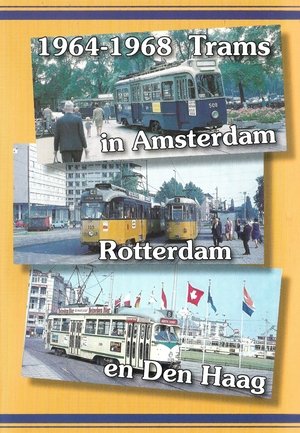
1964-1968 Trams in Amsterdam, Rotterdam en Den Haag(2003)
Movie: 1964-1968 Trams in Amsterdam, Rotterdam en Den Haag
HomePage
Overview
Release Date
2003-01-01
Average
0
Rating:
0.0 startsTagline
Genres
Languages:
Keywords
Similar Movies


Wild Amsterdam(nl)
The city from the unique perspective of the many wild animals and plants that inhabit it. Seen through the eyes of the adventurous urban cat, Abatutu.

Riphagen the Untouchable(nl)
Amsterdam, Netherlands, 1944, during World War II. Andries Riphagen, a powerful underworld boss, has made his fortune by putting his many criminal talents at the service of the Nazi occupiers. But the long battle is about to end and the freedom fighters, who have been persecuted and murdered for years, are abandoning their hideouts to mercilessly hunt down those who have collaborated with the killers.

Occupied City(en)
The past collides with the present in this excavation of the Nazi occupation of Amsterdam: a journey from World War II to recent years of pandemic and protest and a provocative, life-affirming reflection on memory, time and what's to come.

Yannick(en)
At 41 years old, the Quebecois conductor Yannick Nézet-Séguin has established himself as one of the most gifted maestros of his generation, with numerous prestigious posts with some of the world’s greatest orchestras already under his belt, including the Philadelphia Orchestra and the Rotterdam Philharmonic Orchestra (music director), London Philharmonic Orchestra (principal guest conductor), and the Orchestre métropolitain de Montréal. One week before Nézet-Séguin's official nomination as music director of the Rotterdam Philharmonic Orchestra in 2008, filmmaker Christiaan van Schermbeek met the maestro for the first time. The once-in-a-lifetime event inspired Schermbeek to begin this documentary project, giving us a fascinating glimpse into the life of a truly extraordinary individual.

Sexwork & Me(en)
21st century legal prostitution through the frank stories of Amsterdam red-light district sex workers at a time when tighter regulation threatens their livelihood.

The Diary of Anne Frank(en)
The true, harrowing story of a young Jewish girl who, with her family and their friends, is forced into hiding in an attic in Nazi-occupied Amsterdam.

The Last Vermeer(en)
A soldier and member of the Dutch resistance investigates stolen art in the wake of the Second World War, including a Vermeer sold to the Nazis by a flamboyant forger.

Operation Amsterdam(en)
When Germany invades Holland in 1940, a British intelligence officer and two Dutch diamond merchants go to Amsterdam to persuade the Dutch diamond merchants to evacuate their diamond supplies to England.

Katie Tippel(nl)
In the late 19th-century, the Tippel family moves to rural Stavoren in search of greener pastures. However, their dreams are quickly shattered, as teenage Katie is terrorized by a male-dominated society who only see her as an object. Her situation worsens when, following her father's sacking and her elder sister's descent into alcoholism, her mother decides that, rather than starving, Katie becomes a prostitute.

Mijn Noord(nl)
The working-class Tuindorp Nieuwendam neighborhood in Amsterdam-Noord is like a village within the city. Many natives of the Northern Netherlands still live in the characteristically built houses, a unique variation on the Amsterdam School. With humor and Amsterdam directness, they share their stories about what's happening in their lives and in the neighborhood. Recently, a new generation of residents has also discovered the Noord district. How do residents view these changes and the neighborhood's transformation? Was everything better in the past, or are new connections emerging between residents, old and new?

Mother Land(fi)
When filmmaker Mari Soppela took her children and husband to live for a year on a sacred mountain in her native Finland, she was fulfilling a lifelong dream to share the arctic wilderness of her childhood with her family. But when years later her children turn the camera onto her, she is forced to confront her motivation for filming their lives in this searching and searingly honest cinematic exploration of identity, belonging and motherhood. Filmed over the course of 27 years, Mother Land challenges us all to examine the landscapes we carry within us and the narratives we create to make sense of our lives.

The A’dammer - The Man Behind the Cabinet(nl)
The A’dammer - The Man Behind the Cabinet follows the life of designer Aldo van den Nieuwelaar. He designed the iconic A’dammer cabinet, an international design icon, with over seventy versions sold worldwide. Museums acquired his work, and he became a promising name in the design world. But Aldo was more of an artist than an entrepreneur, and his perfectionism clashed with commercial interests. His tense relationship with director Harm Scheltens of furniture manufacturer Pastoe, in particular, escalated into a years-long legal battle over money, recognition, and control.

Goeie mensen(nl)
Sjaak and Clara founded the very first food bank in the Netherlands in 2002. Since handing over their responsibilities at the food bank, they have continued their mission unabated. They still run a soup kitchen and the Social Café Onder de Oranjeboom (Under the Orange Tree), where vulnerable members of society can find a hot meal, support, and a good conversation. For many years, this dedicated couple has been committed to helping people in Rotterdam living in poverty.

To Love(ru)
Four love stories connected by newsreels of the late 60s. Each short story begins with an epigraph taken from the Song of Songs of the Old Testament. The stories are interconnected by documentary shots and numerous interviews taken on the streets from passers-by who are asked the same question: “what does it mean to love?”.


T-rail(ja)
Sanyo Electric Tramway carried 586 million people through Shimonoseki City over the 45 years of operation, from 1926 to 1971. Based on colour footage and photographs taken by former city employee Seiichiro Tomura using an 8 mm camera on the last day of operation, and featuring rare audio recordings of the train interior and the farewell ceremony, this documentary is a nostalgic look at the history of the city.


Ruurdt(nl)
In 2023, there were an estimated 30.6 thousand homeless people. This number continues to rise at an alarming rate. One of them is the headstrong Ruurdt. He has difficulty getting help and cannot adapt well to our society. He is now also in danger of losing the houseboat that was assigned to him. 'Ruurdt' is an intimate portrait of a man on the fringes of our society.

Beppie(nl)
BEPPIE is a moving and disarming portrait of an Amsterdam street urchin. Van der Keuken once described her as follows: 'She was ten years old and the joy of the Achtergracht, where I was living at the time. An Amsterdam child, sweet and crooked as a corkscrew.' He films her while she skims the city with some friends and knocks at strangers' doors. Her family has nine children and is not well off. In those days, a visit to the De Miranda swimming pool cost a quarter, but only ten cents if the weather was bad. At school, Beppie gets a poor mark because she is too boisterous, but when the whole class rattles off the multiplication tables, she joins in at the top of her voice. All of TV-watching Holland was wildly enthusiastic about this portrait, with which Van der Keuken even made the front page of the national newspaper De Telegraaf.