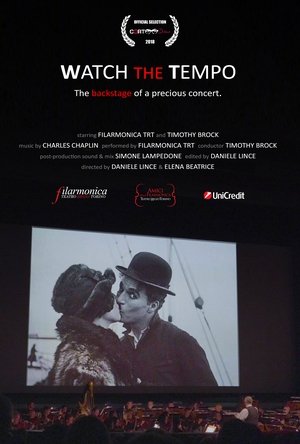
Watch the Tempo(2018)
The backstage of a precious concert.
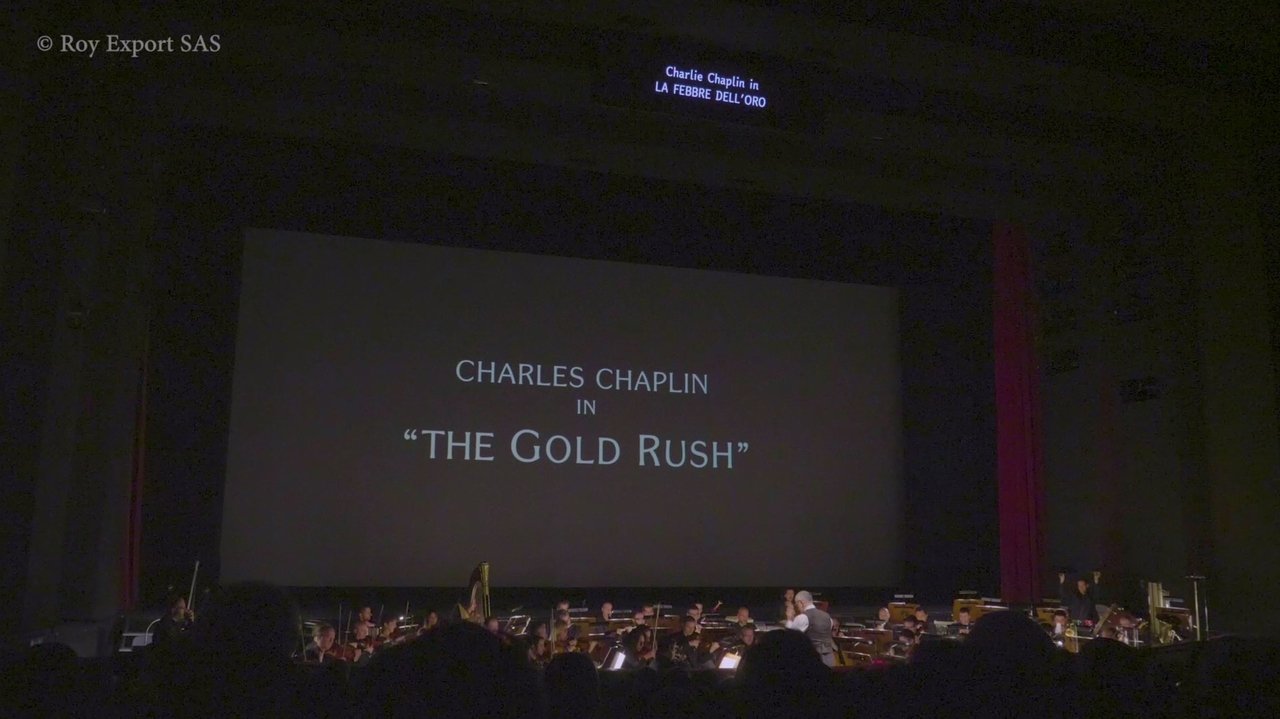
On 18th of December 2017, the Filarmonica Teatro Regio Torino, directed by Timothy Brock, presented "The Gold Rush" by Charles Chaplin, with live performance of the soundtrack. But let's go back a few days: this short film takes us in the backstage of the concert!
Movie: Watch the Tempo
Top 1 Billed Cast
Video Trailer Watch the Tempo
All 1 videos
![Watch the Tempo [Trailer, Documentary Short Film, 2018, Int’l Version]](https://img.youtube.com/vi/Oa1fUXROgVQ/sddefault.jpg)
Watch the Tempo [Trailer, Documentary Short Film, 2018, Int’l Version] - Trailer
Similar Movies

Breaking Plates(en)
A unique hybrid of documentary, silent film, drama and dance, 'Breaking Plates' puts revolutionary women of the past on the screen with present day filmmakers. Contemporary women talk to characters from 100 years ago, reanimate their antics and emulate their mayhem moves. As early 21st century performers step into the clothes of their early 20th century counterparts, battling their haywire machines, exploding gags, and eruptive bodies, they learn to wield humour as a weapon against the structures that contain them today.

The Arrival of a Train at La Ciotat(fr)
A group of people are standing along the platform of a railway station in La Ciotat, waiting for a train. One is seen coming, at some distance, and eventually stops at the platform. Doors of the railway-cars open and attendants help passengers off and on. Popular legend has it that, when this film was shown, the first-night audience fled the café in terror, fearing being run over by the "approaching" train. This legend has since been identified as promotional embellishment, though there is evidence to suggest that people were astounded at the capabilities of the Lumières' cinématographe.

Never Be Boring: Billy Wilder(de)
A funny walk through the life story of Billy Wilder (1906-2002), a cinematic genius; a portrait of a filmmaker who never was a boring man, a superb mind who had ten commandments, of which the first nine were: “Thou shalt not bore.”

Disney: Through the Looking Glass(es)
Tito del Amo, a passionate 72-year-old researcher, takes the final step to unravel the enigma about the alleged Spanish origin of the American cartoonist Walt Disney, making the same journey that his supposed mother made to give him up for adoption in Chicago. A journey that begins in Mojácar, Almería, Spain, and ends in New York. An exciting adventure, like Alicia's through the looking glass, to discover what is truth and what is not, with an unexpected result.

Belmondo, le magnifique(fr)
With more than 70 films and 160 million cumulative tickets in France, Jean-Paul Belmondo is one of the essential stars of French cinema.

Samsara(xx)
Darta, a man from an impoverished family, is rejected by the wealthy parents of the woman he loves. Desperate, he strikes a bargain with the Monkey King, performing a dark ritual to gain wealth. However, in doing so, he accidentally curses his wife and child to a life of suffering. Rooted in Indonesian mysticism, this universal narrative explores the insatiable hunger to become something one is not and the boundaries one is willing to cross to achieve it.

Berlin: Symphony of a Great City(de)
A day in the city of Berlin, which experienced an industrial boom in the 1920s, and still provides an insight into the living and working conditions at that time. Germany had just recovered a little from the worst consequences of the First World War, the great economic crisis was still a few years away and Hitler was not yet an issue at the time.

Nanook of the North(en)
This pioneering documentary film depicts the lives of the indigenous Inuit people of Canada's northern Quebec region. Although the production contains some fictional elements, it vividly shows how its resourceful subjects survive in such a harsh climate, revealing how they construct their igloo homes and find food by hunting and fishing. The film also captures the beautiful, if unforgiving, frozen landscape of the Great White North, far removed from conventional civilization.

Gewalt no Mori - Kare ha Waseda de shinda(ja)
A documentary about the end of the student movement in 1972 and the lynching of Daizaburo Kawaguchi, a student at Waseda University. The documentary interweaves testimonies from japanese intellectuals and a short play, written and directed by Shôji Kôkami, about the murder.

Carmencita(xx)
The first woman to appear in front of an Edison motion picture camera and possibly the first woman to appear in a motion picture within the United States. In the film, Carmencita is recorded going through a routine she had been performing at Koster & Bial's in New York since February 1890.

Men Boxing(xx)
Experimental film fragment made with the Edison-Dickson-Heise experimental horizontal-feed kinetograph camera and viewer, using 3/4-inch wide film.


Broken Palace(en)
A short documentary about the rapidly disappearing era of heritage movie palaces and the film going experience once offered within those hallowed walls.

Fantastic Flowers(en)
Fantastic Flowers is a compilation of short silent films produced between 1906 and 1920, displaying amazing colours that were applied to each frame using the Pathécolor process, or other similar stencilling techniques. Bonsoir – La Fée aux fleurs (1906) / [Bloemenvelden Haarlem] (1909) / Les Chrysanthèmes (1907) / Le Chrysanthème, roi de l’automne (1914) / [Les Tulipes] (1907) / Les Fleurs dans les jardins (1914) / L’Après-midi d’une japonaise (1920) / The Beauty Thief ([1920]) / La Fée printemps (1906) / [Het schoonste uit de natuur] (1912?) / La Culture du dahlia (1911) / [Hollandse Tulpen en Klompen] (1920?) / Fabrication des fleurs artificielles (1911) / [Bonsoir tableau] (1906)

Matisse(fr)
Between 1950 and 1955, Henri Langlois tried to produce, on behalf of the Cinémathèque française, several films devoted to great artists, with their cooperation, by entrusting them with virgin film stock. Wrote Langlois on the unfinished project, epic in scope: "We had the idea of asking poets, painters, scholars, writers and even repressed filmmakers [...] to make films in 16mm, with the means at hand, without taking into account any commercial concern or censorship." What precious little came of the project was eight minutes of film from Matisse and twenty-some from Marc Chagall, released at a later date.

Cinemania(en)
This documentary about the culture of intense cinephilia in New York City reveals the impassioned world of five obsessed movie buffs. These human encyclopedias of cinema see two to five films a day, and from 600 to 2,000 films per year. This is the story of their lives, their memories, their unbending habits and the films they love.

Mankai Movie A3!: Another Stories(ja)
This contains the side stories during the time the Mankai Company was rebuilt.

Schlock! The Secret History of American Movies(en)
Hollywood is a town of tinsel and glamour; but there is another Hollywood, a place where maverick independent exploitation filmmakers went toe to toe with the big guys and came out on top.