Loading Page
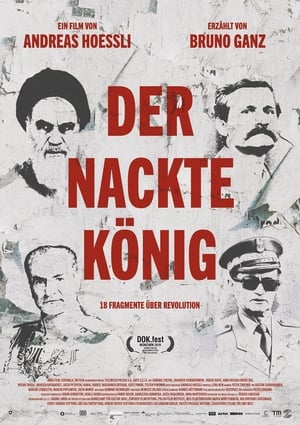
The Naked King - 18 Fragments on Revolution(2019)
Status: Released
Date: 2019-09-12
0%
0 Votes
Time: 1h 47m
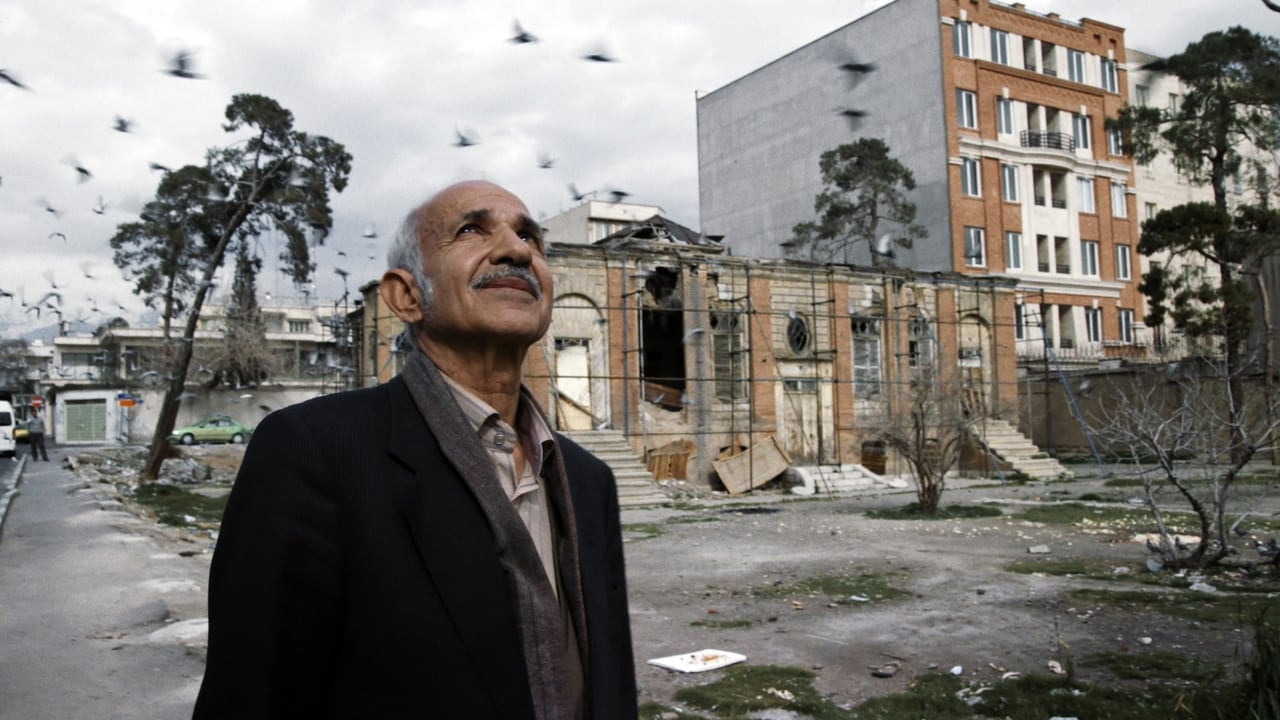
A documentary about the revolutions in 1979 and 1980 in Iran and Poland.
Overview:
In 1979, a revolution in Iran. In 1980, a revolution in Poland. The fall of the Shah, the “King of Kings,” in Iran. Mass strikes and the foundation of Solidarność (Solidarity) in Poland. What was in the minds of the young women and men who fomented revolution in their own country? What did they think when their revolution was quelled, or – as in Iran – an authoritarian regime was instituted under the name of an “Islamic Republic”?
Languages: German, English, Persian, Polish.
Countries:
Germany,
Poland,
Switzerland
ProductionCompanies: 

Movie: The Naked King - 18 Fragments on Revolution
Top 10 Billed Cast
Video Trailer The Naked King - 18 Fragments on Revolution
All 1 videos
![Der nackte König [Offizieller Trailer Deutsch HD German]](https://img.youtube.com/vi/YsTAadKGTn4/sddefault.jpg)
Der nackte König [Offizieller Trailer Deutsch HD German] - Trailer
Similar Movies

68%
First Case, Second Case(fa)
1979-02-01
A documentary about a teacher who sends a group of pupils out of the classroom when one of them does not own up to talking behind the master's back.

63%
The Russian Revolution(en)
2017-06-15
Starting in 1881 this film shows the personal battle between Lenin's Ulyanov family and the royal Romanovs that eventually led to the Russian revolution.


0%
Nicaragua Part 3: In Their Time(en)
1985-10-28
Through the eyes of journalists and photographers working at Barricada, the official publication of the FSLN, the film observes the problems of putting socialism into practice, with reports on the war, the economy, the prison system and the political process leading up to the 1984 elections.

73%
The Guns and the People(pt)
1975-01-01
Film directors with hand-held cameras went to the streets of Lisbon from April 25 to May 1, 1974, registering interviews and political events of the Portuguese "Carnation Revolution", as that period would be later known.


0%
Landfall(es)
2020-04-15
Hurricane María abated, the news crews packed up and left Puerto Rico, and the interest of the international community turned elsewhere. What happened next?

0%
Khamsin(fr)
2019-01-31
Lebanon today. The traces of the civil war are all too tangible as government corruption becomes unbearable. In a country where conflict and peace are caught in an endless cycle, musicians from different backgrounds pool their talents to create an underground music scene. Each evokes his or her representation of Lebanon: its shifting geographical, political, historical and social borders, its painful passage through conflict and instability. A touching portrait of a young generation trying to build an oasis in a hostile environment where the forces of destruction continue to wreak havoc.

0%
Torn from the Flag(en)
2007-11-10
A sociopolitical historical documentary-thriller about the international decline of communism and the 1956 Hungarian Revolution.

0%
Jeunesse Rouge: The Story of Young Communist Revolutionaries in France(fr)
2023-03-17
"Jeunesse Rouge" is a documentary exploring young French Communist revolutionaries fighting for a just and equal society. The film follows their organizing and mobilizing, while delving into the history of the Communist movement in France. Archival footage and interviews with activists show their passionate commitment, from protests and strikes to political education. It highlights the power of youth activism and their potential to bring about change in the face of systemic inequality.

70%
¡Las Sandinistas!(en)
2018-03-12
¡Las Sandinistas! uncovers the disappearing stories of women who shattered barriers to lead combat and social reform during Nicaragua’s 1979 Sandinista Revolution, and who continue to lead Nicaragua’s current struggle for democracy and equality.

65%
All Things Ablaze(uk)
2014-10-29
What does the violent heart of revolution feel like? As the anger and hatred glow white hot is there a language its players use to speak to one another? And what becomes of the gun toting authorities when their fiefdom is destroyed, nobody is any longer afraid, and all things are ablaze? Just some of the questions addressed in this visceral documentary from Maidan square in the violent Ukrainian winter of 2013-14.

72%
Where to Invade Next(en)
2015-12-23
To understand firsthand what the United States of America can learn from other nations, Michael Moore playfully “invades” some to see what they have to offer.

0%
Nasser's Republic: The Making of Modern Egypt(en)
2016-04-17
In 1952 a young Egyptian colonel named Gamal Abdel Nasser led a coup that became a revolution, winning the support of millions of his countrymen. Over the next 18 years he challenged Western hegemony abroad, confronted Islamism at home, established the region’s first military authoritarian regime, and faced deep divisions among the Arabs.

62%
Ten Days That Shook the World(en)
1967-01-01
An epic presentation of the turbulent days leading to the Russian Revolution. Based on the classic work by John Reed, this important documentary makes use of rare footage and little-known information, stirringly narrated by Orson Welles.

70%
Euromaidan. Rough Cut(uk)
2014-03-21
Three months of revolution. From indignant protest to national unity. From pots on their heads to batons and body armor. From the euphoria of victory to the mourning of the fallen Heavenly Hundred. Revolution as an explosion of revived dignity, as the euphoria of freedom, as the pain of awareness at the cost, as the birth of the modern history of Ukraine. This year we have decided not to have an opening film, because all our attention is focused on the changes taking place in our country today. We have asked the directors who filmed the Ukrainian protests to share their best shots with us. The episodes of these upcoming films about the Euromaidan were formed in a kaleidoscope of revolution, which needs no comment. We offer you a chronicle of the Ukrainian protest. Experience the three months of fighting with us, feel and see the revolution through our eyes.

79%
Winter on Fire: Ukraine's Fight for Freedom(en)
2015-09-03
Over 93 days in Ukraine, what started as peaceful student demonstrations became a violent revolution and full-fledged civil rights movement.

95%
Ulterior States(en)
2015-06-27
The film took three years and 125 videos to complete. Through this journey, I got immersed in the decentralised crypto-currency culture and met a bunch of wonderful futuristic-pirates, I would have never met otherwise. It is becoming easier to admit that Ulterior States is an expression of my perceptions, an extract of the years 2012-2015. The collaged story explores code as activism and discovers a melting pot through the neutrality of a decentralised consensus. It looks to the future from different humanist perspectives and argues that crypto-currencies could lead towards; community governed micro-state applications.

78%
Gray State: The Rise(en)
2015-01-21
A documentary about America’s current militarized police state, the liberal use of deadly force against unarmed citizens, and a possible pending economic collapse. The world reels with the turmoil of war, geological disaster, and economic collapse, while Americans continue to submerge themselves in illusions of safety and immunity. While rights are sold for security, the federal government, swollen with power, begins a systematic takeover of liberty in order to bring about a New World Order. Fear-mongering, terrorism, police state, martial law, war, arrest, internment, hunger, oppression, violence, resistance. Neighbor is turned against neighbor as the value of the dollar plunges to zero, food supplies are depleted, and everyone becomes a terror suspect. There are arrests. Disappearances. Bio attacks. Public executions of those even suspected of dissent. Even rumors of concentration camps on American soil. The GRAY STATE is here. It always was. By consent or conquest.

65%
Terror! Robespierre and the French Revolution(en)
2009-07-11
In 1794, French revolutionary Maximilien Robespierre produced the world's first defense of "state terror" - claiming that the road to virtue lay through political violence. This film combines drama, archive and documentary interviews to examine Robespierre's year in charge of the Committee Of Public Safety - the powerful state machine at the heart of Revolutionary France. Contesting Robespierre's legacy is Slavoj Zizek, who argues that terror in the cause of virtue is justifiable, and Simon Schama, who believes the road from Robespierre ran straight to the gulag and the 20th-century concentration camp. The drama, based on original sources, follows the life-and-death politics of the Committee during "Year Two" of the new Republic.