Loading Page
Twinkl(2008)
Status: Released
Date: 2008-12-10
0%
0 Votes
Time: 0h 52m
Overview:
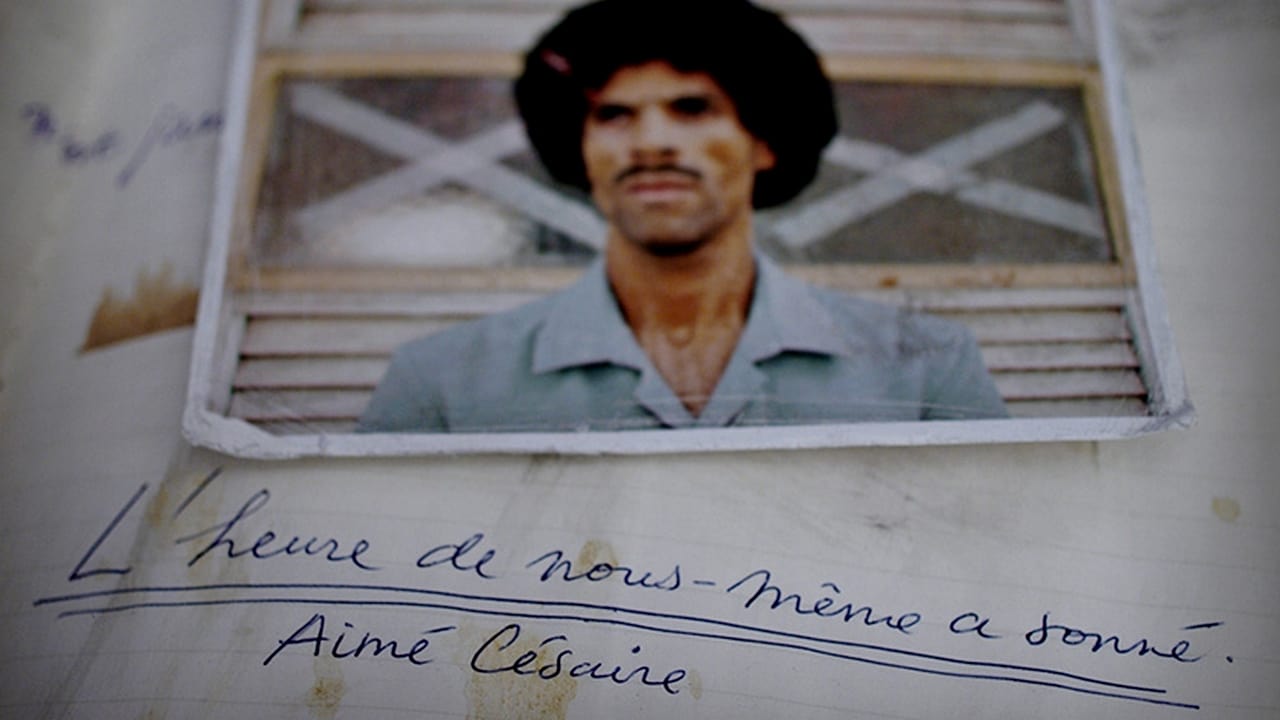
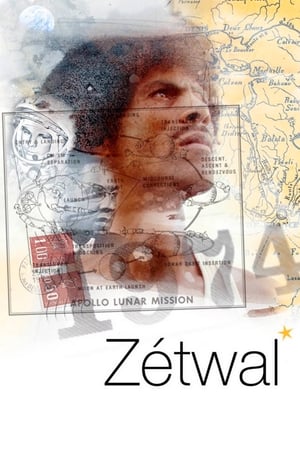
Martinique Island, 1974. Inspired by the writings of the Martiniquais poet and politician Aimé Césaire (1913-2008), the dreamer Robert Saint-Rose, known as Zétwall (Star in Creole), aspires to be the first Frenchman to step on the lunar surface.
Languages: French.
Countries:
France
ProductionCompanies: 
La Maison Garage
Movie: Twinkl
Top 10 Billed Cast
Video Trailer Twinkl
Video: Sample 1

Sample 1

Sample 2

Zetwal³
All 3 videos

Sample 1 - Clip

Sample 2 - Clip

Zetwal³ - Featurette
Similar Movies

60%
Dark Glamour: The Blood and Guts of Hammer Productions(fr)
2017-08-06
The greatness, fall and renaissance of Hammer, the flagship company of British popular cinema, mainly from 1955 to 1968. Tortured women and sadistic monsters populated oppressive scenarios in provocative productions that shocked censorship and disgusted critics but fascinated the public. Movies in which horror was shown in offensive colors: dreadful stories, told without prejudices, that offered fear, blood, sex and stunning performances.

80%
The Mystery of Chaco Canyon(en)
1999-01-01
Chaco Canyon, located in northwest New Mexico, is perhaps the only site in the world constructed in an elaborate pattern that mirrors the yearly cycle of the sun and the 19-year cycle of the moon. How did an ancient civilization, with no known written language, arrange its buildings into a virtual celestial calendar, spanning an area roughly the size of Ireland?

69%
Cielo(en)
2017-10-06
The first feature from Alison McAlpine is a dialogue with the heavens—in this case, the heavens above the Andes and the Atacama Desert in northern Chile, where she alights on the desert- and mountain-dwelling astronomers, fishermen, miners, and cowboys who live their lives with reverence and awe for the skies.


75%
Fascism in Colour(en)
2006-01-01
After the World War I, Mussolini's perspective on life is severely altered; once a willful socialist reformer, now obsessed with the idea of power, he founds the National Fascist Party in 1921 and assumes political power in 1922, becoming the Duce, dictator of Italy. His success encourages Hitler to take power in Germany in 1933, opening the dark road to World War II. (Originally released as a two-part miniseries. Includes colorized archival footage.)

100%
Prehistoric Astronomers(en)
2007-01-01
Cave paintings and lunar calendars exist in the caves and remains of prehistoric hunters studied recently. What if Prehistoric Man were clever enough to develop in depth scientific knowledge? As unlikely as it may seem, new data tend to prove that Prehistoric Man actually invented Astronomy!

0%
Shadow Chasers(fr)
2000-09-23
This feature-length documentary is a portrait of eclipse chasers, people for whom solar eclipses - among nature's more spectacular phenomena – are a veritable obsession. The film follows 4 of them as they travel incredible distances to witness the last total eclipse of the millennium as it sweeps eastward across Europe to India. At various points along the way enthusiasts Alain Cirou in France, Paul Houde in Austria, Olivier Staiger in Germany and Debasis Sarkar in India offer their impressions of the historic event.

75%
Camp Century: The Hidden City Beneath the Ice(de)
2020-01-08
How in 1959, during the heat of the Cold War, the government of the United States decided to create a secret military base located in the far north of Greenland: Camp Century, almost a real town with roads and houses, a nuclear plant to provide power and silos to house missiles aimed at the Soviet Union.

72%
Searching for Planet 9(fr)
2022-09-17
At the edge of our solar system supposedly lies an immense planet. Five to ten times the size of the Earth. Several international teams of scientists have been competing in a frantic race to detect it, in uncharted territories, far beyond Neptune. The recent discovery of several dwarf planets, with intriguing trajectories, have put astronomers on the trail of this mysterious planet. Why is this enigmatic planet so difficult to detect? What would a ninth planet teach us about our corner of the universe? Could it help us unlock some of the mysteries of our solar system?

70%
Disco Europe Express(fr)
2019-09-15
Despite its Afro-American origins, the history of disco music, the soundtrack of the seventies, would be inconceivable without a handful of legendary European music producers who conjured up some of the biggest world-wide hits in the anonymity of their studios.

0%
Pirates of the Airwaves(en)
2014-07-27
In 1966 a group of determined young men defied the New Zealand government and launched a pirate radio station aboard a ship in the Hauraki Gulf.

75%
Sheila, toutes ces vies-là(fr)
2022-12-24
The portrait of a woman who remembers. Sheila tells the story of Sheila, without concessions or evasions. Her childhood, her parents, her beginnings, the rumors, her love affairs, her marriage, her son, her successes, her farewells, her return, her mourning. The journey of an extraordinary popular icon who never stopped fighting. The courage of an artist who never gives up. "Sheila, toutes ces vies-là" is also a journey through time. 60 years of pop music, punctuated by numerous archives, personal films, timeless hits and illustrations by Marc-Antoine Coulon. But also 60 years of fashion, through a legendary wardrobe (her TV show outfits) that Sheila invites us to rediscover.

73%
Never Be Boring: Billy Wilder(de)
2017-10-28
A funny walk through the life story of Billy Wilder (1906-2002), a cinematic genius; a portrait of a filmmaker who never was a boring man, a superb mind who had ten commandments, of which the first nine were: “Thou shalt not bore.”

57%
1979: Big Bang of the Present(de)
2019-12-10
Deng Xiaoping's economic and political opening in China. Margaret Thatcher's extreme economic measures in the United Kingdom. Ayatollah Khomeini's Islamic Revolution in Iran. Pope John Paul II's visit to Poland. Saddam Hussein's rise to power in Iraq. The Soviet invasion of Afghanistan. The nuclear accident at the Harrisburg power plant and the birth of ecological activism. The year 1979, the beginning of the future.

66%
The Last Man on the Moon(en)
2016-02-26
The 1960s was an extraordinary time for the United States. Unburdened by post-war reparations, Americans were preoccupied with other developments like NASA, the game-changing space programme that put Neil Armstrong on the moon. Yet it was astronauts like Eugene Cernan who paved the uneven, perilous path to lunar exploration. A test pilot who lived to court danger, he was recruited along with 14 other men in a secretive process that saw them become the closest of friends and adversaries. In this intensely competitive environment, Cernan was one of only three men who was sent twice to the moon, with his second trip also being NASA’s final lunar mission. As he looks back at what he loved and lost during the eight years in Houston, an incomparably eventful life emerges into view. Director Mark Craig crafts a quietly epic biography that combines the rare insight of the surviving former astronauts with archival footage and otherworldly moonscapes.

0%
Moonscape(en)
2013-12-29
Moonscape is a free and freely downloadable high-definition documentary about the first manned Moon landing. Funded and produced by space enthusiasts from all over the world, it shows the full, unedited Apollo 11 landing and moonwalk, using only the original TV and film footage and the original audio and photographs. All this material has been scanned, digitized and restored from the best available sources. The live TV broadcast, the 16mm color film footage shot on the Moon and in Mission Control, and the Hasselblad 70mm color photographs taken by astronauts Buzz Aldrin and Neil Armstrong, have been fully synchronized with the audio recordings (including the onboard and Mission Control recordings) and are presented in real time, as they happened, with full subtitles in English or Italian.

0%
Alien Moon(en)
2019-06-25
Our enigmatic moon may have a sinister origin that mankind is not prepared for. From astronaut UFO encounters, to flashing lights, to geometric anomalies on the surface that appear to be structures, it's possible that the moon my actually be the home of ancient aliens or be serving as a base of operations. For the moon to be able to perfectly eclipse the sun is a mathematical impossibility based on our current understanding of psychics but we also know that the moon could be hollow from experiments performed on Apollo missions. Clearly, there is an intelligence involved with our mysterious satellite.

66%
Wonders of the Moon(en)
2018-01-31
Documentary which uses the latest, most detailed imagery to reveal the monthly life cycle of the moon. From Wales to Wyoming, Hong Kong to Croydon, the programme finds out how the moon shapes life on Earth, as well as exploring its mysterious dark side and discovering how the moon's journey around Earth delivers one of nature's most awe-inspiring events - a total solar eclipse. And at the end of a remarkable year of lunar activity, we find out why so many supermoons have been lighting up the night sky.

71%
My Favorite War(lv)
2020-09-25
Ilze Burkovska, a little girl who is obsessed with stories of World War II and will be a filmmaker in a distant future, lives in Latvia under the totalitarian boot of the Soviets and the ominous shadow of the many menaces and horrors of the Cold War.

70%
Thomas Pesquet : L'Odyssée de l'espace(fr)
2018-01-03
For 192 days, Thomas Pesquet filmed his journey in space. He he lived in the ISS (International Space Station) with 5 other astronauts. From this extraterrestrial journey, the 39-year-old French astronaut brings back extraordinary images. Earth, seen from space The images of the earth scroll then, fascinating, despite this observation of the astronaut on pollution and deforestation. He had read the damage before, he now sees it from the ISS. He feels the fragility of the Earth. His weightless images on a soundtrack of quality provoke a surge of beauty, of strangeness, in this slowness propitious to poetry. And the reading of the texts of the two winners of "Le Petit Prince" writing contest, visiting an eighth planet, takes on a whole new dimension in this beautiful production by Julien Adam and Matthieu Besnard produced by Capa Presse TV.