Loading Page

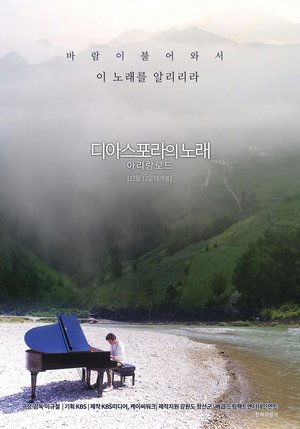
Diaspora: Arirang Road(2019)
Status: Released
Date: 2019-12-12
0%
0 Votes
Time: 1h 26m
Diasporas’ song still goes on.
Overview:
During the Japanese occupation period, Koreans were forced to deport or drafted to work in other countries. Now 150 years passed, it appears around 7million of those people and their families are spread in 170 countries. There, a world-famous Korean-Japanese musician Yang Bang Ean follows the pathways of Korean diasporas as an inspiration, and performs his cross over music concert called ‘ARIRANG ROAD’.
Languages: Korean.
Countries:
South Korea
ProductionCompanies: 
Dreamfact Entertainment
Movie: Diaspora: Arirang Road
Top 3 Billed Cast

Kim Jo-yeon
탄광노동자
HomePage
Overview
During the Japanese occupation period, Koreans were forced to deport or drafted to work in other countries. Now 150 years passed, it appears around 7million of those people and their families are spread in 170 countries. There, a world-famous Korean-Japanese musician Yang Bang Ean follows the pathways of Korean diasporas as an inspiration, and performs his cross over music concert called ‘ARIRANG ROAD’.
Release Date
2019-12-12
Average
0
Rating:
0.0 startsTagline
Diasporas’ song still goes on.
Genres
Languages:
한국어/조선말Keywords
Similar Movies

0%
Ryeohaeng(ko)
2019-08-08
A group of women climbs a summer mountain situated in South Korea. They are refugees who have settled into South Korean society after fleeing from North Korea. For them, climbing the mountains has been an unavoidable journey for survival - a matter of life and death.


79%
My Love, Don't Cross That River(ko)
2014-11-27
There lives a couple known as "100-year-old lovebirds". They're like fairy tale characters: the husband is strong like a woodman, and the wife is full of charms like a princess. They dearly love each other, wear Korean traditional clothes together, and still fall asleep hand in hand. However, death, quietly and like a thief, sits between them. This film starts from that moment, and follows the last moments of 76 years of their marriage.

0%
Landscape of our Body(vi)
2024-05-24
As queer trans and gender non-conforming children of the Vietnamese diaspora, we are fragmented at the crossroads of being displaced from not only a sense of belonging to our ancestral land, but also our own bodies which are conditioned by society to stray away from our most authentic existence. Yet these bodies of ours are the vessels we sail to embark on a lifetime voyage of return to our original selves. It is our bodies that navigate the treacherous tides of normative systems that impose themselves on our very being. And it is our bodies that act as community lighthouses for collective liberation. Ultimately, the landscape of our bodies is our blueprint to remembering, to healing, to blooming.

63%
Cuban Rafters(es)
2002-04-12
The story of Cuban refugees who risked their lives in homemade rafts to reach the United States, and what life is like for those who succeed.

72%
The Journey of Man: A Genetic Odyssey(en)
2003-01-21
Many geneticists and archaeologists have long surmised that human life began in Africa. Dr. Spencer Wells, one of a group of scientists studying the origin of human life, offers evidence and theories to support such a thesis in this PBS special. He claims that Africa was populated by only a few thousand people that some deserted their homeland in a conquest that has resulted in global domination.

73%
Twinsters(en)
2015-07-17
Adopted from South Korea, raised on different continents & connected through social media, Samantha & Anaïs believe that they are twin sisters separated at birth.

100%
Our Algeria(ar)
1959-01-01
"Djazaïrouna", produced by the cinema service of the Provisional Government of the Algerian Republic (GPRA), is a montage film intended to inform the international community at the UN in 1959 on the objectives pursued by the Algerian resistance during the war of 'Algeria. Independence in Algeria (1954-1962). In 1959, Djamel-Eddine Chanderli and Mohammed Lakdar-Hamina produced Djazaïrouna (Our Algeria) from images taken by René Vautier and Doctor Pierre Chaulet. This film, completed a little later and will result in the film “The Voice of the People”. This documentary on the history of Algeria through a montage of current events, traces the political and military actions of the A.L.N, the demonstrations of December 1960, and the attack on a fortified French base on the border between Algeria and Tunisia.

0%
The VICE Guide to North Korea(en)
2008-07-03
"Getting into North Korea was one of the hardest and weirdest processes VBS has ever dealt with. They finally said, “OK, OK, you can come. But only as tourists.” At the airport, the North Korean consulate brought us to a restaurant and these women came out and started singing North Korean nationalist songs. We were thinking, “Look, we were just on a plane for 20 hours. Can we just go to bed?” but this guy with our group who was from the LA Times told us, “Everyone in here besides us is secret police. If you don’t act excited then you’re not going to get your visa. So we got drunk and jumped up onstage and sang songs with the girls. The next day we got our visas. A lot of people we had gone with didn’t get theirs. That was our first hint at just what a freaky, freaky trip we were embarking on…" -VICE Founder Shane Smith

0%
Soon Come Back(en)
2023-07-01
Soon Come Back is a poetic documentary about migration’s effect on Nande's relationships to “home” in Jamaica and the US, and her feelings of alienation being a child of the diaspora.

0%
Gravity of the Tea(ko)
2019-11-28
IM Kwon-taek is a Korean film-maker. He was born in 1934 when his country was under Japanese occupation. When Korean War was over his parents became North Korean partisan, and he ran away from home. He’s made 101 films since he made his debut in 1962 with Farewell Doman River. He tasted the glory at Cannes Int’l Film Festival with Chiwhasun. However making the 102nd film seems harder than ever to this 80-year-old director. His 2 projects have been suspended. He still can’t find chance to make his 102nd film, but spends daily routine free from film-making. This is a recording of years that the film-maker spends without making a film.

0%
Irpinia(en)
Irpinia follows the journey of young West Indian dreamer Dudley as he makes his way to England in the 1960s. At 24 years old, Dudley boarded a ship named Irpinia in search of a better life in England, the so-called motherland. Now 86, Dudley reflects on the exciting journey at sea and the harsh reality that lay ahead of him.

78%
In the Absence(ko)
2018-11-09
When the MV Sewol ferry sank off the coast of South Korea in 2014, over three hundred people lost their lives, most of them schoolchildren. Years later, the victims’ families and survivors are still demanding justice from national authorities.

0%
Razões Africanas(pt)
2023-10-19

59%
Aim High In Creation!(en)
2013-11-19
A revolutionary film about the cinematic genius of North Korea's late Dear Leader Kim Jung-IL, with a groundbreaking experiment at its heart - a propaganda film, made according to the rules of his 1987 manifesto. Through the shared love of cinema, AIM HIGH IN CREATION! forges an astonishing new bond between the hidden filmmakers of North Korea and their Free World collaborators. Revealing an unexpected truth about the most isolated nation on earth: filmmakers, no matter where they live, are family.

87%
Jeronimo(en)
2019-11-21
Born to Korean immigrant parents freed from indentured servitude in early twentieth century Mexico, Jerónimo Lim Kim joins the Cuban Revolution with his law school classmate Fidel Castro and becomes an accomplished government official in the Castro regime, until he rediscovers his ethnic roots and dedicates his later life to reconstructing his Korean Cuban identity. After Jerónimo's death, younger Korean Cubans recognize his legacy, but it is not until they are presented with the opportunity to visit South Korea that questions about their mixed identity resurface.


65%
First Person Plural(en)
2000-12-18
In 1966, Deann Borshay Liem was adopted by an American family and sent from Korea to her new home in California. There, the memory of her birth family was nearly obliterated, until recurring dreams led her to investigate her own past, and she discovered that her Korean mother was very much alive. Bravely uniting her biological and adoptive families, Borshay Liem embarks on a heartfelt journey in this acclaimed film that first premiered on POV in 2000. First Person Plural is a poignant essay on family, loss and the reconciling of two identities.