Loading Page

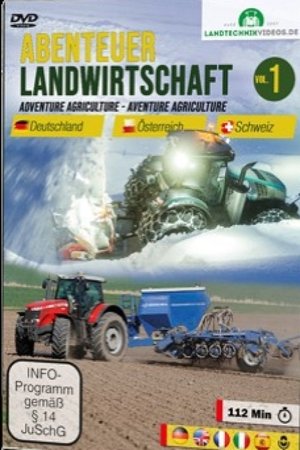
Abenteuer Landwirtschaft: Deutschland, Österreich, Schweiz Vol.1(2019)
Status: Released
Date: 2019-01-01
0%
0 Votes
Languages:
Countries:
Germany,
Austria,
Switzerland
ProductionCompanies:
Landtechnikvideos.de
Movie: Abenteuer Landwirtschaft: Deutschland, Österreich, Schweiz Vol.1
HomePage
Overview
Release Date
2019-01-01
Average
0
Rating:
0.0 startsTagline
Genres
Languages:
Keywords
Similar Movies

68%
Germany: A Summer's Fairytale(de)
2006-10-03
A documentary of the German national soccer team’s 2006 World Cup experience that changed the face of modern Germany.

63%
King Corn(en)
2007-10-12
King Corn is a fun and crusading journey into the digestive tract of our fast food nation where one ultra-industrial, pesticide-laden, heavily-subsidized commodity dominates the food pyramid from top to bottom – corn. Fueled by curiosity and a dash of naiveté, two college buddies return to their ancestral home of Greene, Iowa to figure out how a modest kernel conquered America. With the help of some real farmers, oodles of fertilizer and government aide, and some genetically modified seeds, the friends manage to grow one acre of corn. Along the way, they unlock the hilarious absurdities and scary but hidden truths about America’s modern food system in this engrossing and eye-opening documentary.

0%
The Last Book(de)
2019-10-10
The film focuses on the exciting life journey of Swiss writer Katharina Zimmermann. She follows her husband on a mission to the jungle in Indonesia where she raises their four children and five foster children and lives through the military coup. Back in Switzerland Katharina discovers her voice and finds her path. Now, at eighty, she is writing her life story. Yet suddenly she faces another battle because her publisher is threatening to let her go.


0%
Zwischenwelten - Unterschiedliche Wege des Heilens(de)
2020-04-16
A documentary about healers from the Swiss canton of Appenzell.

62%
Germany in Autumn(de)
1978-03-03
Nine fictitious documentaries and films reflect the mood of late 1970s Germany, particularly the two-month period in 1977 when a businessman was kidnapped by the RAF (Red Army Faction). The kidnap had been made to orchestrate the release of the original leaders of the RAF, aka the Baader-Meinhof.

0%
The Shepherds of Berneray(gd)
1981-10-28
In 1980, Jack Shae and Allen Moore, two ethnographic filmmakers from Harvard University, moved their families to the island of Berneray in the Outer Hebrides. Over the course of 18 months they documented the everyday lives and struggles of the crofters they lived among, whom were even then a vanishing breed. The film is in English and Gaelic. This carefully observed documentary by filmmakers Jack Shae and Allen Moore is a poetic ethnographic film in the style of their mentor, Robert Gardner (“Dead Birds”). It follows the rhythm of life on a wind-swept island in the Outer Hebrides through the four seasons and in the filmmakers’ observation of the day-to-day struggles of a vanishing society we see the deep-time legacy of their kind. The film is in English and Gaelic.

100%
White Winter(de)
2022-12-27
In southern Germany, winter can still be admired in all its glory every year. With its white coat of snow and icicles and myriads of small crystals that look like geometric works of art. In the valleys and on the slopes the snow is still so thick every year that the alpine huts are snowed in up to the windows. Cows and dairymen are safe in their farms at lower altitudes. But not the wild creatures of the mountains! They need strategies to survive the cold season and to defy snow masses, cold and ice. And some seem to do it so easily that they even raise their young in the middle of winter. But how do animals, plants and fungi cope with the annually recurring ice age, which from our perspective is a time of need? The many adaptations in nature prove that winter is an integral part of the natural cycle of the year and the living environment of species. They are adapted to cold and frost. That is why the animals and plants at the edge of the Alps suffer particularly from climate change!

70%
Merkel-Jahre - Am Ende einer Ära(de)
2021-08-30
The film shines a light onto federal chancellor Angela Merkel and her now ending 16-year-long tenure. An era, not an episode. And a vagarious relationship history between the chancellor and the Germans. Who has changed whom here?

0%
Ich. Immendorff(de)
2007-05-31
Documentary film about the painter and sculptor Jörg Immendorff who ranks among the most important German artists. The filmmakers accompanied Immendorff over a period of two years – until his death in May 2007. The artist had been living for nine years knowing that he was terminally ill with ALS. The film shows how Immendorff continued to work with unabated energy and how he tried not to let himself be restrained by his deteriorating health.


