Loading Page

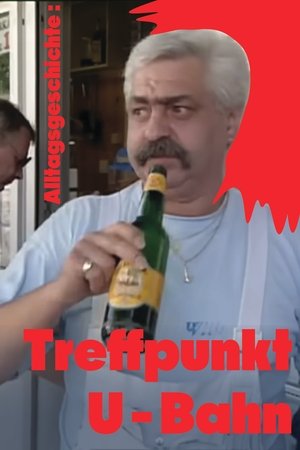
Alltagsgeschichte – Treffpunkt U-Bahn(1993)
Status: Released
Date: 1993-12-31
0%
0 Votes
Overview:
Ignaz Wuzel and Gerhard Jeschko are regulars at the espresso in the Südtiroler Platz underground station. Warden Leopold Prinz knows the problems of the children from Karlsplatz. In 1993, Elizabeth T. Spira filmed people on the Vienna subway network. Above all, it is the desperate, the lost and the forgotten who find refuge and a home in and around the subway.
Languages:
Countries:
ProductionCompanies: 
Movie: Alltagsgeschichte – Treffpunkt U-Bahn
Top 4 Billed Cast

Elizabeth T. Spira
Interviewerin
HomePage
Overview
Ignaz Wuzel and Gerhard Jeschko are regulars at the espresso in the Südtiroler Platz underground station. Warden Leopold Prinz knows the problems of the children from Karlsplatz. In 1993, Elizabeth T. Spira filmed people on the Vienna subway network. Above all, it is the desperate, the lost and the forgotten who find refuge and a home in and around the subway.
Release Date
1993-12-31
Average
0
Rating:
0.0 startsTagline
Genres
Languages:
Keywords
Similar Movies

73%
Never Be Boring: Billy Wilder(de)
2017-10-28
A funny walk through the life story of Billy Wilder (1906-2002), a cinematic genius; a portrait of a filmmaker who never was a boring man, a superb mind who had ten commandments, of which the first nine were: “Thou shalt not bore.”

10%
Octopus Alarm(de)
2006-02-11
Alex is intersex. Although he has XY chromosomes, his sex is ambiguous. When Alex was an infant, his mother authorised genital reassignment surgery, and he was thereafter raised female. Now Alex is an adult, and he is consumed by feelings of anger and loss. After meeting other "XY women" and doing a lot of soul-searching, he decides he wants to live as a man.

0%
The Standstill(de)
2024-02-09
In an observation over four seasons THE STANDSTILL shows Vienna and its surroundings along with encounters with people during and after the Corona crisis. The film tells of the immediate and also the long-term effects, which can only be evaluated and classified in the future.

100%
The End Of The Line: Rochester's Subway(en)
1995-05-01
"The End of the Line - Rochester's Subway" tells the little-known story of the rail line that operated in a former section of the Erie Canal from 1927 until its abandonment in 1956. Produced in 1994 by filmmakers Fredrick Armstrong and James P. Harte, the forty-five minute documentary recounts the tale of an American city's bumpy ride through the Twentieth Century, from the perspective of a little engine that could, but didn't. The film has since been rereleased (2005) and now contains the main feature with special portions that were added as part of the rereleased version. These include a look at the only surviving subway car from the lines and a Phantom tun through the tunnels in their abandoned state, among others, for a total of 90 minutes of unique and well preserved historical information.

10%
How we built the Moscow metro(fr)
2014-03-18
In the 1930’s, the workers of the underground, headed by brigades of writers, are in charge to write in real time "the history of the Moscow Metro". Based on their narratives, partially unpublished, the film recounts the first lines construction of the most beautifiul underground in the world, in the light of this "big literary Utopia", stoped by the purges of 1937-38.

61%
In the Basement(de)
2014-09-26
Filmmaker Ulrich Seidl explores of the dark underside of the human psyche by entering Austrian basements fitted out as private domains for secrets and fetishes.

0%
Endphase(en)
2021-06-02
Endphase tells the story of one the last WWII massacres which was not spoken about for 75 years. In the night of 2 May 1945, 228 Jewish women, children and old men were murdered in Hofamt Priel, a small village in Austria. The perpetrators were never found. The film is a journey into the past of the neighbouring communities Persenbeug and Hofamt Priel, where the brothers Hans and Tobias Hochstöger grew up. In search of an explanation they speak with the last local eyewitnesses and find Yakov Schwarz, the last survivor, and his family in Israel.

0%
Projekt Ballhausplatz(de)
2023-09-21
How a group of young men managed to take over the government and lead it to the brink of democracy. What drove the “Praetorians” and why almost the entire country was at their feet. Why the European public marveled and admired this.

10%
Elevator Pitch(en)
2020-06-18
A depiction of New York’s subway as an absurd obstacle course – revealing a system that shuts many out of a city in motion.

0%
The Election Campaigners(de)
1993-10-29
THE ELECTION CAMPAIGNERS tries to analyse the phenomenon of the Austrian Freedom Party (FPÖ). The party’s great success is generally regarded as a result of its leader’s demonic charisma. But this film doesn’t focus on Jörg Haider. Instead it gives a face to the people who make Haider’s election victories possible, taking a clear stance, yet refraining from commentary or judgement. It is up to the viewers to draw their own conclusions.

51%
Brothers of the Night(de)
2016-02-18
Soft boys by day, kings by night. The film follows a group of young Bulgarian Roma who come to Vienna looking for freedom and a quick buck. They sell their bodies as if that's all they had. What comforts them, so far from home, is the feeling of being together. But the nights are long and unpredictable.

60%
Dawn of the Nazis(en)
2017-01-01
How Germany was when its people entered the nightmare of World War II? Despair and fear lead a hungry population to follow the chilling call of just one man to world domination. A real-life horror story, an ominous tale of violence and deception, which takes place from 1919 to 1934. (Entirely made up of restored, colorized archival footage.)

0%
All Riders(en)
2021-01-28
The battle for accessibility in New York City Transit told by those fighting it. Less than a quarter of stations in the city's sprawling subway system are accessible to people with disabilities and those that need elevators. This film takes you on the frontlines of the disability rights movement featuring the perspectives of activists, local and state legislators, transit advocates and MTA officials.

62%
Homemad(e)(de)
2001-09-12
Marc Aurel-Straße in Vienna: The last surviving Jewish textile merchant in the former textile district, the Iranian hotel proprietor and the Café Salzgries and its regulars. Between the summer of 1999 and spring 2000, Ruth Beckermann undertook a series of small journeys on and around her own doorstep and investigated her local area with the help of a film crew. This documentary film also gives an insight into the political changes when a far right Party joined the Government coalition in Austria.

70%
Dream City(en)
1986-01-01
This film is a portrait of New York in the 1980s by famed photographer Steven Siegel, including footage of the subways, the parks, Times Square and other neighborhoods. The film is narrated by teenagers of that era.

0%
Point of Origin - Building a house in Austria(en)
2023-10-04
An international tech entrepreneur with a fondness for architecture asks Rem Koolhaas to build a house on an impossibly small piece of mountainside in Zell am See in Austria. The architect of the celebrated book S,M,L,XL seizes the challenge: how to draw light into a house less than four metres wide that is mostly underground? Photographer and filmmaker Frans Parthesius followed the building process and offers insight into Koolhaas’s way of working and the special relationship with his client.

0%
Alma Anciana(pt)
2024-10-31
Three juxtaposing stories taking place in Portugal, Austria and Cuba create an intimate and poetic portrait of the daily lives and struggles of the elderly in an unstable world, seen through the eyes of their grandchildren.

0%
Inland(en)
2019-05-03
"Politics for Austria," "Fairness," "We provide security"-election slogans that promise a return to bygone morals, adorn the city of Vienna before the Austrian national parliamentary elections in 2017. The mistrust with regard to supposed political elites, coupled with promises made by the right wing populist parties, polarize Austrian society. INLAND offers intimate insight into the lives of its protagonists and thereby draws a genre picture of their fears and hopes in complex times.

0%
The Road to War (The End of an Empire)(en)
2014-01-01
"The Road to War" uses elaborate and fascinating computer-generated recreations and archives never seen before to examine how the assassination of Archduke Franz Ferdinand in 1914 was used by the Austro-Hungarian Empire to start a war against Serbia. The film investigates how this regional conflict involving the Central Powers and the Triple Entente escalated to become "World War I", a war with more than 17 million dead and More than 20 million injured.

0%
Sisi... und ich erzähle euch die Wahrheit(de)
2012-10-12
September 11, 1898: The imperial family’s personal physician, Dr. Herman Widerhofer, is deeply shocked by the news that an anarchist has assassinated Empress Elisabeth in Geneva. He then shuts himself up in his private rooms and recalls the empress’ fateful life. We learn the truth about Elisabeth, as the doctor knew more about her than anyone else.