Loading Page

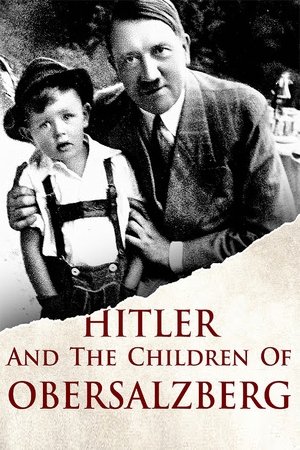
Hitler and the Children of Obersalzberg(2017)
Status: Released
Date: 2017-04-10
0%
0 Votes
Time: 0h 52m
Overview:
The Obersalzberg retreat was the summer residence and retreat of Adolf Hitler, Eva Braun and his closest confidants in the Nazi regime. The public are mainly familiar with fi lm footage and photographs from the alleged Nazi idyll. For the first time, eye witnesses are willing to talk about their experiences in Obersalzberg.
Languages: German.
Countries:
ProductionCompanies:
Syndicado
Movie: Hitler and the Children of Obersalzberg
Top 10 Billed Cast
Adolf Hitler
Self (archive footage)
HomePage
Overview
The Obersalzberg retreat was the summer residence and retreat of Adolf Hitler, Eva Braun and his closest confidants in the Nazi regime. The public are mainly familiar with fi lm footage and photographs from the alleged Nazi idyll. For the first time, eye witnesses are willing to talk about their experiences in Obersalzberg.
Release Date
2017-04-10
Average
0
Rating:
0.0 startsTagline
Genres
Languages:
DeutschKeywords
Similar Movies

78%
The Boy in the Striped Pyjamas(en)
2008-05-07
When his family moves from their home in Berlin to a strange new house in Poland, young Bruno befriends Shmuel, a boy who lives on the other side of the fence where everyone seems to be wearing striped pajamas. Unaware of Shmuel's fate as a Jewish prisoner or the role his own Nazi father plays in his imprisonment, Bruno embarks on a dangerous journey inside the camp's walls.

60%
Eichmann(en)
2007-09-22
Based upon the final confession of Adolf Eichmann, made before his execution in Israel, of his role in Hitler's plan for the final solution.


45%
Human Lampshade: A Holocaust Mystery(en)
2012-09-29
This story follows one man's quest to uncover the origins and reveal the mysteries of a possible Holocaust artifact some historians now say never existed: lampshades made of human skin. When the flood waters of Hurricane Katrina receded, they left behind a wrecked New Orleans and a strange looking lamp that an illicit dealer claimed was 'made from the skin of Jews.'

0%
Hitler, la folie d'un homme(fr)
2005-05-03

66%
The Grey Zone(en)
2001-09-13
The story of Auschwitz's twelfth Sonderkommando — one of the thirteen consecutive "Special Squads" of Jewish prisoners placed by the Nazis in the excruciating moral dilemma of assisting in the extermination of fellow Jews in exchange for a few more months of life.

63%
Victory in the West(de)
1941-05-07
A Nazi propaganda film about the lead up to World War II and Germany's success on the Western Front. Utilizes newsreel footage of battles and fell into disfavour with propaganda minister Goebbels because of it's lack of emphasis on Adolf Hitler.

0%
The Weight of Steel Title(de)
2020-01-15
Who knows Berthold Beitz? Fewer and fewer people. He shaped the history of Germany like no other, be it as the leading industrial manager of Krupp or as the rescuer of numerous Jews during National Socialism.

71%
Max Manus: Man of War(no)
2008-12-18
Max Manus is a Norwegian 2008 biographic war film based on the real events of the life of resistance fighter Max Manus (1914–96), after his contribution in the Winter War against the Soviet Union. The story follows Manus through the outbreak of World War II in Norway until peacetime in 1945.


82%
Night and Fog(fr)
1956-01-29
Filmmaker Alain Resnais documents the atrocities behind the walls of Hitler's concentration camps.

80%
Judgment at Nuremberg(en)
1961-12-18
In 1947, four German judges who served on the bench during the Nazi regime face a military tribunal to answer charges of crimes against humanity. Chief Justice Haywood hears evidence and testimony not only from lead defendant Ernst Janning and his defense attorney Hans Rolfe, but also from the widow of a Nazi general, an idealistic U.S. Army captain and reluctant witness Irene Wallner.

75%
Fascism in Colour(en)
2006-01-01
After the World War I, Mussolini's perspective on life is severely altered; once a willful socialist reformer, now obsessed with the idea of power, he founds the National Fascist Party in 1921 and assumes political power in 1922, becoming the Duce, dictator of Italy. His success encourages Hitler to take power in Germany in 1933, opening the dark road to World War II. (Originally released as a two-part miniseries. Includes colorized archival footage.)

67%
Aimée & Jaguar(de)
1999-02-11
In 1943, while the Allies are bombing Berlin and the Gestapo is purging the capital of Jews, a dangerous love affair blossoms between two women – one a Jewish member of the underground, the other an exemplar of Nazi motherhood.

80%
June 1940, the Great Chaos(fr)
2010-06-14
From May 10, 1940, France is living one of the worst tragedies of it history. In a few weeks, the country folds, and then collapsed in facing the attack of the Nazi Germany. On June 1940, each day is a tragedy. For the first time, thanks to historic revelations, and to numerous never seen before images and documents and reenacted situations of the time, this film recounts the incredible stories of those men and women trapped in the torment of this great chaos.

69%
Nazis at Nuremberg: The Lost Testimony(en)
2022-12-05
Never-before-heard trial testimony reveals shocking new details about World War II and the inner workings of the Nazi war machine.

70%
The Zone of Interest(en)
2023-12-15
The commandant of Auschwitz, Rudolf Höss, and his wife Hedwig, strive to build a dream life for their family in a house and garden next to the camp.

22%
Ordered to Love(de)
1961-01-13
Revealing story about the mysterious Nazi organization "Lebensborn," which was intended to serve the SS in pursuing population policy and racial hygiene goals by systematically producing "hereditarily valuable" children. The film depicts an anti-Hitler Knight's Cross recipient with false papers who becomes a witness and victim of relevant events in a Lebensborn home, where 30 enthusiastic BDM girls and a number of SS hooligans and frontline soldiers have just moved in to "give the Führer a child."

68%
The Day Hitler Died(en)
2015-12-18
The story of Hitler’s final hours told by people who were there. This special features exclusive forgotten interviews, believed lost for 65 years, with members of Hitler’s inner circle who were trapped with him in his bunker as the Russians fought to take Berlin. These unique interviews from figures such as the leader of the Hitler Youth Artur Axmann and Hitler’s secretary Traudl Junge, have never before been seen outside Germany. Using rarely seen archive footage and dramatic reconstruction, this special tells the story of Adolf Hitler’s final days in his Berlin bunker.

69%
Schtonk!(de)
1992-03-12
Schtonk! is a farce of the actual events of 1983, when Germany's Stern magazine published, with great fanfare, 60 volumes of the alleged diaries of Adolf Hitler – which two weeks later turned out to be entirely fake. Fritz Knobel (based on real-life forger Konrad Kujau) supports himself by faking and selling Nazi memorabilia. When Knobel writes and sells a volume of Hitler's (nonexistent) diaries, he thinks it's just another job. When sleazy journalist Hermann Willié learns of the diaries, however, he quickly realizes their potential value... and Knobel is quickly in over his head. As the pressure builds and Knobel is forced to deliver more and more volumes of the fake diaries, he finds himself acting increasingly like the man whose life he is rewriting. The film is a romping and hilarious satire, poking fun not only at the events and characters involved in the hoax (who are only thinly disguised in the film), but at the discomfort Germany has with its difficult past.