Loading Page


The Long Walk(1971)
Status: Released
Date: 1971-05-07
0%
0 Votes
Time: 0h 30m
Overview:
Mr. Greene recollects Navajo history through interviews with ancient tribesmen and reports on contemporary conditions, with emphasis on the progress being made at Rough Rock School in contrast with a BIA boarding school in Utah. Rough Rock is the "experimental" institution set up to give the Native Americans direct control of the process by which their children can be educated to function, productively and with a sense of identification, in two totally different worlds.
Languages:
Countries:
Movie: The Long Walk
Top 1 Billed Cast
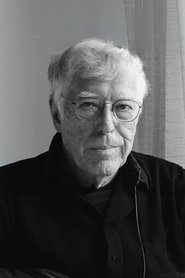
Richard O. Moore
Narrator (voice)
HomePage
Overview
Mr. Greene recollects Navajo history through interviews with ancient tribesmen and reports on contemporary conditions, with emphasis on the progress being made at Rough Rock School in contrast with a BIA boarding school in Utah. Rough Rock is the "experimental" institution set up to give the Native Americans direct control of the process by which their children can be educated to function, productively and with a sense of identification, in two totally different worlds.
Release Date
1971-05-07
Average
0
Rating:
0.0 startsTagline
Genres
Languages:
Keywords
Similar Movies

62%
Tawai: A Voice from the Forest(en)
2017-09-29
Explorer Bruce Parry visits nomadic tribes in Borneo and the Amazon in hope to better understand humanity's changing relationship with the world around us.

70%
Revealed: How to Poison a Planet(en)
2024-04-28
A searing examination of the contamination that sparked an international catastrophe and the decades’ long battle with some of the world’s largest chemical companies for justice and compensation.

60%
Yanuni(en)
2025-06-14
Indigenous chief Juma Xipaia fights to protect tribal lands despite assassination attempts. Her struggle intensifies after learning she's pregnant, while her husband, Special Forces ranger Hugo Loss, stands by her side.

0%
Red Fever(en)
2024-05-01
Red Fever is a witty and entertaining feature documentary about the profound -- yet hidden -- Indigenous influence on Western culture and identity. The film follows Cree co-director Neil Diamond as he asks, “Why do they love us so much?!” and sets out on a journey to find out why the world is so fascinated with the stereotypical imagery of Native people that is all over pop culture. Why have Indigenous cultures been revered, romanticized, and appropriated for so long, and to this day? Red Fever uncovers the surprising truths behind the imagery -- so buried in history that even most Native people don't know about them.

0%
Red Girl Rising(en)
2025-04-30
Joyce Jonathan Crone—Mohawk matriarch, retired teacher, activist, humanitarian—reaches forward into her community of Huntsville, Ontario, opening hearts and bridging gaps for Indigenous education.

0%
Hacking at Leaves(en)
2024-04-06
Hacking at Leaves documents artist and hazmat-suit aficionado Johannes Grenzfurthner as he attempts to come to terms with the United States' colonial past, Navajo tribal history, and the hacker movement. The story hones in on a small tinker space in Durango, Colorado, that made significant contributions to worldwide COVID relief efforts. But things go awry when Uncle Sam interferes with the film's production.

0%
Attiuk(fr)
1963-07-19
The people of Unamenshipu (La Romaine), an Innu community in the Côte-Nord region of Quebec, are seen but not heard in this richly detailed documentary about the rituals surrounding an Innu caribou hunt. Released in 1960, it’s one of 13 titles in Au Pays de Neufve-France, a series of poetic documentary shorts about life along the St. Lawrence River. Off-camera narration, written by Pierre Perrault, frames the Innu participants through an ethnographic lens. Co-directed by René Bonnière and Perrault, a founding figure of Quebec’s direct cinema movement.

60%
Nostalgia for the Lake(es)
2023-04-24
A vision from Limbo, where the canoeist of the eternal lake floats in his boat, between sleep and wakefulness. When he sleeps, he dreams of the everyday of a parallel time. when he wakes up, the same song haunts him again and again. his boat, “ara” (time, in guarani) travels through time like a shooting star.


57%
Broken Rainbow(en)
1985-05-05
Documentary chronicling the government relocation of 10,000 Navajo Indians in Arizona.

20%
Strength(es)
2021-08-04
In the rugged mountains of Oaxaca, young basketball players Bernabé, Tobías, and Aniceto battle systemic barriers to redefine their futures. Pushed by the demanding leadership of Sergio Zúñiga, they tackle every challenge head-on. With rising star Gustavo and the strategic guidance of trainer Sebastián, these determined athletes prove that grit, teamwork, and the power of dreams can transform not only their lives, but their entire community.


100%
Made in Ethiopia(am)
2024-06-06
When a massive Chinese factory complex attempts a high-stakes expansion in rural Ethiopia, three women in search of prosperity have their faith in industrialization tested to the limit. Filmed over four years with singular access, Made in Ethiopia lifts the curtain on China’s historic but misunderstood impact on Africa, and explores contemporary Ethiopia at a moment of profound crisis. The film was awarded the Jury Special Mention at Tribeca Festival.

0%
Cry Rock(en)
2010-10-03
In the Bella Coola Valley, a haunting legend endures through generations as a filmmaker reckons with whether the stories of her ancestors can survive being held or if they were never meant to be captured.

0%
Mamus(en)
2024-11-20
A stunning and intimate portrait of the Arhuaco indigenous community in Colombia. In 1990, in a celebrated BBC documentary, the Arhuaco made contact with the outside world to warn industrialized societies of the potentially catastrophic future facing the planet if we don’t change our ways. Now, three decades later, with the advances of audio/visual technology, we go back to the Snowy Peaks of Sierra Nevada de Santa Maria to illuminate their ethos against the backdrop of an increasingly fragile world.

0%
Shipibo Konibo: A Rite of Passage(en)
2005-10-09
In Peruvian Amazonia, for the first time in many years, a Shipibo–Konibo community prepare to perform the Aneshiati ceremony: a time of dance, song, festive clothing, and drink—including the sacred tea ayahuasca.