Loading Page


Fungus(2000)
Status: Released
Date: 2000-10-26
0%
0 Votes
Time: 0h 57m
Overview:
This film essay about mushrooms and their connections to other living things tries to use the structure of mushrooms to explain nature, science, and civilization, all the while searching for various analogies, such as the similarities between mycorrhiza and other structures.
Languages: English, Czech.
Countries:
Czech Republic
ProductionCompanies: 
DOCUfilm Praha
Movie: Fungus
Top 3 Billed Cast
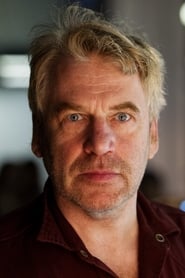
Tomáš Vorel
Self
HomePage
Overview
This film essay about mushrooms and their connections to other living things tries to use the structure of mushrooms to explain nature, science, and civilization, all the while searching for various analogies, such as the similarities between mycorrhiza and other structures.
Release Date
2000-10-26
Average
0
Rating:
0.0 startsTagline
Genres
Languages:
EnglishČeskýKeywords
Similar Movies

70%
FFG: un retrato(es)
1976-01-01
An experimental portrait of Fernando Fernán Gómez, one of the most renowned Spanish artists of all time.

0%
Donosti 2730(es)
2024-03-16
A youngster writes a letter to his grandmother about his last trip to Donosti (Spain). This city inspires him to ponder about the language of cinema, time, cities, and sharing memories with our loved ones.

71%
Arcadia(en)
2017-10-08
A provocative and poetic exploration of how the British people have seen their own land through more than a century of cinema. A hallucinated journey of immense beauty and brutality. A kaleidoscopic essay on how magic and madness have linked human beings to nature since the beginning of time.

90%
Im Reich Des Squatters(de)
2020-04-20

58%
The Last Season(en)
2014-04-25
In search of the lucrative matsutake mushroom, two former soldiers discover the means to gradually heal their wounds of war. Roger, a self-described 'fall-down drunk' and sniper in Vietnam, and Kouy, a Cambodian refugee who fought the Khmer Rouge, bonded in the bustling tent-city known as Mushroom Camp, which pops up each autumn in the Oregon woods. Their friendship became an adoptive family; according to a Cambodian custom, if you lose your family like Kouy, you must rebuilt it anew. Now, however, this new family could be lost. Roger's health is declining and trauma flashbacks rack his mind; Kouy gently aids his family before the snow falls and the hunting season ends, signaling his time to leave.

0%
Ten Lives of a Cat: A Film about Chris Marker(en)
2023-10-31
Ten years after the death of iconic French filmmaker, Chris Marker. A filmmaker, hoping to rediscover that unique sensibility against the uncertainty of the new century, returns to the places synonymous with those incomparable and unforgettable films-- From the cat cemetery of Sans Soleil, to the mausoleum of The Last Bolshevik; The caves of Level Five to the rooftops of The Case of the Grinning Cat. A biographical portrait of one of the 20th century's greatest and most misunderstood filmmakers.

65%
The Fall of Communism as Seen in Gay Pornography(en)
1998-01-06
Every image in The Fall of Communism as Seen in Gay Pornography comes from gay erotic videos produced in Eastern Europe since the introduction of capitalism. The video provides a glimpse of young men responding to the pressures of an unfamiliar world, one in which money, power and sex are now connected.

50%
Visions of Europe(en)
2004-05-01
Twenty-five films from twenty-five European countries by twenty-five European directors.

0%
Exergo(eu)
2024-05-04
Departing from peripheral details of some paintings of the Bilbao Fine Arts Museum, a female narrator unravels several stories related to the economic, social and psychological conditions of past and current artists.

0%
Unpublished Visions(gl)
2021-07-01
Four filmmakers working in the region of Galicia (in the northwest of Spain) follow and portray on the screen Galician artists working in disciplines of different nature. The result is four pieces around the creative process of these artists. Lois Patiño film their parents working on their paintings in their studio in Vigo, Jaione Camborda films dancer Janet Novás rehearsing for one of her pieces, Xisela Franco follows film director Margarita Ledo revisiting the location of her latest film Nation and Alfonso Zarauza reflects on the relationship between actress-director by putting together the work of Melania Cruz in two of their collaborations.

63%
The So-Called Caryatids(fr)
1984-01-01
Commissioned by French television, this is a short documentary on the neo-classical statues found throughout Paris, predominantly on the walls of buildings, holding up windows, roofs etc.

83%
The Kingdom: How Fungi Made Our World(en)
2018-03-01
You find fungi in Antarctica and in nuclear reactors. They live inside your lungs and your skin is covered with them. Fungi are the most under appreciated and unexplained organisms, yet they could cure you from smallpox and turn cardboard boxes into forests. They could even transform Mars into Eden. There are vastly more fungi species than plants and each and every one of them play a crucial role in life’s support systems. Join us on a journey into the mysterious world of Fungi to witness their beauty, unravel their mysteries and discover how this secret kingdom is essential to life on Earth, and may in fact hold the key to our future.

71%
The Magic of Mushrooms(en)
2014-04-24
Professor Richard Fortey delves into the fascinating and normally-hidden kingdom of fungi. From their spectacular birth, through their secretive underground life to their final explosive death, Richard reveals a remarkable world that few of us understand or even realise exists - yet all life on Earth depends on it.

0%
The Weight of Sight(no)
2024-01-23
The Weight of Sight is a playful and very personal essay where director Truls Krane Meby, through a massive archive of his own material - anything from DV-tapes to 35mm - explores the last 20 years of digital development - how it’s influenced the images we make, and our bodies. What kind of images do we get of the world now that everyone is a photographer, and what does it do with how we unfold our identities? How has the internet both captured and freed us? And will Truls even dare to show this film?


74%
F for Fake(fr)
1973-09-01
Documents the lives of infamous fakers Elmyr de Hory and Clifford Irving. De Hory, who later committed suicide to avoid more prison time, made his name by selling forged works of art by painters like Picasso and Matisse. Irving was infamous for writing a fake autobiography of Howard Hughes. Welles moves between documentary and fiction as he examines the fundamental elements of fraud and the people who commit fraud at the expense of others.


71%
Linklater: On Cinema and Time(en)
2013-12-04
If cinema is the art of time, Linklater is one of its most thoughtful and engaged directors. Unlike other filmmakers identified as auteurs, Linklater’s distinction is not found on the surface of his films, in a visual style or signature shot, but rather in their DNA, as ongoing conversations with cinema, which is to say, with time itself. A visual essay produced by Sight and Sound.

70%
Stanley Kubrick: One-Point Perspective(en)
2012-08-29
Kogonada's visual essay about the formalistice choices of master filmmaker Stanley Kubrick