Loading Page

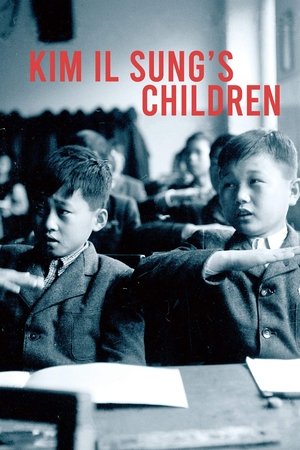
Kim Il Sung's Children(2020)
Status: Released
Date: 2020-06-25
0%
0 Votes
Time: 1h 24m
Overview:
From 1950 to 1953, one hundred thousand children were orphaned by the Korean War. With no resources to mend the wounds, the two sides, North and South, took different paths to find homes and families for the war orphans. While the children of South Korea were sent to Europe and the United States through ‘International Adoption’, the children of North Korea were distributed across Eastern Europe through a method called ‘Commissioned Education’. As a result, more than five thousand children from the North had to spend nearly a decade living in foreign lands across Eastern Europe. This story is a record of their lives, which used to be kept hidden from the rest of the world. There is a key to understanding how North Korea's closed political structure began and how the ‘Juche ideology’ was formed in this documentary movie. Understanding North Korea in the 1950s is an important way to understand North Korea at present.
Languages: Bulgarian, English, Korean, Polish, Romanian, Czech.
Countries:
South Korea
ProductionCompanies:
DocuStory Production
Movie: Kim Il Sung's Children
Top 1 Billed Cast

김덕영
Video Trailer Kim Il Sung's Children
All 1 videos

'김일성의 아이들' (KIM IL SUNG's Children) 영화 Trailer - Trailer
Similar Movies

0%
Act of Victory(ko)
2025-06-19

0%
Assignment in Korea(sv)
1951-04-23
Swedish journalist visits Korea to report on the situation during the war

0%
Homes Apart: Korea(ko)
1991-01-02
They speak the same language, share a similar culture and once belonged to a single nation. When the Korean War ended in 1953, ten million families were torn apart. By the early 90s, as the rest of the world celebrated the end of the Cold War, Koreans remain separated between North and South, fearing the threat of mutual destruction. Beginning with one man's journey to reunite with his sister in North Korea, filmmakers Takagi and Choy reveal the personal, social and political dimensions of one of the last divided nations on earth. The film was also the first US project to get permission to film in both South & North Korea.

70%
The Red Princess(fr)
2022-04-04
Who is Kim Yo-jong? In a context of maximum tensions between North Korea and the United States, Pierre Haski paints an unprecedented portrait of the little sister of Kim Jong-un, whose influence in Pyongyang is growing stronger day by day.

60%
The Fantastic(ko)
2021-10-15
In Maija Blåfield’s documentary, eight former North Koreans talk about what it was like to watch illegal films in a closed society. In addition to the 'waste videos', South Korean films were also smuggled into the country via China.

72%
The Battle Of Chosin(en)
2016-11-01
An amazingly harrowing story of the 17 day engagement of bloody combat and heroic survival in subartic temperatures. UN forces largely outnumbered and surrounded, due to a surprise attack led by 120,000 Chinese troops.

77%
Beyond Utopia(en)
2023-10-23
A courageous pastor uses his underground network to rescue and aid North Korean families as they risk their lives to embrace freedom.

55%
A Postcard from Pyongyang(de)
2019-09-26
"A Postcard from Pyongyang" is a journey into a deeply enigmatic and completely isolated country that keeps the world in suspense: North Korea. Friends Gregor Möller, Philip Kist and Anne Lewald visit in 2013 and 2017 and do what is strictly forbidden and for which they might have ended up in a forced labor camp: even though accompanied by state watchers, they secretly film their travels, accompanied by state watchdogs. We get an extraordinary insight into one of the most closed societies in the world and experience the 'beautiful new world' as the state propaganda machinery displays it.

60%
28 Heroes(en)
2013-02-07
Heroes brings to life the harrowing exploits of a Canadian platoon who fought to hold their vulnerable outpost in the face of repeated attacks during the Korean War.


73%
Twinsters(en)
2015-07-17
Adopted from South Korea, raised on different continents & connected through social media, Samantha & Anaïs believe that they are twin sisters separated at birth.

65%
North Korea: A Day in the Life(nl)
2004-01-01
If the cityscapes and patriotic anthems of this film seem a far cry from the bleak landscape of Seoul Train, that's no accident. Dutch filmmaker Pieter Fleury, with the full permission and cooperation of the North Korean government, created this propaganda film that gives us a glimpse of a day in the life of one of the world's most enigmatic societies. A Day in the Life, largely dictated by the North Korean film bureau, follows a typical North Korean family through their daily duties, largely dedicated to the pride in the North Korean nation of comrades and the glory of General Kim Jong Il. The film is meant to extol the success of modern North Korea. But does it? With straight footage and a total absence of narration, viewers may interpret Fleury's film in a slightly different manner than intended

0%
North Korea's Secret Slaves: Dollar Heroes(en)
2018-10-27
Shrouded in secrecy and notoriously cash-strapped the North Korean regime has resorted to running one of the world's largest slaving operations - exploiting the profits to fulfil their own agenda. These bonded labourers can be found in Russia, China and dozens of other countries around the world including EU member states. Featuring undercover footage and powerful testimonials, we reveal the scale and brutality of the operation and ask what, if anything, is being done to stop it.

0%
Legacy of the Battlefield(ko)
2025-05-21

72%
Crossing the Line(en)
2006-10-16
In 1962, a U.S. soldier sent to guard the peace in South Korea deserted his unit, walked across the most heavily fortified area on earth and defected to the Cold War enemy, the communist state of North Korea. He became a star of the North Korean propaganda machine, but then disappeared from the face of the earth. Now, after 45 years, the story of James Dresnok, the last American defector in North Korea, is being told for the first time. Crossing the Line follows Dresnok as he recalls his childhood, desertion, and life in the DPRK.

55%
Korea, A Hundred Years of War(fr)
2020-06-11
A contemporary history of Korea(s) from a unique point of view that embraces the inner history of both South and North Korea in a single narrative.

65%
Dictator: One Crazy Job(fr)
2013-06-12
They’ve become the human face of inhuman barbarity. Leaders like Hitler, Idi Amin Dada, Stalin, Kim Jong Il, Saddam Hussein, Nicolae Ceausescu, Bokassa, Muammar Kadhafi, Khomeini, Mussolini and Franco governed their countries completely cut off from reality. These paranoid leaders were driven to abuse their power by the pathology of power itself. Dictators are driven by a relentless, thought-out determination to impose themselves as infallible, all-knowing and all-powerful beings. But they are also men ruled by their caprices, uncontrollable impulses, and reckless fits of frenzy, which paradoxically render them as human as anyone else. The abuses they committed were clearly atrocious, yet some of them were as outlandish as the characters portrayed in the film The Dictator. They sunk to depths worthy of Kafka: so incredibly absurd, they are outrageously funny.

100%
Second Chance(en)
2013-01-01
Second Chance tells a story of Ukrainian orphaned children and the Canadian volunteers who spend their summers working along side them. The film follows first time volunteer and filmmaker, Adriana Luhovy, as she learns about the children and becomes witness to their strengths and resilience. Converging in Yaremche in the Carpathian Mountains of Ukraine, over 500 orphaned children come together from all over the country. At first quiet and fearful, they learn to trust one another and their counsellors. By countering heartbreaking statistics - 60% of orphaned girls are trafficked within the first year of leaving the orphanage; 50% of boys end up in jail; 10% commit suicide - the volunteers are dedicated to making a difference in the lives of orphaned Ukrainian children.

69%
The Lovers and the Despot(en)
2016-09-22
Hong Kong, 1978. South Korean actress Choi Eun-hee is kidnapped by North Korean operatives following orders from dictator Kim Jong-il.

0%
The Architect: A Montford Point Marine(en)
2023-09-30
In this dynamic and dramatic short film, an African American veteran takes us on an extraordinary journey through his life. From a chance visit to the Pentagon, to growing up in a vibrant integrated neighborhood, his story is one of resilience and inspiration. Fueled by the determination to seize educational opportunities, he enlists just in time to experience the racial divisions of his era before Truman desegregates the military. Thrust into the brutality of the Korean War, the weight of combat becomes an indelible part of his soul. Returning home, he embarks on a new path as an architect and discovers unexpected connections in far-off Pakistan. As his family expands, his sons reflect on the man who raised them and the legacy he instilled. This film unearths the essence of the Black experience in the early 20th century, paints a vivid portrait of the Chosin Reservoir, and unravels the intricate tapestry of race, family, and personal growth.