Loading Page

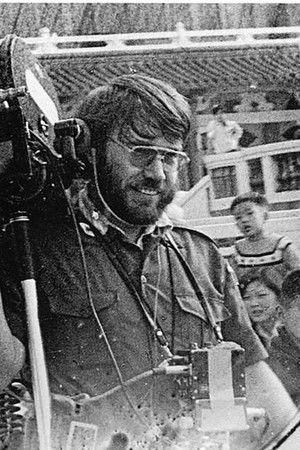
Vittne till sin samtid(2014)
Status: Released
Date: 2014-01-29
0%
0 Votes
Time: 1h 20m
Overview:
As an unwavering natural force, Maj Wechselmann produces at least one film a year, which is guaranteed to show troublesome connections between established power structures and maladjustments for people further down the hierarchy of society; this time through the Swedish Television photographer Claes-Göran Bjernér's fascinating fate of life. Bjernér, who reported from 23 wars in 83 countries, had his lungs injured for life in the poison gas disaster in Bhopal, India in 1984. The film begins with him almost dying several times, but miraculously returning to life. In interviews and archival photos, he shares his unique first-hand experiences of war, violence and corruption. A glowing agitation to never stop demanding responsibility for the world's tragedies.
Languages: Swedish.
Countries:
Sweden
ProductionCompanies:
Produktionsgruppen Wechselmann AB
Movie: Vittne till sin samtid
Top 3 Billed Cast

Herman Lindqvist
Himself
HomePage
Overview
As an unwavering natural force, Maj Wechselmann produces at least one film a year, which is guaranteed to show troublesome connections between established power structures and maladjustments for people further down the hierarchy of society; this time through the Swedish Television photographer Claes-Göran Bjernér's fascinating fate of life. Bjernér, who reported from 23 wars in 83 countries, had his lungs injured for life in the poison gas disaster in Bhopal, India in 1984. The film begins with him almost dying several times, but miraculously returning to life. In interviews and archival photos, he shares his unique first-hand experiences of war, violence and corruption. A glowing agitation to never stop demanding responsibility for the world's tragedies.
Release Date
2014-01-29
Average
0
Rating:
0.0 startsTagline
Genres
Languages:
svenskaKeywords
Similar Movies


82%
Aghet(de)
2010-04-09
2010 documentary film on the Armenian Genocide by the Young Turk government of the Ottoman Empire during World War I. It is based on eyewitness reports by European and American personnel stationed in the Near East at the time, Armenian survivors and other contemporary witnesses which are recited by modern German actors.


68%
Resurface(en)
2017-04-23
A suicidal war veteran finds like-minded souls in a surf therapy program that helps traumatized soldiers heal while riding the waves.

70%
Victims 1918(fi)
2008-01-25
A documentary on the executions that took place during and after the Finnish civil war in 1918.


67%
The Brave Class(es)
2017-06-02
Three college students start a social experiment to prove that reality changes according to the words we use to describe it. Through research, activist actions, and artistic interventions, they analyze the importance of language in the way we understand the world. The documentary includes analysis from more than 20 international experts and leaders in the fields of political communication and information.

53%
Safeguarding Military Information(en)
1942-01-16
World War II propaganda short which focuses on the dangers of inadvertent dispersal of military information.

67%
We Are Many(en)
2014-06-08
The story of the biggest demonstration in human history, which took place on 15th February 2003, against the impending war on Iraq.

60%
One Rogue Reporter(en)
2014-06-08
Rich Peppiatt delivers a satirical dissection of the newspaper trade by turning the tables on unscrupulous editors. Through a series of mischievous stunts and interviews with heavyweights of journalism, comedy & politics, Peppiatt hilariously exposes the hypocrisy at the heart of modern journalism.

67%
Accidental Anarchist(en)
2017-07-23
Carne Ross was a government highflyer. A career diplomat who believed Western Democracy could save us all. But working inside the system he came to see its failures, deceits and ulterior motives. He felt at first hand the corruption of power. After the Iraq war Carne became disillusioned, quit his job and started searching for answers.

75%
Colombia in My Arms(fi)
2022-11-30
After 52 years of armed conflict the FARC guerrillas are about to hand over their arms in exchange for political participation and social inclusion of the poor. Ernesto is one of them. The much celebrated Colombian peace agreement throws Ernesto and the polarised society around him into chaos in which everyone is afraid of the future and their own survival.

82%
i -Documentary of the Journalist-(ja)
2019-11-15
In Japan, there is an informal agreement between mainstream media and the government that is hardly ever questioned: Journalists are not too persistent in their criticism, in turn representatives of the government grant direct access to select information through press conferences. Isoko Mochizuki, reporter for the Tokyo Shimbun newspaper, has established herself as a spoilsport in this system.

60%
The Pity of War(en)
2014-02-28
Professor Niall Ferguson argues that Britain's decision to enter the First World War was a catastrophic error that unleashed an era of totalitarianism and genocide.


0%
The 600: The Soldier’s Story(en)
2019-08-24
The story of 600 men who protected and rescued civilians during the Rwandan genocide before helping to liberate their country in 1994.


81%
The Unconquered(pl)
2017-09-15
The Institute of National Remembrance, Fish Ladder and Juice present “The Unconquered” – an animated film that shows the fight of Poles for freedom, from the first day of World War II to the fall of communism in 1989.

0%
Stitching Palestine(ar)
2017-03-28
Twelve Palestinian women sit before us and talk of their life before the Diaspora, of their memories, of their lives and of their identity. Their narratives are connected by the enduring thread of the ancient art of embroidery. Twelve resilient, determined and articulate women from disparate walks of life: lawyers, artists, housewives, activists, architects, and politicians stitch together the story of their homeland, of their dispossession, and of their unwavering determination that justice will prevail. Through their stories, the individual weaves into the collective, yet remaining distinctly personal. Twelve women, twelve life-spans, and stories from Palestine; a land whose position was fixed on the map of the world, but is now embroidered on its face.

0%
Y1: Silence of the Deep(el)
2020-05-19
14 September 1943: The legendary submarine Y1 “Katsonis” was sunk north of the island of Skiathos by the German submarine chaser UJ 2101. Through the book of XO Elias Tsoukalas who escaped capture and had to swim for nine hours to reach shore, secret documents, and crew members’ diaries, the documentary unfolds the human stories woven around the submarine. Seventy-five years later, with the support of the Hellenic Navy, we search for the submarine sunk at 253 metres depth and film the wreck for the very first time.