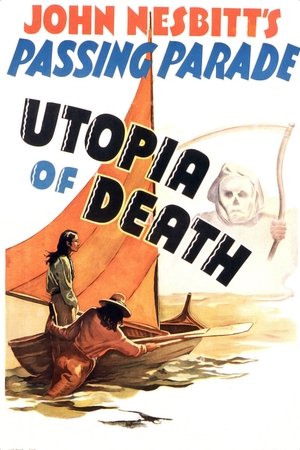
Utopia of Death(1940)
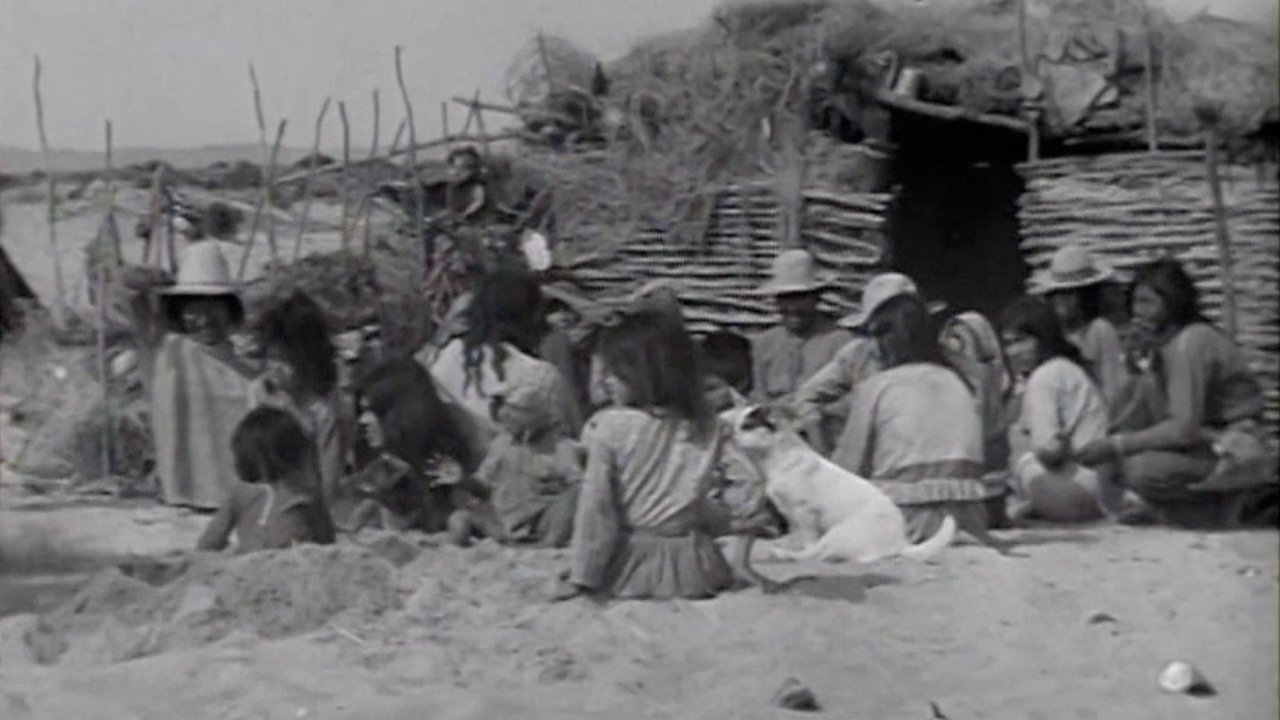
This short film focuses on the mysterious and legendary Seri Indians who live in a utopian colony off the west coast of Mexico.

Movie: Utopia of Death
Top 2 Billed Cast

Narrator (voice)
Self (uncredited)
HomePage
Overview
This short film focuses on the mysterious and legendary Seri Indians who live in a utopian colony off the west coast of Mexico.
Release Date
1940-10-12
Average
0
Rating:
0.0 startsTagline
Genres
Languages:
EnglishKeywords
Similar Movies

Madero of Mexico(en)
This Passing Parade series short chronicles the political life of Francisco Madero, who tried to bring democracy and land reform to Mexico.

Strange Testament(en)
This MGM Passing Parade series short tells the story of Julian Poydras, whose encounter with a girl at Mardi Gras had a profound effect on his later life.

The Lost City of Z(en)
A true-life drama in the 1920s, centering on British explorer Col. Percy Fawcett, who discovered evidence of a previously unknown, advanced civilization in the Amazon and disappeared whilst searching for it.

América(en)
This sparkling, irreverent, and deeply emotional piece of creative nonfiction announces the arrival of a standout filmmaking partnership. When their father is hauled away, a colorful trio of brothers — a sibling team to rival Moe, Larry, and Curly — step up to take care of América, their grandmother, in Colima, Mexico. Rodrigo, Diego, and Bruno are stilt-walkers and acrobats and Elvis impersonators and unicycle riders — when not running the family's agriculture warehouse. With a loose, offhanded charm, Stoll and Whiteside capture the family’s natural performative streak in a way that makes even the most explosive, dramatic moments feel organic. The endearing, genuine scenes between Diego and his grandmother celebrate the possibility of multigenerational connection.


Matria(es)
My grandfather fought alongside Pancho Villa, became Master Mason, was an elected official who represented Oaxaca three times, and president of the national Association of Cattle Hands. In 1942, he formed the Legion of Mexican Fighters, a group of 100,000 cattle hands training to repel a possible Nazi invasion in Mexico. His story of success, however, held a secret that affected my family, and that I discovered while making this documentary.

Forgotten Treasure(en)
This John Nesbitt's Passing Parade series short highlights the film preservation efforts of the Museum of Modern Art in New York. Several scenes from early newsreels are shown.

Cook & Peary: The Race to the Pole(en)
Cook and Peary: The Race to the Pole is an unabashedly biased recreation of the controversy concerning the "conquering" of the North Pole. Robert E. Peary (Rod Steiger), a US Navy commander and shameless self-promoter, sets out through Arctic wastes in 1909 to discover the Pole, an expedition that many others have attempted but failed to complete. His principal rival is Dr. Frederick A. Cook (Richard Chamberlain), who insists that he'd already reached the Pole in 1908. Though the experts (and the US Congress) conclude that Perry was first, public opinion is firmly in Cook's corner--as is this TV movie.

Memory(es)
Documentary short about Mexico's femicide crisis.

The Film That Was Lost(en)
In this John Nesbitt's Passing Parade short, a look is taken at the problems of film preservation efforts in the 1930s and early 1940s.

Patrimonio(es)
As unrestricted development threatens water sources in Baja California Sur, Mexico, local peoples are beginning to push back against global business interests.


Cartel Land(en)
In the Mexican state of Michoacán, Dr. Jose Mireles, a small-town physician known as "El Doctor," shepherds a citizen uprising against the Knights Templar, the violent drug cartel that has wreaked havoc on the region for years. Meanwhile, in Arizona's Altar Valley—a narrow, 52-mile-long desert corridor known as Cocaine Alley—Tim "Nailer" Foley, an American veteran, heads a small paramilitary group called Arizona Border Recon, whose goal is to halt Mexico’s drug wars from seeping across our border.

People on Paper(en)
Americans are preoccupied with the news, but need an escape from many of the events reported in the news. These escapes in the past have included dime store novels. The most accessible of these escapes is what are known as the funny papers, the set of serialized comic strips that are included within many newspapers. They appeal to all socio-economic classes, and all ages. Some of the earliest known from the late 19th century include the Yellow Kid, Little Nemo, Happy Hooligan, the Katzenjammer Kids, Mutt & Jeff, and Bringing Up Father. Many cartoonists are seen in action. Some originated their characters, while others have taken over following the passing of the originator. The joy of many comic strips are the absurd and the fantastical, which are limited only by the imagination of the cartoonist. Others are grounded in reality, which add to their poignancy within the public mindset.

The Great American Mug(en)
This John Nesbitt's Passing Parade short takes a look at the typical American barbershop throughout the years.

The Story That Couldn't Be Printed(en)
This John Nesbitt's Passing Parade short tells the story of John Peter Zenger, who in Colonial New York was tried for sedition based on what he printed in his newspaper.

Arkhé(es)
“Archeology” and “Archive” share the same roots. Both words come from “Arkhé”, the Greek word for “origin”. In the ruins of buildings, lost forever by earthquakes, as in the depth of the archives, we dig. What happened the morning of the big earthquake? The morning of September 19th 1985 is fading away in our memories. These recordings have never been seen. Unedited images of the catastrophe dug out by the archaeological adventure of an archivist that suffered with them. He dug and suffered until he could no longer see.

Magic on a Stick(en)
This MGM Passing Parade series short recounts how English chemist John Walker invented the wooden friction match during the 1820s.

Angel of Mercy(en)
This MGM Passing Parade series short tells the story of Clara Barton, the founder of the Red Cross.

Maximilian of Mexico: The Dream of Ruling(de)
The life and struggles of Ferdinand Maximilian Joseph Maria of Habsburg-Lorraine (1832-1867), emperor of the Second Mexican Empire as Maximilian I of Mexico from 1864 to 1867 (under the wing of Emperor Napoleon III and the French Empire), his tragic confrontation with Mexican leader Benito Juárez, the defeat of the will and the end of a dream.