Loading Page

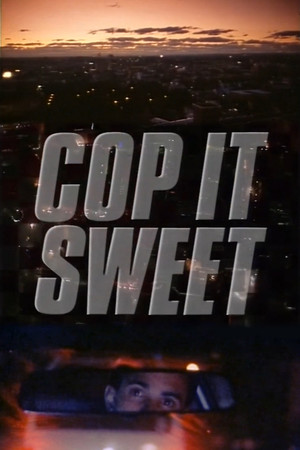
Cop It Sweet(1992)
Status: Released
Date: 1992-03-04
0%
0 Votes
Time: 1h 5m
Overview:
In the winter of 1991 an ABC film crew spent six weeks following Sydney's Redfern police. The inner city patrol of Redfern is predominantly working class with a large aboriginal and migrant population. The police in this film are general duties officers mostly on mobile patrols. At the time of filming 78% of police at Redfern were under the age of 25.
Languages: English.
Countries:
ProductionCompanies: 
Movie: Cop It Sweet
Top 7 Billed Cast
Video Trailer Cop It Sweet
All 1 videos

NSW police chase speeding vehicle - Clip
Similar Movies

0%
Show Me Democracy(en)
2016-09-14
Amidst the storm of Ferguson, 7 St. Louis college students evolve into advocates and activists as they demand change through policy and protest

0%
The Musicians' Green Book: An Enduring Legacy(en)
2022-11-26
Stories and music of Black artists who relied on an underground travel guide to navigate the injustices of racial segregation while on the road. The Negro Travelers’ Green Book was a directory of lodgings, restaurants, and entertainment venues where African Americans were welcomed. Features performances and interviews with vocalists, musicians, activists, historians, and others.

70%
Nin E Tepueian: My Cry(fr)
2020-01-24
NIN E TEPUEIAN - MY CRY is a documentary tracks the journey of Innu poet, actress and activist, Natasha Kanapé Fontaine, at a pivotal time in her career as a committed artist. Santiago Bertolino's camera follows a young Innu poet over the course of a year. A voice rises, inspiration builds; another star finds its place amongst the constellation of contemporary Indigenous literature. A voice of prominent magnitude illuminates the road towards healing and renewal: Natasha Kanapé Fontaine.


40%
Jailhouse Socrates(fi)
2017-09-01
A Finnish Prostitute and four Gangsters expose how the Drug Squad Police Chief commits crimes, rather than solves them. Is this corruption of an individual or a system?

0%
The Mosque(en)
2020-01-27
The story of the Quebec Mosque Shooting—the first ever mass shooting in a mosque in the West—is known around the world, but the story of the community that survived the attack is all but unknown. The Mosque: A Community's Struggle is an intimate portrait of the resilient Muslim community of Ste-Foy, Québec, as they struggle to survive and shift the narrative of what it means to be a Muslim, one year after the devastating attack that took the lives of six of their members. As the world moves on, this small mosque and its community fights Islamophobia, harassment and hate speech. How will the community heal and how will they stop the rhetoric that threatens to precipitate further violence?

0%
After the Apology(en)
2017-10-09
Suellyn thought the Department of Community Services (DOCS) would only remove children in extreme cases, until her own grandchildren were taken in the middle of the night. Hazel decided to take on the DOCS system after her fourth grandchild was taken into state care. Jen Swan expected to continue to care for her grandchildren but DOCS deemed her unsuitable, a shock not just to her but to her sister, Deb, who was, at the time, a DOCS worker. The rate of Indigenous child removal has actually increased since Prime Minister Kevin Rudd delivered the apology to the ‘stolen generations’ in 2008. These four grandmothers find each other and start a national movement to place extended families as a key solution to the rising number of Aboriginal children in out-of-home care. They are not only taking on the system; they are changing it…

0%
Namatjira Project(en)
2017-09-05
From the remote Australian desert to the opulence of Buckingham Palace - Namatjira Project is the iconic story of the Namatjira family, tracing their quest for justice.


70%
Joe Louis: America's Hero Betrayed(en)
2008-02-23
An American story. Traces the career of Joe Louis (1914-1981) within the context of American racial consciousness: his difficulty getting big fights early in his career, the pride of African-Americans in his prowess, the shift of White sentiment toward Louis as Hitler came to power, Louis's patriotism during World War II, and the hounding of Louis by the IRS for the following 15 years. In his last years, he's a casino greeter, a drug user, and the occasional object of scorn for young Turks like Muhammad Ali. Appreciative comment comes from boxing scholars, Louis's son Joe Jr., friends, and icons like Maya Angelou, Dick Gregory, and Bill Cosby.

76%
Surviving Edged Weapons(en)
1988-01-01
In an intense action-filled 85 minutes, you will learn to defend yourself against the mounting threat of “knife culture” offenders.

0%
Too Black to Be French?(fr)
2015-07-03
Approximately, because so-called "ethnic" statistics are prohibited, there are an estimated 3.3 million black French citizens. Distant descendants of slaves from the Caribbean or "indigenous" peoples from the French colonial empire in Africa, they constitute a minority that is often discriminated against. Isabelle Boni-Claverie, a mixed-race woman raised in the affluent neighborhoods of Paris, daughter of an Ivorian politician and granddaughter of Alphonse Boni, a Black man who became a magistrate of the French Republic in the 1930s, examines what is blocking the social advancement of Black French people and the full recognition of their citizenship.

78%
The Rape of Recy Taylor(en)
2019-05-30
Recy Taylor, a 24-year-old black mother and sharecropper, was gang raped by six white boys in 1944 Alabama. Common in Jim Crow South, few women spoke up in fear for their lives. Not Recy Taylor, who bravely identified her rapists. The NAACP sent its chief rape investigator Rosa Parks, who rallied support and triggered an unprecedented outcry for justice. The film exposes a legacy of physical abuse of black women and reveals Rosa Parks’ intimate role in Recy Taylor’s story.

48%
The Problem with Apu(en)
2017-11-18
In the history of “The Simpsons,” few characters outside the title family have had as much cultural impact as Apu Nahasapeemapetilon, the Springfield convenience store owner. Comedian Hari Kondabolu is out to show why that might be a problem.

76%
Yellow Fever(en)
2012-09-01
What does beauty look like? In this award-winning short, Kenyan filmmaker Ng’endo Mukii combines animation, performance, and experimental techniques to create a visually arresting and psychologically penetrating exploration of the insidious impact of Western beauty standards and media-created ideals on African women’s perceptions of themselves. From hair-straightening to skin-lightening, YELLOW FEVER unpacks the cultural and historical forces that have long made Black women uncomfortable, literally, in their own skin.

60%
FC Roma(cs)
2016-09-16
A team of Romany football players try to overcome prejudice in this Czech documentary.

0%
K9 Guardians(en)
2015-06-15
Paul Ludwig, a K9 police officer and handler himself, was nearly killed when a K9 failed on the street. Sam Edmonds, a decoy//trainer hybrid has been taking bites on the arms and legs while learning from the best of the best over the last 10 years. They joined together to start training and producing some of the toughest K9's in the world while shedding light on an unsettling situation: most working dogs are extremely ill-prepared and under-trained for the reality of our world today. A situation that has led to canine and officer deaths in the past. They talk to several other K9 trainers and officers, hear their stories, meet their partners, and follow their dogs through the training process and back into the streets to protect our communities.

40%
Triumph: The Untold Story of Perry Wallace(en)
2018-03-23
Whenever the phrase "breaking the color line" is used, there's a temptation to invoke Jackie Robinson's story. However, Perry Wallace, the first black college athlete in the Southeast Conference, was a mere teenager who stood all alone at center court in such hotbeds of rabid racism as Starkville, Mississippi and Tuscaloosa, Alabama.

0%
Black Power Salute(en)
2008-07-09
A film about one of the most iconic images of the 20th century, the moment when the radical spirit of the 1960s upstaged the greatest sporting event in the world. Two men made a courageous gesture that reverberated around the world, and changed their lives forever. This film is about Tommie Smith and John Carlos' protest at the 1968 Olympics.

84%
Henry Ford(en)
2013-01-29
HENRY FORD paints a fascinating portrait of a farm boy who rose from obscurity to become the most influential American innovator of the 20th century.