Loading Page

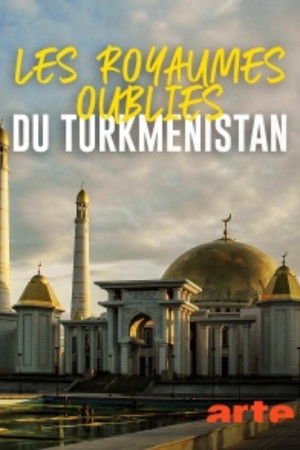
Turkmenistan's Cultural Treasures(2020)
Status: Released
Date: 2020-10-03
0%
0 Votes
Time: 0h 52m
Overview:
To outsiders, Turkmenistan is one of the world's least known countries. For the first time in ten years, a film crew has been free to visit spectacular excavation sites and follow international researchers into areas that have long been off-limits. Once considered the poorest part of the Soviet Union, oil and natural gas have brought new wealth to Turkmenistan today. A little known fact in the West is that 4,000 years ago, the country was home to one of the ancient world's centers of power. Although it flourished around the same time as the advanced civilizations of Mesopotamia and Egypt, the Margiana empire was later largely forgotten. Since the fall of the Soviet Union, the country has been slowly opening up to international researchers, and its astounding cultural heritage is coming to light.
Languages: German.
Countries:
Germany
ProductionCompanies: 
doc station
Movie: Turkmenistan's Cultural Treasures
HomePage
Overview
To outsiders, Turkmenistan is one of the world's least known countries. For the first time in ten years, a film crew has been free to visit spectacular excavation sites and follow international researchers into areas that have long been off-limits. Once considered the poorest part of the Soviet Union, oil and natural gas have brought new wealth to Turkmenistan today. A little known fact in the West is that 4,000 years ago, the country was home to one of the ancient world's centers of power. Although it flourished around the same time as the advanced civilizations of Mesopotamia and Egypt, the Margiana empire was later largely forgotten. Since the fall of the Soviet Union, the country has been slowly opening up to international researchers, and its astounding cultural heritage is coming to light.
Release Date
2020-10-03
Average
0
Rating:
0.0 startsTagline
Genres
Languages:
DeutschKeywords
Similar Movies

76%
Caligula with Mary Beard(en)
2013-07-29
What is true and what is false in the hideous stories spread about the controversial figure of the Roman emperor Gaius Julius Caesar Augustus Germanicus (12-41), nicknamed Caligula? Professor Mary Beard explains what is accurate and what is mythical in the historical accounts that portray him as an unbalanced despot. Was he a sadistic tyrant, as Roman historians have told, or perhaps the truth about him was manipulated because of political interests?

75%
Secrets of Egypt's Lost Queen(en)
2007-01-01
Move over, King Tut: There's a new pharaoh on the scene. A team of top archaeologists and forensics experts revisits the story of Hatshepsut, the woman who snatched the throne dressed as a man and declared herself ruler. Despite her long and prosperous reign, her record was all but eradicated from Egyptian history in a mystery that has long puzzled scholars. But with the latest research effort captured in this program, history is about to change.

85%
Peru - Sacrifices in the Kingdom of Chimor(fr)
2022-09-01
In northern Peru, the unprecedented archaeological discovery of the largest known mass child sacrifice in the world opens the doors to the kingdom of Chimor. This international archaeological investigation carried out like a criminal investigation reveals the mysteries of the last civilization of the Andes before the arrival of the Incas.

50%
Nero's Sunken City(de)
2017-04-16
Beneath the turquoise waves of the Bay of Naples lies an extraordinary underwater archeology site, the ancient Roman city of Baiae. From the first century to the third century AD, Baiae was the exclusive playground for the rich and powerful among Rome’s elite. What made Baiae such a special place? What really went on there? And why did it disappear?

48%
The Egtved Girl(de)
2018-02-24
In 1921, in the Danish town of Egtved, on the Jutland peninsula, was discovered one of the most important Bronze Age burial sites: the tomb of a girl who lived around 1370 BCE. Who was that girl and what was her daily life like?

67%
Mysteries of the Terracotta Warriors(en)
2024-06-11
Thousands of terracotta warriors guarded the first Chinese emperor's tomb. This is their story, told through archeological evidence and reenactments.

65%
Aku-Aku(en)
1960-01-22
Documentary following the 1955–1956 Norwegian Archaeological Expedition's investigations of Polynesian history and culture at Easter Island.

60%
Immortal Pompeii(de)
2020-06-12
In 79 A.D., Mount Vesuvius erupted, killing 2,000 people. This documentary asks what happened next as experts explore Ancient Rome's crisis management.

0%
The Emperor's Lost Harbour(en)
2011-11-17
In the heart of a metropolitan city of 15 million people and among the construction of a new billion-dollar transportation network, an archaeological sensation has been discovered: the ancient harbour of Theodosious, lost from the history books for over 1000 years.

100%
Séfar, A City of Mysteries(fr)
2021-11-20
Séfar (in Arabic: سيفار) is an ancient city in the heart of the Tassili n'Ajjer mountain range in Algeria, more than 2,400 km south of Algiers and very close to the Libyan border. Séfar is the largest troglodyte city in the world, with several thousand fossilized houses. Very few travelers go there given its geographical remoteness and especially because of the difficulties of access to the site. The site is full of several paintings, some of which date back more than 12,000 years, mostly depicting animals and scenes of hunting or daily life which testify that this hostile place has not always been an inhabited desert. Local superstition suggests that the site is inhabited by djins, no doubt in connection with the strange paintings found on the site.

70%
Into the Inferno(en)
2016-09-07
With stunning views of eruptions and lava flows, Werner Herzog captures the raw power of volcanoes and their ties to indigenous spiritual practices.

45%
Ancient Armageddon(en)
2023-06-05
This explores the mysterious and catastrophic collapse of ancient civilizations during the late Bronze Age, from the Hittites to the Mycenaeans and the Egyptians, revealing the tumultuous events that brought an end to a thriving era of human history, and warns we may be facing similar threats today.


74%
Dinosaurs: The Final Day with David Attenborough(en)
2022-04-15
David Attenborough brings to life, in unprecedented detail, the last days of the dinosaurs. Palaeontologist Robert DePalma has made an incredible discovery in a prehistoric graveyard: fossilised creatures, astonishingly well preserved, that could help change our understanding of the last days of the dinosaurs. Evidence from his site records the day when an asteroid bigger than Mount Everest devastated our planet and caused the extinction of the dinosaurs. Based on brand new evidence, witness the catastrophic events of that day play out minute by minute.

73%
Secrets of the Saqqara Tomb(en)
2020-10-28
This documentary follows a team of local archaeologists excavating never before explored passageways, shafts, and tombs, piecing together the secrets of Egypt’s most significant find in almost 50 years in Saqqara.


75%
Cleopatra's Final Secret(en)
2025-09-25
After 20 years seeking Cleopatra's tomb, archaeologist K. Martinez's search shifts to an underwater Mediterranean site. She's joined by Titanic finder Bob Ballard, Egyptian Navy and dive teams to explore the location.

79%
Homo sapiens(fr)
2005-01-11
Two hundred and fifty thousand years ago, the first direct representative of our species appeared on earth: Homo Sapiens... From 400,000 to 20,000 BC, we follow the destiny of Homo Erectus, Neanderthal and Sapiens. We will thus discover the appearance of language, art, cults, agriculture, and breeding.

74%
Nostalgia for the Light(es)
2010-10-27
In Chile's Atacama Desert, astronomers peer deep into the cosmos in search for answers concerning the origins of life. Nearby, a group of women sift through the sand searching for body parts of loved ones, dumped unceremoniously by Pinochet's regime.