Loading Page

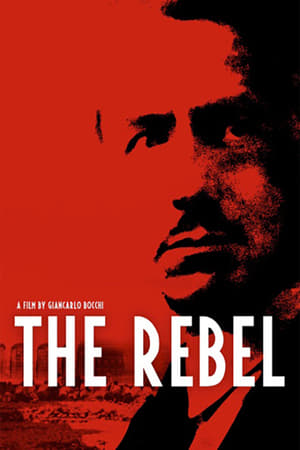
The Rebel(2011)
Status: Released
Date: 2011-06-02
0%
0 Votes
Time: 1h 12m
Guido Picelli, the forgotten hero
Overview:
The adventures of Guido Picelli, a man who was a leading light in the history of twentieth-century Italy and Europe. Guido Picelli fought untiringly for the affirmation of social justice and opposed every form of totalitarianism.
Languages: Italian.
Countries:
Russia,
Italy,
Spain
Budget: $5,600.00
Movie: The Rebel
Top 2 Billed Cast
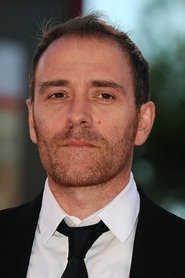
Valerio Mastandrea
Narratore
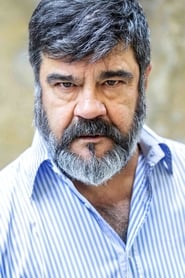
Francesco Pannofino
Narratore
HomePage
Overview
The adventures of Guido Picelli, a man who was a leading light in the history of twentieth-century Italy and Europe. Guido Picelli fought untiringly for the affirmation of social justice and opposed every form of totalitarianism.
Release Date
2011-06-02
Average
0
Rating:
0.0 startsTagline
Guido Picelli, the forgotten hero
Genres
Languages:
ItalianoKeywords
Similar Movies


50%
Heroic Spain(es)
1938-08-02
Documentary produced by Falange and edited in Berlin, in response to the international success of the Republican production "Spain 1936" (Le Chanois, 1937).

70%
The Antifascists(sv)
2017-03-09
A low-intensity war is being fought on the streets of Europe and the aim is on fascism. This critically acclaimed documentary takes us behind the masks of the militants called antifascists. In 2013 a group of armed nazis attacks a peaceful demonstration in Stockholm where several people are injured. In Greece the neo-nazi party Golden Dawn becomes the third largest in the election and in Malmö the activist Showan Shattak and his friends are attacked by a group of nazis with knives and he ends up in a coma. In this portrait of the antifascists in Greece and Sweden we get to meet key figures that explain their view on their radical politics but also to question the level their own violence and militancy.

93%
L'Exode(fr)
2020-06-07

0%
Picassos Friseur(de)
2001-10-28
In 1948 Pablo Picasso met the hairdresser Eugenio Arias. Both were linked by the fate of emigration. If Picasso initially only had his hair cut by Arias, a deep friendship soon developed.


80%
The Silence of Others(es)
2019-01-25
The story of the tortuous struggle against the silence of the victims of the dictatorship imposed by General Franco after the victory of the rebel side in the Spanish Civil War (1936-1975). In a democratic country, but still ideologically divided, the survivors seek justice as they organize the so-called “Argentinian lawsuit” and denounce the legally sanctioned pact of oblivion that intends to hide the crimes they were subjects of.

40%
Caleta Palace(es)
2023-11-24
Eight foreign characters recall their exploits and fears in Malaga, a paradise city that starts a revolution on July 18th 1936, as the military coup is stopped by popular rebellion, until February 9th 1937, when Mussolini troops take Malaga and put it under the rule of Franco. Seven months that shape the stark tale of a besieged city, the first capital to be conquered in Spanish Civil War and a prelude of WW2.

67%
Words for an End of the World(es)
2020-11-13
Spain, April 14, 1931. The Second Republic is born. From the beginning, the writer Miguel de Unamuno is considered one of the ethical pillars of the new regime. Five years later, on December 31, 1936, a few months after the outbreak of the Spanish Civil War (1936-39), Unamuno dies at his home in Salamanca, capital of the rebel side, led by General Francisco Franco, and main center of dissemination of its propaganda apparatus.

60%
The Aguiluchos of the FAI in the Land of Aragón Report 1: Stamps of the antifascist revolution(es)
1936-10-01
This documentary is the first of a series that dedicated 4 issues to the activity of the Durruti column in Aragon.


85%
Crossfire(en)
2020-12-30
Crossfire is Lauren Southern's third documentary film project focusing on the issues surrounding policing, brutality, race, law and order. A heated debate today which has led to a massive political divide between those supporting officers, those defending reform and even many rioting violently in the streets.

0%
Occupation, the 27th Picture(hr)
2013-06-29
We encounter the controversial Croatian film director Lordan Zafranovic in voluntary exile in Prague. The film follows his rise from a talented outsider to the celebrated Yugoslav director of the acclaimed war film, 'An Occupation in 26 Pictures'. His life story is an unconventional depiction of a rise and fall that reveals compromises made in order to survive artistically during communism, as well as the missed opportunities and miscalculations that led to his inability to adapt in later years. Is the charismatic Zafranovic a national traitor or a victim of historical circumstances in which the only thing he wanted to do, in his own words, was to be himself and make films?

0%
Libertad negra(es)
2016-04-23

60%
Bandite(it)
2009-01-01

70%
We Weren't Given Anything for Free(it)
2014-01-20
Annita Malavasi was just 22 when the Germans occupied Italy, their former allies, in 1943. As a partisan in the Italian resistance named “Laila”, she moved throughout the Apennines with and between fighting units, delivering information, transporting weapons, and taking part in battles. She spent over a year in the Apennines, fighting against the German occupation. At the same time, she had to assert herself against the men of the mountain villages. By the end of the war, Laila had risen among the ranks to become one of the few female commanders in the Italian resistance. This film chronicles the story of a lifelong struggle for emancipation that began with the battle for Italy’s liberation from fascism. Laila and her two comrades, Gina “Sonia” Moncigoli and Pierina “Iva” Bonilauri talk about their time in the Resistenza and what it meant to them and many other women.


0%
Mum's Idea(es)
2010-10-20
Three elders return to their homeland seventy years after being forced to leave it because of the Spanish Civil War.

73%
El cine libertario: cuando las películas hacen historia(es)
2010-01-27
Upon the outbreak of the Spanish Civil War in July 1936, the anarchist union CNT socialized the film industry in Spain, so in Madrid and Barcelona film workers took over the production assets and, between 1936 and 1938, numerous films on a wide variety of topics were released, composing a varied mosaic that gives rise to one of the most unusual and original moments of Spanish cinematography.

90%
Sueños colectivos(es)
2011-05-04