Loading Page

Charlie Marx and the Chocolate Factory(2009)
Status: Released
Date: 2009-01-01
0%
0 Votes
Time: 0h 27m
Overview:
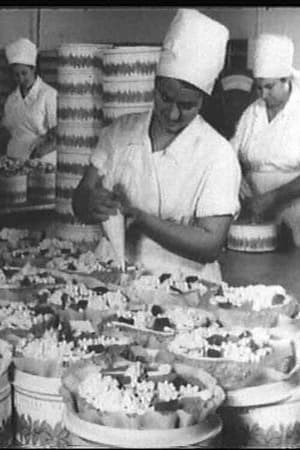
Charlie Marx and the Chocolate Factory started as an investigation of the link between politics and chocolate, at the Karl Marx Confectionary Factory in Kiev, Ukraine. Since access to the factory was denied, the project had to be re-considered, re-invented or re-enacted. Mostly made of archival footage and re-enacted performances based on the company's website, the film merges what was left of the initial idea with what has been collected and realized instead. It borrows from the genres of video art, 'Man on the street' interview, direct address, corporate film, essay, and music video, without legitimately belonging to any of them. The film unravels as a reflection on its own failure, and yet keeps on investigating what has always been at stake: the shift from public to private property (and from analog to digital technology), dialectics of permanence and change, language as a mirror of ideology, and post-Soviet oligarchy culture.
Languages:
Countries:
Ukraine
ProductionCompanies:
Foundation Center for Contemporary Art, Kiev
Austrian Cultural Forum, Kiev
Merv Brazinski Productions
Movie: Charlie Marx and the Chocolate Factory
HomePage
Overview
Charlie Marx and the Chocolate Factory started as an investigation of the link between politics and chocolate, at the Karl Marx Confectionary Factory in Kiev, Ukraine. Since access to the factory was denied, the project had to be re-considered, re-invented or re-enacted. Mostly made of archival footage and re-enacted performances based on the company's website, the film merges what was left of the initial idea with what has been collected and realized instead. It borrows from the genres of video art, 'Man on the street' interview, direct address, corporate film, essay, and music video, without legitimately belonging to any of them. The film unravels as a reflection on its own failure, and yet keeps on investigating what has always been at stake: the shift from public to private property (and from analog to digital technology), dialectics of permanence and change, language as a mirror of ideology, and post-Soviet oligarchy culture.
Release Date
2009-01-01
Average
0
Rating:
0.0 startsTagline
Genres
Languages:
Keywords
Similar Movies

71%
My Favorite War(lv)
2020-09-25
Ilze Burkovska, a little girl who is obsessed with stories of World War II and will be a filmmaker in a distant future, lives in Latvia under the totalitarian boot of the Soviets and the ominous shadow of the many menaces and horrors of the Cold War.

0%
Chocolate Perfection(en)
2015-12-01
Michel Roux Jr sets out to discover the secret of chocolate, not just why we're addicted to the sublime and complex foodstuff but it’s rich and varied history. From a sacred drink of Aztec Emperors to the aphrodisiac of choice at the court of Louis XIV in Versailles.

0%
Nikita Kino(fr)
2003-02-01
The film is a travelogue of sorts. Ostrovsky’s personal family footage meets the archives of Soviet propaganda footage. The result is a kind of Khruschev-era mix with a collage of Soviet music and a voice-over of my reminiscences of the Cold War era.

54%
Disco and Atomic War(et)
2009-04-10
A different history of the Cold War: how Estonians under Soviet tyranny began to feel the breeze of freedom when a group of anonymous dreamers successfully used improbable methods to capture the Finnish television signal, a window into Western popular culture, brave but harmless warriors who helped change the fate of an entire nation.

71%
Chuck Norris vs Communism(ro)
2015-11-12
In late eighties, in Ceausescu's Romania, a black market VHS bootlegger and a courageous female translator brought the magic of Western films to the Romanian people and sowed the seeds of a revolution.

71%
Zeitgeist: Moving Forward(en)
2011-01-15
A presentation of a case for a needed transition out of the current socioeconomic monetary paradigm which governs the entire world society. This subject matter will transcend the issues of cultural relativism and traditional ideology and move to relate the core, empirical 'life ground' attributes of human and social survival, extrapolating those immutable natural laws into a new sustainable social paradigm called a 'Resource-Based Economy'.


100%
Red Autumn(de)
2024-06-15
A Experimental Docu-Drama about the Red Army Faction's formation, and events leading up to their imprisonment and death, from 1970 to 1977.

0%
Torn from the Flag(en)
2007-11-10
A sociopolitical historical documentary-thriller about the international decline of communism and the 1956 Hungarian Revolution.

30%
Russia 1917: Countdown to Revolution(en)
2017-10-10
Russia, 1917. After the abdication of Czar Nicholas II Romanov, the struggle for power confronts allies, enemies, factions and ideas; a ruthless battle between democracy and authoritarianism that will end with the takeover of the government by Vladimir Lenin and the Bolsheviks.

90%
Stalin In Color(en)
2014-09-22
March 9th, 1953, 5 million people attend Stalin’s funeral. A revolutionary lacking in both charisma and stature, Stalin came to power almost by chance, and his 30-year reign saw him become the most Machiavellian and bloodthirsty of dictators. The man who insisted on being called “The Father of the People” massacred his own countrymen, and was responsible for the death of some 20 million people. Soon forgetting his former ideological stance, he mercilessly crushed anyone who opposed him, in both word and deed. His camps for reform through hard labor – known as “gulags” – turned 18 million Russians into slaves. He not only murdered his opponents but his best friends too, and even sometimes members of his own family. His cruelty knew no bounds. Through colorized archive material rich in previously unseen footage, and many accounts from the period including some from Stalin himself, this documentary tells the story of a man who turned a dream into a nightmare.

60%
Karl Marx – Der deutsche Prophet(de)
2018-04-28
On the 200th anniversary of Karl Marx's birth, the docu-drama paints a multifaceted portrait of the most influential German thinker of modern times. The world-famous actor Mario Adorf embodies the equally contradictory and contradictory world spirit, in the dichotomy of prophetic confidence and fear of failure. An exciting cinematic journey through his life and work.

0%
Balancing Acts: A Jewish Theatre in The Soviet Union(en)
2008-11-09
Moscow, January 1948. In the bitter cold, a large crowd attends the State Funeral of the Yiddish actor and director Solomon Mikhoels. An official proclamation mourns the death of "a great People's Artist of the Soviet Union." What people are really mourning is the death of the most popular Jewish theater in the Soviet Union, and the man who kept it alive against all odds for over 20 years. No doubt many suspected the truth: he had just been assassinated by Stalin's secret police.


76%
Hearts and Minds(en)
1974-12-20
Many times during his presidency, Lyndon B. Johnson said that ultimate victory in the Vietnam War depended upon the U.S. military winning the "hearts and minds" of the Vietnamese people. Filmmaker Peter Davis uses Johnson's phrase in an ironic context in this anti-war documentary, filmed and released while the Vietnam War was still under way, juxtaposing interviews with military figures like U.S. Army Chief of Staff William C. Westmoreland with shocking scenes of violence and brutality.

0%
Osteuropa zwischen Hitler und Stalin - Das große Sterben(de)
2025-06-10
Between 1930 and 1945, Eastern Europe experienced mass violence on an unprecedented scale. Hitler and Stalin exploited the vast region for their respective expansionist plans. It is estimated that around 14 million civilians were murdered—primarily Jews, Poles, Balts, Belarusians, and Ukrainians.

0%
Jeunesse Rouge: The Story of Young Communist Revolutionaries in France(fr)
2023-03-17
"Jeunesse Rouge" is a documentary exploring young French Communist revolutionaries fighting for a just and equal society. The film follows their organizing and mobilizing, while delving into the history of the Communist movement in France. Archival footage and interviews with activists show their passionate commitment, from protests and strikes to political education. It highlights the power of youth activism and their potential to bring about change in the face of systemic inequality.

0%
Stalin: Man of Steel(en)
2003-01-01
Emmy Awards nominee for "Outstanding Individual Achievement in a Craft: Research: Multi-faceted portrait of the man who succeeded Lenin as the head of the Soviet Union. With a captivating blend of period documents, newly-released information, newsreel and archival footage and interviews with experts, the program examines his rise to power, deconstructs the cult of personality that helped him maintain an iron grip over his vast empire, and analyzes the policies he introduced, including the deadly expansion of the notorious gulags where he banished so many of his countrymen to certain death.


73%
Hitler & Stalin: Portrait of Hostility(de)
2009-04-08
A double portrait of two dictators who were thousands of miles apart but were constantly fixated on each other.