Loading Page

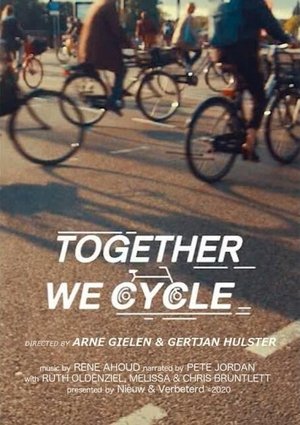
Together We Cycle(2022)
Status: Released
Date: 2022-06-01
0%
0 Votes
Time: 1h 10m
Overview:
The film Together we cycle investigates the critical events that has led to the revival of the Dutch cycling culture. For most people, cycling in the Netherlands, seems a natural phenomenon. However, until the 1970s the development of mobility in the Netherlands followed trents across the globe. The bicycle had had its day, and the future belonged to the car. The only thing that had to be done was to adapt cities to the influx of cars. Then Dutch society took a different turn. Against all odds people kept on cycling. The question why this happened in the Netherlands, has not an easy answer. There are many factors, events and circumstances that worked together, both socially and policy-wise. In Together we cycle, key players tell the story of the bumpy road which led to the current state. Where cycling is an obvious choice for most citizens.
Languages: Dutch, English.
Countries:
Movie: Together We Cycle
Video Trailer Together We Cycle
All 1 videos

Together we cycle - trailer - Trailer
Similar Movies

0%
Velorama(en)
2014-07-06
Documentary looking at a century of cycling. Commissioned to mark the arrival of the 2014 Tour de France in Yorkshire, the film makes full use of stunning British Film Institute footage to transport the audience on a journey from the invention of the modern bike, through the rise of recreational cycling, to gruelling competitive races. Award-winning director Daisy Asquith artfully combines the richly-diverse archive with a hypnotic soundtrack from cult composer Bill Nelson in a joyful, absorbing watch for both cycling and archive fans.

0%
Tinkebell - Who Killed the Blue Bird?(nl)
2024-01-19
Artist Katinka Simonse, alias Tinkebell, is a controversial, very mediagenic phenomenon. In her universe there is no distinction between life, art and activism; Tinkebell is her own work of art. Everything she encounters on her life path can become part of her story. Filmmaker Judith de Leeuw was given access to all images about Tinkebell, including her entire private archive. She thus constructed an archive film about how as a human being, living on the ruins of the past, you can be a character in your own story. What is the price you can afford if you continue to believe at any cost?

0%
Québec...?(fr)
1967-01-01
This short documentary film is a fascinating portrait of urban and rural Quebec in the late 1960s, as the province entered modernity. The collective work produced for the Quebec Ministry of Industry and Commerce calls on several major Quebec figures.

0%
Spiegelbeeld(nl)
2025-01-21
Tilburg artist Tommy van der Loo searches for the influence of superiority thinking, racism and colour in his life. Van der Loo is an emerging artist and his work has been purchased by Boijmans van Beuningen in Rotterdam. He also had an exhibition at the Kunsthal. He also made the memorial for the abolition of slavery in Eindhoven. He has had multiple experiences with discrimination and incorporates that into his sculptures. Identity and image formation are important to him: How do you look at others, how do others look at you. The search is the inspiration for his new sculpture.

0%
Cycle of Memory(en)
2022-07-18
Mel Schwartz escaped the Great Depression on a bicycle adventure he'd remember for the rest of his life... until Mel lost his memory to Alzheimer's. Now over seventy-five years later, his grandchildren set out to recreate his life-changing journey and find those memories before they slip away. Cycle of Memory explores the importance of intergenerational connection, healing painful pasts, and leaving a meaningful time capsule for the future.

49%
London's Trafalgar Square(xx)
1890-01-01
Moving picture of London's Trafalgar Square traffic, filmed with a kinesigraph.

0%
Mother's heart(nl)
2024-05-09
“Job is 2 meters tall and has been my baby for 58 years. I will continue to care for him as long as I can,” says 91-year-old Tineke about her severely disabled adult son. But how long can she keep that up and who needs who: Job Tineke or Tineke Job? A documentary about the limits of motherhood.

0%
Sportsfreund Lötzsch(de)
2008-07-17

0%
Encounter on Urban Environment(en)
1971-01-01
This feature documentary takes a look at how the Halifax/Dartmouth community in Nova Scotia was stimulated by a week-long session held by a panel of specialists from different fields who met with members of this urban community to consider the future of the area and the responsibility of the citizens and government in planning the future.

0%
Endless Bullying: The Story of Maryana(nl)
2022-02-08
Maryana came to the conclusion that she no longer wanted to live because the bullying became unbearable. Based on stories from her family, teachers, friends and classmates, we get an idea of who Maryana was and what kept her busy. All relatives have the same message: let's learn from this and ensure that this does not happen again in the future.

0%
Alternate Spaces(en)
2022-12-15
A short documentary on the River Ouse, following it downstream from Lewes to Newhaven, meditating on the surrounding area.


60%
Traffic Crossing Leeds Bridge(xx)
1888-10-15
A film by Louis Aimé Augustin Le Prince, shot in late October 1888, showing pedestrians and carriages crossing Leeds Bridge.

56%
Douce France(fr)
2021-06-16
Amina, Sami and Jennyfer are high school students in the Paris suburbs, in 93. At the initiative of 3 of their teachers, they embark on an unexpected investigation into a gigantic leisure park project which involves concreting agricultural land near their homes. But can we have the power to act on a territory when we are 17 years old? Funny and intrepid, these new citizens take us to meet residents of their neighborhood, property developers, farmers and even elected officials of the National Assembly. A joyful quest that challenges conventional wisdom and revives our connection to the land!

60%
Mother Land(fi)
2022-02-02
When filmmaker Mari Soppela took her children and husband to live for a year on a sacred mountain in her native Finland, she was fulfilling a lifelong dream to share the arctic wilderness of her childhood with her family. But when years later her children turn the camera onto her, she is forced to confront her motivation for filming their lives in this searching and searingly honest cinematic exploration of identity, belonging and motherhood. Filmed over the course of 27 years, Mother Land challenges us all to examine the landscapes we carry within us and the narratives we create to make sense of our lives.

0%
Legal weed(nl)
2021-12-06
Currently, purchasing cannabis is done through 'the back door'. What is sold legally is purchased illegally. The end of 2019 marked the start of a four-year experiment in which cannabis grown under state supervision is legally traded. This should lead to less crime and better quality weed with fewer harmful substances. After a strict selection procedure, ten growers are selected who can supply this government weed. Bromet follows seasoned grower John - who wanted to run his nursery as legally and transparently as possible, but still lost everything after a lawsuit - and the businessmen of plan C who want to grow cannabis for the first time. Bromet also interviews coffee shop owners, politicians involved and both supporters and opponents. A follow-up documentary was made in 2024.

0%
It's Dutch Design(en)
2019-11-28
It's Dutch Design is a 60-minute documentary about the worldwide success of Dutch Design. Top Designers and international keyplayers reveal their personal vision and explain why a small country could become so big in the field of Design. The history is told with iconic Dutch Design examples, spanning more than 100 years.

100%
Fernand Pouillon, Une architecture habitée(fr)
2017-01-01
In this documentary, Marie-Claire Rubinstein reveals to us, through the testimonies of the inhabitants who live there, the architectural achievements of the French urban planner Fernand Pouillon in Algiers. In particular the vast complexes of hundreds of social housing units, including the most famous Diar E Saâd (1953), Diar El Mahçoul (1954) and Climat de France (1957). The historical context, during the war of independence is related by the historian Benjamin Stora and Nadir Boumaza. This documentary also evokes the personality of Fernand Pouillon in a post-colonial context.
