Loading Page

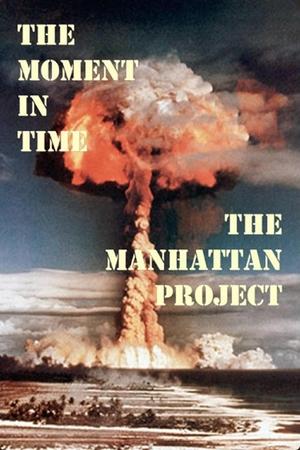
The Moment in Time: The Manhattan Project(2000)
Status: Released
Date: 2000-06-05
0%
0 Votes
Time: 0h 57m
Overview:
The Moment in Time documents the uncertain days of the beginning of World War II when it was feared the Nazis were developing the atomic bomb. The history of the bomb's development is traced through recollections of those who worked on what was known as "the gadget."
Languages: English.
Countries:
United States of America
ProductionCompanies:
The Local Legacies Project of the U.S. Library of Congess
Movie: The Moment in Time: The Manhattan Project
Top 5 Billed Cast
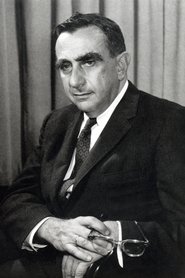
Edward Teller
Self

Hans Bethe
Self

J. Robert Oppenheimer
Self (archive footage)
HomePage
Overview
The Moment in Time documents the uncertain days of the beginning of World War II when it was feared the Nazis were developing the atomic bomb. The history of the bomb's development is traced through recollections of those who worked on what was known as "the gadget."
Release Date
2000-06-05
Average
0
Rating:
0.0 startsTagline
Genres
Languages:
EnglishKeywords
Similar Movies

74%
Hiroshima(ja)
1953-10-07
Historical fiction about the aftermath of the atomic bombing of Hiroshima, Japan, on 6 August 1945, and its effects on various civilians, especially children, of that city.

70%
The Half-Life of Genius Physicist Raemer Schreiber(en)
2018-07-17
Our two-hour film highlights the life and career of Dr. Schreiber with respect and clarity. Raemer, his wife Marge, and young daughter Paula would move to the high-desert of New Mexico where he and other brilliant minds would change the world forever.

75%
Tokyo Phoenix(fr)
2017-05-20
In 150 years, twice marked by total destruction —a terrible earthquake in 1923 and incendiary bombings in 1945— followed by a spectacular rebirth, Tokyo, the old city of Edo, has become the largest and most futuristic capital in the world in a transformation process fueled by the exceptional resilience of its inhabitants, and nourished by a unique phenomenon of cultural hybridization.

0%
Effects of the Atomic Bomb on Hiroshima and Nagasaki(ja)
1946-01-01
This was the only documentary made in the aftermath of the atomic bombings of 1945. Japanese filmmakers entered the two cities intent on making an appeal to the International Red Cross, but were promptly arrested by newly arriving American troops. The Americans and Japanese eventually worked together to produce this film, a science film unemotionally displaying the effects of atomic particles, blast and fire on everything from concrete to human flesh. No other filmmakers were allowed into the cities, and when the film was done the Americans crated everything up and shipped it to an unknown location. That footage is now lost. However, an American and a Japanese filmmaker each stole and hid a copy of the film, fearful that the reality of Hiroshima and Nagasaki would be hidden from history. Eventually, these prints surfaced and became our only precious archive of the aftermath of nuclear warfare -- a film that everyone knows in part, yet has rarely seen in its entirety.

66%
Red Joan(en)
2018-09-13
London, England, May 2000. The peaceful life of elderly Joan Stanley is suddenly disrupted when she is arrested by the British Intelligence Service and accused of providing information to communist Russia during the forties.

77%
Twice: The Extraordinary Life of Tsutomu Yamaguchi(ja)
2010-01-05
Tsutomu Yamaguchi is a hibakusha. A survivor of both atomic bomb blasts in 1945. First at Hiroshima, then again at Nagasaki. Now nearing 90, Yamaguchi finally speaks out. Breaking taboos of shame and sorrow, he responds to a call to fight for a world without nuclear weapons by telling his story, so that no one else will ever have to tell one like it again. Twice reconstructs Yamaguchi’s experiences in 1945 Japan, interviews him on the after-effects of exposure and documents the last five years of the late-blooming activist’s life.

80%
Reich: Three Tales(en)
2002-05-12
"Three Tales" is a video music work by American composer Steve Reich and video artist Beryl Korot. It is set in three "Acts", each depicting a technological advance of the 20th century and its negative implications on humanity: the dirigible airship Hindenburg and its explosion; the Atom Bomb and its testing on Bikini Atoll; and Dolly the sheep, first successful genetic cloning of a mammal.

83%
Gift of Fire(ja)
2021-08-06
Towards the end of WWII, the Navy gave the Kyoto University's physics lab the secret of a bomb that makes use of nuclear fission energy. While doing research to save Japan, the researchers there wonder if they should promote the development of weapons as scientists. Research enthusiast Ishimura Osamu tries to experiment purely but is at the mercy of the time period. His brother, Hiroyuki, also has to face the truth of the war. Asakura Setsu wants only to talk about the future. A story based on historical facts about youth during the tragedy of war.

77%
To End All War: Oppenheimer & the Atomic Bomb(en)
2023-07-09
Explore how one man's relentless drive and invention of the atomic bomb changed the nature of war forever, led to the deaths of hundreds of thousands of people and unleashed mass hysteria.

100%
The Neutron Bomb(en)
2022-10-06
We've all heard of the atomic bomb, but in the late 1950s, an idea was conceived of a bomb which would maximize damage to people, but minimize damage to buildings and vital infrastructure: perfect for an occupying army. This is the story of a man and his bomb: a melding of world events and scientific discovery inspire the neutron bomb, one of the most hated nuclear weapons ever invented.

54%
A Doctor's Sword(en)
2015-08-07
An Irish doctor survived the atomic bomb attack on Nagasaki and was given a Samurai sword for the lives he saved. 70 years later his family searches for the origin of their father's sword.

68%
The Bomb(en)
2015-07-29
Using masterfully restored footage from recently declassified images, The Bomb tells a powerful story of the most destructive invention in human history. From the earliest testing stages to its use as the ultimate chess piece in global politics, the program outlines how America developed the bomb, how it changed the world and how it continues to loom large in our lives. The show also includes interviews with prominent historians and government insiders, along with men and women who helped build the weapon piece by piece.

65%
Inside Christopher Nolan's Oppenheimer(en)
2023-07-15
A look behind the scenes of Christopher Nolan's film "Oppenheimer" about an American scientist and his role in the development of the atomic bomb.

80%
Hiroshima: The Aftermath(en)
2015-06-06
Brand new documentary marking the 70th anniversary of the Hiroshima and Nagasaki bombings which ended WWII and began the nuclear age. Features interviews with survivors from both sides.

77%
Oppenheimer After Trinity(en)
2023-04-22
This captivating documentary on J. Robert Oppenheimer, the architect of the atomic bomb, explores his journey before the historic test and reveals the burden he carried after. De-classified documents, rare film footage and exclusive interviews, including Oppenheimer's grandson, show an intimate exploration of the burden Oppenheimer carried and the profound global impact still being debated today.

62%
Einstein and the Bomb(en)
2024-02-16
What happened after Einstein fled Nazi Germany? Using archival footage and his own words, this docudrama dives into the mind of a tortured genius.

74%
200,000 Phantoms(fr)
2007-07-11
In 1914, the Czech architect Jan Letzel designed in the Japanese city of Hiroshima Center for the World Expo, which has turned into ruins after the atomic bombing in August 1945. “Atomic Dome” – all that remains of the destroyed palace of the exhibition – has become part of the Hiroshima memorial. In 2007, French sculptor, painter and film director Jean-Gabriel Périot assembled this cinematic collage from hundreds of multi-format, color and black and white photographs of different years’ of “Genbaku Dome”.

66%
Atomic: Living in Dread and Promise(en)
2015-08-08
Using only archive film and a new musical score by the band Mogwai, Mark Cousins presents an impressionistic kaleidoscope of our nuclear times – protest marches, Cold War sabre-rattling, Chernobyl and Fukishima – but also the sublime beauty of the atomic world, and how x-rays and MRI scans have improved human lives. The nuclear age has been a nightmare, but dreamlike too.

0%
Akiko's Piano: Chords Played by the Surviving Piano(ja)
2020-08-15
1940, Kawamoto Akiko lives in Hiroshima with her father and mother, Genkichi and Shizuko, as well as her two younger brothers. Akiko loves playing her favourite piano. As the war situation worsens, she is busy helping out the war efforts. On the morning of August 6, 1945, she disobeys her father and heads into the centre of town for work. In Hiroshima 75 years later, her favourite piano remains, restored and playable following its survival of the atomic bombing

80%
Oppenheimer: Genius or Madman?(en)
2023-07-25
This documentary explores famous figure J. Robert Oppenheimer, an American theoretical physicist who was called, "father of the atomic bomb" for his role in the Manhattan Project.