Loading Page

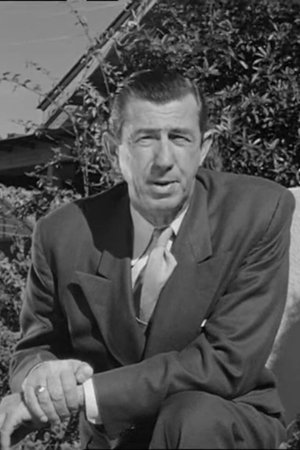
Bring Out a Briton(1957)
Status: Released
Date: 1957-01-01
0%
0 Votes
Time: 0h 6m
Overview:
‘Bring Out a Briton’ was a short appeal for Australians to help the Immigration Department in its plan to form and assist a ‘Bring Out a Briton’ Committee in each district. It featured popular Australian actor Chips Rafferty as the spokesman for the campaign. Aimed at the Australian public rather than the prospective immigrants it was designed to allay a perceived anxiety amongst the public about non-British European migration.
Languages: English.
Countries:
Australia
ProductionCompanies:
Australian Commonwealth Film Unit
Movie: Bring Out a Briton
Top 1 Billed Cast

Chips Rafferty
Self
HomePage
Overview
‘Bring Out a Briton’ was a short appeal for Australians to help the Immigration Department in its plan to form and assist a ‘Bring Out a Briton’ Committee in each district. It featured popular Australian actor Chips Rafferty as the spokesman for the campaign. Aimed at the Australian public rather than the prospective immigrants it was designed to allay a perceived anxiety amongst the public about non-British European migration.
Release Date
1957-01-01
Average
0
Rating:
0.0 startsTagline
Genres
Languages:
EnglishKeywords
Similar Movies

80%
Elsewhere, Everywhere(fr)
2021-12-01
A computer screen, images from the four corners of the world. We cross borders in one-click while another trip’s story reach us in bits, through text messages, chats, phone conversations, and an immigration office’s questionnaire. It’s the journey of Shahin, a 20-year-old Iranian boy who, fleeing his country alone, lands in Greece, then winds his way to England where he claims asylum.

100%
Takayna(en)
takayna / Tarkine in northwestern Tasmania is home to one of the last undisturbed tracts of Gondwanan rainforest in the world, and one of the highest concentrations of Aboriginal archaeology in the hemisphere. Yet this place, which remains largely as it was when dinosaurs roamed the planet, is currently at the mercy of destructive extraction industries, including logging and mining. Weaving together the conflicting narratives of activists, locals and Aboriginal communities, and told through the experiences of a trail running doctor and a relentless environmentalist, this documentary, presented by Patagonia Films, unpacks the complexities of modern conservation and challenges us to consider the importance of our last truly wild places.

0%
After the Apology(en)
2017-10-09
Suellyn thought the Department of Community Services (DOCS) would only remove children in extreme cases, until her own grandchildren were taken in the middle of the night. Hazel decided to take on the DOCS system after her fourth grandchild was taken into state care. Jen Swan expected to continue to care for her grandchildren but DOCS deemed her unsuitable, a shock not just to her but to her sister, Deb, who was, at the time, a DOCS worker. The rate of Indigenous child removal has actually increased since Prime Minister Kevin Rudd delivered the apology to the ‘stolen generations’ in 2008. These four grandmothers find each other and start a national movement to place extended families as a key solution to the rising number of Aboriginal children in out-of-home care. They are not only taking on the system; they are changing it…


100%
Voodoo Medics(en)
About trauma, resilience and post-traumatic growth in the medics who served with Australia's special forces in Afghanistan. From losing mates in the battlefield to treating horrifically injured Afghan kids in remote surgical theatres.

0%
Escort(nl)
2016-03-10
Young, inexperienced members of the Dutch Boarder Patrol undergo an intensive training on escorting refused asylum seekers to their homeland.

85%
Dominion(en)
2018-03-29
Exposing the dark underbelly of modern animal agriculture through drones, hidden & handheld cameras, the feature-length film explores the morality and validity of our dominion over the animal kingdom.

87%
Kangaroo: A Love-Hate Story(en)
2018-01-19
This groundbreaking film reveals the truth surrounding Australia’s love-hate relationship with its beloved icon. The kangaroo image is proudly used by top companies, sports teams and as tourist souvenirs, yet when they hop across the vast continent some consider them to be pests to be shot and sold for profit. KANGAROO unpacks a national paradigm where the relationship with kangaroos is examined.


0%
The Iron Triangle: Willets Point and the Remaking of New York(en)
2017-11-11
Targeted for several failed redevelopment plans dating back to the days of Robert Moses, Willets Point, a gritty area in New York City known as the “Iron Triangle,” is the home of hundreds of immigrant-run, auto repair shops that thrive despite a lack of municipal infrastructure support. During the last year of the Bloomberg Administration, NYC’s government advanced plans for a “dynamic” high-end entertainment district that would completely wipe out this historic industrial core. The year is 2013, and the workers of Willets Point are racing against the clock to forestall their impending eviction. Their story launches an investigation into New York City’s history as the front line of deindustrialization, urban renewal, and gentrification.

0%
Gnomebrook(en)
2014-11-06
Once a year 2000 garden gnomes and 10,000 gnome carers gather in the sleepy mountain hamlet of Glenbrook, for the Annual Australian Garden Gnome Convention.

90%
Still Standing(en)
2023-02-11
Discover the untold story of Pinball and Arcade in Australia in this heart-warming, and at times heart-breaking, nostalgic journey through the golden era of gaming.

60%
Island of the Hungry Ghosts(en)
2019-01-11
Christmas Island, Australia is home to one of the largest land migrations on earth—that of forty million crabs journeying from jungle to sea. But the jungle holds another secret: a high-security facility that indefinitely detains individuals seeking asylum.

0%
A Field Guide to Being a 12-Year-Old Girl(en)
2017-10-11
This is a film about 12-year-old girls, made by 12-year-old girls, for 12-year-old girls, or anyone that has been a 12-year-old girl, or will be a 12-year-old girl, or wishes they were a 12-year-old girl. This inquisitive cross between a documentary and a theatre piece was created by Tilda Cobham-Hervey and twelve 12-year-old girls, where real girls articulate what they hope for, what they remember and what it feels like to be twelve. Performing themselves in a filmed field guide, together these specimens investigate their own species.

62%
The Shelter(fr)
2014-08-10
It is winter at an emergency shelter for the homeless in Lausanne. Every night at the door of this little-known basement facility the same entry ritual takes place, resulting in confrontations which can sometimes turn violent. Those on duty at the shelter have the difficult task of “triaging the poor”: the women and children first, then the men. Although the total capacity at the shelter is 100, only 50 “chosen ones” will be admitted inside and granted a warm meal and a bed. The others know it will be a long night.

0%
Life in Australia: Wagga Wagga(en)
1966-01-01
Made by the Department of Immigration to entice immigrants from Great Britain, this film shows an idyllic picture of life in the New South Wales regional town of Wagga Wagga in the mid 1960s.

70%
Detained(sv)
2015-04-10
A documentary from within the Swedish Migration Board's locked repository where people are in custody awaiting forced deportation. Prisoner and guard are in close proximity around the clock. Converses during sleepless nights and playing football during hot summer days. We follow Sophie, 29, who loves her job at the repository, Sami, 20, the young rebel who is locked up but free inside, and Aina, 47, who were separated from her children and kept locked up while the police are stepping up efforts to enforce their expulsion order.

68%
Finke: There & Back(en)
2018-06-30
The iconic Finke Desert Race, the largest off-road motorsport event in the southern hemisphere and Australia's fastest, deadliest, toughest and certainly dustiest race. Filmed over three years, Finke explores the race from within – competitors, organisers, paramedics, and the drive to win against the desert at all costs. Finke is a visual adventure of inspiration and danger, excitement and spills.

50%
Brazen Hussies(en)
2020-11-05
Reveals a revolutionary chapter in Australian history, the Women’s Liberation Movement (1965 -1975). Interweaves fresh archival footage, personal photographs, memorabilia, and personal accounts from activists all around Australia to show how a daring and diverse group of women joined forces to defy the status quo, demand equality, and create profound social change. These women defined one of the greatest social movements of the 20th century, sometimes at great personal cost.

90%
Koala Rescue(en)
2020-02-23
Koala Rescue profiles the courage and determination of everyday Aussies that went out of their way to rescue, treat and rehabilitate the koalas who survived the Australian Black Summer bushfires, 2019-20.