Loading Page
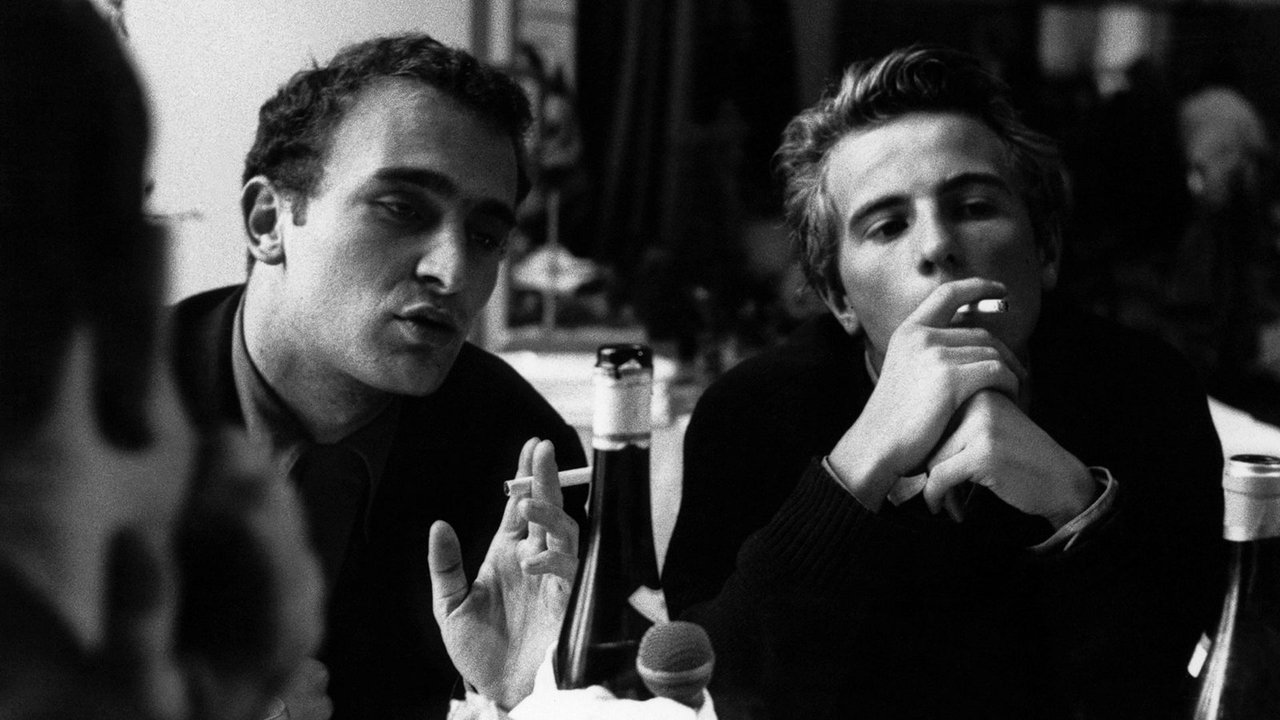
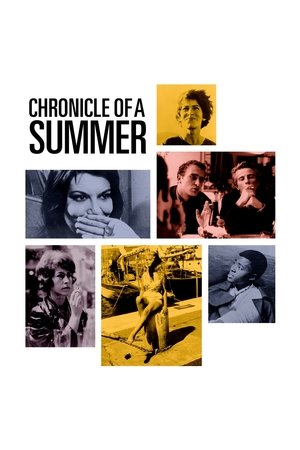
Chronicle of a Summer(1961)
Status: Released
Date: 1961-10-20
71%
112 Votes
Time: 1h 31m
The first film of cinéma vérité
Overview:
Paris, summer 1960. Anthropologist and filmmaker Jean Rouch and sociologist and film critic Edgar Morin wander through the crowded streets asking passersby how they cope with life's misfortunes.
Languages: French.
Countries:
France
ProductionCompanies: 
Movie: Chronicle of a Summer
Top 8 Billed Cast

Edgar Morin
Self
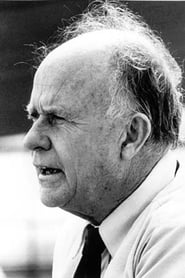
Jean Rouch
Self

Marceline Loridan-Ivens
Self

Jean-Pierre Sergent
Self
Régis Debray
Self
Video Trailer Chronicle of a Summer
All 1 videos
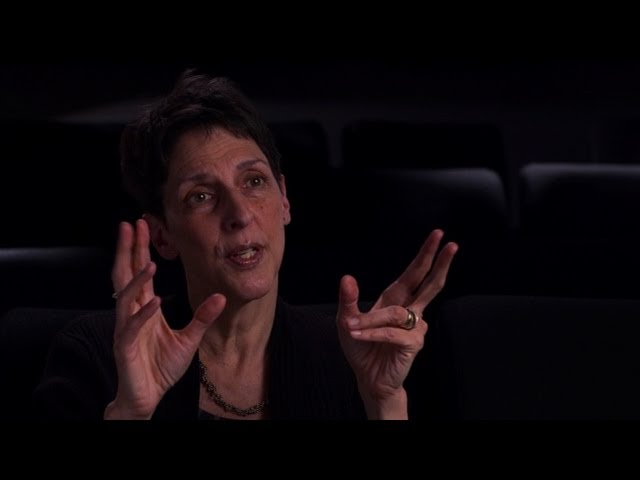
What Is Cinéma Vérité? - Featurette
Recommendations Movies

73%
Daisies(cs)
1966-12-30
Two teenage girls embark on a series of destructive pranks in which they consume and destroy the world around them.

54%
A Castle in Italy(fr)
2013-10-30
Louise meets Nathan, her dreams resurface. It's also the story of her ailing brother, their mother, and the destiny of a leading family of wealthy Italian industrialists. The story of a family falling apart, a world coming to an end and love beginning.

60%
The Stolen Years(zh)
2013-08-29
He Man awakes from a coma thinking that she’s still on her honeymoon with her husband Xie Yu, but she gets a rude shock: there’s a five-year gap in her memory, and during that time the couple has divorced. Confused and desperate to figure out how their marriage crumbled, He Man seeks out her ex-husband and her ex-best-friend for answers.

73%
I, a Negro(fr)
1959-03-12
Winner of the prestigious Prix Louis Delluc in 1958, "Moi, un noir" marked Jean Rouch's break with traditional ethnography, and his embrace of the collaborative and improvisatory strategies he called "shared ethnography" and "ethnofiction". The film depicts an ordinary week in the lives of men and women from Niger who have migrated to Abidjan, Côte d'Ivoire for work.

77%
Two in the Shadow(ja)
1967-11-18
A man is involved in a fatal car accident, and though he is blameless, his company transfers him to a remote branch in a small town. Before he leaves, he gives the man's widow a large sum of money that she uses to move back to her hometown.

70%
Juvenile Court(en)
1973-06-04
"Juvenile Court" shows the complex variety of cases before the Memphis Juvenile Court: foster home placement, drug abuse, armed robbery, child abuse, and sexual offenses. The sequences illustrate such issues as community protection vs. the desire for rehabilitation, the range and the limits of the choices available to the court, the psychology of the offender, and the constitutional and procedural questions involved in administering a juvenile court.

79%
The Greatest Night in Pop(en)
2024-01-19
On a January night in 1985, music's biggest stars gathered to record "We Are the World." This documentary goes behind the scenes of the historic event.

68%
Phenomena(en)
1985-01-25
A young girl, with an amazing ability to communicate with insects, is transferred to an exclusive Swiss boarding school, where her unusual capability might help solve a string of murders.

73%
La Chimera(it)
2023-10-12
Just out of jail, rumpled English archaeologist Arthur reconnects with his wayward crew of tombaroli accomplices – a happy-go-lucky collective of itinerant grave-robbers who survive by looting Etruscan tombs and fencing the ancient treasures they dig up.

73%
Lolita(en)
1962-06-13
Humbert Humbert is a middle-aged British novelist who is both appalled by and attracted to the vulgarity of American culture. When he comes to stay at the boarding house run by Charlotte Haze, he soon becomes obsessed with Lolita, the woman's teenaged daughter.

76%
Night of the Living Dead(en)
1968-10-04
A ragtag group barricade themselves in an old Pennsylvania farmhouse to remain safe from a horde of flesh-eating ghouls ravaging the Northeast.


81%
Metropolis(de)
1927-01-10
In a futuristic city sharply divided between the rich and the poor, the son of the city's mastermind meets a prophet who predicts the coming of a savior to mediate their differences.

80%
Oppenheimer(en)
2023-07-19
The story of J. Robert Oppenheimer's role in the development of the atomic bomb during World War II.


76%
Ex Machina(en)
2015-01-21
Caleb, a coder at the world's largest internet company, wins a competition to spend a week at a private mountain retreat belonging to Nathan, the reclusive CEO of the company. But when Caleb arrives at the remote location he finds that he will have to participate in a strange and fascinating experiment in which he must interact with the world's first true artificial intelligence, housed in the body of a beautiful robot girl.

86%
12 Angry Men(en)
1957-04-10
The defense and the prosecution have rested and the jury is filing into the jury room to decide if a young Spanish-American is guilty or innocent of murdering his father. What begins as an open and shut case soon becomes a mini-drama of each of the jurors' prejudices and preconceptions about the trial, the accused, and each other.

75%
John Wick(en)
2014-10-22
Ex-hitman John Wick comes out of retirement to track down the gangsters that took everything from him.

77%
All Quiet on the Western Front(de)
2022-10-07
Paul Baumer and his friends Albert and Muller, egged on by romantic dreams of heroism, voluntarily enlist in the German army. Full of excitement and patriotic fervour, the boys enthusiastically march into a war they believe in. But once on the Western Front, they discover the soul-destroying horror of World War I.

85%
Parasite(ko)
2019-05-30
All unemployed, Ki-taek's family takes peculiar interest in the wealthy and glamorous Parks for their livelihood until they get entangled in an unexpected incident.
Similar Movies

60%
Dark Glamour: The Blood and Guts of Hammer Productions(fr)
2017-08-06
The greatness, fall and renaissance of Hammer, the flagship company of British popular cinema, mainly from 1955 to 1968. Tortured women and sadistic monsters populated oppressive scenarios in provocative productions that shocked censorship and disgusted critics but fascinated the public. Movies in which horror was shown in offensive colors: dreadful stories, told without prejudices, that offered fear, blood, sex and stunning performances.


71%
Meeting the Man: James Baldwin in Paris(en)
1971-05-05
In 1970, a British film crew set out to make a straightforward literary portrait of James Baldwin set in Paris, insisting on setting aside his political activism. Baldwin bristled at their questions, and the result is a fascinating, confrontational, often uncomfortable butting of heads between the filmmakers and their subject, in which the author visits the Bastille and other Parisian landmarks and reflects on revolution, colonialism, and what it means to be a Black expatriate in Europe.

60%
Mucha: The Story of an Artist Who Created a Style(cs)
2020-10-01
Czech painter and illustrator Alphonse Mucha (1860-1939) ranks among the pioneers of the Art Nouveau movement at the end of the 19th century. Virtually overnight, he becomes famous in Paris thanks to the posters that he designs to announce actress Sarah Bernhardt’s plays. But at the height of his fame, Mucha decides to leave Paris to realize his lifetime project.

85%
Republic of Silence(en)
2022-08-11
They grew up in the land of dictators and surveillance, where images are censored, photos are burned, thoughts are discreet, and mouths are kept shut. They grew up in Syria.

70%
Django & Django: Sergio Corbucci Unchained(en)
2021-11-15
A tribute to Italian filmmaker Sergio Corbucci (1926-90), presented by American filmmaker Quentin Tarantino.

46%
Nice Girls Don't Stay for Breakfast(en)
2019-02-27
In the late 1990s, iconic photographer Bruce Weber barely managed to convince legendary actor Robert Mitchum (1917-97) to let himself be filmed simply hanging out with friends, telling anecdotes from his life and recording jazz standards.

75%
Fascism in Colour(en)
2006-01-01
After the World War I, Mussolini's perspective on life is severely altered; once a willful socialist reformer, now obsessed with the idea of power, he founds the National Fascist Party in 1921 and assumes political power in 1922, becoming the Duce, dictator of Italy. His success encourages Hitler to take power in Germany in 1933, opening the dark road to World War II. (Originally released as a two-part miniseries. Includes colorized archival footage.)

0%
Escort(nl)
2016-03-10
Young, inexperienced members of the Dutch Boarder Patrol undergo an intensive training on escorting refused asylum seekers to their homeland.

74%
The Last Movie Painter(it)
2020-02-06
A fantastic journey through the world of Renato Casaro, one of the most important illustrators that the world’s film poster industry has ever known.

75%
Camp Century: The Hidden City Beneath the Ice(de)
2020-01-08
How in 1959, during the heat of the Cold War, the government of the United States decided to create a secret military base located in the far north of Greenland: Camp Century, almost a real town with roads and houses, a nuclear plant to provide power and silos to house missiles aimed at the Soviet Union.

80%
Notre Dame de Paris: The Ordeal of the Centuries(fr)
2019-12-18
A fictional documentary on Notre Dame de Paris, produced in 2019.

80%
June 1940, the Great Chaos(fr)
2010-06-14
From May 10, 1940, France is living one of the worst tragedies of it history. In a few weeks, the country folds, and then collapsed in facing the attack of the Nazi Germany. On June 1940, each day is a tragedy. For the first time, thanks to historic revelations, and to numerous never seen before images and documents and reenacted situations of the time, this film recounts the incredible stories of those men and women trapped in the torment of this great chaos.

54%
Happy Winter(it)
2018-03-15
Every summer on Palermo's Mondello beach, over 1,000 cabins are built in preparation of the Ferragosto holiday. Centered around a family who goes into debt, three women holding onto the feeling of youth, and a politician seeking votes -- a vanity fair of beachgoers hiding behind the memory of a social status that the economic crisis of recent years has compromised.

45%
100 Years of the UFA(de)
2017-08-28
The intricate history of UFA, a film production company founded in 1917 that has survived the Weimar Republic, the Nazi regime, the Adenauer era and the many and tumultuous events of contemporary Germany, and has always been the epicenter of the German film industry.

73%
Never Be Boring: Billy Wilder(de)
2017-10-28
A funny walk through the life story of Billy Wilder (1906-2002), a cinematic genius; a portrait of a filmmaker who never was a boring man, a superb mind who had ten commandments, of which the first nine were: “Thou shalt not bore.”

57%
1979: Big Bang of the Present(de)
2019-12-10
Deng Xiaoping's economic and political opening in China. Margaret Thatcher's extreme economic measures in the United Kingdom. Ayatollah Khomeini's Islamic Revolution in Iran. Pope John Paul II's visit to Poland. Saddam Hussein's rise to power in Iraq. The Soviet invasion of Afghanistan. The nuclear accident at the Harrisburg power plant and the birth of ecological activism. The year 1979, the beginning of the future.

57%
A Brony Tale(en)
2014-07-08
Vancouver-based voice artist Ashleigh Ball has been the voice of numerous characters in classic cartoons such as Care Bears, Strawberry Shortcake, Cinderella and more. When Ashleigh was hired to voice Apple Jack and Rainbow Dash for Hasbro's fourth series to use the My Little Pony name - My Little Pony: Friendship Is Magic - she had no idea she would become an Internet phenomenon and major celebrity to a worldwide fan-base of grownups. Bronies are united by their belief in the show's philosophy. This documentary gives an inside view of the Pony fan-world, and an intimate look at the courage it takes to just be yourself...even when that means liking a little girls' cartoon.

76%
Diana: 7 Days That Shook the Windsors(en)
2017-07-31
This illuminating documentary examines the aftermath of Princess Diana's tragic death and the tense, dramatic week leading up to her funeral

100%
Sawt Echaâb(ar)
1961-01-01
“La Voix du Peuple,” composed of archival photographs by René Vauthier and others, exposes the root causes of the armed conflict of the Algerian resistance. Participating in a war of real images against French colonial propaganda, these images aimed to show the images that the occupier had censored or distorted, by showing the extortions of the French occupation army: torture, arrests and arbitrary executions, napalm bombings, roundabout fires, erasing entire villages from the map, etc. This is what the French media described as a “pacification campaign”.