Loading Page

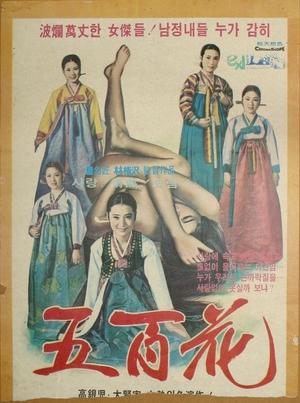
Five Hostesses for the Resistance(1973)
Status: Released
Date: 1973-03-07
0%
0 Votes
Time: 1h 38m
Overview:
A patriot Park No-Hun is dispatched by Shanghai Provisional Government for Independence to assassinate members of the House of Council. In this situation Young-Kuk, brother of Hyeon-Ju who is a kisaeng of Myeong Wol Kwan, is jailed and Choi Chil-Yong, an inspector of Japanese Higher Police Department, is in agony of difficulties between Korea and Japan. Shin Yun-Il, a member of the council falls in love with a kisaeng whose name is Jeong-Mi. All of these are going their way under the influence of phases of the times such as carrying out colonial policies and each of them is linked complicatedly and causes troubles. After all their efforts concentrated on Independence of Korea, and Park No-Hun carried out his mission with help of 5 kisaengs of Myeong Wol Kwan. Finally he leaves for Shanghai with them.
Languages: Korean.
Countries:
South Korea
ProductionCompanies:
Woo-jin Films
Movie: Five Hostesses for the Resistance
Top 10 Billed Cast
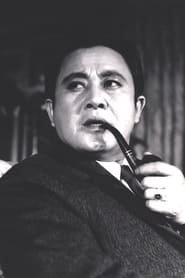
박노식
Park No-hun
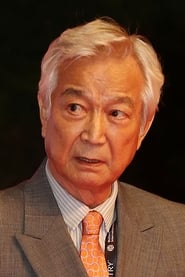
신성일
Un-il

고은아
Ji-hong
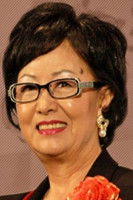
태현실
Jeong-mi
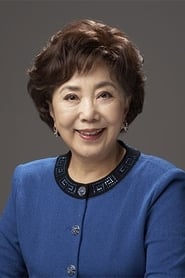
사미자
Mae-hwa
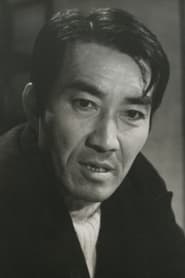
독고성
Cheol-yong
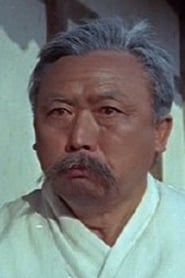
최남현
Chamui Shin
HomePage
Overview
A patriot Park No-Hun is dispatched by Shanghai Provisional Government for Independence to assassinate members of the House of Council. In this situation Young-Kuk, brother of Hyeon-Ju who is a kisaeng of Myeong Wol Kwan, is jailed and Choi Chil-Yong, an inspector of Japanese Higher Police Department, is in agony of difficulties between Korea and Japan. Shin Yun-Il, a member of the council falls in love with a kisaeng whose name is Jeong-Mi. All of these are going their way under the influence of phases of the times such as carrying out colonial policies and each of them is linked complicatedly and causes troubles. After all their efforts concentrated on Independence of Korea, and Park No-Hun carried out his mission with help of 5 kisaengs of Myeong Wol Kwan. Finally he leaves for Shanghai with them.
Release Date
1973-03-07
Average
0
Rating:
0.0 startsTagline
Genres
Languages:
한국어/조선말Keywords
Similar Movies

76%
Gandhi(en)
1982-12-01
In the early years of the 20th century, Mohandas K. Gandhi, a British-trained lawyer, forsakes all worldly possessions to take up the cause of Indian independence. Faced with armed resistance from the British government, Gandhi adopts a policy of 'passive resistance', endeavouring to win freedom for his people without resorting to bloodshed.

0%
Tuning Fork(ko)
2014-10-30
From the Japanese Occupation a 'comfort woman' returns from China an old woman. At the end of the war she can't return home and spends the next 65 years living as an alien in a foreign country. Even to her own granddaughter she seems to be losing her mind. She only wants to go back to Korea.

80%
Traces(ko)
1967-10-11
A Japanese fine art teacher helps a Korean independence fighter to escape from a threat of being arrested by the Japanese police. The Korean man introduces him a gisaeng (Koran geisha) who learned Korean traditional court dance and he falls in love with her. However she hates Japanese because her parents were killed in the war.

0%
Kaneko Fumiko(ja)
2026-02-28
Why did she die? The Supreme Court first sentenced her to death, but then commuted her sentence to life imprisonment and sent her to Tochigi Women's Prison. What happened before she took her own life there? Based on her tanka poems, which convey her raw voice, the film explores her lone fight during the 121 days between her death sentence and suicide, a period that has remained obscure to date.

74%
Man of Will(ko)
2017-10-19
Young Kim Chang-soo is placed behind bars, charged with murdering a Japanese person who took part in Empress Myeongseong's assassination. In prison, Kim Chang-soo sees how Koreans are persecuted and grows into a fighter for Korean independence.

71%
Fighter in the Wind(ko)
2004-08-12
An account of karate competitor Choi Yeung-Eui who went to Japan after World War II to become a fighter pilot but found a very different path instead. He changed his name to Masutatsu Oyama and went across the country, defeating martial artists one after another. This film concentrates on the period when he is still young, and developing his famous karate style, Kyokushin.

68%
Modern Boy(ko)
2008-10-02
During the Japanese occupation, a Korean modern boy, who wants to fit in with the Japanese, falls in love with a Korean freedom fighter.

82%
The Handmaiden(ko)
2016-06-01
1930s Korea, in the period of Japanese occupation, a new girl, Sookee, is hired as a handmaiden to a Japanese heiress, Hideko, who lives a secluded life on a large countryside estate with her domineering Uncle Kouzuki. But the maid has a secret. She is a pickpocket recruited by a swindler posing as a Japanese Count to help him seduce the Lady to steal her fortune.

73%
Assassination(ko)
2015-07-22
In Japanese-occupied Korea, three freedom fighters are assigned a mission to assassinate a genocidal military leader and his top collaborator. But the plan goes completely awry amidst double-crossings, counter-assassinations, and a shocking revelation about one of the assassins' past.

87%
Herstory(ko)
2018-06-27
A true story of a six-year-long legal conflict of 10 comfort women and 13 attorneys against 200 Fukuoka supporters association.

65%
Epitaph(ko)
2007-08-01
A traumatized girl sees visions of her dead mother in one of three tales set in a 1942 South Korean hospital.

63%
My Dear Keum-hong(ko)
1995-04-22
The story takes place during the period of Japanese Imperialism in Korea. It tells the tale of the life and loves of one peculiar poet. In 1932, Bon-wwong returned from studying fine arts in Japan. He is known as a painter of the Fauvism school of the Art. At the first successful exhibition of his works, he meets a young man, Lee Sang, a poet with really queer character. Soon Lee Sang and Bon-woong become close friends, and they meet almost every day and enjoy all kinds of interesting and usual events. Lee Sang goes to visit Bakchon (a health resort) for medical treatment. Bon-woong follow him. At Bakchon, Lee and Bon-woong meet Keum-hong (a famous waitress) and both fall in love with her. Lee loves Keum-hong physically, vulgarly, and indecently. On the contrary, Bon-woong loves her spiritually and platonically with respect. So, he can do nothing but watch the torrid love affair between Lee and Keum-hong.

77%
The Tiger(ko)
2015-12-16
In 1925 Korea, Japanese rulers demand the last remaining tiger be killed. The tiger easily defeats his pursuers until a legendary hunter takes him on.

0%
Çerx(ku)
2022-03-25
In the 1990s, some newspapers were not allowed to enter the Diyarbakir region, under a state of emergency at that time, although they were legal. Children like Bawer and Hebûn, who were part of the distribution group, would secretly collect these newspapers from outside the city at a previously agreed location and take them to the planned meeting place in the city. There, the children changed their clothes and went out to distribute them, under the guise of other work. But they were constantly followed by those who saw the newspaper as dangerous and wanted to prevent its dissemination. Çerx is a testament to the conditions under which these newspapers were distributed to readers and the difficulties encountered.

77%
Battle of Surabaya(id)
2015-03-01
Musa, who is only a thirteen-year-old shoe shiner, undergoes destiny through his adventure of waging war during the war time. Will he manage to bring peace among the troops who keep on fighting for nothing?

79%
My Way(ko)
2011-12-21
During the invasion of Normandy the photograph of a slim Korean man in German uniform was found. It transpired that the man had served as a soldier in the Japanese, Russian and German armies. His incredible story inspired director Kang Je-Gyu to create this epic war drama.

0%
Manhae Han Yong-un's Silence(ko)
2023-06-29
Donghak Rebellion (Donghak Peasant Movement) takes place in Hongjuseong (now Hongseong). Manhae, a boy who participates in the Donghak Rebellion as a 16-year-old, steals 1,000 nyang and sends it to military funds. At the age of 55, at Simujang in Seongbuk-dong, Manhae remarried while staying in a boarding house. While making a living by sewing his wife's wages, Manhae continues to resist Japanese imperialism by participating in the movement against the name change of the Chang clan and against the dispatch of Korean student soldiers along with writing. He takes over the military funds from Madam Baekhwa of Myeongwol in Yongjing. Lee Hwa-yeong hands over the military funds with Man-hae. In 1944, Manhae passed away at the age of 66. As the poem "Your Silence" flows, Manhae's achievements are introduced as highlights, and his subtitles flow.

52%
Hurrah! For Freedom(ko)
1946-10-22
During the country's occupation Choi was only allowed to make Japan-friendly films, but the plot of Hurrah! For Freedom is distinctly different, telling the story of a Korean resistance fighter in 1945.

71%
Spirits' Homecoming(ko)
2016-02-24
After the Japanese kidnap two Korean teenagers and take them to a comfort station to join other girls who are serving as sex slaves, only one of them survives. Decades later, the elderly woman tries to reunite with her friend's spirit.

67%
Race to Freedom: Um Bok-dong(ko)
2019-02-27
During the Japanese colonial rule of Korea, while people are in despair, Jae-ho tries to raise morale by winning cycle championship. Bok-dong, who started cycling with Jae-ho just to make a forture, becomes a symbol of hope for Koreans by defeating Japanese cyclists.