Loading Page
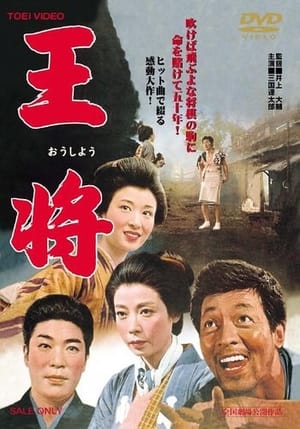
The King(1962)
Status: Released
Date: 1962-11-23
0%
0 Votes
Time: 1h 32m
The life story of the shogi master&maniac Sankichi Sakata in the Meiji era.
Overview:
The film takes place at the junction of the two eras of Meiji and Taisho. Sakata Sankichi, an uneducated zori sandal maker, becomes a professional shogi player through his genius shogi skills and lives a fanatically devoted shogi game supported by the love of his family. This is the 3rd adaptation of Hideji Hojo's famous play.
Languages: Japanese.
Countries:
Japan
ProductionCompanies: 
Movie: The King
Top 10 Billed Cast

三国連太郎

淡島千景

三田佳子
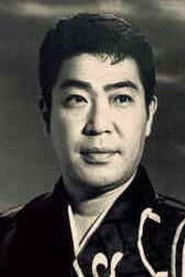
村田英雄
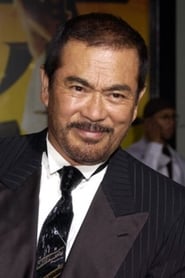
千葉真一

平幹二朗

花沢徳衛
香川良介
殿山泰司

菅原通済
HomePage
Overview
The film takes place at the junction of the two eras of Meiji and Taisho. Sakata Sankichi, an uneducated zori sandal maker, becomes a professional shogi player through his genius shogi skills and lives a fanatically devoted shogi game supported by the love of his family. This is the 3rd adaptation of Hideji Hojo's famous play.
Release Date
1962-11-23
Average
0
Rating:
0.0 startsTagline
The life story of the shogi master&maniac Sankichi Sakata in the Meiji era.
Genres
Languages:
日本語Keywords
Similar Movies

0%
対決(ja)
1967-09-06
Late Taishō period. The Shibatora family, led by Naojirō, held power over the Tomigawara area in Jōshū. After launching an attack on the Takayasu family for encroaching on their territory, they were instead ambushed by Takayasu's forces. Taking full responsibility, Naojirō turned himself in to the police. Six years later, upon his release, he is enraged to find that everything has changed drastically from how it once was.

72%
The Scent of Incense(ja)
1964-05-24
After her mother runs away from home, Tomoko is raised to be a geisha. One day Tomoko meets her mother in a red-light district in Tokyo and her life deeply gets in trouble.

0%
A Man With Dragon Tattoos(ja)
1962-12-26
In the late 1890s, coal is a precious new natural resource. During an era of rapid economic growth, dreams are instilled into the lives of many across Japan. A vigorous young man with a look of fearless determination, sets foot on the northern part of Kyushu, an area where Yakuza thrived. His name is Kingoro Tamai (Yujiro Ishihara). With plans to travel the world, Kingoro worked diligently at a coal mine. His loyalty and hard work earned the respect of his peers, his courage won the heart of the beautiful Mon (Ruriko Asaoka), and his success evoked jealousy in his enemies.

60%
Father of the Milky Way Railroad(ja)
2023-05-05
Kenji, the eldest son of Masajiro, a wealthy moneylender, refuses to work in the family business and becomes obsessed with farming, jewelry and religion.

0%
The Grand Master(ja)
1948-10-18
Shogi, a Japanese form of chess, is a game that requires skill and determination. When poor sandal-maker Sakata decides to pursue his dream of becoming the Shogi Grand Master Champion, everything is at stake – including his family. What will it cost for Sakata to follow his passion?

62%
The Chrysanthemum and the Guillotine(ja)
2018-07-07
In the wake of the social unrest caused by the 1923 Great Kanto Earthquake, two female sumo athletes, Kiku and Tokachi, and an anarchist group called the Guillotine Society, spark an unlikely connection.

0%
The Izu Dancer(ja)
1960-05-13
Love story between a student and girl whose parents are itinerant entertainers. Set in Japan in the 1920's.

50%
Haikara-san: Here Comes Miss Modern Part 2(ja)
2018-10-19
In turn of the 20th Century Japan, a period characterized by widespread innovation and social restructuring, Benio Hanamura endeavors to take modernization to new heights. With a tomboy nature, Benio rails against traditional ideas that women should take care of the home—serving their husbands rather than pursuing their own dreams. Her values as a modern woman come under fire as the one man who supports her independence, Lieutenant Shinobu Ijuin, goes missing in action. Resurfacing back in Japan, Shinobu has lost all memory of his true identity. In this stunning sequel, will Benio be able to reconnect with Shinobu before she is married off to a new man?

72%
The Insect Woman(ja)
1963-11-16
A woman, Tome, is born to a lower class family in Japan in 1918. The title refers to an insect, repeating its mistakes, as in an infinite circle. Imamura, with this metaphor, introduces the life of Tome, who keeps trying to change her poor life.

0%
The Bear Storm(ja)
1980-11-27
An adaptation of Akira Yoshimura's original suspense novel starring Rentaro Mikuni. 4th year of the Taishō era. About 15 families who moved in search of agricultural land to the land of the pioneers in Hokkaido led a peaceful life. One day, one of the pioneers, Mikio Shimakawa's wife Yura, and her child Taichi are attacked and killed by a bear that cannot hibernate. To resolve the situation, Shimakawa goes against all odds and turns to Ginshiro, the most hated hunter in the village, for help. While Shimakawa was away from the village, Yura and his friends were holding a funeral, the bear attacked again...

0%
Faraway Sunset(ja)
1992-07-04
Faraway Sunset tells the story of the famed bacteriologist who is known to have discovered the agent that cause syphilis, and for his relentless search for a cure to yellow fever. As a toddler, his mother's neglect had caused an accident to his left hand, fusing together all the fingers in a bizarre twist of fate. Naturally extremely remorseful for being the cause of her son's handicap, she does everything she could to ensure that he gets to lead a normal life, despite having to fend off bullies and unfair prejudices.

45%
The Ode to Joy(ja)
2006-06-17
Based on the true story of the Bandō prisoner-of-war camp in World War I. It depicts the friendship of the German POWs with the director of the camp and local residents at the stage of Naruto, Tokushima Prefecture, in Japan.

70%
The Miracle of Crybaby Shottan(ja)
2018-09-07
Shoji Segawa was a quiet and inconspicuous boy, but, for the first time, he is recognized by people after winning the National Middle School Shogi Tournament. At the age of 26, his dream of becoming a professional shogi player collapses due to an age restriction. After he quits playing shogi, he becomes desperate. With the support of his peers, including Yuya Suzuki, and his love of shogi, Shoji Segawa begins to play shogi again. A miracle happens to him.

56%
The Lights of Asakusa(ja)
1937-12-02
Pre-war Asakusa was a riotous district of cabarets, dance-halls and brothels - a striking backdrop for Shimazu's story of innocence and experience. Pretty, young Reiko is the new dancer in an infamous theatre troupe, and her fellow performers try to protect her virtue in a land of vice. Meanwhile, an ageing actor wants to be a hero off stage as well as on, and the troupe matriarch Marie has to keep them all together.


73%
Talking the Pictures(ja)
2019-12-13
Set at a movie theater in a small village around 100 years ago. Silent films are play at the movie theater. A young man aspires to become a benshi, a performer that provides live narration to silent films.


69%
The Flower and the Angry Waves(ja)
1964-02-08
A young yakuza in love with the girl who's to marry his clan oyabun, kidnaps the girl before fleeing with her. In Tokyo, he hides under the identity of a worker while the young woman becomes a waitress in a restaurant.


72%
A Wanderer's Notebook(ja)
1962-09-29
Considered one of the finest late Naruses and a model of film biography, A Wanderer’s Notebook features remarkable performances by Hideko Takamine – Phillip Lopate calls it “probably her greatest performance” – and Kinuyo Tanaka as mother and daughter living from hand to mouth in Twenties Tokyo. Based on the life and career of Fumiko Hayashi, the novelist whose work Naruse adapted to the screen several times, A Wanderer’s Notebook traces her bitter struggle for literary recognition in the first half of the twentieth century – her affairs with feckless men, the jobs she took to survive (peddler, waitress, bar maid), and her arduous, often humiliating attempts to get published in a male-dominated culture.