Loading Page


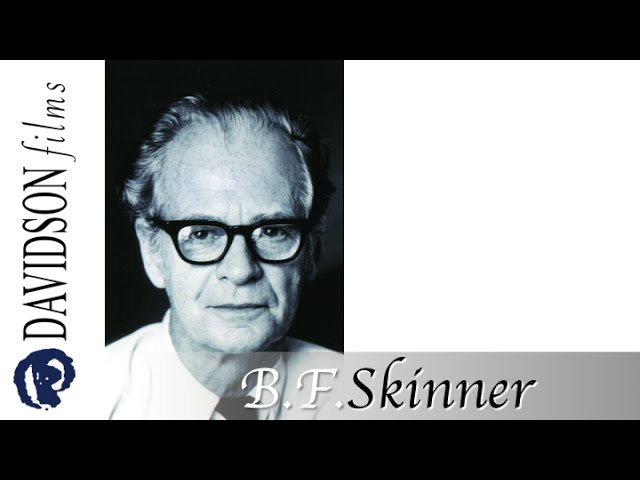
B. F. Skinner: A Fresh Appraisal(1999)
Status: Released
Date: 1999-01-01
0%
0 Votes
Time: 0h 41m
Overview:
Other than Freud, no psychologist has been so discussed, critiqued and, at times, maligned as B.F. Skinner. Using both archival and new film, this video takes a new look at who the man was, and what he really said in his twenty books. Like other thinkers who broke new ground, Skinner had to invent his own vocabulary to describe the phenomena he was studying. In this film, his terms are introduced in context so the student understands how they were intended to be used and the research that produced them. The film lays to rest some myths and credits Skinner with contributions not often attributed to him. Understanding the complex man behind his work enables students to better evaluate the importance and relevance of the work he inspired. Murray Sidman, Ph.D., colleague and thoughtful practitioner of behavioral analysis, narrates.
Languages: English.
Countries:
ProductionCompanies:
Davidson Films
Movie: B. F. Skinner: A Fresh Appraisal
Top 4 Billed Cast
Video Trailer B. F. Skinner: A Fresh Appraisal
All 1 videos
B. F. Skinner: A Fresh Appraisal (Davidson Films, Inc.) - Trailer
Similar Movies

71%
Metallica: Some Kind of Monster(en)
2004-06-10
After bassist Jason Newsted quits the band in 2001, heavy metal superstars Metallica realize that they need an intervention. In this revealing documentary, filmmakers follow the three rock stars as they hire a group therapist and grapple with 20 years of repressed anger and aggression. Between searching for a replacement bass player, creating a new album and confronting their personal demons, the band learns to open up in ways they never thought possible.

62%
Tawai: A Voice from the Forest(en)
2017-09-29
Explorer Bruce Parry visits nomadic tribes in Borneo and the Amazon in hope to better understand humanity's changing relationship with the world around us.

70%
The Mind of a Murderer: Part 1(en)
1984-03-19
A look into the mind of one of the Hillside Strangler murderers, Kenneth Bianchi.

0%
The Family Forest(en)
Epigenetics and psychogenealogy through a VERY personal experience.

76%
Derren Brown: Infamous(en)
2014-09-22
Multi award-winning psychological illusionist Derren Brown returns in the recording of his acclaimed live show ‘Infamous’. Featuring Derren at his baffling best with the excitement of a live theatre audience, Infamous includes amazing, provocative, jaw dropping demonstrations of his incredible skills of magic, suggestion, showmanship and misdirection in a must-watch roller coaster of emotions.

65%
The Soul Keeper(it)
2003-01-17
Zurich, 1905. Nineteen-year-old Russian Sabina Spielrein is put by her parents in a psychiatric hospital, suffering from a severe form of hysteria and refusing to eat. A compassionate doctor, Carl Gustav Jung, takes her under his care and, for the first time, experiments with the psychoanalytical method of his teacher Sigmund Freud. Thus is born a sweeping story of love and passion, of body and soul, soaring to the utmost heights, but also plunging to the darkest depths of the 20th century.

0%
The Stanford Prison Experiment(en)
2002-05-11
An intensive psychological test by Professor Philip Zimbardo in 1971 saw US students volunteer to play prisoners and guards in an bid to examine the nature of good and evil. Within five days, four prisoners had broken down and another was on hunger strike. This film, containing strong language, reveals why the test was abandoned after less than a week.

76%
The Last Stop(en)
2017-04-29
The Élan School was a for-profit, residential behavior modification program and therapeutic boarding school located deep within the woods of Maine. Delinquent teenagers who failed to comply with other treatment programs were referred to the school as a last resort. Treatment entailed harsh discipline, surveillance, degradation, and downright abuse. Years later, the patients who were institutionalized in this facility still carry the trauma they endured, with mixed opinions on the impact of their experience.

65%
The Truth About Marriage(en)
2020-02-14
This documentary follows three couples to see how things turned out several years after their weddings. The film presents challenging ideas about relationships, as it answers the question: Why is marriage so difficult?

50%
Entheogen: Awakening the Divine Within(en)
2006-01-01
A feature length documentary which invites the viewer to rediscover an enchanted cosmos in the modern world by awakening to the divine within. The film examines the re-emergence of archaic techniques of ecstasy in the modern world by weaving a synthesis of ecological and evolutionary awareness,electronic dance culture, and the current pharmacological re-evaluation of entheogenic compounds.

65%
Stanford Prison Experiment: Psychology of Imprisonment(en)
1991-06-06
The Stanford prison experiment was a landmark psychological study of the human response to captivity, in particular, to the real world circumstances of prison life, and the effects of imposed social roles on behaviour. It was conducted in 1971 by a team of researchers led by Philip Zimbardo of Stanford University.

78%
The Hugo's Brain(fr)
2012-11-27
The Hugo's Brain is a French documentary-drama about autism. The documentary crosses authentic autistic stories with a fiction story about the life of an autistic (Hugo), from childhood to adulthood, portraying his difficulties and his handicap.

0%
Voices from the Shadows(en)
‘Voices from the Shadows’ shows the brave and sometimes heartrending stories of five ME patients and their carers, along with input from Dr Nigel Speight, Prof Leonard Jason and Prof Malcolm Hooper. These were filmed and edited between 2009 and 2011, by the brother and mother of an ME patient in the UK. It shows the devastating consequences that occur when patients are disbelieved and the illness is misunderstood. Severe and lasting relapse occurs when patients are given inappropriate psychological or behavioural management: management that ignores the severe amplification of symptoms that can be caused by increased physical or mental activity or exposure to stimuli, and by further infections. A belief in behavioural and psychological causes, particularly when ME becomes very severe and chronic, following mismanagement, is still taught to medical students and healthcare professionals in the UK. As a consequence, situations similar to those shown in the film continue to occur.

0%
Draussen bleiben(de)
2007-10-24

0%
love, amma(en)
2022-01-01
After being diagnosed with borderline personality disorder, a young mother writes a letter to her daughter about their family’s collective journey to acceptance.

80%
Leviathan(en)
2025-06-28
Why is social trust breaking down, and how do we find it again? This is the question at the heart of Leviathan. Directed and produced by Alexander Beiner, it draws on sociology, myth, psychology, economics and systems theory to delve into the deep code of culture and make sense of the times we live in. It’s a journey that invites the viewer to confront the shadows lurking at the heart of our systems, and points the way toward hope, healing and action.

0%
Erik H. Erikson: A Life's Work(en)
1999-01-01
Narrated by Erikson's colleague, Margaret Brenman-Gibson, Ph.D. and Ruthie Mickles, Ph.D. Using archival materials and newly shot footage, this film introduces students to the rich wisdom of Erik H. Erikson. Best known for his identification of the eight stages of the life cycle, Erikson spent a lifetime observing and studying the way in which the interplay of genetics, cultural influences and unique experiences produces individual human lives. This film combines biographical information about Erikson with his theoretical proposals to give students an understanding of the relationship between the life experience of a theorist and the work that is produced.

0%
Vygotsky's Developmental Theory: An Introduction(en)
1994-01-01
The work of Lev Vygotsky is increasingly cited as we reconsider the theory and practice of constructivist education. This program introduces the life, vocabulary and concepts of Lev Vygotsky. The video illustrates four basic concepts integral to his work: Children construct knowledge, learning can lead development, development cannot be separated from its social context, and language plays a central role in cognitive development. Elena Bodrova brings an easy familiarity to these concepts. Deborah Leong’s commentary and the lively classroom examples enable students, teachers in training, and classroom teachers to incorporate these concepts into their understanding of child development.

49%
The Passion of Ayn Rand(en)
1999-01-27
Author Ayn Rand becomes involved with a much younger and married man, to the dismay of those close to her.
