Loading Page
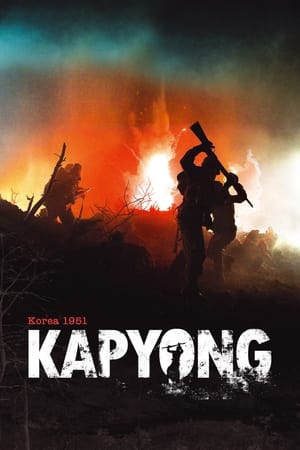
Kapyong(2011)
Status: Released
Date: 2011-04-28
0%
0 Votes
Time: 0h 54m
The Forgotten Battle of the Forgotten War
Overview:
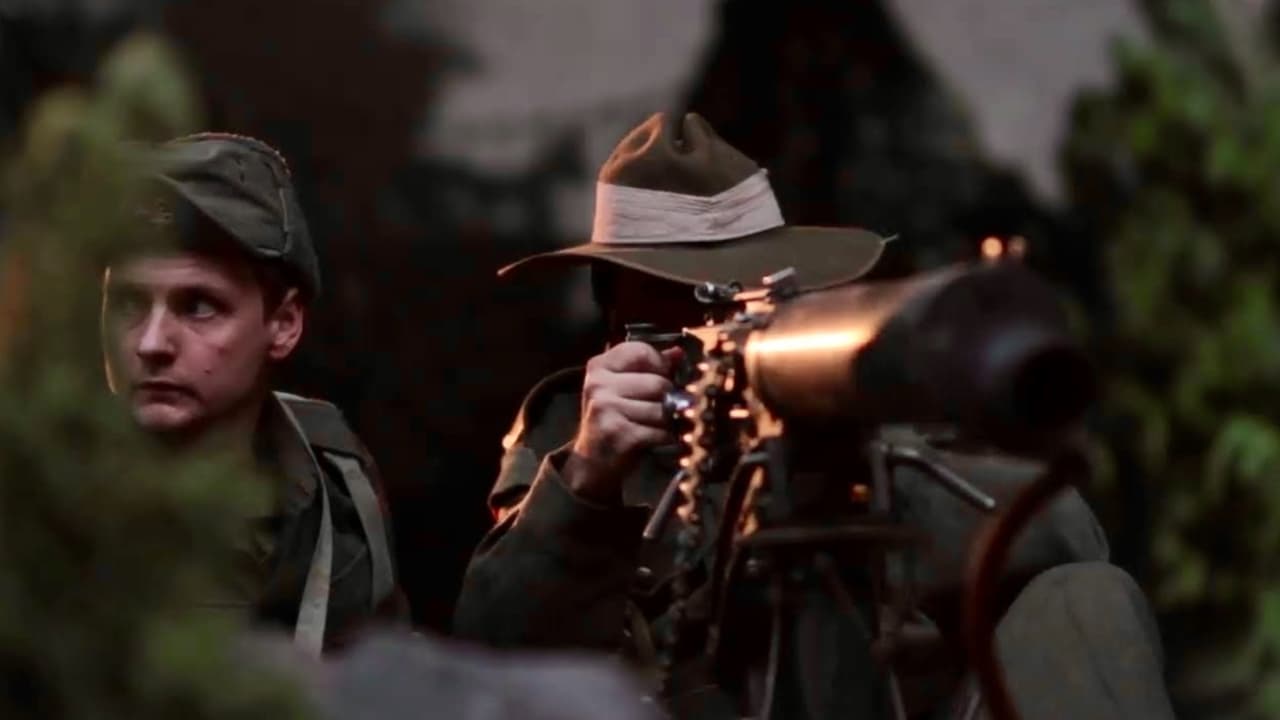
On April 24, 1951, following a rout of the South Korean army, the Chinese People Volunteer Army pursued their enemy to the lines of Australian and Canadian troops still digging fall-back defences, 39 kilometres to the rear. Here, sometimes at the length of a bayonet, often in total darkness, individual was pitted against individual in a struggle between a superpower and a cluster of other nations from across the world. They fought for a valley, the ancient and traditional invasion route to Seoul. If it fell the southern capital and the war, was lost. The United Nations troops had the military advantage of the high ground and artillery support: the Chinese relied entirely on vastly superior numbers. As a result, young men from both sides found a battle which was very close and very personal. The Battle of Kapyong became the turning point of China's Fifth Offensive in that Korea spring... Written by John Lewis
Languages: English.
Countries:
Australia
ProductionCompanies: 

Movie: Kapyong
Top 7 Billed Cast

John Waters
Narrator

Cory Corbett
Canadian Lieutenant

長島夕貴
Chinese Soldier

Rick Tonna
Soldier
Video Trailer Kapyong
All 1 videos

KAPYONG 60.wmv - Trailer
Similar Movies

0%
Assignment in Korea(sv)
1951-04-23
Swedish journalist visits Korea to report on the situation during the war

80%
Ayla: The Daughter of War(tr)
2017-10-27
In 1950, amidst the ravages of the Korean War, Sergeant Süleyman stumbles upon a a half-frozen little girl, with no parents and no help in sight and he risks his own life to save her, smuggling her into his army base and out of harm’s way.

0%
Homes Apart: Korea(ko)
1991-01-02
They speak the same language, share a similar culture and once belonged to a single nation. When the Korean War ended in 1953, ten million families were torn apart. By the early 90s, as the rest of the world celebrated the end of the Cold War, Koreans remain separated between North and South, fearing the threat of mutual destruction. Beginning with one man's journey to reunite with his sister in North Korea, filmmakers Takagi and Choy reveal the personal, social and political dimensions of one of the last divided nations on earth. The film was also the first US project to get permission to film in both South & North Korea.

74%
Welcome to Dongmakgol(ko)
2005-08-04
Based on the long running play by Jang Jin, the story is set in Korea during the Korean War in 1950. Soldiers from both the North and South, as well as an American pilot, find themselves in a secluded and naively idealistic village, its residents unaware of the outside world, including the war.

80%
Tae Guk Gi: The Brotherhood of War(ko)
2004-02-05
When two brothers are forced to fight in the Korean War, the elder decides to take the riskiest missions if it will help shield the younger from battle.

67%
Mysteries of the Terracotta Warriors(en)
2024-06-11
Thousands of terracotta warriors guarded the first Chinese emperor's tomb. This is their story, told through archeological evidence and reenactments.


71%
Devotion(en)
2022-11-23
The harrowing true story of two elite US Navy fighter pilots during the Korean War. Their heroic sacrifices would ultimately make them the Navy's most celebrated wingmen.

50%
Wildflowers on the Battleground(ko)
1974-12-07
A look at the Korean War through the eyes of a mute boy who was kept as a mascot by a regiment of soldiers near the front lines.

70%
M*A*S*H(en)
1970-02-18
One of the world's most acclaimed comedies, M*A*S*H focuses on three Korean War Army surgeons brilliantly brought to life by Donald Sutherland, Tom Skerritt and Elliott Gould. Though highly skilled and deeply dedicated, they adopt a hilarious, lunatic lifestyle as an antidote to the tragedies of their Mobile Army Surgical Hospital, and in the process infuriate Army bureaucrats. Robert Duvall, Gary Burghoff and Sally Kellerman co-star as a sanctimonious Major, an other-worldly Corporal, and a self-righteous yet lusty nurse.

77%
A Tudor Feast at Christmas(en)
2006-12-21
A group of historians and archaeologists prepare a Tudor feast as it would have been over 400 years ago, including the use of period clothes, recipes from the era, food sourced from the land and the absence of modern conveniences.

64%
The DMZ(ko)
1965-12-09
The film exposes the atrocities of war through the eyes of two children who are stranded in the DMZ after the end of the Korean War. The DMZ, strewn with abandoned tanks, dead bodies, land mines, and unexploded shells, is an exceedingly dangerous place for children. But what most endangers them in the end are not weapons but people.


72%
The Battle Of Chosin(en)
2016-11-01
An amazingly harrowing story of the 17 day engagement of bloody combat and heroic survival in subartic temperatures. UN forces largely outnumbered and surrounded, due to a surprise attack led by 120,000 Chinese troops.

60%
The Volunteers: To the War(zh)
2023-09-28
In the early days of the founding of the People's Republic of China in 1949, New China was faced with "internal and external troubles". Since the outbreak of the Korean Civil War, the U.S. military has repeatedly provoked the border between China and North Korea, and civilians have been brutally bombed. In order to maintain the hard-won peace and long-term stability for generations, in October 1950, the Chinese People's Volunteers entered North Korea, and the "Resist US Aid Korea" war kicked off.

0%
Act of Victory(ko)
2025-06-19

64%
The Volunteers: The Battle of Life and Death(zh)
2024-09-30
The movie focuses on the battle of Cheolwon, where the 63rd Army of the Chinese People's Volunteer Army (CPVA) was ordered to enter the battlefield of Cheolwon in May 1951, just after a month-long battle, to fight against four divisions of the United Nations Army (UNA). The volunteers fought with bloodshed and finally brought the enemy to the negotiation table.

72%
Theatre of War(es)
2018-02-16
Theatre of War is an essay on how to represent war, performed by former enemies. British and Argentinian veterans of the Falklands war come together to discuss, rehearse and re-enact their memories 35 years after the conflict.

75%
71: Into the Fire(ko)
2010-06-16
In August 1950, waiting for UN troops to arrive, the South Korean army assembled to protect Nakdong River. Only 71 student-soldiers are left behind to guard the city of Pohang. Now they are on a mission to defend the country from North Korean troops.

55%
Korea, A Hundred Years of War(fr)
2020-06-11
A contemporary history of Korea(s) from a unique point of view that embraces the inner history of both South and North Korea in a single narrative.