Loading Page

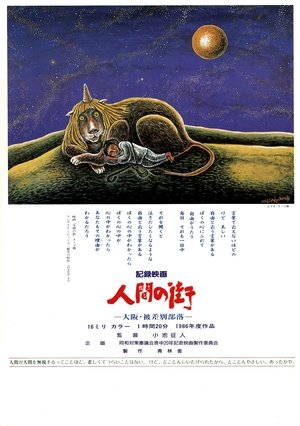
Ningen no machi(1986)
Status: Released
Date: 1986-07-03
0%
0 Votes
Time: 1h 20m
Overview:
Interviews with Burakumin in Osaka, victims of discrimination
Languages:
Countries:
Japan
ProductionCompanies:
Seirinsha
Movie: Ningen no machi
Top 1 Billed Cast
HomePage
Overview
Interviews with Burakumin in Osaka, victims of discrimination
Release Date
1986-07-03
Average
0
Rating:
0.0 startsTagline
Genres
Languages:
Keywords
Similar Movies


65%
September 1923(ja)
2023-09-01
Based on the murder of nine street peddlers in the aftermath of the Great Kanto earthquake.

60%
The River with No Bridge(ja)
1992-05-23
A widow and her two sons, Seitaro and Koji, live in the small town of Komori, where Buraku people are forced to reside. The two boys are continuously harassed by their teachers and classmates through their childhood as a result of their Buraku heritage. In the midst of the 1918 Great Rice Riots in Osaka, Seitaro meets with Asako, the daughter of a rice shop owner, and falls in love with her. She too is of Buraku descent. At the same period, Hideaki, an old friend of the brothers returns to Komori, and he along with Koji and the townspeople create "Zenkoku Suiheisha", the National Levelers Association, an organization pledged to build a bridge over the river of discrimination, making all people equal in every way.

54%
Apostasy(ja)
1948-11-30
In the Meiji period, a schoolteacher tries to hide his lower-class upbringing as he supports a visiting liberal intellectual.

66%
The Broken Commandment(ja)
1962-04-06
Ushimatsu's father told him never to reveal his lower-caste heritage; years later, he now contemplates confiding in an activist fighting against such discrimination.

72%
The Broken Commandment(ja)
2022-07-08
At the strong insistence of his father, Ushimatsu Segawa conceals his origins from a “buraku” area of low-class “untouchables,” leaving his hometown to serve as an elementary school teacher where he excels and is loved by his students. But he constantly struggles with the secret of his low-birth status and is disturbed by all of the discrimination levelled upon his class. It prevents him from pursuing a romance with Shiho, whom he meets at the temple where he resides, but who descends from a samurai family.

50%
River Without a Bridge(ja)
1969-02-01
Brothers Koji and Seitaro Hatana, belong to the "outcast" caste. Despite their personal qualities—intelligence and fairness—they encounter numerous obstacles due to their caste affiliation. Together with other "outcasts," the brothers take up the fight for their human rights.

0%
Landmarks(es)
2026-04-01
In 2009, a man and two accomplices try to evict members of the Indigenous community of Chuschagasta in northern Argentina. Claiming ownership of the land and armed with guns, they kill the community’s leader, Javier Chocobar. The murder is caught on video. It takes nine years of protests before court proceedings are finally opened in 2018. During all this time, the killers remain free. The film combines the voices and photographs of the community with courtroom footage to explore the long history of colonialism and land dispossession that led to this crime.

76%
Diana: In Her Own Words(en)
2017-08-06
Using home videos recorded by her voice coach, Diana takes us through the story of her life.

88%
The Very Best of Peter Sellers(en)
1990-01-01
A definitive collection of his very best work: The Very Best of Peter Sellers.

69%
Le Temps de cerveau disponible(en)
2010-03-17
Cruelty, psychological and sexual violence, humiliations: reality television seems to have gone mad. His debut in the early 2000s inaugurated a new era in the history of the audio-visual. Fifty years of archives trace the evolution of entertainment: how the staging of intimacy during the 80s opened new territories, how the privatization of the biggest channels has changed the relationship with the spectator. With the contribution of specialists, including philosopher Bernard Stiegler, this documentary demonstrates how emotion has made way for the exacerbation of the most destructive impulses.


73%
Ballet Boys(no)
2014-06-27
Ballet Boys takes you through disappointments, victories, forging of friendship, first loves, doubt, faith, growing apart from each other, finding your own way and own ambitions, all mixed with the beautiful expression of ballet.

47%
The Settlement(ru)
2001-10-31
This movie is about a day in life of the settlement for people with mental problems. Located in a peaceful countryside, it conveys an image of a pure, happy place, where people live and work together, in complete harmony. But there is a growing unexplainable feeling of anxiety and hopelessness.

0%
Viva Pedro: The Life & Times of Pedro Almodóvar(en)
2007-01-30
The genius that is Almodóvar is expressed in this film with interviews from his family, co-workers, and Almodóvar experts.

0%
Jean-Marie Le Pen, l'homme qui ne voulait pas le pouvoir ?(fr)
2022-08-30
Jean-Marie Le Pen, figurehead of the National Front and the French far right, has been a presidential candidate five times. In 2002, he created a surprise by reaching the second round but was soundly defeated by Jacques Chirac. This failure may be linked to the composition of his party, a collection of political movements with sometimes contradictory interests and ideals.

70%
A Night at the Movies: Hollywood Goes to Washington(en)
2012-10-05
A survey of movies about politics, with clips from several films and interviews with filmmakers and actors.

34%
Positive(de)
1990-05-04
This film powerfully documents New York City's gay community's response to the AIDS crisis as they are forced to organize themselves after the government's failure to stem the epidemic. Activists who are interviewed include playwrite Larry Kramer, People With AIDS Coalition co-founder Michael Callen (who died of AIDS in 1994), New York filmmaker and journalist Phil Zwickler, as well as representatives from ACT-UP, Queer Nation and the Gay Men's Health Crisis.


67%
Spider-Man 2: Making the Amazing(en)
2004-11-30
A comprehensive 12-part documentary on the making of "Spider-Man 2," covering everything from pre-production to premiere.