Loading Page

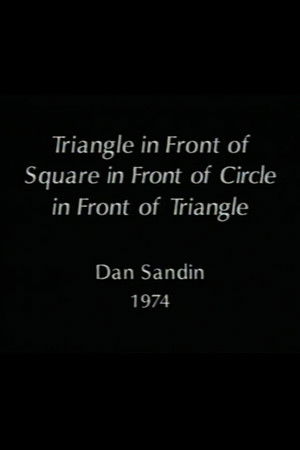
Triangle in Front of Square in Front of Circle in Front of Triangle(1973)
Status: Released
Date: 1973-01-01
0%
0 Votes
Time: 0h 1m
Overview:
In this elegant demonstration, Sandin explains the mistake of using common language concepts and spatial relations to describe what actually can happen on the video screen. The images generated in the tape act according to specific parameters set by the artist. Sandin has stated "The analog Image Processor was programmed to implement the logic equations; if square, if triangle and circle show circle." In this tape, Sandin is in effect arguing for a distinct video vocabulary that replaces the classical concept of perspective. This tape was produced at the University of Illinois Chicago.
Languages:
Countries:
United States of America
Movie: Triangle in Front of Square in Front of Circle in Front of Triangle
Loading Photos
Photo Type :Total items
Similar Movies
0%
kid-like-you.mp3(en)
2024-03-30
Experimental video art set to the track "Place I Know/Kid Like You" by Arthur Russell.
100%
Technicolor Dream(en)
2017-01-08
TECHNICOLOR DREAM is a video art of vivid imagery and symbolic scenarios. It is a portrayal of passion,agony,memories and melancholy through unorthodox fusion of sight and sound.
70%
Enigma: Nazo(ja)
1978-07-12
Enigma is something of a more glamorous version of White Hole, with a wide variety of elaborate textures (often composed of iconographic and religious symbols) converging towards the centre of the screen.
73%
Ki or Breathing(ja)
1980-07-11
'Ki or Breathing' is a spare concoction assembled from slow motion shots of nature and set to a score by the much-acclaimed Tohru Takemitsu.
0%
NAO_VA_EMBORA.mp4(pt)
2021-06-01
100%
A Weak & Panicked Animal(en)
2024-05-11
Enclosed by a civilised landscape, society reduces the problem of human survival to a minimum. The sidewalk, the fence, the clearing, demarcate a treaty between man and nature whereby neither one of us shall pass these thresholds lest we become subject to the law of the other.
69%
Nam June Paik: Moon Is the Oldest TV(en)
2023-03-24
The quixotic journey of Nam June Paik, one of the most famous Asian artists of the 20th century, who revolutionized the use of technology as an artistic canvas and prophesied both the fascist tendencies and intercultural understanding that would arise from the interconnected metaverse of today's world.
56%
Technology/Transformation: Wonder Woman(en)
1978-11-29
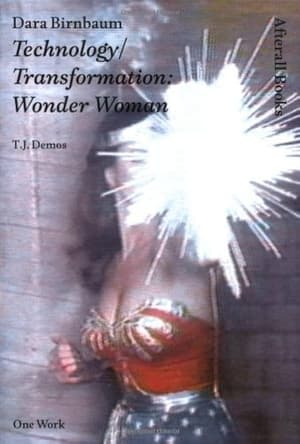
The video opens with a barrage of explosive imagery along with an audio track of a siren taken from the 1970s TV show Wonder Woman. The following scenes are fast paced repeated shots from Wonder Woman, with several scenes following of actress Lynda Carter as the main character Diana Prince, performing her transformative spin from secretarial role into superhero role. […] The representation of repeated transformations expose the illusion of fixed female identities in media and attempts to show the emergence of a new woman through use of technology. […] The video ends with a scene of repeating explosions that precedes a blue background with white text that scrolls upwards, delivering a transcription of lyrics to the song ‘Wonder Woman Disco'.

0%
Re-enactment(en)
2000-08-08
For this work Alÿs purchased a gun in Mexico City then walked through the city streets with the weapon in his hand. After eleven minutes he was arrested by the police. The following day he repeated the action, this time in cooperation with the police. By presenting a record of this dramatic action alongside footage of its reenactment, Alÿs blurs the boundaries between documentation and fiction. Questioning the concept of authenticity, this work demonstrates “how media can distort and dramatize the immediate reality of a moment,” the artist has said. Gallery label from Francis Alÿs: A Story of Deception, May 8–August 1, 2011.
70%
9/11 Simulation in Roblox Environment(en)
2017-07-20
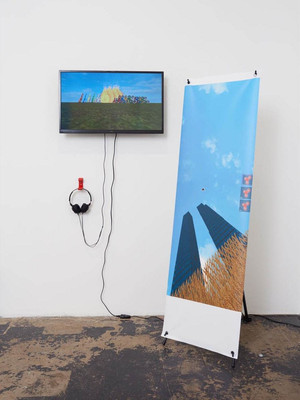
CGI collage short film originally premiered as part of the 'Extinction Renaissance' exhibition at the Loyal Gallery in Stockholm.
0%
Candle(en)
2021-09-30
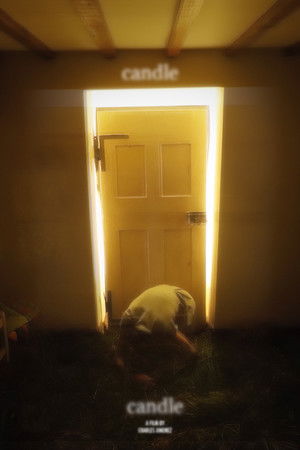
Confined to an endlessly burning waiting room, a dying sedentary woman experiences herself blurring in and out of her body. In her last remaining fragments she tries to make amends with her spirit before her remaining fragments either decay or create.
81%
Good Morning, Mr. Orwell(en)
1984-01-01
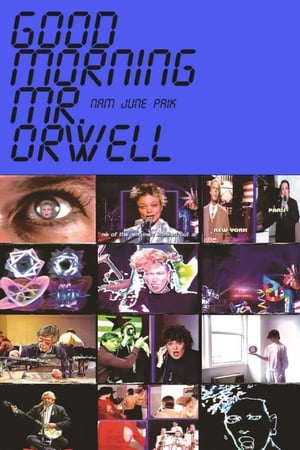
In his book "1984", George Orwell saw the television of the future as a control instrument in the hands of Big Brother. Right at the start of the much-anticipated Orwellian year, Paik and Co. were keen to demonstrate satellite TV's ability to serve positive ends-- Namely, the intercontinental exchange of culture, combining both highbrow and entertainment elements. A live broadcast shared between WNET TV in New York and the Centre Pompidou in Paris, linked up with broadcasters in Germany and South Korea, reached a worldwide audience of over 10 or even 25 million (including the later repeat transmissions).
0%
Untitled(en)
2018-08-10
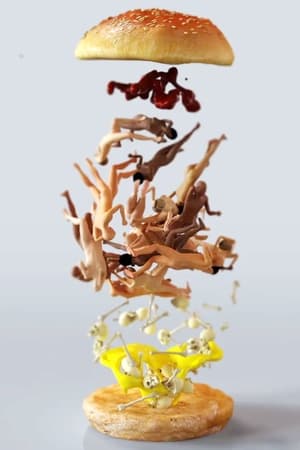
In this hyper-realistic digitally rendered video, sandwiches are assembled in sequence. Each component, from the first slice of bread to the last, is dropped dramatically from a height, before bouncing and settling into place in slow motion. Mayonnaise, then ham, lettuce, tomato, cucumber, and the final slice on top. This perfect yet uncanny choreography reads like an exaggerated, perverse take on ‘food-porn’ obsessed advertising campaigns. These sequences repeat, the sound gradually incorporates saws and machinery, echos from empty environments, pianos breaking, smashes, crashes and mechanical crescendos like jet engines alongside eerie drones, bells, and hard rummaging noises. Another piece of bread lands, some rubber baby dolls fall onto it, some brown slop, a blanket, denim jeans, some businessmen in suits, and more slop. Ketchup, then a union jack, all encased in the final layer of bread that falls to the top of the pile to the sound of a tolling bell. Infinite continuation, loop.

60%
Art of Memory(en)
1987-10-22
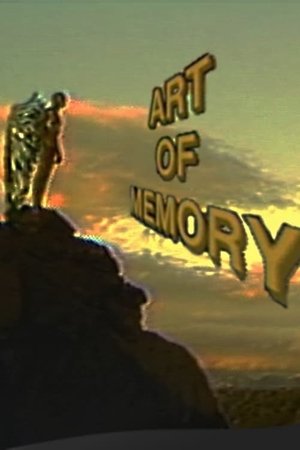
Manipulating a variety of sources, Vasulka uses creative imaging tools to situate historical images against Southwestern landscapes of incredible beauty. Contorting the images into a variety of isomorphic forms, Vasulka creates a literal shape for these memories, developing these shapes as metaphors for the processes of fragmentation, condensation, and inversion, that inevitably contort fact into memory. While much of the raw material for the tape is drawn from World War II and its rehearsals, the Spanish Civil War and the Russian Revolution, The Art of Memory is really an extended meditation seeking to reconcile the blurry, banal photographs of historic figures with the mass destruction they helped engineer.

65%
Melody(en)
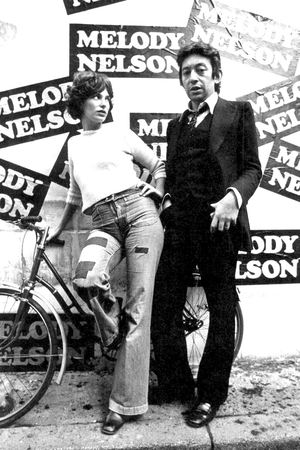
1971-12-22
Although Gainsbourg and Birkin had appeared in a string of films since their magnetic collision in Pierre Grimblat’s Slogan, Melody was a bit of diversion from their collaborations since it’s a series of interwoven videos inspired by the Gainsbourgalbum. For '71 it’s a novel concept to bring visual life to an LP, but even more surprising are the short film’s amazing visuals that director Averty crafted using a wealth of video filters, overlays, camera movements and chroma key effects. Averty applies these in tandem with the increasing tone of Gainsbourg’s songs, which more or less chronicle an older man's affair with a young girl. Each song is comprised of steady, sometimes brooding poetic delivery, with refrains timed to the phrase repeats of each song, while Alan Parker’s buzzing guitar accompanies and wiggles around Gainsbourg’s resonant voice. The bass is fat and groovy, the drums easy but steady, and the periodic use of strings or rich vibrato makes this short a sultry little gem.