Loading Page


A Life for the Tsar(1992)
Status: Released
Date: 1992-01-01
0%
0 Votes
Time: 2h 52m
Overview:
Glinka's "patriotic-heroic tragic opera" in four acts 'A Life for the Tsar' or 'Ivan Susanin' (as it was known during the Soviet era), recorded live at the Bolshoi Theatre in 1992, and starring Evgeny Nesterenko, Marina Mescheriakova, Alexander Lomonosov and Elena Zaremba, with the chorus and orchestra of the Bolshoi, conducted by Alexander Lazarev. The historical basis of the plot involves Ivan Susanin, a patriotic hero of the early 17th century who died in the expulsion of the invading Polish army for the newly elected Tsar Michael of Russia, the first of the Romanov dynasty, elected in 1613.
Languages:
Countries:
Movie: A Life for the Tsar
Top 4 Billed Cast
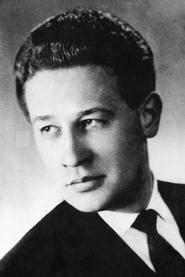
Евгений Нестеренко
Ivan Susanin

Maria Mescheryakova
Antonida

Elena Zaremba
Vanja
HomePage
Overview
Glinka's "patriotic-heroic tragic opera" in four acts 'A Life for the Tsar' or 'Ivan Susanin' (as it was known during the Soviet era), recorded live at the Bolshoi Theatre in 1992, and starring Evgeny Nesterenko, Marina Mescheriakova, Alexander Lomonosov and Elena Zaremba, with the chorus and orchestra of the Bolshoi, conducted by Alexander Lazarev. The historical basis of the plot involves Ivan Susanin, a patriotic hero of the early 17th century who died in the expulsion of the invading Polish army for the newly elected Tsar Michael of Russia, the first of the Romanov dynasty, elected in 1613.
Release Date
1992-01-01
Average
0
Rating:
0.0 startsTagline
Genres
Languages:
Recommendations Movies

69%
Nicholas and Alexandra(en)
1971-11-29
Tsar Nicholas II, the inept last monarch of Russia, insensitive to the needs of his people, is overthrown and exiled to Siberia with his family.
69%
October (Ten Days that Shook the World)(ru)
1928-05-11
Sergei M. Eisenstein's docu-drama about the 1917 October Revolution in Russia. Made ten years after the events and edited in Eisenstein's 'Soviet Montage' style, it re-enacts in celebratory terms several key scenes from the revolution.
69%
They Fought for Their Motherland(ru)
1975-11-05
In July 1942, in the Second World War, the rearguard of the Russian army protects the bridgehead of the Don River against the German army while the retreating Russian troops cross the bridge. While they move back to the Russian territory through the countryside, the soldiers show their companionship, sentiments, fears and heroism to defend their motherland.
58%
Love Happy(en)
1949-10-12
The Marx Brothers help young Broadway hopefuls when they get mixed up with gangsters due to a tin of sardines containing Romanoff diamonds.
65%
The Wizard of the Kremlin(en)
2026-01-21
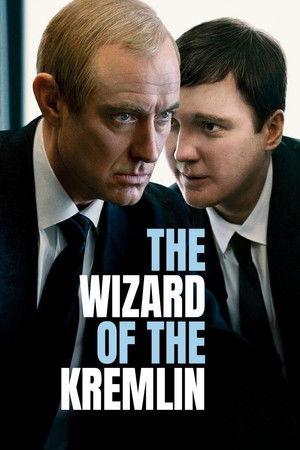
Russia, early 1990s. Amid post-Soviet chaos, a brilliant young man, Vadim Baranov, charts his path. First an artist, then a reality TV producer, he becomes the spin doctor to a rising KGB agent: Vladimir Putin. At the heart of power, Baranov shapes the new Russia, blurring the boundaries between truth and lies, belief and manipulation. Only the magnetic Ksenia is beyond his control, tempting him away from this dangerous game. Years later, after retreating into silence and shrouded in mystery, Baranov finally opens up, revealing the dark secrets of the regime he helped build.
60%
Vysotsky: Thank You For Being Alive(ru)
2011-12-01
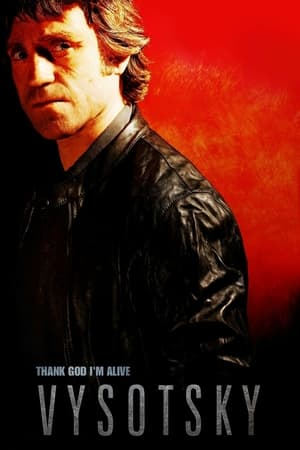
Russian poet, singer and actor Vladimir Vysotsky was an idol of the 1970s and ’80s. In 1980, at the age of 42, he passed away during the Moscow Olympic Games. This is the story of his last great love as handed down to his son from a family friend. Written by nitorch.

73%
The Last Command(en)
1928-01-21
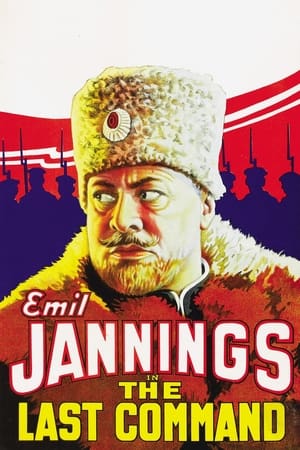
A former Imperial Russian general and cousin of the Czar ends up in Hollywood as an extra in a movie directed by a former revolutionary.
63%
The Conquest of Siberia(ru)
2019-02-21
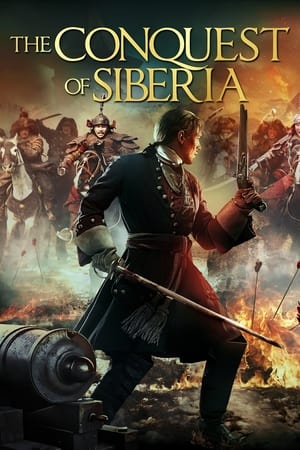
Ivan Demarin, a young officer of Peter the First’s new guards, follows the Tsar’s order and goes to the frontier town of Tobolsk, deep in the Siberian forest. There Ivan falls in love for the first time and he and his regiment happen to be involved in conspiracy of local princes who hunt for gold in the town of Yarkand. His fort is surrounded by hordes of wild Dzungars and there is no one to call for help…
64%
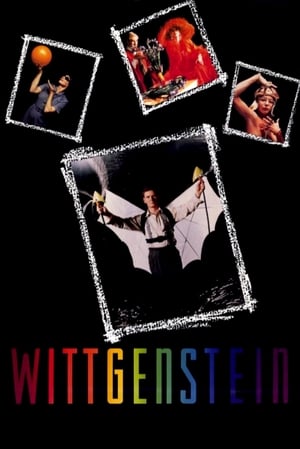
Wittgenstein(en)
1993-03-26
A dramatization, in modern theatrical style, of the life and thought of the Viennese-born, Cambridge-educated philosopher Ludwig Wittgenstein, whose principal interest was the nature and limits of language. A series of sketches depict the unfolding of his life from boyhood, through the era of the first World War, to his eventual Cambridge professorship and association with Bertrand Russell and John Maynard Keynes. The emphasis in these sketches is on the exposition of the ideas of Wittgenstein, a homosexual, and an intuitive, moody, proud, and perfectionistic thinker generally regarded as a genius.
73%
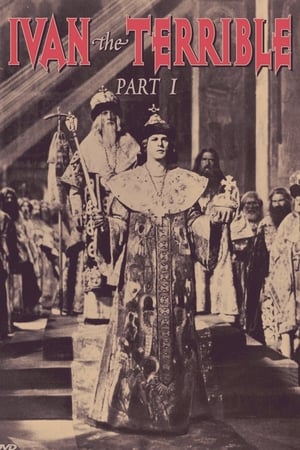
Ivan the Terrible, Part I(ru)
1944-11-11
Set during the early part of his reign, Ivan faces betrayal from the aristocracy and even his closest friends as he seeks to unite the Russian people. Sergei Eisenstein's final film, this is the first part of a three-part biopic of Tsar Ivan IV of Russia, which was never completed due to the producer's dissatisfaction with Eisenstein's attempts to use forbidden experimental filming techniques and excessive cost overruns. The second part was completed but not released for a decade after Eisenstein's death and a change of heart in the USSR government toward his work; the third part was only in its earliest stage of filming when shooting was stopped altogether.
76%
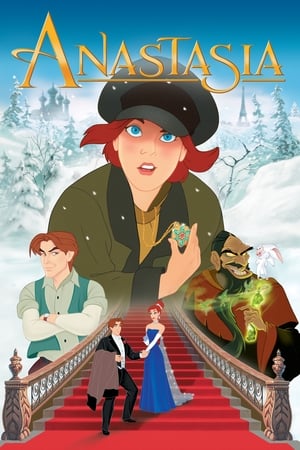
Anastasia(en)
1997-11-20
Ten years after she was separated from her family, an eighteen-year-old orphan with vague memories of the past sets out to Paris in hopes of reuniting with her grandmother. She is accompanied by two con men, who intend to pass her off as the Grand Duchess Anastasia to the Dowager Empress for a reward.
62%
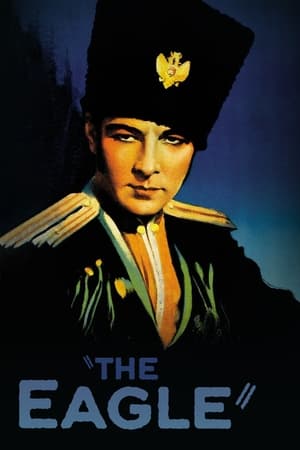
The Eagle(en)
1925-11-08
Vladimir Dubrouvsky, a lieutenant in the Russian army, catches the eye of Czarina Catherine II. He spurns her advances and flees, and she puts out a warrant for his arrest, dead or alive. Vladimir learns that his father's lands have been taken by the evil Kyrilla Troekouroff, and his father dies. He dons a black mask, and becomes the outlaw The Black Eagle. He enters the Troekouroff household disguised as a French instructor for Kyrilla's daughter Mascha. He is after vengeance, but instead falls in love with Mascha.
75%
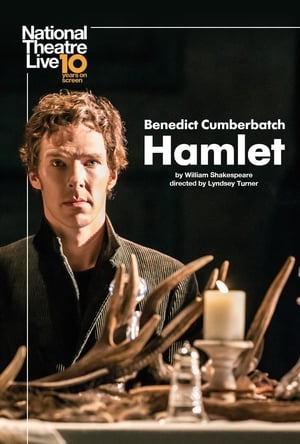
National Theatre Live: Hamlet(en)
2015-10-15
As a country arms itself for war, a family tears itself apart. Forced to avenge his father's death but paralyzed by the task ahead, Hamlet rages against the impossibility of his predicament, threatening both his sanity and the security of the state.
73%
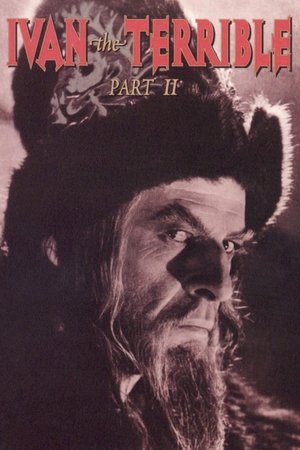
Ivan the Terrible, Part II: The Boyars' Plot(ru)
1958-10-10
This is the second part of a projected three-part epic biopic of Russian Czar Ivan Grozny, undertaken by Soviet film-maker Sergei Eisenstein at the behest of Josef Stalin. Production of the epic was stopped before the third part could be filmed, due to producer dissatisfaction with Eisenstein's introducing forbidden experimental filming techniques into the material, more evident in this part than the first part. As it was, this second part was banned from showings until after the deaths of both Eisenstein and Stalin, and a change of attitude by the subsequent heads of the Soviet government. In this part, as Ivan the Terrible attempts to consolidate his power by establishing a personal army, his political rivals, the Russian boyars, plot to assassinate him.

74%
Leto(ru)
2018-06-07
Leningrad, one summer in the early eighties. Smuggling LPs by Lou Reed and David Bowie, the underground rock scene is boiling ahead of the Perestroika. Mike and his beautiful wife Natasha meet with young Viktor Tsoi. Together with friends, they will change the destiny of rock’n’roll in the Soviet Union.
61%
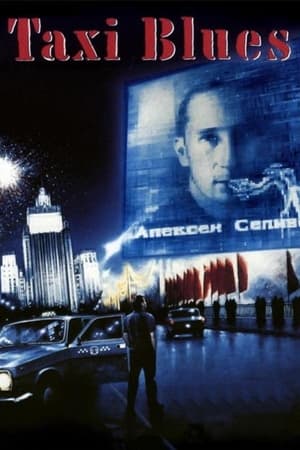
Taxi Blues(ru)
1990-10-17
Ivan is old Russia: thick, dour, hard-working, often brutish; he misses Communism. He drives a taxi and one night meets Alexi, a new Russian, a musician, an alcoholic, irresponsible. Alexi stiffs Ivan for the fare, so Ivan tracks him down and a love-hate relationship ensues. When Alexi lets the bath water run over in Ivan's flat and Ivan must pay 500 rubles for repairs, he tries to force Alexi into day labor to repay him. It's hopeless. Then, suddenly, Alexi is discovered, goes on a jazz tour of America, becomes a celebrity, and returns in triumph. Ivan longs to renew the friendship, and it looks as if he may get what he wants.
70%
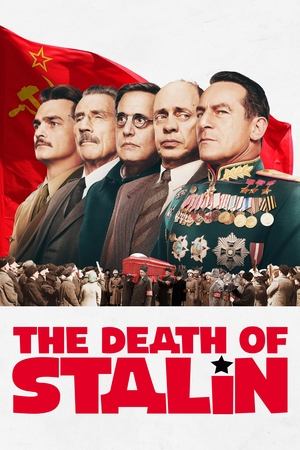
The Death of Stalin(en)
2017-10-20
When dictator Joseph Stalin dies, his parasitic cronies square off in a frantic power struggle to become the next Soviet leader. As they bumble, brawl and back-stab their way to the top, the question remains — just who is running the government?

72%
What Men Talk About(ru)
2010-03-04
Four old friends - Kamil, Lesha, Sasha and Slava - all well-to-do professionals in their late 30s embarking on a two days road trip from Moscow to Odessa. They wish to escape the metropolis and the everyday routine of work, family and girlfriends to relax in a nightclub run by Slava's friend and to see the popular band B-2 show.
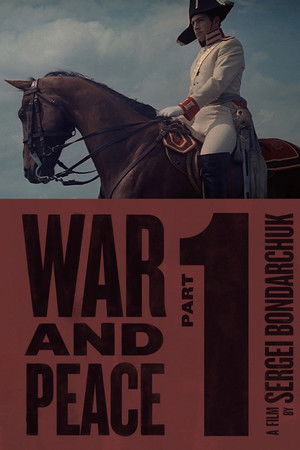
75%
War and Peace, Part I: Andrei Bolkonsky(ru)
1966-03-14
In 1805 St. Petersburg, Pierre Bezukhov, illegitimate son of a rich nobleman, is introduced to high society. His friend, Prince Andrei Bolkonsky, joins the Imperial Russian Army as aide-de-camp of General Mikhail Kutuzov in the War of the Third Coalition against General Napoleon Bonaparte. Part one of the four-part adaptation of Leo Tolstoy's 1869 novel.