Loading Page


Violencia política: allanamientos poblaciones, detenciones, cárcel política (Colección UP)(1973)
Status: Released
Date: 1973-09-11
0%
0 Votes
Languages:
Countries:
Movie: Violencia política: allanamientos poblaciones, detenciones, cárcel política (Colección UP)
HomePage
Overview
Release Date
1973-09-11
Average
0
Rating:
0.0 startsTagline
Genres
Languages:
Keywords
Recommendations Movies
59%
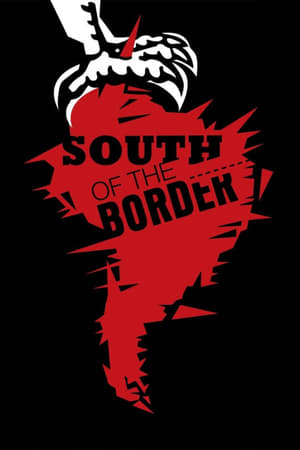
South of the Border(en)
2009-09-07
A road trip across five countries to explore the social and political movements as well as the mainstream media's misperception of South America while interviewing seven of its elected presidents.
71%
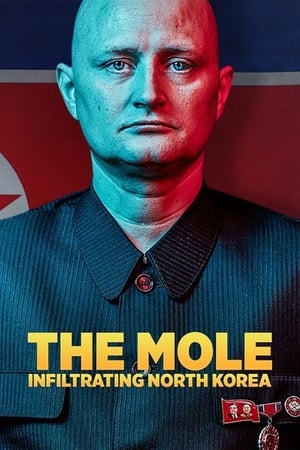
The Mole: Undercover in North Korea(en)
2020-10-11
A real-life undercover thriller about two ordinary men who embark on an outrageously dangerous ten-year mission to penetrate the world's most secretive and brutal dictatorship: North Korea.

64%
Ex Libris: The New York Public Library(en)
2017-09-13
A documentary about how a dominant cultural and demographic institution both sustains their traditional activities and adapts to the digital revolution.

65%
Downloaded(en)
2013-06-20
A documentary that explores the downloading revolution; the kids that created it, the bands and the businesses that were affected by it, and its impact on the world at large.
67%
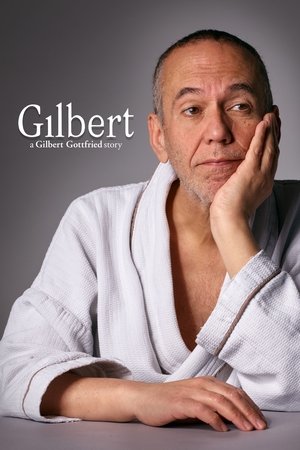
Gilbert(en)
2017-04-20
The life and career of one of comedy's most inimitable modern voices, Mr. Gilbert Gottfried.
75%
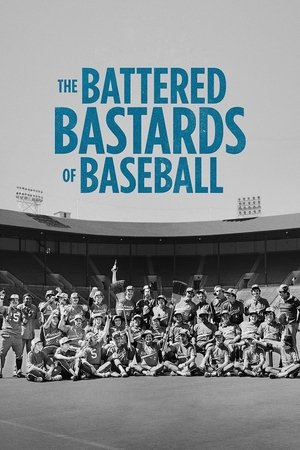
The Battered Bastards of Baseball(en)
2014-01-20
Hollywood veteran Bing Russell creates the only independent baseball team in the country—alarming the baseball establishment and sparking the meteoric rise of the 1970s Portland Mavericks.
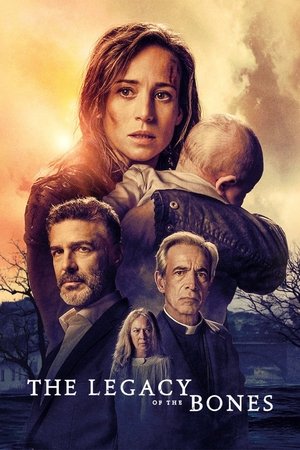
65%
The Legacy of the Bones(es)
2019-12-05
Inspector Amaia Salazar must return to the Baztan valley in order to solve a series of suicides that seem to follow a similar pattern.

71%
The Class of ‘92(en)
2013-12-01
A detailing of the rise to prominence and global sporting superstardom of six supremely talented young Manchester United football players (David Beckham, Nicky Butt, Ryan Giggs, Paul Scholes, Phil and Gary Neville). The film covers the period 1992-1999, culminating in Manchester United's European Cup triumph.


76%
Night Will Fall(en)
2014-06-07
When Allied forces liberated the Nazi concentration camps in 1944-45, their terrible discoveries were recorded by army and newsreel cameramen, revealing for the first time the full horror of what had happened. Making use of British, Soviet and American footage, the Ministry of Information’s Sidney Bernstein (later founder of Granada Television) aimed to create a documentary that would provide lasting, undeniable evidence of the Nazis’ unspeakable crimes. He commissioned a wealth of British talent, including editor Stewart McAllister, writer and future cabinet minister Richard Crossman – and, as treatment advisor, his friend Alfred Hitchcock. Yet, despite initial support from the British and US Governments, the film was shelved, and only now, 70 years on, has it been restored and completed by Imperial War Museums under its original title "German Concentration Camps Factual Survey".
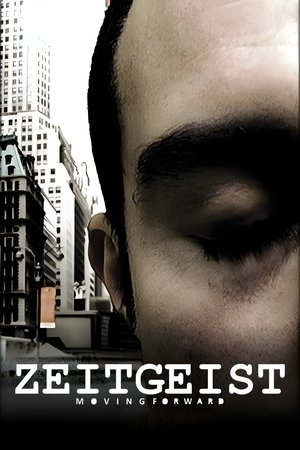
71%
Zeitgeist: Moving Forward(en)
2011-01-15
A presentation of a case for a needed transition out of the current socioeconomic monetary paradigm which governs the entire world society. This subject matter will transcend the issues of cultural relativism and traditional ideology and move to relate the core, empirical 'life ground' attributes of human and social survival, extrapolating those immutable natural laws into a new sustainable social paradigm called a 'Resource-Based Economy'.
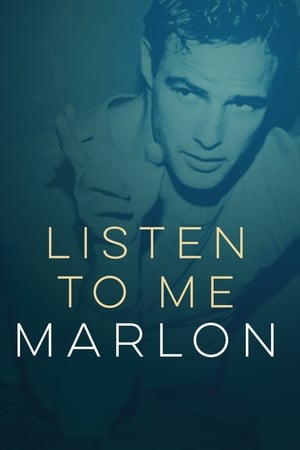
75%
Listen to Me Marlon(en)
2015-07-29
With exclusive access to his extraordinary unseen and unheard personal archive including hundreds of hours of audio recorded over the course of his life, this is the definitive Marlon Brando cinema documentary. Charting his exceptional career as an actor and his extraordinary life away from the stage and screen with Brando himself as your guide, the film will fully explore the complexities of the man by telling the story uniquely from Marlon's perspective, entirely in his own voice. No talking heads, no interviewees, just Brando on Brando and life.
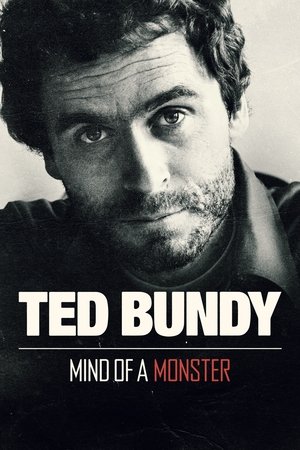
76%
Ted Bundy: Mind of a Monster(en)
2019-08-18
New exclusive access and never before heard testimony gives a unique insight into the mind of America's most notorious serial killer, Ted Bundy. Breathtaking archive from the time and the voice of Bundy himself, reveals the monster inside the man.
66%
After Truth: Disinformation and the Cost of Fake News(en)
2020-03-19
An investigation into the ongoing threat caused by the phenomenon of “fake news” in the U.S., focusing on the real-life consequences that disinformation, conspiracy theories and false news stories have on the average citizen.

68%
Looking for Richard(en)
1996-10-11
Al Pacino's deeply-felt rumination on Shakespeare's significance and relevance to the modern world through interviews and an in-depth analysis of "Richard III."

74%
Above Majestic(en)
2018-10-30
A look at the origins, history and conspiracies behind the "Majestic 12", a clandestine group of military and corporate figureheads charged with reverse-engineering extraterrestrial technology.

73%
Mea Maxima Culpa: Silence in the House of God(en)
2012-11-16
Alex Gibney explores the charged issue of pedophilia in the Catholic Church, following a trail from the first known protest against clerical sexual abuse in the United States and all way to the Vatican.
66%
Champs(en)
2015-03-13
A documentary about the sport of boxing, as seen through the eyes of champions Mike Tyson, Evander Holyfield and Bernard Hopkins.
71%
Deliver Us from Evil(en)
2006-06-24
Documentary filmmaker Amy Berg investigates the life of 30-year pedophile Father Oliver O'Grady and exposes the corruption inside the Catholic Church that allowed him to abuse countless children. Victims' stories and a disturbing interview with O'Grady offer a view into the troubled mind of the spiritual leader who moved from parish to parish gaining trust ... all the while betraying so many.
59%
Memories of a Murderer: The Nilsen Tapes(en)
2021-08-18
Serial killer Dennis Nilsen narrates his life and horrific crimes via a series of chilling audiotapes recorded from his jail cell.
Similar Movies

0%
Letters to a Dictatorship(pt)
2006-01-01
A hundred letters written by Portuguese women during the Salazar dictatorship were found by chance in a second-hand bookshop. By confronting today the women who wrote these letters with the ghosts of the past, and revealing important archive material, Letters to a Dictatorship takes us on an in-depth journey through the obscurantism that dominated Portugal for more than 50 years.

20%
Inês(fr)
1974-11-17
Inês Etienne Romeu was an opponent to the Brazilian's dictatorship. She was kidnapped, tortured and raped in jail, where she stayed for almost 100 days. She was later sentenced to life imprisonment. She stayed ten years in prison, from 1971 to 1979. Delphine Seyrig directed this film in 1974, when Inês was still in prison, protesting against this imprisonment and in support to Inês.
75%
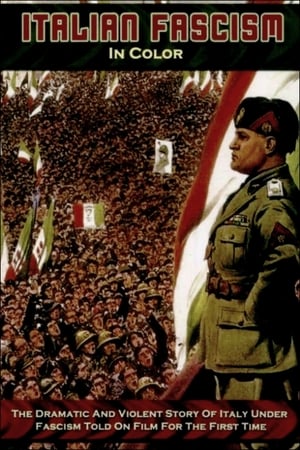
Fascism in Colour(en)
2006-01-01
After the World War I, Mussolini's perspective on life is severely altered; once a willful socialist reformer, now obsessed with the idea of power, he founds the National Fascist Party in 1921 and assumes political power in 1922, becoming the Duce, dictator of Italy. His success encourages Hitler to take power in Germany in 1933, opening the dark road to World War II. (Originally released as a two-part miniseries. Includes colorized archival footage.)
60%
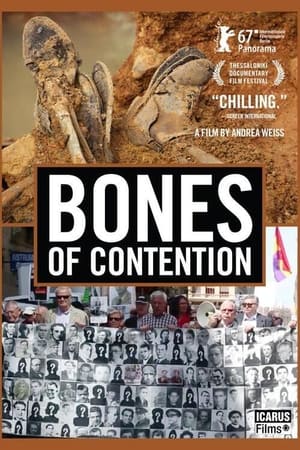
Bones of Contention(en)
2018-03-02
A history of the political and social repression carried out by the ruthless regime of Spanish dictator Francisco Franco between 1936 and 1975 that focuses on the lives of gays and lesbians during those dark years and the death of the Spanish gay poet Federico García Lorca.

0%
Politzek, the voices that challenge the Kremlin(fr)
2026-03-07
In Russia, criticizing the war in Ukraine or Vladimir Putin’s regime has become a crime. Thousands of ordinary citizens are being arrested, tried, and imprisoned. They are called “Politzek”: political prisoners. Filmed clandestinely over the course of more than a year, Politzek gives a platform to those who, despite the fear, continue to speak out against Putin’s repressive Russia. Through the intersecting stories of a teenager sentenced to five years in prison for criticizing the government on social media, a young artist jailed for placing anti-war stickers, a human rights activist, and two theater directors facing Kafkaesque trials, the film unveils the machinery of state repression in Russia. With rare footage, broken yet unyielding voices, this is a story of silenced resistance.
75%
Cuba and the Cameraman(en)
2017-09-08
This revealing portrait of Cuba follows the lives of Fidel Castro and three Cuban families affected by his policies over the last four decades.
0%
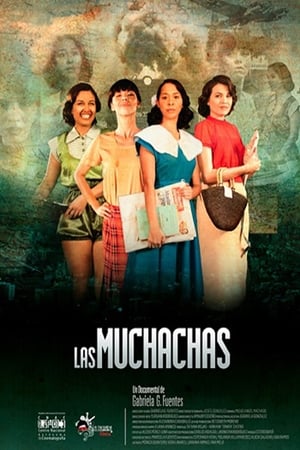
The Girls(es)
2014-06-27
Four lucid grandmothers tell their story forgotten by history: the militancy and resistance of the young women of the leftist youth against the dictatorship of Marcos Pérez Jiménez.
75%
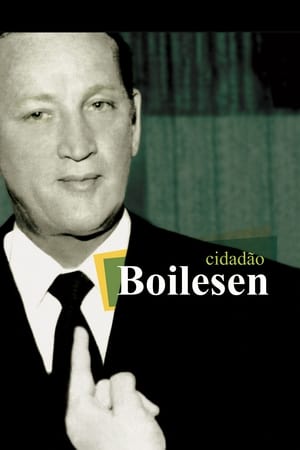
Citizen Boilesen(pt)
2009-11-27
A documentary about the controversial businessman Henning Boilesen Jr. and his involvement with the military regime as one of its most enthusiastic supporters, financing it and participating in the tortures of political prisoners. Those actions later culminated in his assassination in 1971 by members of militant groups opposed to the regime.
0%
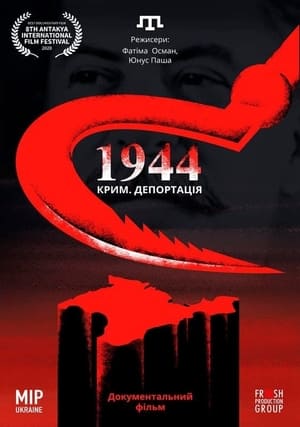
1944. Deportation(uk)
2019-05-17
In 1944 Crimean Tatars has suffered a long road in exile. It was accompanied by famine, illness and loss. In the first years of exile, almost half of deported Crimean Tatars died. But those, who survived, dreamed of only one thing - to return to Crimea. The documentary 1944 tells about the tragedy of all Crimean Tatars through several separate life stories. They are cherished by each Crimean Tatar family and must be remembered by all generations to come.
68%
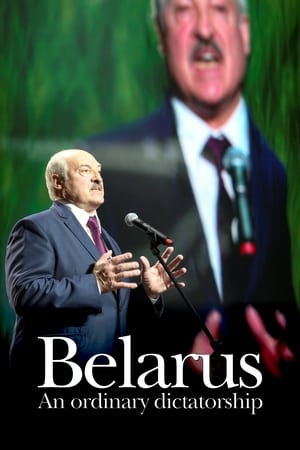
Belarus: An Ordinary Dictatorship(fr)
2018-03-18
It’s the last dictatorship of Europe, caught in a Soviet time-warp, where the secret police is still called the KGB and the president rules by fear. Disappearances, political assassinations, waves of repression and mass arrests are all regular occurances. But while half of Belarus moves closer to Russia, the other half is trying to resist…

60%
Corporate Accountability(es)
2020-02-21
Images of Argentinian companies and factories in the first light of day, seen from the inside of a car, while the director reads out documents in voiceover that reveals the collusion of the same concerns in the military dictatorship’s terror.

77%
The Autobiography of Nicolae Ceausescu(ro)
2010-10-29
The three-hour-long documentary covers 25 years in the life of Nicolae Ceaușescu and was made using 1,000 hours of original footage from the National Archives of Romania.
69%
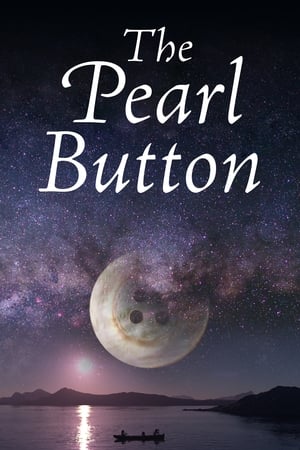
The Pearl Button(es)
2015-10-15
The ocean contains the history of all humanity. The sea holds all the voices of the earth and those that come from outer space. Water receives impetus from the stars and transmits it to living creatures. Water, the longest border in Chile, also holds the secret of two mysterious buttons which were found on its ocean floor. Chile, with its 2,670 miles of coastline and the largest archipelago in the world, presents a supernatural landscape. In it are volcanoes, mountains and glaciers. In it are the voices of the Patagonian Indigenous people, the first English sailors and also those of its political prisoners. Some say that water has memory. This film shows that it also has a voice.
72%
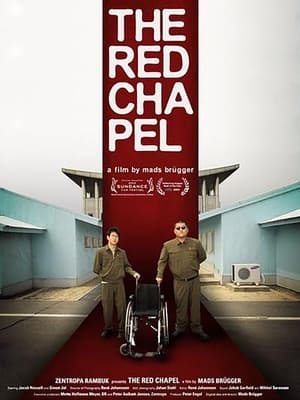
The Red Chapel(da)
2010-12-29
Two Danish comedians join the director on a trip to North Korea, where they have been allowed access under the pretext of wanting to perform a vaudeville act.
85%
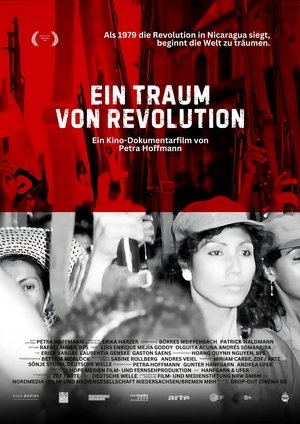
Ein Traum von Revolution(de)
2024-04-11
When the revolution in Nicaragua won its victory nearly 40 years ago, the world began to dream. A young generation was taking the reins in a country of grand utopias. From West Germany alone, 15,000 “brigadists” travelled to help rebuild the war-torn country: liberals, greens, unionists, social democrats, leftists and church representatives harvested coffee and cotton, built schools, kindergartens and hospital wards. No movement has mobilised so many people. What became of the hopes and dreams of the revolutionaries and their supporters?

65%
Nazis in the CIA(de)
2013-10-15
Florian Hartung and Dirk Pohlmann have reconstructed a previously unknown dimension of the collaboration between Nazis and the CIA in the Cold War. Drawing upon recently released documents, the film exposes for the first time a perfidious, worldwide net that reaches deep into the power structures of the Federal Republic of Germany. Lending their authority to the fact-finders’ mission are high-ranking statesmen, journalists and historians.
0%
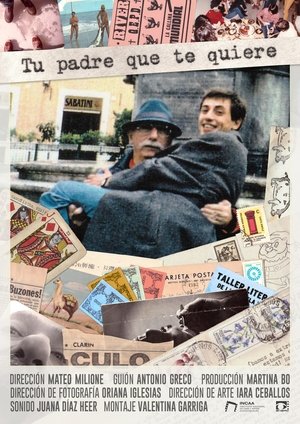
Your loving father(es)
2025-04-03
In the late ‘70s, in the midst of the military dictatorship, a surrealist literary work- shop is the oasis of Martín, a tormented young man who seeks to improve his poetry. Caron, a brilliant and eccentric writer, adopts him as a son. Their bond is recorded in short home movies and an unusual correspondence.
80%
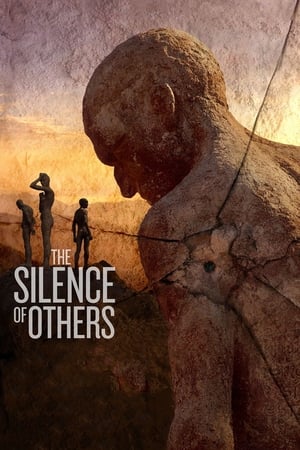
The Silence of Others(es)
2019-01-25
The story of the tortuous struggle against the silence of the victims of the dictatorship imposed by General Franco after the victory of the rebel side in the Spanish Civil War (1936-1975). In a democratic country, but still ideologically divided, the survivors seek justice as they organize the so-called “Argentinian lawsuit” and denounce the legally sanctioned pact of oblivion that intends to hide the crimes they were subjects of.
0%
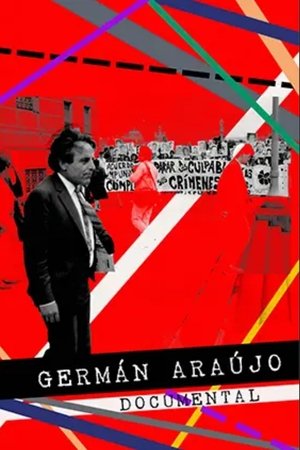
Germán Araújo(en)
2025-10-30
In Germán Araujo, director Aldo Novick revives the memory of a journalist who defied censorship during one of Uruguay's darkest periods. Through previously unseen archival footage, testimonies, and music, the film honors the courage of those who reported the truth when it was risky. This powerful documentary is shaping up to be one of the most important Uruguayan film releases of the year.