Molds and How They Grow(1969)
In this educational film, laboratory demonstrations show the effects of moisture and temperature on the growth of molds. Photomicrography reveals the structure of molds: hyphae, mycelium, spore balls, spores. Beginning with spores on a rice culture, time-lapse photography shows the formation of a new colony.

Movie: Molds and How They Grow
HomePage
Overview
In this educational film, laboratory demonstrations show the effects of moisture and temperature on the growth of molds. Photomicrography reveals the structure of molds: hyphae, mycelium, spore balls, spores. Beginning with spores on a rice culture, time-lapse photography shows the formation of a new colony.
Release Date
1969-01-01
Average
0
Rating:
0.0 startsTagline
Genres
Languages:
Keywords
Recommendations Movies
Fantastic Fungi(en)
A vivid journey into the mysterious subterranean world of mycelium and its fruit— the mushroom. A story that begins 3.5 billion years ago, fungi makes the soil that supports life, connecting vast systems of roots from plants and trees all over the planet, like an underground Internet. Through the eyes of renowned mycologist Paul Stamets, professor of forest ecology Suzanne Simard, best selling author Michael Pollan, food naturalist Eugenia Bone and others, we experience the power, beauty and complexity of the fungi kingdom.
More Brains! A Return to the Living Dead(en)
Retrospective documentary about the making of the horror cult classic "The Return of the Living Dead."
The September Issue(en)
A documentary chronicling Vogue editor-in-chief Anna Wintour's preparations for the 2007 fall-fashion issue.

One Soldier's Story: The Journey of American Sniper(en)
Join director Clint Eastwood and his creative team, along with Bradley Cooper and Sienna Miller, as they overcome enormous creative and logistic obstacles to make a film that brings the truth of Navy SEAL Chris Kyle's story to the screen.

Naqoyqatsi(en)
A visual montage portrait of our contemporary world dominated by globalized technology and violence.

Spider-Man: All Roads Lead to No Way Home(en)
JB Smoove and Martin Starr host a celebration of 20 years of "Spider-Man" movies, from the Sam Raimi trilogy to Marc Webb's movies and the trio from Jon Watts.
The Mole: Undercover in North Korea(en)
A real-life undercover thriller about two ordinary men who embark on an outrageously dangerous ten-year mission to penetrate the world's most secretive and brutal dictatorship: North Korea.

DMT: The Spirit Molecule(en)
THE SPIRIT MOLECULE weaves an account of Dr. Rick Strassman's groundbreaking DMT research through a multifaceted approach to this intriguing hallucinogen found in the human brain and hundreds of plants, including the sacred Amazonian brew, ayahuasca. Utilizing interviews with a variety of experts to explain their thoughts and experiences with DMT, and ayahuasca, within their respective fields, and discussions with Strassman’s research volunteers, brings to life the awesome effects of this compound, and introduces us to far-reaching theories regarding its role in human consciousness.
Beyond Infinity: Buzz and the Journey to Lightyear(en)
Explore the evolution of Buzz Lightyear from toy to human in the making of Pixar’s Lightyear. Dive into the origin and cultural impact of everyone’s favorite Space Ranger, the art of designing a new “human Buzz,” and the challenges faced by the Lightyear crew along the way.
The Summers of It - Chapter Two: It Ends(en)
This documentary focuses on the actors and their journey over two summers to create the remake to the original IT, by Stephen King. The documentary originally released as bonus material, bundled with IT: Chapter Two.

The Secret(en)
Interviews with leading authors, philosophers and scientists, with an in-depth discussion of the Law of Attraction. The audience is shown how they can learn and use 'The Secret' in their everyday lives.

Ronaldo(en)
Filmed over 14 months with unprecedented access into the inner circle of the man and the sport, this is the first official and fully authorised film of one of the most celebrated figures in football. For the first time ever, the world gets vividly candid and un-paralleled, behind-closed-doors access to the footballer, father, family-man and friend in this moving & fascinating documentary. Through in-depth conversations, state of the art football footage and never before seen archival footage, the film gives an astonishing insight into the sporting and personal life of triple Ballon D'Or winner Cristiano Ronaldo at the peak of his career. From the makers of ‘Senna’ and ‘Amy’, Ronaldo takes audiences on an intimate and revealing journey of what it’s like to live as an iconic athlete in the eye of the storm.

Being James Bond(en)
Daniel Craig candidly reflects on his 15 year adventure as James Bond. Including never-before-seen archival footage from Casino Royale to the upcoming 25th film No Time To Die, Craig shares his personal memories in conversation with 007 producers, Michael G Wilson and Barbara Broccoli.

I Am Heath Ledger(en)
The life and career of an actor, artist, and icon. His own journey through his own camera.

Cristiano Ronaldo: World at His Feet(en)
Cristiano Ronaldo: The World at His Feet follows the footballer from his beginnings in Portugal, breakthrough start with Manchester United and current career at Real Madrid.
Harry Potter: A History Of Magic(en)
A thrilling journey through legends, belief and folklore, this film goes behind the scenes with the British Library as they search to tell that story through objects in their collection, in an ambitious new exhibition: Harry Potter: A History Of Magic. J.K. Rowling, who is lending unseen manuscripts, drawings and drafts from her private archives (which will sit alongside treasures from the British Library, as well as original drafts and drawings from Jim Kay) talks about some of the personal items she has lent to the exhibition and gives new insight into her writing, looking at some of the objects from the exhibition that have fired her imagination.
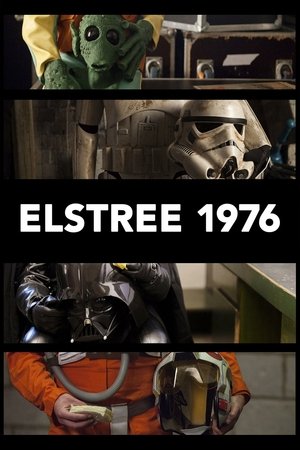
Elstree 1976(en)
A documentary about ten very different lives connected by having appeared onscreen wearing masks or helmets in Star Wars.

Downloaded(en)
A documentary that explores the downloading revolution; the kids that created it, the bands and the businesses that were affected by it, and its impact on the world at large.
Embrace the Panda: Making Turning Red(en)
A feature length documentary about the all-women team at the helm of Pixar's original feature, Turning Red. With unprecedented behind-the-scenes access to Director Domee Shi and her core leadership crew, this story shines a light on the powerful professional and personal journeys that brought this incredibly comical, utterly relatable, and deeply heartfelt story to the screen.
Similar Movies
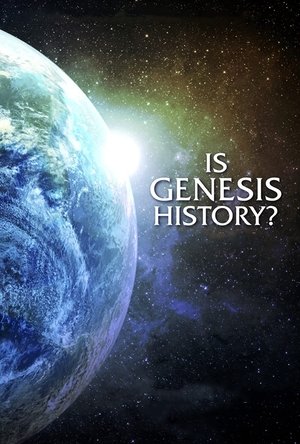
Is Genesis History?(en)
A fascinating new look at the biblical, historical, and scientific evidence for Creation and the Flood. Learn from more than a dozen scientists and scholars as they explore the world around us in light of Genesis. Dr. Del Tackett, creator of The Truth Project, hikes through canyons, climbs up mountains, and dives below the sea in an exploration of two competing views... one compelling truth.
Fantastic Fungi(en)
A vivid journey into the mysterious subterranean world of mycelium and its fruit— the mushroom. A story that begins 3.5 billion years ago, fungi makes the soil that supports life, connecting vast systems of roots from plants and trees all over the planet, like an underground Internet. Through the eyes of renowned mycologist Paul Stamets, professor of forest ecology Suzanne Simard, best selling author Michael Pollan, food naturalist Eugenia Bone and others, we experience the power, beauty and complexity of the fungi kingdom.

Close-Up on Planets(en)
Computer animation and footage from NASA space missions explain how our solar system evolved and the place Earth has within the system.
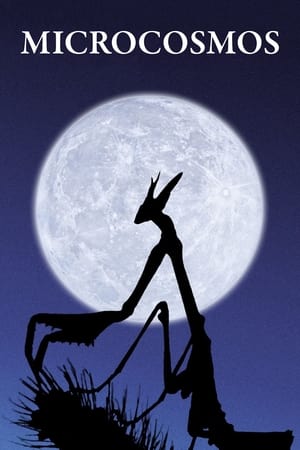
Microcosmos(fr)
A documentary of insect life in meadows and ponds, using incredible close-ups, slow motion, and time-lapse photography. It includes bees collecting nectar, ladybugs eating mites, snails mating, spiders wrapping their catch, a scarab beetle relentlessly pushing its ball of dung uphill, endless lines of caterpillars, an underwater spider creating an air bubble to live in, and a mosquito hatching.
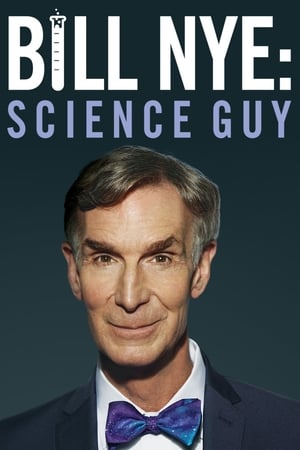
Bill Nye: Science Guy(en)
Bill Nye is retiring his kid show act in a bid to become more like his late professor, astronomer Carl Sagan. Sagan dreamed of launching a spacecraft that could revolutionize interplanetary exploration. Bill sets out to accomplish Sagan's mission, but he is pulled away when he is challenged by evolution and climate change contrarians to defend the scientific consensus. Can Bill show the world why science matters in a culture increasingly indifferent to evidence?
Root of All Evil?(en)
In this two-part Channel 4 series, Professor Richard Dawkins challenges what he describes as 'a process of non-thinking called faith'. He describes his astonishment that, at the start of the 21st century, religious faith is gaining ground in the face of rational, scientific truth. Science, based on scepticism, investigation and evidence, must continuously test its own concepts and claims. Faith, by definition, defies evidence: it is untested and unshakeable, and is therefore in direct contradiction with science. In addition, though religions preach morality, peace and hope, in fact, says Dawkins, they bring intolerance, violence and destruction. The growth of extreme fundamentalism in so many religions across the world not only endangers humanity but, he argues, is in conflict with the trend over thousands of years of history for humanity to progress to become more enlightened and more tolerant.
Einstein's Universe(en)
A documentary produced in 1979 to celebrate the centenary of the birth of Albert Einstein. Narrated and hosted by Peter Ustinov and written by Nigel Calder.
Black Hole Hunters(en)
A team of international scientists attempt to document the first-ever image of a black hole.
Is Genesis History? Mountains After the Flood(en)
In this fascinating sequel to "Is Genesis History?", watch a team of scientists discover new evidence for the global Flood. By the time the journey is over, you'll understand exactly how modern science connects to the book of Genesis.
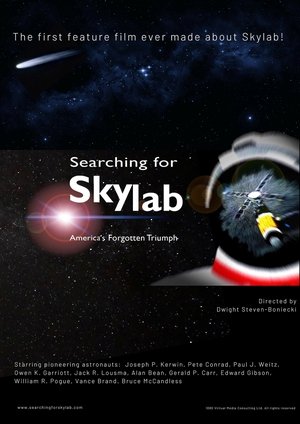
Searching for Skylab, America's Forgotten Triumph(en)
The first American space station Skylab is found in pieces scattered in Western Australia. Putting these pieces back together and re-tracing the Skylab program back to its very conception reveals the cornerstone of human space exploration.
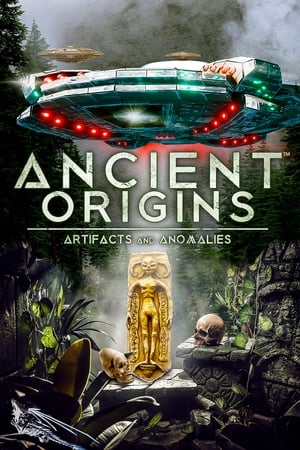
Ancient Origins: Artifacts and Anomalies(en)
Archaeologists generally regard Mesopotamia as "the beginning of civilization" but shocking new evidence that defies comprehension clearly suggests that highly advanced civilizations existed in pre-history. With new advanced technology, archaeologists are now able to image undiscovered worlds before our own from above. The truth to mankind's true origins is being rapidly revealed to be very different than what we've been told.
Aap tot Aap(nl)

Out of Plain Sight(en)
From the Los Angeles Times and Pulitzer Prize-finalist Rosanna Xia, OUT OF PLAIN SIGHT is a cinematic exposé of an environmental disaster lurking just off the coast of Southern California. Not far from Catalina Island, aboard one of the most-advanced research ships in the world, David Valentine discovered a corroded barrel on the seafloor that gave him chills. The full environmental horror sharpens into greater clarity once he calls Xia, who pieces together a shocking revelation: In the years after World War II, as many as half a million barrels of toxic waste had been quietly dumped into the ocean – and the consequences continue to haunt the world today.
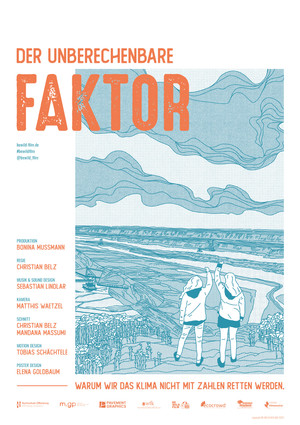
The Unpredictable Factor(de)
In today's climate debate, there is only one factor that cannot be calculated in climate models - humans. How can we nevertheless understand our role in the climate system and manage the crisis? Climate change is a complex global problem. Increasingly extreme weather events, rising sea levels, and more difficult living conditions - including for us humans - are already the order of the day. Global society has never faced such a complex challenge. For young people in particular, the frightening climate scenarios will be a reality in the future. For the global south, it is already today. To overcome this crisis, different perspectives are needed. "THE UNPREDICTABLE FACTOR" goes back to the origins of the German environmental movement, accompanies today's activists in the Rhineland in their fight against the coal industry and gives a voice to scientists from climate research, ethnology and psychology.
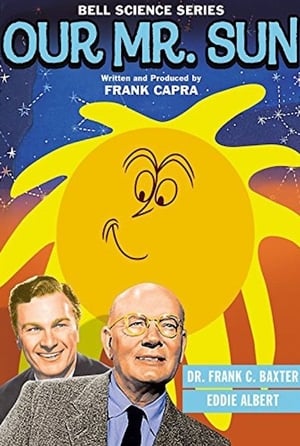
Our Mr. Sun(en)
One entry in a series of films produced to make science accessible to the masses—especially children—this film describes the sun in scientific but entertaining terms.

Stopping the Next Pandemic(fr)
How can we prevent epidemics? Why do viruses and bacteria move? Rather than trying to contain epidemics one after another, why not stop the processes that encourage their emergence? The challenges are enormous, but scientists argue that solutions exist. Because if emerging diseases are the collateral consequences of our lifestyles, our lifestyles are under our control.

Attacking the Devil: Harold Evans and the Last Nazi War Crime(en)
Before the internet. Before social media. Before breaking news. The victims of Thalidomide had to rely on something even more extraordinary to fight their corner: Investigative journalism. This is the story of how Harold Evans fought and won the battle of his and many other lives.
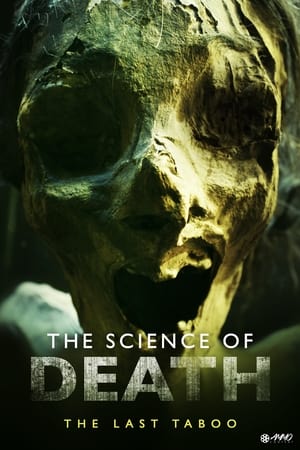
Science Of Death(en)
After ignoring death for most of our history, the medical and scientific communities have begun to focus their attention on how our bodies behave on our journey to the great beyond. Often seen as an event, dying is actually a process, which, in some cases, can be stopped or reversed. Even after someone is clinically dead, life in many parts of our bodies carries on for hours, days, or even weeks.