Loading Page


Uncovering Our Earliest Ancestor: The Link(2009)
Status: Released
Date: 2009-04-26
71%
5 Votes
Time: 0h 59m
Overview:
Explores the story behind the discovery of an early primate fossil, Darwinius masillae, nicknamed Ida, in a shale quarry in Germany. The fossil is believed to be around 47 million years old, and is extraordinarily well-preserved. Originally unearthed in 1983, Ida lay in the hands of a private collector for 20 years before it was shown to a Norwegian paleontologist, Dr Jørn Hurum. Realising that Ida could turn out to be a significant missing link between modern primates, lemurs and lower mammals, he persuaded the Natural History Museum in Oslo to purchase the fossil and assembled an international team of experts to study it. Their findings were announced in a press conference and the online publication of a scientific paper on 19 May 2009.
Languages: English.
Countries:
United Kingdom
ProductionCompanies: 

Movie: Uncovering Our Earliest Ancestor: The Link
Top 1 Billed Cast
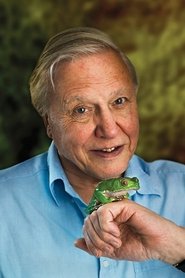
David Attenborough
Self - Presenter / Narrator
Loading Photos
Photo Type :Total items
Recommendations Movies
66%
Secrets of the Neanderthals(en)
2024-05-02
This documentary delves into the mysteries surrounding the Neanderthals and what their fossil record tells us about their lives and disappearance.
72%
Unknown: Cave of Bones(en)
2023-07-16
Scientists examine underground clues from over 250,000 years ago that raise questions about our early relatives — and what it truly means to be human.
70%
The Curious Birth of Benjamin Button(en)
2009-05-05
A documentary about the making of David Fincher's 2008 film THE CURIOUS CASE OF BENJAMIN BUTTON. Virtually every element in the evolution of the Fincher's film is documented here, from the project's attachment to numerous other directors during the 1990s, to its shoot in 2006 and 2007 in New Orleans, to its complex, CGI-intensive postproduction process.

69%
Wormwood(en)
2017-10-22
In this genre-bending tale, Errol Morris explores the mysterious death of a U.S. scientist entangled in a secret Cold War program known as MK-Ultra.
63%
Louis Theroux: Twilight of the Porn Stars(en)
2012-06-10
In 1997, Louis Theroux made a documentary about the world of male porn performers in Los Angeles. 15 years later, he returns to find a business struggling with the deluge of free porn on the internet. Louis revisits some of the original programme's contributors as well as meeting the latest crop of porn performers dreaming of porn stardom.
69%
Anthropocene: The Human Epoch(en)
2018-09-28
Documentary on psychedelic potash mines, expansive concrete seawalls, mammoth industrial machines, and other examples of humanity’s massive, destructive reengineering of the planet.
76%
Our Planet: Behind the Scenes(en)
2019-04-05
Years spent recording footage of creatures from every corner of the globe is bound to produce a bit of drama. Here's a behind-the-scenes look.
71%
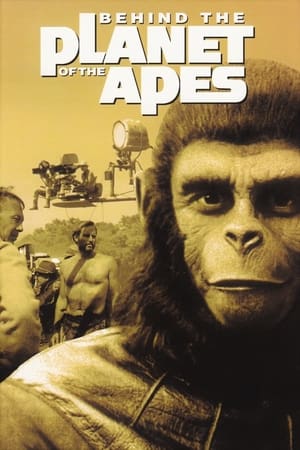
Behind the Planet of the Apes(en)
1998-09-05
Roddy McDowall takes you, film by film, from production meetings to make-up sessions, then right onto the movie set to see the actual filming of the science fiction masterpiece. The most comprehensive history of Planet of the Apes ever created, this fascinating 127-minute documentary explores one of the most imaginative and influential series in movie history.

65%
Downloaded(en)
2013-06-20
A documentary that explores the downloading revolution; the kids that created it, the bands and the businesses that were affected by it, and its impact on the world at large.

68%
Looking for Richard(en)
1996-10-11
Al Pacino's deeply-felt rumination on Shakespeare's significance and relevance to the modern world through interviews and an in-depth analysis of "Richard III."
74%
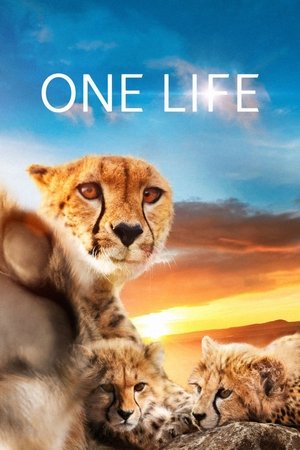
One Life(en)
2011-07-19
One Life captures unprecedented and beautiful sequences of animal behaviour guaranteed to bring you closer to nature than ever before, as well as a second disc packed full of never before seen extras including an exclusive making of featurette narrated by Daniel Craig.
78%
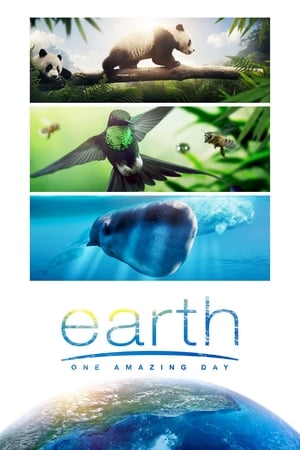
Earth: One Amazing Day(en)
2017-08-04
An astonishing journey revealing the awesome power of the natural world. Over the course of one single day, we track the sun from the highest mountains to the remotest islands to exotic jungles.
71%
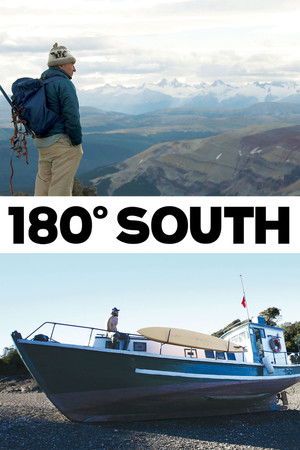
180° South(en)
2010-02-10
The film follows adventurer Jeff Johnson as he retraces the epic 1968 journey of his heroes Yvon Chouinard and Doug Tompkins to Patagonia.
75%
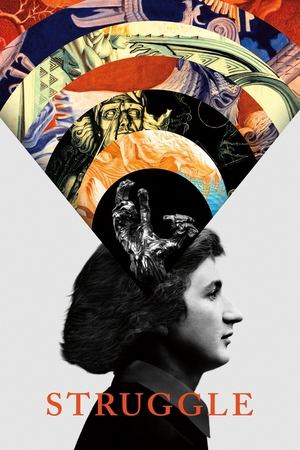
Struggle: The Life and Lost Art of Szukalski(en)
2018-12-20
Artists in LA discover the work of forgotten Polish sculptor Stanislav Szukalski, a mad genius whose true story unfolds chapter by astounding chapter.
69%
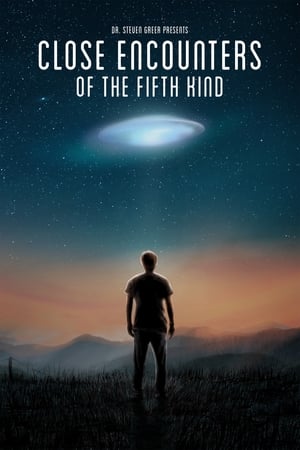
Close Encounters of the Fifth Kind(en)
2020-04-07
Dr. Steven Greer’s previous works, SIRIUS and UNACKNOWLEDGED, broke crowdfunding records and ignited a grassroots movement. CLOSE ENCOUNTERS OF THE FIFTH KIND features groundbreaking video and photographic evidence and supporting interviews from prominent figures such as Adam Curry of Princeton’s PEAR Lab; legendary civil rights attorney Daniel Sheehan, and Dr. Russell Targ, who headed the CIA’s top secret remote viewing program. Their message: For thousands of people, contact has begun. This is their story.
74%
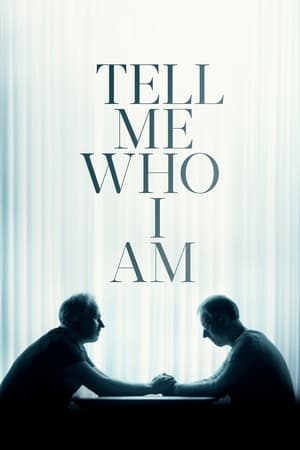
Tell Me Who I Am(en)
2019-10-18
In this documentary, Alex trusts his twin, Marcus, to tell him about his past after he loses his memory. But Marcus is hiding a dark family secret.
70%
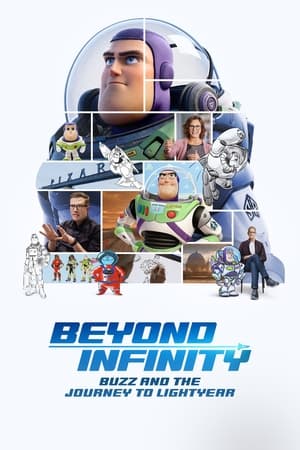
Beyond Infinity: Buzz and the Journey to Lightyear(en)
2022-06-10
Explore the evolution of Buzz Lightyear from toy to human in the making of Pixar’s Lightyear. Dive into the origin and cultural impact of everyone’s favorite Space Ranger, the art of designing a new “human Buzz,” and the challenges faced by the Lightyear crew along the way.
65%
The Most Unknown(en)
2018-03-16
An epic documentary film that sends nine scientists to extraordinary parts of the world to uncover unexpected answers to some of humanity’s biggest questions. How did life begin? What is time? What is consciousness? How much do we really know? By introducing researchers from diverse backgrounds for the first time, then dropping them into new, immersive field work they previously hadn’t tackled, the film pushes the boundaries of how science storytelling is approached. What emerges is a deeply human trip to the foundations of discovery and a powerful reminder that the unanswered questions are the most crucial ones to pose. Directed by Emmy-nominated and Peabody Award-winning filmmaker Ian Cheney and advised by world-renowned filmmaker Werner Herzog, The Most Unknown is an ambitious look at a side of science never before shown on screen.
76%
Explorer: The Last Tepui(en)
2022-04-06
This documentary starring climber Alex Honnold and famous biologist Bruce Means document their expedition to the South American sky islands in search of new species and discoveries. Follows elite climber Alex Honnold and a world-class climbing team led by National Geographic Explorer and climber Mark Synnott on a grueling mission deep in the Amazon jungle as they attempt a first-ascent climb up a 1000 foot sheer cliff.
Similar Movies
72%
Another World(en)
2014-03-15
A feature documentary about the journey of mankind to discover our true force and who we truly are. It is a quest through science and consciousness, individual and planetary, exploring our relationships with ourselves, the world around us and the universe as a whole.
76%
Charles Darwin and the Tree of Life(en)
2009-02-01
Darwin's great insight – that life has evolved over millions of years by natural selection – has been the cornerstone of all David Attenborough’s natural history series. In this documentary, he takes us on a deeply personal journey which reflects his own life and the way he came to understand Darwin’s theory.
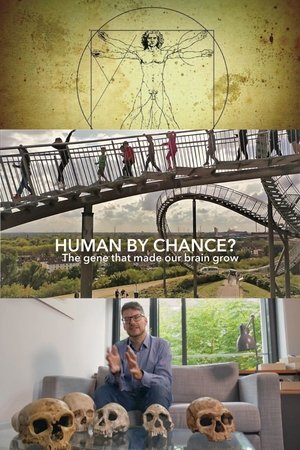
0%
Human By Chance?(en)
2020-01-01
If we compare ourselves with our genetically closest living relatives, the chimpanzees, we have few physical advantages. We are far weaker, cannot move nearly as fast, and do not have the same climbing capabilities. Instead, humans excel in areas such as architecture, religion, science, language, writing, art, culture, and ideas. These achievements are due to our larger brain that contain billions of neurons. It was the rapid growth of our brain, originating about 2 million years ago, that allowed us to be the predominant species of the world. What caused this rapid growth of our cerebral cortex? Researchers worldwide have asked this question for many years, but now there finally seems to be an answer.
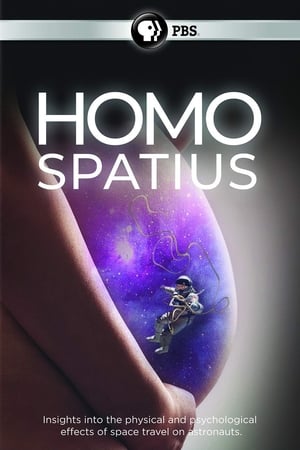
64%
Homo Spatius(fr)
2018-09-25
Can Homo sapiens evolve into Homo spatius? For over 50 years now, we have been testing our human nature in our effort to conquer outer space, and still 30 years away from a possible human exploration of Mars, a question remains: Can our body take such travels? Will it ever adapt? Combining human adventure and the exploration of the human body, this film offers unique insights into the physical and psychological effects of space travel on the Astronauts and measures the impact on medical sciences.
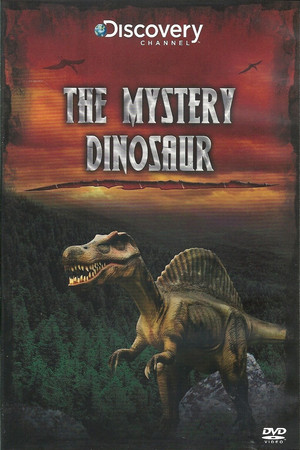
0%
The Mystery Dinosaur(en)
2006-06-24
This is the story of a mystery dinosaur called jane, who has baffled the greatest minds in paleontology from the moment she was unearthed.
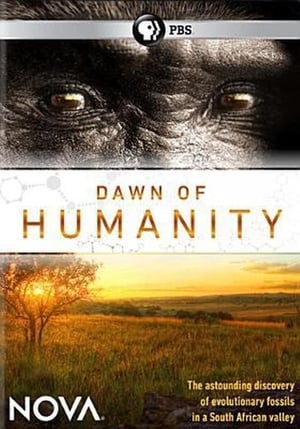
75%
Dawn of Humanity(en)
2015-09-10
Nova and National Geographic present exclusive access to an astounding discovery of ancient fossil human ancestors.
86%
When Whales Walked: Journeys in Deep Time(en)
2019-06-19
Discover the evolutionary secrets of some of the world’s most majestic creatures. From voracious crocodiles and acrobatic birds to stupendous whales and majestic elephants, this documentary follows top scientists on a global adventure as they follow clues from the fossil record and change what we thought we knew about the evolution of iconic beasts.
80%
Decoding Neanderthals(en)
2013-01-09
Over 60,000 years ago, the first modern humans left their African homeland and entered Europe, then a bleak and inhospitable continent in the grip of the Ice Age. But when they arrived, they were not alone: the stocky, powerfully built Neanderthals had already been living there for hundreds of thousands of years. So what happened when the first modern humans encountered the Neanderthals? Did they make love or war?

75%
The Genius of Charles Darwin(en)
2008-08-04
A documentary series from Channel 4, hosted by professor Richard Dawkins, well-known darwinist. The series mixes segments on the life and discoveries of Charles Darwin, the theory of natural selection and evolution, and Dawkins' attempts at convincing a group of school children that evolution explains the world around us better than any religion.
80%
The Bones(en)
2024-03-18
Following the journey of fossils from their discovery in remote corners of the earth to laboratories, museums, auction houses and collectors’ living rooms, the film weaves together interlocking stories of eccentric characters caught between the demands of commerce and the basic human drive to unlock the most profound mysteries of life. THE BONES takes us deep into the Gobi, Sahara, and North American badlands, and through laboratories, museums, high-end auction houses, and grungy hotel rooms at the Tucson gem show. Wrapped in elusive questions about the origins of life on earth, and its potential future demise, THE BONES unearths the deep passions at the heart of the dinosaur world.
0%
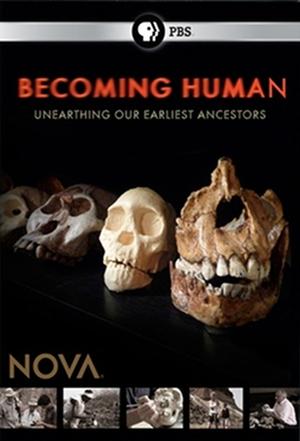
Becoming Human(en)
2009-03-23
NOVA's groundbreaking investigation explores how new discoveries are transforming views of our earliest ancestors. Becoming Human explores the origins of us -where modern humans and our capacities for art, invention, and survival came from, and how our social history led to 3-5% of our genetic heritage being Neanderthal. Featuring interviews with world-renowned scientists, footage shot in the trenches as fossils were unearthed, and stunning computer-generated animation, Becoming Human brings early hominids to life, examining how they lived and how we became the creative and adaptable modern humans of today. In gripping forensic detail, we meet: Selam, the amazingly complete remains of a 3 million year-old child, packed with clues to why we split from the apes, came down from the trees, and started walking upright; Turkana Boy -a tantalizing fossil of Homo erectus, the first ancestor to leave Africa and colonize the globe. What led to this first great African exodus?
75%
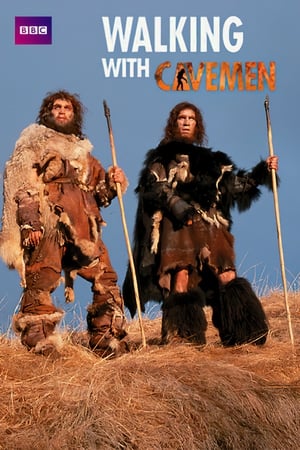
Walking with Cavemen(en)
2003-08-04
The great follow-up to 'Walking with Dinosaurs' and 'Walking with Beasts', presented by Professor Robert Winston, explains the story of human evolution.

75%
Intelligence artificielle - Quand les émotions s'en mêlent(fr)
2021-11-19
With the rapid advancements in artificial intelligence, the line between humans and machines continues to blur, and everything is evolving at an astonishing pace as this technology offers tantalizing promises. However, some researchers, including 2024 Nobel Prize in Physics laureate Geoffrey Hinton, warn about its exponential power. A deep dive into the dizzying complexities of AI.
70%
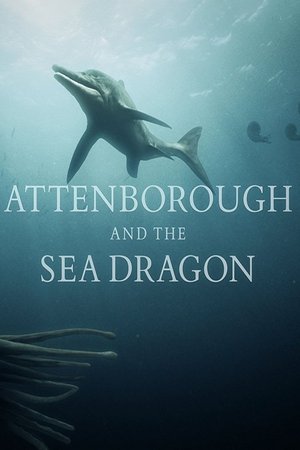
Attenborough and the Sea Dragon(en)
2018-01-07
Sir David Attenborough investigates the discovery of a 200 million year old Ichthyosaur on the Jurassic Coast in southern England. Using state of the art technology and CGI David brings the story of the fossilised ichthyosaur out of the rock and shows us what this creature was really like as it lived during the Jurassic time period.
86%
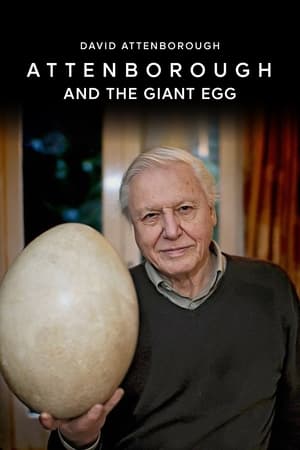
Attenborough and the Giant Egg(en)
2011-03-02
David Attenborough returns to the island of Madagascar on a very personal quest. In 1960 he visited the island to film one of his first ever wildlife series, Zoo Quest. Whilst he was there, he acquired a giant egg. It was the egg of an extinct bird known as the 'elephant bird' - the largest bird that ever lived. It has been one of his most treasured possessions ever since. Fifty years older, he now returns to the island to find out more about this amazing creature and to see how the island has changed. Could the elephant bird's fate provide lessons that may help protect Madagascar's remaining wildlife? Using Zoo Quest archive and specially shot location footage, this film follows David as he revisits scenes from his youth and meets people at the front line of wildlife protection. On his return, scientists at Oxford University are able to reveal for the first time how old David's egg actually is - and what that might tell us about the legendary elephant bird.
75%
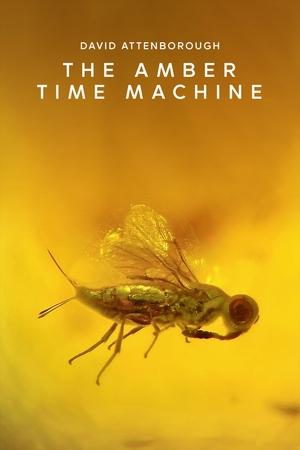
The Amber Time Machine(en)
2004-02-15
David Attenborough searches for the identities of preserved creatures inside a piece of Baltic amber that was given to him by his adoptive sister when he was twelve years old.
50%
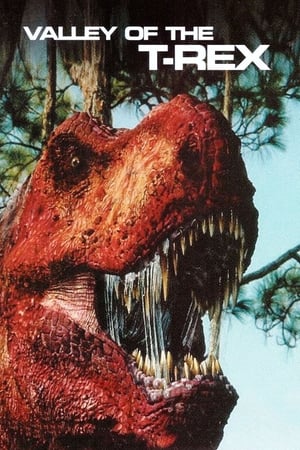
The Valley of the T-Rex(en)
2001-09-10
Valley of the T. rex is a Discovery Channel documentary, featuring paleontologist Jack Horner, that aired on September 10, 2001. The program shows Horner with his digging team as they travel to Hell Creek Formation in search for dinosaur fossils, while also following Horner as he presents his view of the theropod dinosaur Tyrannosaurus rex as a scavenger rather than a predator, as it is often portrayed in popular culture. Paleontologist Jack Horner finds the skeletons of five T-Rex dinosaurs in the badlands of Montana in a single summer, yielding fresh clues about T-Rex behavior.