Loading Page

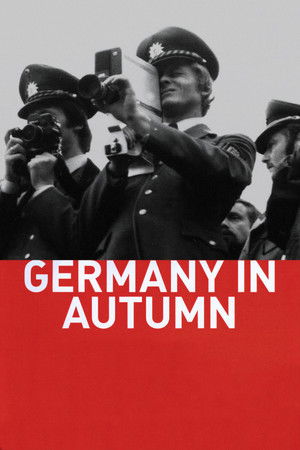
Germany in Autumn(1978)
Status: Released
Date: 1978-03-03
62%
28 Votes
Time: 2h 3m
Overview:
Nine fictitious documentaries and films reflect the mood of late 1970s Germany, particularly the two-month period in 1977 when a businessman was kidnapped by the RAF (Red Army Faction). The kidnap had been made to orchestrate the release of the original leaders of the RAF, aka the Baader-Meinhof.
Languages: German.
Countries:
Germany
ProductionCompanies:
ABS Filmproduktion
Tango Film
Kairos-Film
Movie: Germany in Autumn
Top 10 Billed Cast

Hannelore Hoger
Gabi Teichert

Angela Winkler
Antigone

Vadim Glowna
Freiermuth

Katja Rupé
Franziska Busch

Heinz Bennent
Mitglied des Kommitees

Wolf Biermann
Self

Joachim Bißmeier
TV-Redakteur
Helmut Griem
TV-Redakteur

Dieter Laser
Abgeordneter (TV Aufsichtsgremium)

Manfred Zapatka
Loading Photos
Photo Type :Total items
Recommendations Movies
70%
Marianne and Juliane(de)
1981-09-04
Germany, 1968: The priest's daughters Marianna and Juliane both fight for changes in society, like making abortion legal. However their means are totally different: while Juliane's committed as a reporter, her sister joins a terroristic organization. After she's caught by the police and put into isolation jail, Juliane remains as her last connection to the rest of the world. Although she doesn't accept her sister's arguments and her boyfriend Wolfgang doesn't want her to, Juliane keeps on helping her sister. She begins to question the way her sister is treated.
65%
Rosa Luxemburg(de)
1986-04-10
Polish socialist and Marxist Rosa Luxemburg works tirelessly in the service of revolution in early 20th century Poland and Germany. While Luxemburg campaigns for her beliefs, she is repeatedly imprisoned as she forms the Spartacist League offering a new vision for Germany.
65%
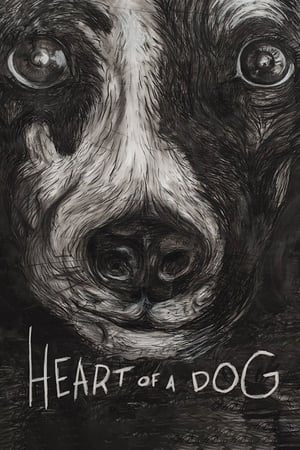
Heart of a Dog(en)
2015-10-21
Lyrical and powerfully personal essay film that reflects on the deaths of her husband Lou Reed, her mother, her beloved dog, and such diverse subjects as family memories, surveillance, and Buddhist teachings.

75%
Feminists: What Were They Thinking?(en)
2018-02-19
In 1977, a book of photographs captured an awakening - women shedding the cultural restrictions of their childhoods and embracing their full humanity. This documentary revisits those photos, those women and those times and takes aim at our culture today that alarmingly shows the need for continued change.
63%
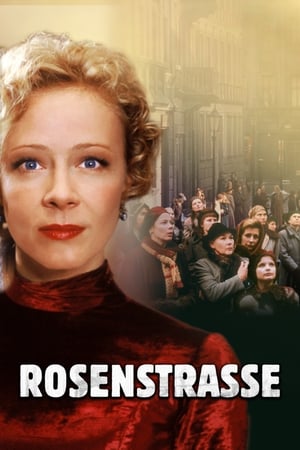
Rosenstrasse(de)
2003-09-18
When Ruth's husband dies in New York, in 2000, she imposes strict Jewish mourning, which puzzles her children. A stranger comes to the house - Ruth's cousin - with a picture of Ruth, age 8, in Berlin, with a woman the cousin says helped Ruth escape. Hannah, Ruth's daughter engaged to a gentile, goes to Berlin to find the woman, Lena Fisher, now 90. Posing as a journalist investigating intermarriage, Hannah interviews Lena who tells the story of a week in 1943 when the Jewish husbands of Aryan women were detained in a building on Rosenstrasse. The women gather daily for word of their husbands. The film goes back and forth to tell Ruth and Lena's story. How will it affect Hannah?


68%
Nothing Like a Dame(en)
2018-05-02
BBC Arena's documentary on the Dames of British Theatre and film featuring Maggie Smith, Eileen Atkins, Judi Dench and Joan Plowright on screen together for the first time as they reminisce over a long summer weekend in a house Joan once shared with Sir Laurence Olivier.
72%
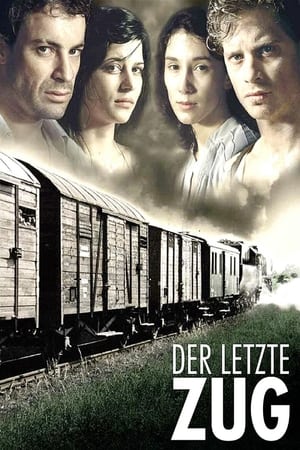
The Last Train(de)
2006-10-26
A group of people are imprisoned in a rail car bound from Berlin to a concentration camp in 1945.

71%
Deliver Us from Evil(en)
2006-06-24
Documentary filmmaker Amy Berg investigates the life of 30-year pedophile Father Oliver O'Grady and exposes the corruption inside the Catholic Church that allowed him to abuse countless children. Victims' stories and a disturbing interview with O'Grady offer a view into the troubled mind of the spiritual leader who moved from parish to parish gaining trust ... all the while betraying so many.
73%
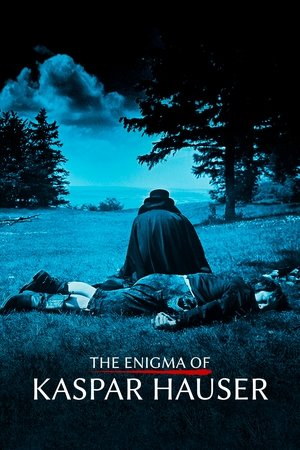
The Enigma of Kaspar Hauser(de)
1974-11-01
The film follows Kaspar Hauser, who lived the first seventeen years of his life chained in a tiny cellar with only a toy horse to occupy his time, devoid of all human contact except for a man who wears a black overcoat and top hat who feeds him.
75%
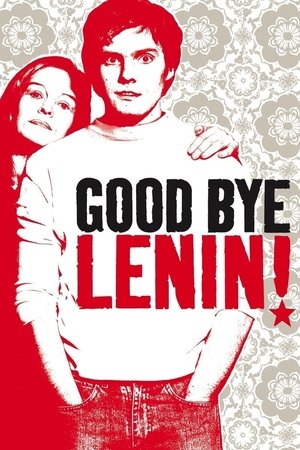
Good Bye, Lenin!(de)
2003-02-13
Alex Kerner's mother was in a coma while the Berlin wall fell. When she wakes up he must try to keep her from learning what happened (as she was an avid communist supporter) to avoid shocking her which could lead to another heart attack.
68%
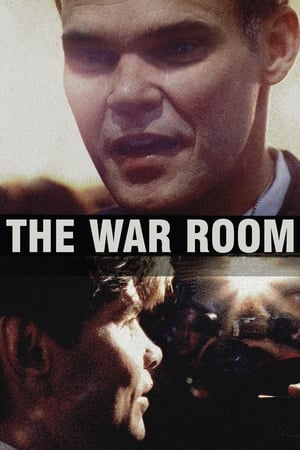
The War Room(en)
1993-11-03
A behind-the-scenes documentary about the Clinton for President campaign, focusing on the adventures of spin doctors James Carville and George Stephanopoulos.
67%
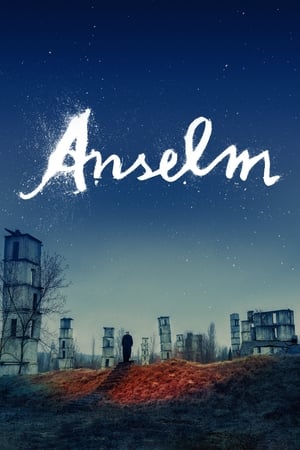
Anselm(de)
2023-10-12
This unique cinematic experience dives deep into an artist’s work and reveals his life path, inspiration, and creative process. It explores his fascination with myth and history. Past and present are interwoven to diffuse the line between film and painting, allowing the audience to be completely immersed in the remarkable world of one of the greatest contemporary artists, Anselm Kiefer. Wim Wenders shot this unique portrait over the course of two years in stunning 3D.

67%
Goodbye Berlin(de)
2016-09-15
Maik, a fourteen-year-old teenager, sets out on a road trip during summertime with Tschick, a new classmate, in a stolen car. The two share life changing experiences during the eventful journey.

60%
Cocoon(de)
2020-08-13
In the heat of a shimmering Berlin summer, Nora spends her days as a third wheel to her older sister Jule and her best friend Aylin. When Romy comes onto the scene, a friendship blossoms. Nora instantly falls for her, opening up a whole new world and unexpected summer of love.

73%
Eldorado: Everything the Nazis Hate(de)
2023-06-27
A glittery nightclub in 1920s Berlin becomes a haven for the queer community in this documentary exploring the freedoms lost amid Hitler’s rise to power.

75%
Jim & Andy: The Great Beyond(en)
2017-09-05
Offbeat documentarian Chris Smith provides a behind-the-scenes look at how Jim Carrey adopted the persona of idiosyncratic comedian Andy Kaufman on the set of Man on the Moon.
65%
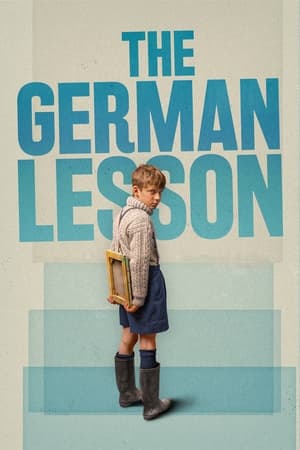
The German Lesson(de)
2019-10-03
In a small North German village a drama played out during and shortly after the Second World War about duty versus individual conscience and morality.
64%
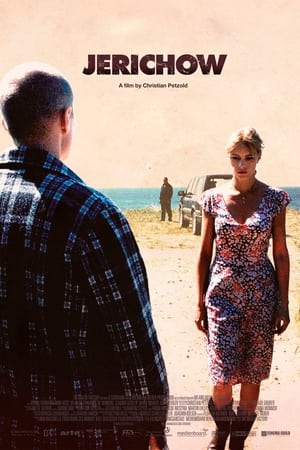
Jerichow(de)
2009-01-08
In a small Northern German town, a dishonourably discharged Afghanistan veteran is offered a job as a deliveryman by an alcoholic Turkish entrepreneur, through which the former meets the latter's gorgeous wife.

71%
Audrey(en)
2020-11-30
An unprecedented and intimate look at the life, work and enduring legacy of British actress Audrey Hepburn (1929-1993).
Similar Movies

60%
Mr. X(en)
2014-01-20
The image of a mysterious, solitary filmmaker - a cineaste maudit - who flees from both the media and the public, is unrelentingly bound to the figure of Leos Carax, in France. Elsewhere, the real focus is on his films and he is considered to be an icon of world cinema. Mr.X dives into the poetic and visionary world of an artist who was already a cult figure from his very first film. Punctuated by interviews and unseen footage, this documentary is most of all a fine-tuned exploration of the poetic and visionary world of Leos Carax, alias "Mr.X".

53%
Seven Women, Seven Sins(en)
1986-04-19
Seven Women, Seven Sins (1986) represents a quintessential moment in film history. The women filmmakers invited to direct for the seven sins were amongst the world's most renown: Helke Sander (Gluttony), Bette Gordon (Greed), Maxi Cohen (Anger), Chantal Akerman (Sloth), Valie Export (Lust), Laurence Gavron (Envy), and Ulrike Ottinger (Pride). Each filmmaker had the liberty of choosing a sin to interpret as they wished. The final film reflected this diversity, including traditional narrative fiction, experimental video, a musical, a radical documentary, and was delivered in multiple formats from 16, super 16, video and 35mm.

63%
Birth/Mother(ja)
2006-08-10
Tarachime is a documentary film which observes 'life' through childbirth. Kawase Naomi, a film director working under the theme of family, life and death, presents the bond of life through her own childbirth experience. "First, I was planning to film from the day I conceived a child and to the moment I gave birth. But I realized, while filming, that this is not the story of "one life." In the end, the film sublimed to a higher stage on which we can witness the knot tying one life with another."

0%
Face to Face: The Schappell Twins(en)
1999-01-01
Two bodies and one mind, this is the extraordinary story of one pair of conjoined twins in today's world.
75%
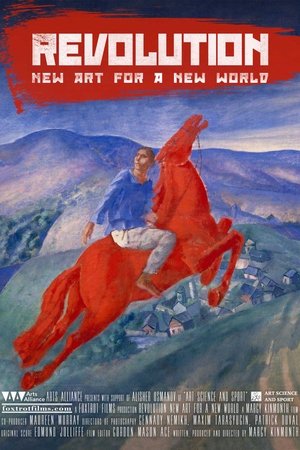
Revolution: New Art for a New World(en)
2017-03-08
Drawing on the collections of major Russian institutions, contributions from contemporary artists, curators and performers and personal testimony from the descendants of those involved, the film brings the artists of the Russian Avant-Garde to life. It tells the stories of artists like Chagall, Kandinsky and Malevich - pioneers who flourished in response to the challenge of building a new art for a new world, only to be broken by implacable authority after 15 short years and silenced by Stalin's Socialist Realism.
79%
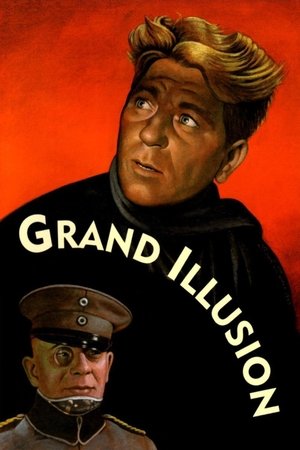
Grand Illusion(fr)
1937-06-04
A group of French soldiers, including the patrician Captain de Boeldieu and the working-class Lieutenant Maréchal, grapple with their own class differences after being captured and held in a World War I German prison camp. When the men are transferred to a high-security fortress, they must concoct a plan to escape beneath the watchful eye of aristocratic German officer von Rauffenstein, who has formed an unexpected bond with de Boeldieu.

71%
Annaluise & Anton(de)
1999-03-11
Luise, called Pünktchen, and Anton are closest of friends. Being the daughter of a wealthy surgeon, young Pünktchen lives in a great house. Her mother, who always travels through the world more for public relation reasons than for the social tasks she pretends to fulfill, is never available to her as a mother. Anton, son of a single and sick mother in financial trouble, does his best to help her out of it by working late. Pünktchen decides to help her only friend (as nobody else would anyway) and starts singing in public places. Trouble arises when Anton can't resist stealing a golden lighter and Pünktchen's secret life is discovered by her parents. Two troubled families finally can see the need for actions to be taken.

50%
Axolotl Overkill(de)
2017-06-29
Mifti is a teenager as beautiful as she is reckless. Mentally unstable, fed up with her dysfunctional family, oblivious to the youthful world, and aware of the sexual magnetism she gives off with her peculiar appearance, she wanders through the dark path of several bohemian adults with questionable lifestyles.
83%
Night and Fog(fr)
1956-01-29
Filmmaker Alain Resnais documents the atrocities behind the walls of Hitler's concentration camps.
81%
M(de)
1931-05-11
In this classic German thriller, Hans Beckert, a serial killer who preys on children, becomes the focus of a massive Berlin police manhunt. Beckert's heinous crimes are so repellant and disruptive to city life that he is even targeted by others in the seedy underworld network. With both cops and criminals in pursuit, the murderer soon realizes that people are on his trail, sending him into a tense, panicked attempt to escape justice.

74%
Jin-Roh: The Wolf Brigade(ja)
1999-11-17
A member of an elite paramilitary counter-terrorism unit becomes traumatized after witnessing the suicide bombing of a young girl and is forced to undergo retraining. However, unbeknownst to him, he becomes a key player in a dispute between rival police divisions, as he finds himself increasingly involved with the sister of the girl he saw die.
68%
Antonia's Line(nl)
1995-09-21
After World War II, Antonia and her daughter, Danielle, go back to their Dutch hometown, where Antonia's late mother has bestowed a small farm upon her. There, Antonia settles down and joins a tightly-knit but unusual community. Those around her include quirky friend Crooked Finger, would-be suitor Bas and, eventually for Antonia, a granddaughter and great-granddaughter who help create a strong family of empowered women.

69%
Coffee and Cigarettes(en)
2004-03-12
An anthology of eleven vignettes featuring star-studded casts of extremely unique individuals who all share the common activities of conversing while drinking coffee and smoking cigarettes.


64%
Afternoon of a Faun: Tanaquil Le Clercq(en)
2014-02-05
Of all the great ballerinas, Tanaquil Le Clercq may have been the most transcendent. With a body unlike any before hers, she mesmerized viewers and choreographers alike. With her elongated, race-horse physique, she became the new prototype for the great George Balanchine. Because of her extraordinary movement and unique personality on stage, she became a muse to two of the greatest choreographers in dance, George Balanchine and Jerome Robbins. She eventually married Balanchine, and Robbins created his famous version of Afternoon of a Faun for her. She had love, fame, adoration, and was the foremost dancer of her day until it suddenly all stopped. At the age of 27, she was struck down by polio and paralyzed. She never danced again. The ballet world has been haunted by her story ever since.

65%
The Pride of the Firm(de)
1914-04-30
Der Stolz der Firma, meaning The Pride of the Business, is a classic German silent film from 1914. The film tells the story of a shrewd apprentice and is filmed in the comical style of director Lubitsch. This is one of the few Lubitsch films from World War I that wasn’t lost.
0%
Travelling with Tove(fi)
1993-01-01
In early 1970s, the graphic designer Tuulikki Pietilä had seen enough of stative visual art and purchased a film camera from Japan. Her film immortalized her trips with Tove Jansson.

83%
Paths of Glory(en)
1957-10-25
A commanding officer defends three scapegoats on trial for a failed offensive that occurred within the French Army in 1916.

73%
The Mortal Storm(en)
1940-06-20
The Roth family leads a quiet life in a small village in the German Alps during the early 1930s. After the Nazis come to power, the family is divided and Martin Breitner, a family friend, is caught up in the turmoil.