Loading Page

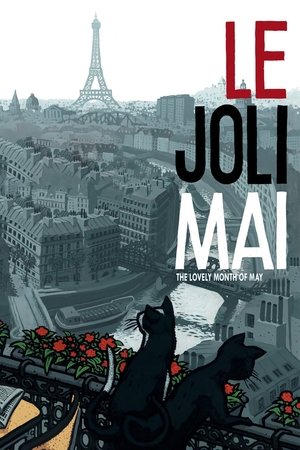
The Lovely Month of May(1963)
Status: Released
Date: 1963-05-03
80%
41 Votes
Time: 2h 45m
So, how are you feeling?
Overview:
Candid interviews of ordinary people on the meaning of happiness, an often amorphous and inarticulable notion that evokes more basic and fundamentally egalitarian ideals of self-betterment, prosperity, tolerance, economic opportunity, and freedom.
Languages: French.
Countries:
France
ProductionCompanies:
Sofracima
Movie: The Lovely Month of May
Top 10 Billed Cast
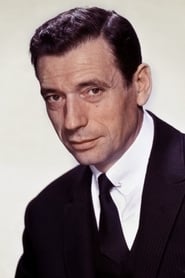
Yves Montand
Narrator (French version) (voice)

Chris Marker
Self / Interviewer (voice)

Jean-Luc Godard
Self (uncredited)

Anna Karina
Self (uncredited)

Edgar Morin
Self (uncredited)

Alain Resnais
Self (uncredited)

Jacques Rivette
Self (uncredited)
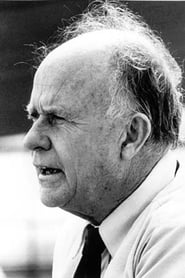
Jean Rouch
Self (uncredited)

Simone Signoret
Narrator (English version) (voice)

Charles de Gaulle
Self
Video Trailer The Lovely Month of May
Loading Photos
Photo Type :Total items
Recommendations Movies
72%
Chronicle of a Summer(fr)
1961-10-20
Paris, summer 1960. Anthropologist and filmmaker Jean Rouch and sociologist and film critic Edgar Morin wander through the crowded streets asking passersby how they cope with life's misfortunes.

70%
Symbiopsychotaxiplasm: Take One(en)
1968-10-28
In Manhattan's Central Park, a film crew directed by William Greaves is shooting a screen test with various pairs of actors. It's a confrontation between a couple: he demands to know what's wrong, she challenges his sexual orientation. Cameras shoot the exchange, and another camera records Greaves and his crew. Sometimes we watch the crew discussing this scene, its language, and the process of making a movie. Is there such a thing as natural language? Are all things related to sex? The camera records distractions - a woman rides horseback past them; a garrulous homeless vet who sleeps in the park chats them up. What's the nature of making a movie?

68%
Nothing Like a Dame(en)
2018-05-02
BBC Arena's documentary on the Dames of British Theatre and film featuring Maggie Smith, Eileen Atkins, Judi Dench and Joan Plowright on screen together for the first time as they reminisce over a long summer weekend in a house Joan once shared with Sir Laurence Olivier.

61%
Naqoyqatsi(en)
2002-09-02
A visual montage portrait of our contemporary world dominated by globalized technology and violence.
72%
Side by Side(en)
2012-08-19
Since the invention of cinema, the standard format for recording moving images has been film. Over the past two decades, a new form of digital filmmaking has emerged, creating a groundbreaking evolution in the medium. Keanu Reeves explores the development of cinema and the impact of digital filmmaking via in-depth interviews with Hollywood masters, such as James Cameron, David Fincher, David Lynch, Christopher Nolan, Martin Scorsese, George Lucas, Steven Soderbergh, and many more.
73%
Henri-Georges Clouzot's Inferno(fr)
2009-10-01
In 1964, Henri-Georges Clouzot's production of L'Enfer came to a halt. Despite huge expectations, major studio backing and an unlimited budget, after three weeks the production collapsed. This documentary presents Inferno's incredible expressionistic original rushes, screen tests, and on-location footage, whilst also reconstructing Clouzot's original vision, and shedding light on the ill-fated endeavor through interviews, dramatizations of unfilmed scenes, and Clouzot's own notes.
72%
Life in a Day(en)
2011-01-27
A documentary shot by filmmakers all over the world that serves as a time capsule to show future generations what it was like to be alive on the 24th of July, 2010.
74%
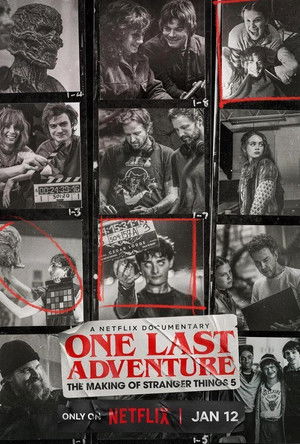
One Last Adventure: The Making of Stranger Things 5(en)
2026-01-11
An inside look at the years of effort and craft that went into the final installment of the Duffer Brothers' generation-defining series.
70%
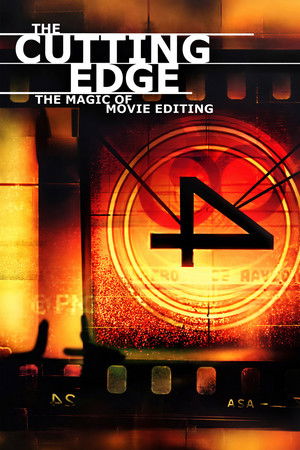
The Cutting Edge: The Magic of Movie Editing(en)
2004-10-12
Documentary about the art of film editing. Clips are shown from many groundbreaking films with innovative editing styles.

64%
Ex Libris: The New York Public Library(en)
2017-09-13
A documentary about how a dominant cultural and demographic institution both sustains their traditional activities and adapts to the digital revolution.
70%
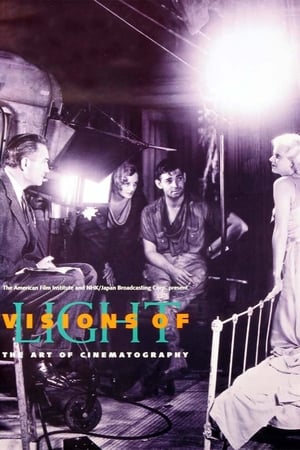
Visions of Light(en)
1992-09-17
Cameramen and women discuss the craft and art of cinematography and of the "DP" (the director of photography), illustrating their points with clips from 100 films, from Birth of a Nation to Do the Right Thing. Themes: the DP tells people where to look; changes in movies (the arrival of sound, color, and wide screens) required creative responses from DPs; and, these artisans constantly invent new equipment and try new things, with wonderful results. The narration takes us through the identifiable studio styles of the 30s, the emergence of noir, the New York look, and the impact of Europeans. Citizen Kane, The Conformist, and Gordon Willis get special attention.
70%
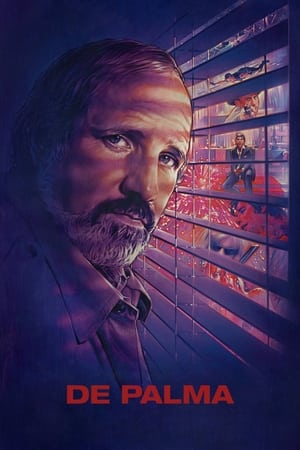
De Palma(en)
2016-06-10
An intimate conversation between filmmakers, chronicling De Palma’s 55-year career, his life, and his filmmaking process, with revealing anecdotes and, of course, a wealth of film clips.
75%
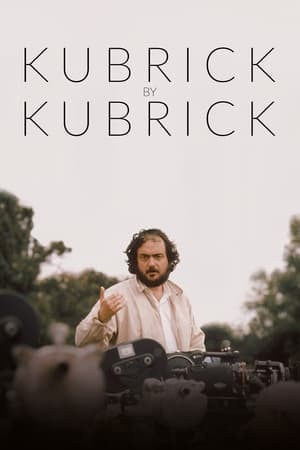
Kubrick by Kubrick(fr)
2020-10-22
American filmmaker Stanley Kubrick (1928–1999), one of the greatest in history, but also one of the most reserved, gave few interviews throughout his long career, and none of them were filmed. A first-person journey through his life and work, based on a recorded conversation with French film critic Michel Climent.
68%
The War Room(en)
1993-11-03
A behind-the-scenes documentary about the Clinton for President campaign, focusing on the adventures of spin doctors James Carville and George Stephanopoulos.
66%
Champs(en)
2015-03-13
A documentary about the sport of boxing, as seen through the eyes of champions Mike Tyson, Evander Holyfield and Bernard Hopkins.
75%
Sans Soleil(fr)
1983-03-02
A woman narrates the thoughts of a world traveler, meditations on time and memory expressed in words and images from places as far-flung as Japan, Guinea-Bissau, Iceland, and San Francisco.

72%
All the Beauty and the Bloodshed(en)
2022-11-23
The life of internationally renowned artist and activist Nan Goldin is told through her slideshows, intimate interviews, ground-breaking photography, and rare footage of her personal fight to hold the Sackler family accountable for the overdose crisis.
65%
Back in Time(en)
2015-10-20
Cast, crew and fans explore the 'Back to the Future' time-travel trilogy's resonance throughout our culture—30 years after Marty McFly went back in time.
75%
Jim & Andy: The Great Beyond(en)
2017-09-05
Offbeat documentarian Chris Smith provides a behind-the-scenes look at how Jim Carrey adopted the persona of idiosyncratic comedian Andy Kaufman on the set of Man on the Moon.
Similar Movies
90%
Les Trésors de la Bibliothèque nationale de France(fr)
2020-12-28
The National Library of France is the guardian of priceless treasures that tell our history, our illustrious thinkers, writers, scholars and artists. Telling the story of the exceptional treasures of the National Library of France is like opening a great history book rich in many twists and turns. Without the love of the kings of France for books and precious objects, this institution would never have seen the light of day. The story begins in the 14th century under the reign of a passionate writer, Charles V, who set up a library in his apartments in the Louvre. But it was not until the 17th century, and the reign of Louis XIV, a lover of the arts and letters, that the royal library took over its historic quarters in the rue Vivienne in Paris, which it still occupies.
69%
The Yes Men(en)
2003-09-07
A comic, biting and revelatory documentary following a small group of prankster activists as they gain worldwide notoriety for impersonating the World Trade Organization (WTO) on television and at business conferences around the world.

73%
Titanic's Final Mystery(en)
2012-04-05
The sinking of the RMS Titanic remains one of the most enduring and mysterious tragedies of the 20th century. For decades, investigators and amateurs alike have floated theories for why it occurred and who was to blame for the extraordinary loss of life, but no one answer could fully explain what happened. Until now. To mark the 100th anniversary of the infamous disaster, Smithsonian Channel will premiere Titanic's Final Mystery. The two-hour special investigates a century of theories and uncovers astonishing new forensic evidence that proves the most likely theory for the case.

80%
Madness - Princes of Ska, Kings of Pop(fr)
2025-06-03
From the back rooms of Camden's pubs to the roof of Buckingham Palace at Queen Elizabeth’s Jubilee: the London band Madness enriched British pop music history with their cheeky style and spectacular performances. In this documentary, we look back on their illustrious career with interviews with band members, friends, and music industry figures. Featuring brand new recorded interviews with Suggs and Bedders from ‘Madness’. Alongside interviews with Lynval Golding, Rhoda Dakar, Clive Langer and many more.
51%
What Difference Does It Make?(en)
2014-02-17
A documentary that explores the challenges that a life in music can bring.

0%
The dark side of Japan(ar)
2025-06-20
Forget the neon lights and cherry blossoms — this is Japan like you’ve never seen it. In this gripping short documentary, Omar Farooq dives into the dark underbelly of Japanese society, exposing hidden truths, silent struggles, and the untold stories that lie behind the country's polished image.
80%
Alsina's Trench(es)
2017-01-01
Documentary film about the "zanja de Alsina", a long trench dug in the Argentinian Pampa in 1876 as way to separate the "civilized" from the "barbarians" during the massacre of indigenous peoples known as "campaña del desierto".

80%
Bruce Springsteen – The America whisperer(fr)
2024-07-31
The life of Bruce Springsteen has been told many times, from the angle of the adored rock star, American icon.
77%
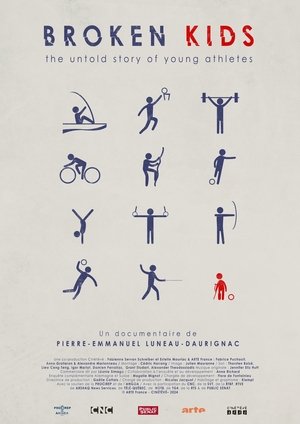
Broken Kids: The Untold Story of Young Athletes(fr)
2024-07-23
Recent scandals have revealed the brutal methods often imposed on young top athletes. Fueled by numerous testimonies, this damning investigation reveals the workings of a system which sacrifices children in the name of economic interests and glory.
100%
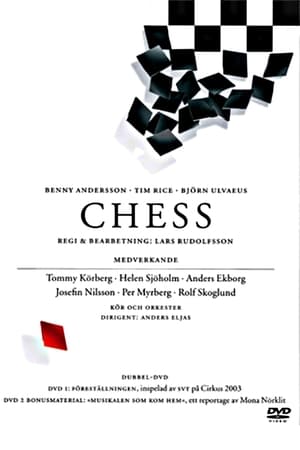
Chess på svenska: The Musical That Came Home(sv)
2003-11-12
The making of CHESS - from first reading to first night.
77%
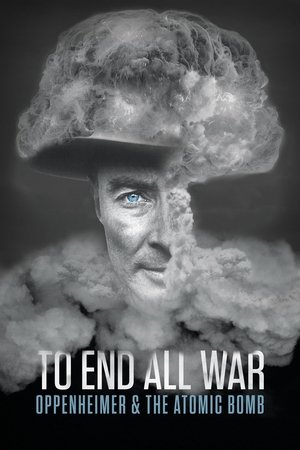
To End All War: Oppenheimer & the Atomic Bomb(en)
2023-07-09
Explore how one man's relentless drive and invention of the atomic bomb changed the nature of war forever, led to the deaths of hundreds of thousands of people and unleashed mass hysteria.

57%
La rosa dei nomi(it)
1987-01-01
65%
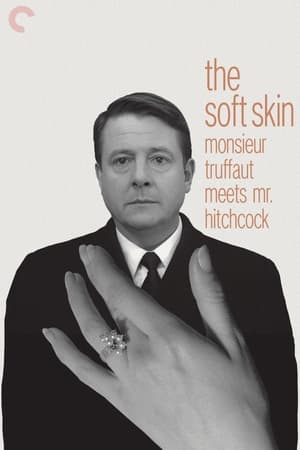
Monsieur Truffaut Meets Mr. Hitchcock(en)
1999-08-05
When Francois Truffaut approached Alfred Hitchcock in 1962 with the idea of having a long conversation with him about his work and publishing this in book form, he didn't imagine that more than four years would pass before Le Cinéma selon Hitchcock finally appeared in 1966. Not only in France but all over the world, Truffaut's Hitchcock interview developed over the years into a standard bible of film literature. In 1983, three years after Hitchcock's death, Truffaut decided to expand his by now legendary book to include a concluding chapter and have it published as the "Edition définitive". This film describes the genesis of the "Hitchbook" and throws light on the strange friendship between two completely different men. The centrepieces are the extracts from the original sound recordings of the interview with the voices of Alfred Hitchcock, Francois Truffaut, and Helen Scott – recordings which have never been heard in public before.
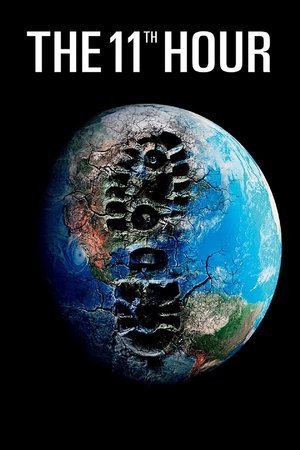
67%
The 11th Hour(en)
2007-08-17
A look at the state of the global environment including visionary and practical solutions for restoring the planet's ecosystems. Featuring ongoing dialogues of experts from all over the world, including former Soviet Prime Minister Mikhail Gorbachev, renowned scientist Stephen Hawking, former head of the CIA R. James Woolse