Loading Page


Anthropocène, l’implacable enquête(2025)
Status: Released
Date: 2025-01-11
75%
2 Votes
Time: 0h 59m
Overview:
For several decades, geoscientists have been observing that the Earth is changing rapidly due to human intervention. This action has such a great impact on the biological, geological and atmospheric processes of the Earth that some scientists speak of the dawn of a new epoch: the Age of Man or the Anthropocene.
Languages: French.
Countries:
France
ProductionCompanies: 

Movie: Anthropocène, l’implacable enquête
HomePage
Overview
For several decades, geoscientists have been observing that the Earth is changing rapidly due to human intervention. This action has such a great impact on the biological, geological and atmospheric processes of the Earth that some scientists speak of the dawn of a new epoch: the Age of Man or the Anthropocene.
Release Date
2025-01-11
Average
7.5
Rating:
3.8 startsTagline
Genres
Languages:
FrançaisKeywords
human vs naturescientific studynature run amokenvironmentalistenvironmental destructionnature documentaryenvironmental issuesman vs naturescientific researchenvironmental perspectivesenvironmental crisisenvironmental documentarystudying naturescience and natureenvironmental collapseresilience of nature
Recommendations Movies
78%
Tomorrow(fr)
2015-11-15
Climate is changing. Instead of showing all the worst that can happen, this documentary focuses on the people suggesting solutions and their actions.
79%
Koyaanisqatsi(en)
1983-04-27
Takes us to locations all around the US and shows us the heavy toll that modern technology is having on humans and the earth. The visual tone poem contains neither dialogue nor a vocalized narration: its tone is set by the juxtaposition of images and the exceptional music by Philip Glass.
79%
The Year Earth Changed(en)
2021-04-15
Never-before-seen footage shows how our living in lockdown opened the door for nature to bounce back and thrive. Across the seas, skies, and lands, Earth found its rhythm when we came to a stop.
75%
Breaking Boundaries: The Science of Our Planet(en)
2021-06-03
David Attenborough and scientist Johan Rockström examine Earth's biodiversity collapse and how this crisis can still be averted.

85%
David Attenborough: A Life on Our Planet(en)
2020-09-28
The story of life on our planet by the man who has seen more of the natural world than any other. In more than 90 years, Attenborough has visited every continent on the globe, exploring the wild places of our planet and documenting the living world in all its variety and wonder. Addressing the biggest challenges facing life on our planet, the film offers a powerful message of hope for future generations.
70%
An Inconvenient Truth(en)
2006-05-24
A documentary on Al Gore's campaign to make the issue of global warming a recognized problem worldwide.
67%
The 11th Hour(en)
2007-08-17
A look at the state of the global environment including visionary and practical solutions for restoring the planet's ecosystems. Featuring ongoing dialogues of experts from all over the world, including former Soviet Prime Minister Mikhail Gorbachev, renowned scientist Stephen Hawking, former head of the CIA R. James Woolse

66%
An Inconvenient Sequel: Truth to Power(en)
2017-07-28
A decade after An Inconvenient Truth brought climate change into the heart of popular culture comes the riveting and rousing follow-up that shows just how close we are to a real energy revolution. Vice President Al Gore continues his tireless fight, traveling around the world training an army of climate champions and influencing international climate policy. Cameras follow him behind the scenes—in moments private and public, funny and poignant—as he pursues the empowering notion that while the stakes have never been higher, the perils of climate change can be overcome with human ingenuity and passion.
78%
Seaspiracy(en)
2021-03-24
Passionate about ocean life, a filmmaker sets out to document the harm that humans do to marine species — and uncovers an alarming global conspiracy.

78%
Home(fr)
2009-06-03
In 200,000 years of existence, man has upset the balance on which the Earth had lived for 4 billion years. Global warming, resource depletion, species extinction: man has endangered his own home. But it is too late to be pessimistic: humanity has barely ten years left to reverse the trend, become aware of its excessive exploitation of the Earth's riches, and change its consumption pattern.
77%
Before the Flood(en)
2016-10-21
A look at how climate change affects our environment and what society can do to prevent the demise of endangered species, ecosystems, and native communities across the planet.
70%
Life After People(en)
2008-01-21
In this special documentary that inspired a two-season television series, scientists and other experts speculate about what the Earth, animal life, and plant life might be like if, suddenly, humanity no longer existed, as well as the effect humanity's disappearance might have on the artificial aspects of civilization.
66%
Secrets of the Neanderthals(en)
2024-05-02
This documentary delves into the mysteries surrounding the Neanderthals and what their fossil record tells us about their lives and disappearance.
73%
Powaqqatsi(en)
1988-04-29
An exploration of technologically developing nations and the effect the transition to Western-style modernization has had on them.

61%
Naqoyqatsi(en)
2002-09-02
A visual montage portrait of our contemporary world dominated by globalized technology and violence.
73%
Surviving Progress(en)
2011-11-04
Humanity’s ascent is often measured by the speed of progress. But what if progress is actually spiraling us downwards, towards collapse? Ronald Wright, whose best-seller, “A Short History Of Progress” inspired “Surviving Progress”, shows how past civilizations were destroyed by “progress traps”—alluring technologies and belief systems that serve immediate needs, but ransom the future. As pressure on the world’s resources accelerates and financial elites bankrupt nations, can our globally-entwined civilization escape a final, catastrophic progress trap? With potent images and illuminating insights from thinkers who have probed our genes, our brains, and our social behaviour, this requiem to progress-as-usual also poses a challenge: to prove that making apes smarter isn’t an evolutionary dead-end.
81%
The Salt of the Earth(fr)
2014-08-29
During the last forty years, the photographer Sebastião Salgado has been travelling through the continents, in the footsteps of an ever-changing humanity. He has witnessed the major events of our recent history: international conflicts, starvations and exodus… He is now embarking on the discovery of pristine territories, of the wild fauna and flora, of grandiose landscapes: a huge photographic project which is a tribute to the planet's beauty. Salgado's life and work are revealed to us by his son, Juliano, who went with him during his last journeys, and by Wim Wenders, a photographer himself.

66%
The Age of Stupid(en)
2009-09-21
Pete Postlethwaite stars as a man living alone in the devastated future world of 2055, looking at old footage from 2008 and asking: why didn’t we stop climate change when we had the chance?
Similar Movies
69%
Aldabra: Once Upon an Island(cs)
2015-11-19
Impressive family film offers a unique stories of the wonderful animals who inhabit the Aldabra atoll, were born here, create communities, give birth to young and struggle for their survival.
90%
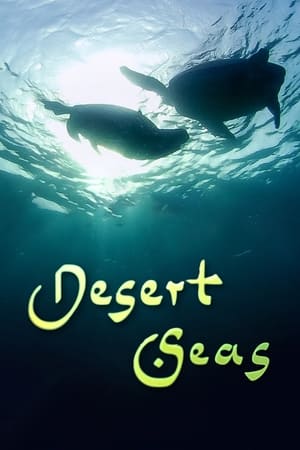
Desert Seas(en)
2011-04-21
Sir David Attenborough unveils the two stunning underwater realms of Saudi Arabia - the flamboyant Red Sea and the contrasting hot muddy Gulf, capturing for the first time the rare event of Palolo worms spawning at night.
60%
Killing the Colorado(en)
2016-08-04
The drought in the American West is predicted to be the worst in 1,000 years. Join five Academy Award-winning filmmakers as they explore the environmental crisis of our time and how to fix it before it's too late.

0%
The River in Me(zh)
Traversing 700,000 square kilometers over 700 days, the filmmakers bring the stories of five people who crisscross the Yellow River to perform their art. At the center of the web is Su Yang, a contemporary artist and musician and his exchange with traditional practitioners of Qin Opera, Shadow Puppetry, Hua’er, and Shaanbei Storytelling.
67%
The 11th Hour(en)
2007-08-17
A look at the state of the global environment including visionary and practical solutions for restoring the planet's ecosystems. Featuring ongoing dialogues of experts from all over the world, including former Soviet Prime Minister Mikhail Gorbachev, renowned scientist Stephen Hawking, former head of the CIA R. James Woolse

70%
Sharks Up Close with Bertie Gregory(en)
2025-07-05
Bertie heads to South Africa for his most audacious mission yet. The wild waters here are a hotspot for one of the ocean’s most famous and feared predators, the great white shark. Diving in the shallows without a cage, Bertie will attempt to film these huge sharks. By entering their domain, he discovers the challenges they face on our rapidly changing planet.

100%
Among the Great Apes with Michelle Yeoh(en)
2009-12-09
Renowned actress Michelle Yeoh journeys home to Malaysia to get to know her adopted orangutan, learning from the Sepilok Rehabilitation Centre about the efforts being made to safeguard and sustain this endangered species.
50%
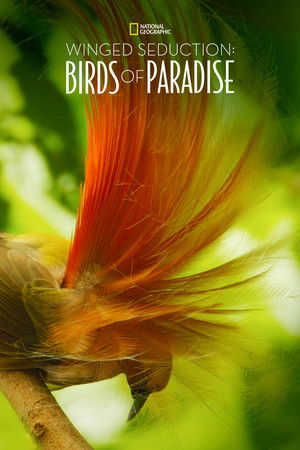
Winged Seduction: Birds of Paradise(en)
2012-11-22
Tim Laman a photographer for National Geographic and ornithologist Ed Scholes have been traveling to some of the most remote jungles the world has to offer in search of observing and photographing all 39 species of tropical bird. This particular group of birds are entitled as the “Birds of Paradise” and can be found in some of the last truly wild locations of New Guinea.
87%
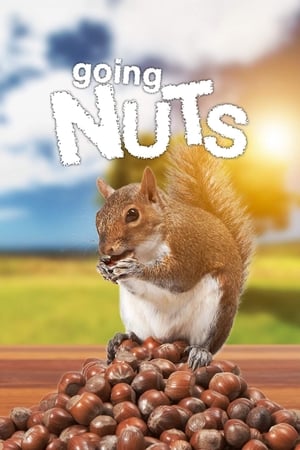
Going Nuts: Tales from the Squirrel World(de)
2019-05-26
Squirrels are among the most widely known and recognized mammals. In many parts of the world they gladly join us for our lunches in city parks, amaze us with their acrobatics and entertain our children as cartoons on TV. Squirrels live in an extraordinarily diverse range of habitats. Some can fly, some can swim, some live in trees or underground, others love icy wastelands or burning hot deserts. But don’t let their cuteness fool you! They may be small, but squirrels are one of the most successful species on the planet. And they have big families. This blue-chip documentary explores some of the most fascinating squirrel species and shows how they became so successful dealing with extreme environments and curious (human) neighbors. 'Going Nuts' unveils the enchanting world of one of the “most watched” mammals on the planet.
0%
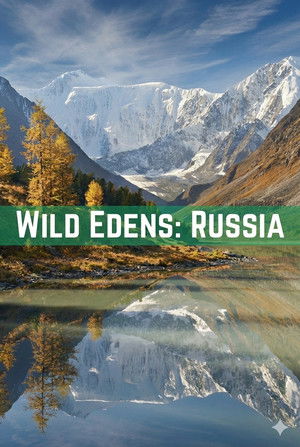
Wild Edens: Russia(en)
2018-01-01
The documentary features some of the least explored parts of Russia: Altai, Amur, Kamchatka, Yamal, and the Arctic. In each region, the crew uncovered how species have adapted to Russia's challenging terrain: from polar bears, hunting on melting ice caps, and musk oxen coping with punishing Arctic conditions, to the toad-headed agama lizards doing their best to survive in the scorched desert near the Caspian Sea. These precious habitats and the animals that call them home are under direct threat from climate change as a result of global warming occurring around the world. The film captures the incredible diversity of this immense wilderness, demonstrate the shooting process of the film, and lead you to think what might be done to mitigate such potential destruction.
77%
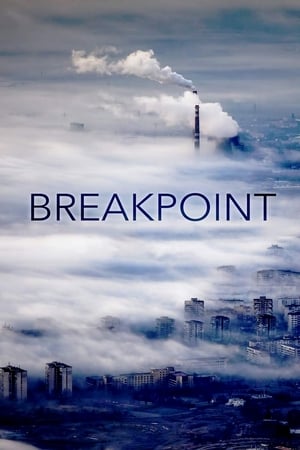
Breakpoint: A Counter History of Progress(fr)
2019-07-14
An account of the last two centuries of the Anthropocene, the Age of Man. How human beings have progressed so much in such a short time through war and the selfish interests of a few, belligerent politicians and captains of industry, damaging the welfare of the majority of mankind, impoverishing the weakest, greedily devouring the limited resources of the Earth.
70%
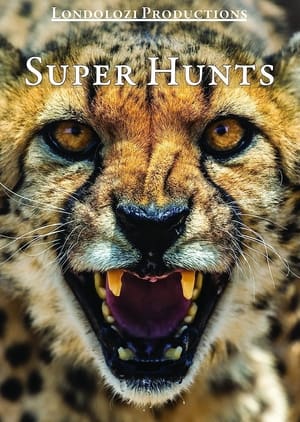
Super Hunts, Super Hunters(en)
1995-01-01
Lions, leopard, cheetah, hyena, wild dog and crocodile - extraordinary scenes of super predators hunting. The Super Predators was filmed over three years at Londolozi Game Reserve in South Africa and on Kenya's Masai Mara. It captures some of the most extraordinary scenes ever seen on film of these super predators hunting and killing. Dramatic slow-motion action replays allow the viewer the opportunity of observing all the subtleties of these magnificent hunters in action. The film includes a plea for the world's most notorious predator, man, to work in closer partnership with nature for our mutual benefit and survival.
85%
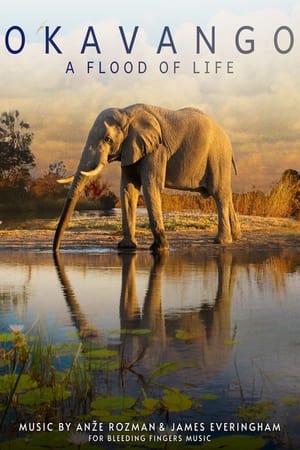
Okavango: A Flood of Life(en)
2021-02-15
A great flood arrives in a desert kingdom, transforming a dustbowl into a vast and lush wetland, in one of the most diverse habitats on earth. This breath-taking blue-chip natural history film is a journey through Okavango’s seasons, seen through the eyes of an indigenous River Bushman. Our storyteller guides us through the course of Okavango’s flood and into a savage drought, interweaving intimate and spectacular wildlife stories. The arrival and disappearance of precious water determines the destiny of the millions of animals that call Okavango home. For many, the flood is a lifeline. For others, it brings the greatest challenges. Everyone lives or dies by this epic event. It is the heartbeat of the Kalahari.
0%
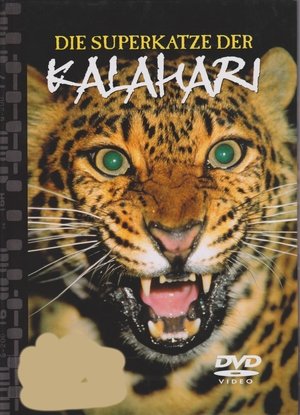
Natural Killers Predators Close Up: Kalahari Supercat(en)
2005-06-15
During the dry season, the Kalahari Desert provides slim pickings for its many inhabitants. Leopards, lions, cheetahs and jackals must all fight for food and survival. Of these predators, it is the leopard that is most adept at facing the challenges of this difficult terrain. Its unparalleled skills mean that it reigns supreme. This film gives us unprecedented access to the daily life of one female leopard as she raises her first litter of cubs. This vicious predator is also a gentle and caring mother, worthy of the title "Supercat."

0%
Knockhatch Animal Conservation: A Short Documentary(en)
A short documentary where we learn about the endangered lemurs, owls and otters from the Knockhatch Conservation staff.
0%
United Sharks of America(en)
2015-08-08
A showcase for breathtaking shark behaviour, covering a wide variety of species across the coastal waters of the US.

0%
Legends of Great Outdoors Colorado(en)
2024-04-01
The short documentary Legends of Great Outdoors Colorado celebrates the visionaries who put Great Outdoors Colorado (GOCO) into motion three decades ago, creating a unique-in-the-nation resource and an enduring legacy of protecting and enhancing Colorado’s wildlife, parks, rivers, trails, and open spaces. In-depth conversations with legendary Coloradans, including GOCO co-founders Roy Romer and Ken Salazar, tell the origin story, and how the mission is possible thanks to passionate partners across the state, the people of Colorado, and GOCO's funding source, the Colorado Lottery. A combination of intimate interviews, archival footage, present-day scenes, and 8-mm film pays homage to Colorado’s outdoor heritage and GOCO’s continued commitment to conservation and recreation.
0%
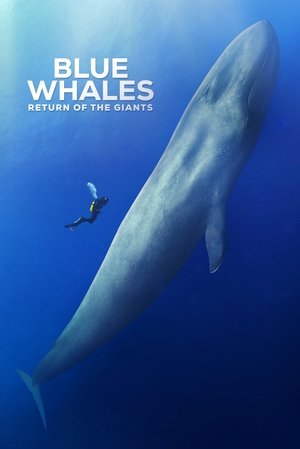
Blue Whales: Return of the Giants(en)
2023-05-25
Blue Whales: Return of the Giants 3D takes viewers on a journey of a lifetime to explore the world of the magnificent blue whale, a species rebounding from the brink of extinction. Following two scientific expeditions—one to find a missing population of blues off the exotic Seychelles Islands, the other to chronicle whale families in Mexico’s stunning Gulf of California—the film is an inspirational story that transforms our understanding of the largest animal ever to have lived.

90%
Leopard Dynasty – The Rise of Rana(en)
2025-06-28
Jhalana’s refuge, India's urban leopard habitat, is controlled by the strong and experienced Bahadur. But his dominance is being challenged – by his son, Rana! Once a quiet youngster, Rana has grown into an ambitious young male. But in the animal kingdom, power is not inherited – it is fought for with strength and persistence. Rana is not content with just securing his place; he wants more. To fulfill his ambitions, he forms a bond with one of his father's females, and what begins as a simple interaction soon turns into a powerful partnership. The aging Bahadur has held his territory for six years and will not tolerate his son's claim. Rana faces a decision: retreat or fight. But Rana follows his instincts.