Loading Page
The Democratic Revolutionary Handbook(NaN)
Status: Released
Date:
0%
0 Votes
Time: 0h 52m
Overview:
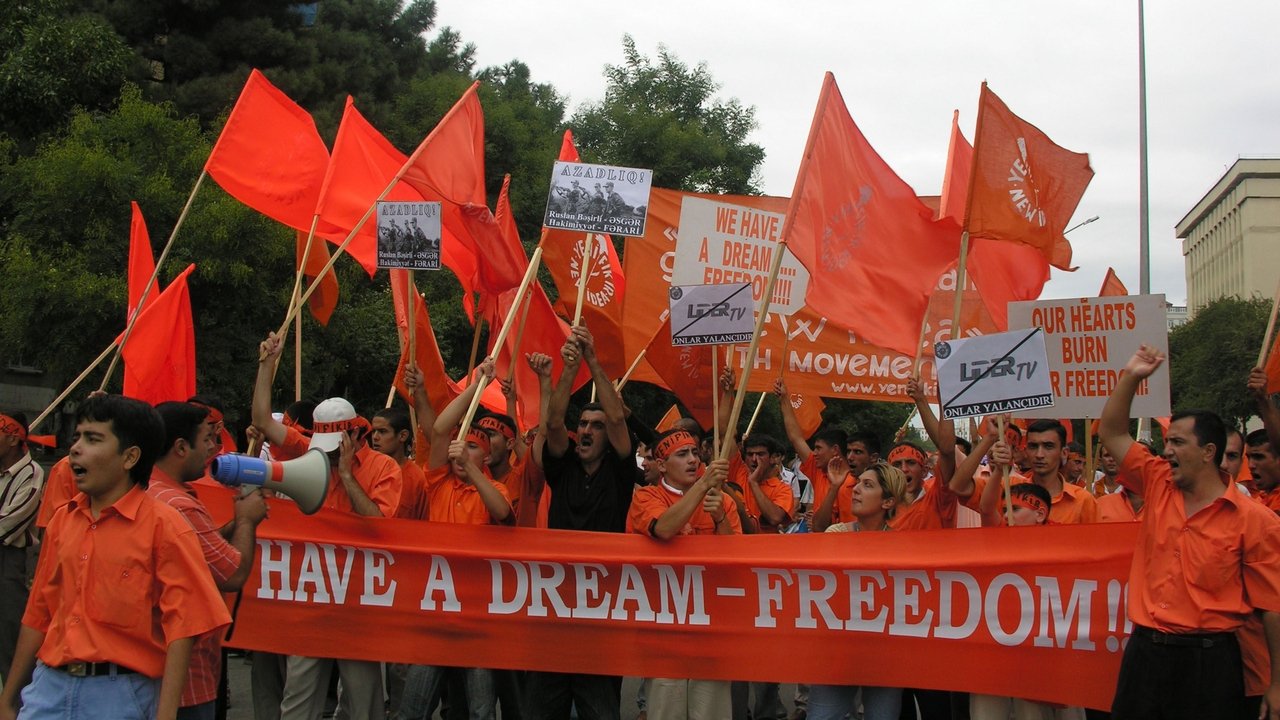
The recent democratic revolutions throughout Eastern Europe—Serbia in 2000, Georgia in 2003, and the Ukraine in 2004—all seemed to follow a quick and easy pattern: the exposure of rigged elections, followed by massive street protests, and a regime that collapsed without a fight. But THE DEMOCRATIC REVOLUTIONARY HANDBOOK reveals the lengthy and meticulous preparations behind these seemingly spontaneous demonstrations, showing how modern marketing techniques have combined with revolutionary politics to transform the region's governments.
Languages: Russian.
Countries:
ProductionCompanies: 
Movie: The Democratic Revolutionary Handbook
Loading Photos
Photo Type :Total items
Recommendations Movies
59%
South of the Border(en)
2009-09-07
A road trip across five countries to explore the social and political movements as well as the mainstream media's misperception of South America while interviewing seven of its elected presidents.
60%
Ukraine on Fire(en)
2016-06-16
Ukraine. Across its eastern border is Russia and to its west-Europe. For centuries, it has been at the center of a tug-of-war between powers seeking to control its rich lands and access to the Black Sea. 2014's Maidan Massacre triggered a bloody uprising that ousted president Viktor Yanukovych and painted Russia as the perpetrator by Western media. But was it? "Ukraine on Fire" by Igor Lopatonok provides a historical perspective for the deep divisions in the region which lead to the 2004 Orange Revolution, 2014 uprisings, and the violent overthrow of democratically elected Yanukovych.

65%
Downloaded(en)
2013-06-20
A documentary that explores the downloading revolution; the kids that created it, the bands and the businesses that were affected by it, and its impact on the world at large.

64%
Ex Libris: The New York Public Library(en)
2017-09-13
A documentary about how a dominant cultural and demographic institution both sustains their traditional activities and adapts to the digital revolution.
79%
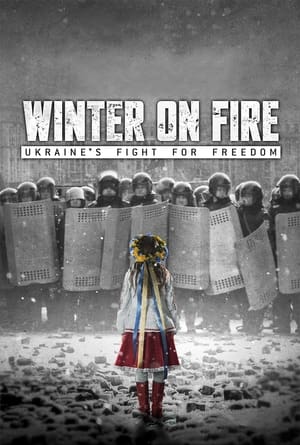
Winter on Fire: Ukraine's Fight for Freedom(en)
2015-09-03
Over 93 days in Ukraine, what started as peaceful student demonstrations became a violent revolution and full-fledged civil rights movement.
71%
Zeitgeist: Moving Forward(en)
2011-01-15
A presentation of a case for a needed transition out of the current socioeconomic monetary paradigm which governs the entire world society. This subject matter will transcend the issues of cultural relativism and traditional ideology and move to relate the core, empirical 'life ground' attributes of human and social survival, extrapolating those immutable natural laws into a new sustainable social paradigm called a 'Resource-Based Economy'.
63%
Enthusiasm. Symphony of Donbas(ru)
1930-11-06
An audiovisual symphony that delves into the industrial, agrarian, and cultural fabric of the Donbas region during the inaugural Soviet Five Year Plan. It spotlights anti-religious campaigns, propagandistic marches, and the vibrant athletic culture of its time

69%
Wormwood(en)
2017-10-22
In this genre-bending tale, Errol Morris explores the mysterious death of a U.S. scientist entangled in a secret Cold War program known as MK-Ultra.
69%
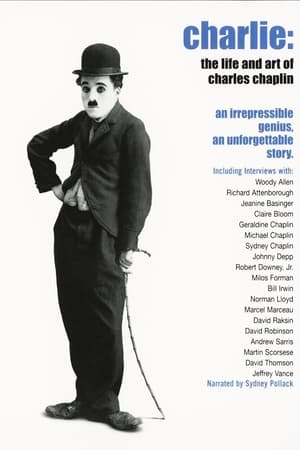
Charlie: The Life and Art of Charles Chaplin(en)
2003-05-01
Brilliant, long in-the-works story of the life and art of the world's greatest comedian and the cinema's first genius, Charlie Chaplin. Produced, written and directed by renowned film critic Richard Schickel.

68%
The Matrix Recalibrated(en)
2004-04-06
The making of Matrix Revolutions, The (2003) is briefly touched on here in this documentary. Interviews with various cast and crew members inform us how they were affected by the deaths of Gloria Foster and Aaliyah, and also delve into the making of the visual effects that takes up a lot of screen time. Written by Rhyl Donnelly
65%
Heart of a Dog(en)
2015-10-21
Lyrical and powerfully personal essay film that reflects on the deaths of her husband Lou Reed, her mother, her beloved dog, and such diverse subjects as family memories, surveillance, and Buddhist teachings.

76%
Night Will Fall(en)
2014-06-07
When Allied forces liberated the Nazi concentration camps in 1944-45, their terrible discoveries were recorded by army and newsreel cameramen, revealing for the first time the full horror of what had happened. Making use of British, Soviet and American footage, the Ministry of Information’s Sidney Bernstein (later founder of Granada Television) aimed to create a documentary that would provide lasting, undeniable evidence of the Nazis’ unspeakable crimes. He commissioned a wealth of British talent, including editor Stewart McAllister, writer and future cabinet minister Richard Crossman – and, as treatment advisor, his friend Alfred Hitchcock. Yet, despite initial support from the British and US Governments, the film was shelved, and only now, 70 years on, has it been restored and completed by Imperial War Museums under its original title "German Concentration Camps Factual Survey".
66%
Comandante(en)
2003-02-14
Oliver Stone spends three days filming with Fidel Castro in Cuba, discussing an array of subjects with the president such as his rise to power, fellow revolutionary Che Guevara, the Cuban Missile crisis, and the present state of the country.
66%
Harmontown(en)
2014-03-08
A comedic, brutally honest documentary following self-destructive TV writer Dan Harmon as he takes his live podcast on a national tour.
74%
She's Beautiful When She's Angry(en)
2014-12-05
A documentary that resurrects the buried history of the outrageous, often brilliant women who founded the modern women's movement from 1966 to 1971.
79%
A Decade Under the Influence(en)
2003-04-25
A documentary examining the decade of the 1970s as a turning point in American cinema. Some of today's best filmmakers interview the influential directors of that time.
77%
OLIVIA RODRIGO: driving home 2 u (a SOUR film)(en)
2022-03-25
Grammy® winner singer-songwriter Olivia Rodrigo takes a familiar road trip from Salt Lake City, where she began writing her debut album “SOUR,” to Los Angeles. Along the way, Rodrigo recounts the memories of writing and creating her record-breaking debut album and shares her feelings as a young woman navigating a specific time in her life. Through new live arrangements of her songs, intimate interviews and never-before-seen footage from the making of the album, audiences will follow Olivia along on a cinematic journey exploring the story of “SOUR.”
75%
Cuba and the Cameraman(en)
2017-09-08
This revealing portrait of Cuba follows the lives of Fidel Castro and three Cuban families affected by his policies over the last four decades.

63%
Banking on Bitcoin(en)
2016-12-30
Not since the invention of the Internet has there been such a disruptive technology as Bitcoin. Bitcoin's early pioneers sought to blur the lines of sovereignty and the financial status quo. After years of underground development Bitcoin grabbed the attention of a curious public, and the ire of the regulators the technology had subverted. After landmark arrests of prominent cyber criminals Bitcoin faces its most severe adversary yet, the very banks it was built to destroy.
70%
LA Originals(en)
2020-04-10
Photographer Estevan Oriol and artist Mister Cartoon turned their Chicano roots into gritty art, impacting street culture, hip hop and beyond.
Similar Movies
90%
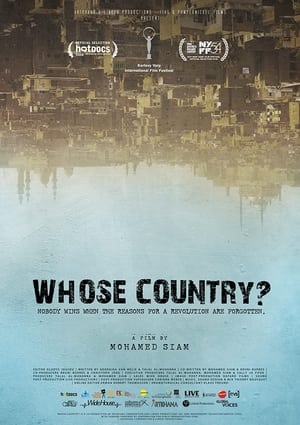
Whose Country?(en)
2016-07-17
A young Egyptian filmmaker recounts his interaction with a group of plainclothes policemen while grappling with issues of guilt and morality.
73%
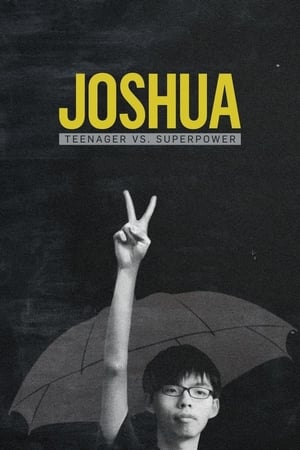
Joshua: Teenager vs. Superpower(en)
2017-01-20
When the Chinese Communist Party backtracks on its promise of autonomy to Hong Kong, teenager Joshua Wong decides to save his city. Rallying thousands of kids to skip school and occupy the streets, Joshua becomes an unlikely leader in Hong Kong and one of China’s most notorious dissidents.
35%
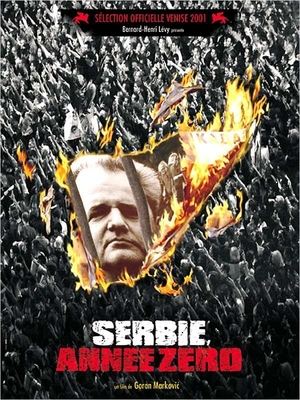
Serbia, Year Zero(fr)
2001-11-21
Documentary that follows events after the fall of Slobodan Milosevic, while looking back on the previous fifteen years, tracing his rise to power. Personal testimony alternates with analysis of a disintegrating society.
68%
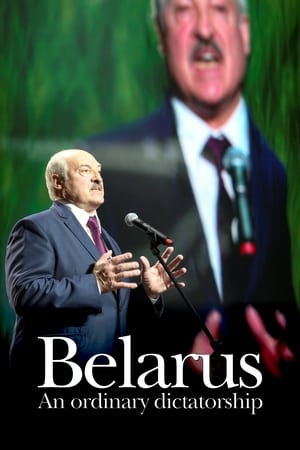
Belarus: An Ordinary Dictatorship(fr)
2018-03-18
It’s the last dictatorship of Europe, caught in a Soviet time-warp, where the secret police is still called the KGB and the president rules by fear. Disappearances, political assassinations, waves of repression and mass arrests are all regular occurances. But while half of Belarus moves closer to Russia, the other half is trying to resist…
0%
Amazing Azerbaijan!(en)
2012-05-24
Documentary feature & TV hour filmed in run-up to Eurovision 2012 in Baku, contrasting the Azerbaijan's glitzy image to their grim human rights record through personal stories.
64%
Point and Shoot(en)
2014-04-19
At first glance, Matthew VanDyke—a shy Baltimore native with a sheltered upbringing and a tormenting OCD diagnosis—is the last person you’d imagine on the front lines of the 2011 Libyan revolution. But after finishing grad school and escaping the U.S. for "a crash course in manhood," a winding path leads him just there. Motorcycling across North Africa and the Middle East and spending time as an embedded journalist in Iraq, Matthew lands in Libya, forming an unexpected kinship with a group of young men who transform his life. Matthew joins his friends in the rebel army against Gaddafi, taking up arms (and a camera). Along the way, he is captured and held in solitary confinement for six terrifying months.
20%
Inês(fr)
1974-11-17
Inês Etienne Romeu was an opponent to the Brazilian's dictatorship. She was kidnapped, tortured and raped in jail, where she stayed for almost 100 days. She was later sentenced to life imprisonment. She stayed ten years in prison, from 1971 to 1979. Delphine Seyrig directed this film in 1974, when Inês was still in prison, protesting against this imprisonment and in support to Inês.
50%
Demokratie unter Druck – Europa vor der Wahl(de)
2019-05-13
Thoughts of a diversity of public and private citizens on the virtues of democracy, its faults, its decadence, its fall and the rise of populism.
76%
The Corporation(en)
2003-09-10
Since the late 18th century American legal decision that the business corporation organizational model is legally a person, it has become a dominant economic, political and social force around the globe. This film takes an in-depth psychological examination of the organization model through various case studies. What the study illustrates is that in the its behaviour, this type of "person" typically acts like a dangerously destructive psychopath without conscience. Furthermore, we see the profound threat this psychopath has for our world and our future, but also how the people with courage, intelligence and determination can do to stop it.

42%
The Last Republican(en)
2024-09-05
A fan of Hot Tub Time Machine, Republican Congressman Adam Kinzinger invites the left-wing Hollywood director Steve Pink to follow his efforts to hold Donald Trump accountable for the January 6 insurrection.
0%
12 March: Rematch(tr)
1994-06-12
Demirkırat stumbled on March 12, 1971. Actually, you know, they shoot limping horses. But this time it didn't. Turkish democracy continued to run despite its wounds. Because March 12 was not a "seizure" but a "warning". The generals were saying, "If what we want is not done, we will seize it." The country was entering a new era under this Sword of Damocles. A president who was helpless in the face of events, a prime minister who had to leave his seat, a newly fallen parliament, four generals neither inside nor outside the power... Now, a solution would be tried to be found out of this complex equation. But how and with whom? No one knew the answer to these questions in Turkey on the morning of March 13.
65%
Primary(en)
1960-11-08
Primary is a documentary film about the primary elections between John F. Kennedy and Hubert Humphrey in 1960. Primary is the first documentary to use light equipment in order to follow their subjects in a more intimate filmmaking style. This unconventional way of filming created a new look for documentary films where the camera’s lens was right in the middle of what ever drama was occurring. Preserved by the Academy Film Archive in partnership with The Film Foundation in 1998.
0%
12 March: Contumacy(tr)
1994-05-15
The slogan "Great Türkiye" began to be heard for the first time in the mid-60s. The Turkish economy had become unstable and stagnant at the hands of military interventions and the provisional government. After 1965, the system began to settle. The economy's also recovered. With the 2nd Development Plan, the wheels of a liberal economy were turned. On the 1 hand, private sector incentives, big projects such as Keban Dam and Bosphorus Bridge. Electricity was going to the villages, Turkey was getting its share from the growth in the world, the country was "doubling up" in the words of the prime minister. Inflation was five percent. Demirel, who rushed from one groundbreaking ceremony to the next, had nothing to say. Of course, this vitality was also reflected in social life. Unions, associations, universities were fidgety. The world and Türkiye were going to 1968 at full speed. The year that gave its name to a generation in the history of the world and Turkey; 1968 had come...

0%
Letters to a Dictatorship(pt)
2006-01-01
A hundred letters written by Portuguese women during the Salazar dictatorship were found by chance in a second-hand bookshop. By confronting today the women who wrote these letters with the ghosts of the past, and revealing important archive material, Letters to a Dictatorship takes us on an in-depth journey through the obscurantism that dominated Portugal for more than 50 years.
80%
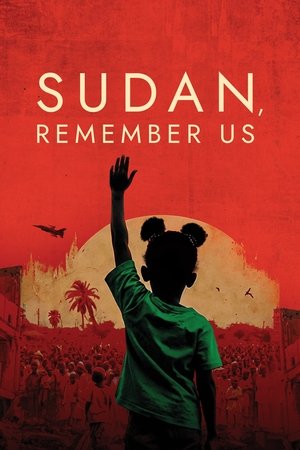
Sudan, Remember Us(ar)
2025-05-07
In a Sudan torn apart by years of war, this documentary immerses us in the daily fight of young Sudanese. Their stories, both harrowing and inspiring, remind us of the ability to find hope even in the darkest of circumstances. This is a call to attention to a forgotten crisis, and a tribute to the power of creativity as a tool of survival and resistance.
75%
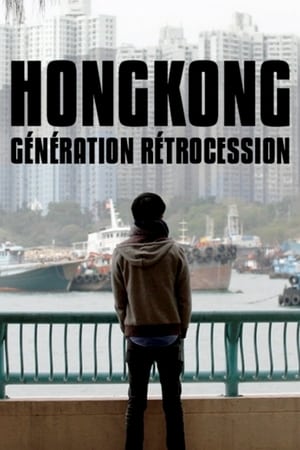
Hong Kong: Retrocession Generation(fr)
2017-07-04
In 2017, twenty years after the British handed over Hong Kong to China in 1997, young people, more politicized than any previous generation and proud of their land, do not feel Chinese and actively fight against the oligarchs who want to subdue them to China's authoritarian power.
60%
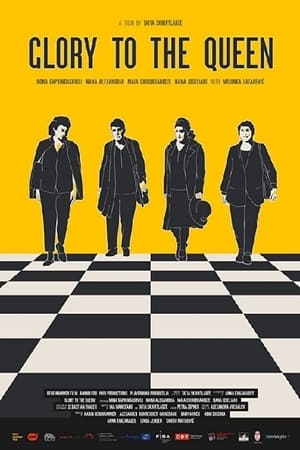
Glory to the Queen(en)
2020-03-01
Against the backdrop of Cold War, Glory to the Queen reveals stories of four legendary female chess players from Georgia who revolutionized women’s chess across the globe and became Soviet icons of female emancipation.
0%
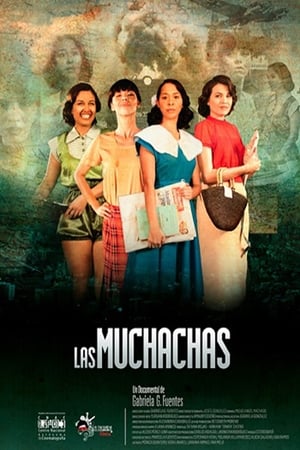
The Girls(es)
2014-06-27
Four lucid grandmothers tell their story forgotten by history: the militancy and resistance of the young women of the leftist youth against the dictatorship of Marcos Pérez Jiménez.