Loading Page


Remember Belsen(2025)
Status: Released
Date: 2025-06-25
0%
0 Votes
Time: 1h 45m
Commemorating the Liberation of Bergen-Belsen, April 15 1945
Overview:
An eyewitness documentary, featuring interviews with five Jewish survivors, a cameraman who recorded the camp’s liberation, and Australian war artist Alan Moore, the first to record the horrors of the BERGEN-BELSEN camp. Frank Shield’s film reflects on the experiences of camp inmates to convey the full horror of the Holocaust. In a moving counterpoint, the film records a reunion between two Jewish survivors, Olga Horak and Helen Schon and war artist, Alan Moore.
Languages: English, German.
Countries:
Australia
ProductionCompanies:
Frontier Films
Movie: Remember Belsen
Top 6 Billed Cast

Tony Barry
Narrator
Video Trailer Remember Belsen
All 1 videos
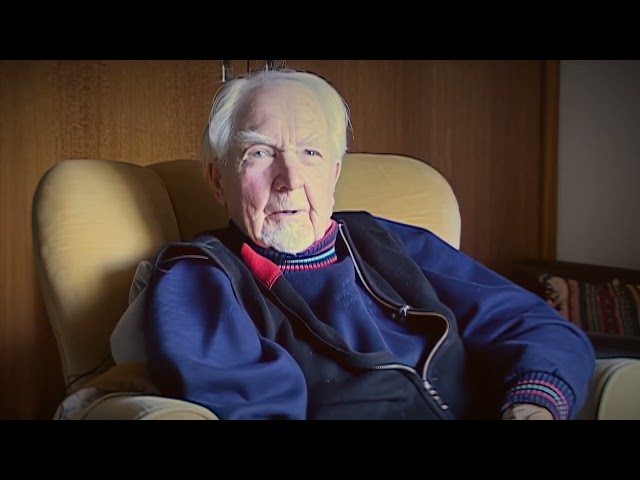
REMEMBER BELSEN TRAILER - Trailer
Recommendations Movies

74%
The Windermere Children(en)
2020-01-27
The story of the pioneering project to rehabilitate child survivors of the Holocaust on the shores of Lake Windermere.

72%
The Diary of Anne Frank(en)
1959-03-18
The true, harrowing story of a young Jewish girl who, with her family and their friends, is forced into hiding in an attic in Nazi-occupied Amsterdam.
68%
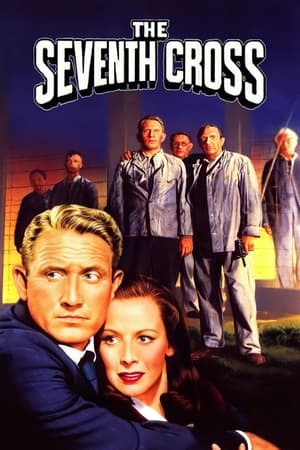
The Seventh Cross(en)
1944-07-24
In Nazi Germany in 1936 seven men escape from a concentration camp. The camp commander puts up seven crosses and, as the Gestapo returns each escapee he is put to death on a cross. The seventh cross is still empty as George Heisler attempts an escape to freedom in Holland.
70%
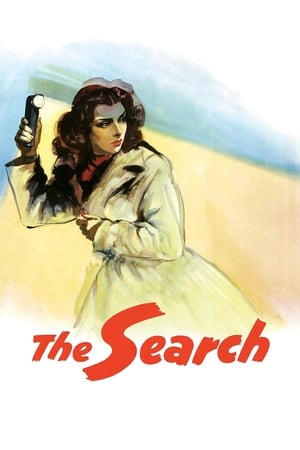
The Search(en)
1948-03-26
In postwar Germany, a displaced Czech boy, separated from his family during wartime, is befriended by an American GI while the boy's mother desperately searches for him.

69%
Eleanor the Great(en)
2025-09-04
94-year-old Eleanor Morgenstein tries to rebuild her life after the death of her best friend. As a result, she moves back to New York City after living in Florida for decades.

68%
Looking for Richard(en)
1996-10-11
Al Pacino's deeply-felt rumination on Shakespeare's significance and relevance to the modern world through interviews and an in-depth analysis of "Richard III."
79%
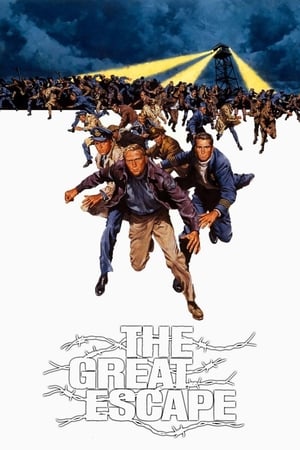
The Great Escape(en)
1963-07-03
The Nazis, exasperated at the number of escapes from their prison camps by a relatively small number of Allied prisoners, relocate them to a high-security 'escape-proof' camp to sit out the remainder of the war. Undaunted, the prisoners plan one of the most ambitious escape attempts of World War II. Based on a true story.

60%
Eichmann(en)
2007-09-22
Based upon the final confession of Adolf Eichmann, made before his execution in Israel, of his role in Hitler's plan for the final solution.
60%
Ilsa: She Wolf of the SS(en)
1975-10-01
Ilsa, a warden at a Nazi death camp that conducts experiments on prisoners, strives to prove that women can withstand more pain and suffering than men, and therefore should be allowed to fight on the frontlines.

62%
Shadows in the Sun(en)
2005-05-12
An aspiring young writer tracks a literary titan suffering from writers block to his refuge in rural Italy and learns about life and love from the irascible genius and his daughters.

69%
Wormwood(en)
2017-10-22
In this genre-bending tale, Errol Morris explores the mysterious death of a U.S. scientist entangled in a secret Cold War program known as MK-Ultra.

64%
The House on Telegraph Hill(en)
1951-05-12
Concentration camp survivor Victoria Kowelska finds herself involved in mystery, greed, and murder when she assumes the identity of a dead friend in order to gain passage to America.

72%
Seven Years in Tibet(en)
1997-09-12
Austrian mountaineer Heinrich Harrer journeys to the Himalayas without his family to head an expedition in 1939. But when World War II breaks out, the arrogant Harrer falls into Allied forces' hands as a prisoner of war. He escapes with a fellow detainee and makes his way to Lhasa, Tibet, where he meets the 14-year-old Dalai Lama, whose friendship ultimately transforms his outlook on life.
66%
The Last Rifleman(en)
2023-12-07
A WWII veteran escapes his care home in Northern Ireland and embarks on an arduous but inspirational journey to France to attend the 75th anniversary of the D-Day landings, finding the courage to face the ghosts of his past.

73%
Hamlet(en)
1996-12-25
Hamlet, Prince of Denmark, returns home to find his father murdered and his mother now marrying the murderer... his uncle. Meanwhile, war is brewing.

64%
Return(en)
2011-02-10
Back from a tour of duty, Kelli struggles to find her place in her family and the rust-belt town she no longer recognizes.

63%
The World, the Flesh and the Devil(en)
1959-05-01
Ralph Burton is a miner who is trapped for several days as a result of a cave-in. When he finally manages to dig himself out, he realizes that all of mankind seems to have been destroyed in a nuclear holocaust. He travels to New York City only to find it deserted. Making a life for himself there, he is flabbergasted to eventually find Sarah Crandall, who also managed to survive. Together, they form a close friendship until the arrival of Benson Thacker who has managed to pilot his small boat into the city's harbor. At this point, tensions rise between the three, particularly between Thacker, who is white, and Burton, who is black.

60%
The Meddler(en)
2016-04-05
With a new iPhone, an apartment near the Grove, and a comfortable bank account left to her by her beloved late husband, Marnie Minervini has happily relocated from New Jersey to Los Angeles to be near her daughter Lori, a successful (but still single) screenwriter, and smother her with motherly love. But when the dozens of texts, unexpected visits, and conversations dominated by unsolicited advice force Lori to draw strict personal boundaries, Marnie finds ways to channel her eternal optimism and forceful generosity to change the lives of others - as well as her own - and find a new purpose in life.
Similar Movies


64%
Colette(cs)
2013-09-12
As World War II rages on, Villi and Colette are captured and sent to Auschwitz concentration camp. Imprisoned within separate compounds, the lovers must risk their lives to be together again.
66%
And Along Come Tourists(de)
2007-05-21
Sven arrives in nowadays Auschwitz to do his civil service at the memorial. He encounters unfriendliness, especially by Stanislaw Krzeminski, the 85 year old KZ-survivor, and Krzysztof Lanuszewski, brother of his early love affair Ania. Even his boss Herold, the places manager, does little to help Sven familiarize. But when problems accumulate Sven realises that he already has become involved.
73%
A Journey Into the Holocaust(en)
2015-01-22
A detailed and deeply personal exploration into genocide and how something this atrocious happened, and continues to happen again and again - even in modern times. First-time filmmaker, Paul Bachow, travels around the world and taps into a vast knowledge base of historians, psychology practitioners, and data derived from countless interviews with experts from around the world.

0%
Charlotte(en)
1981-02-26
In 1939, Charlotte Salomon leaves Berlin to seek refuge at her grandparents' villa in the south of France. A little later, war breaks out, and Charlotte must, besides forgetting all she left behind, deal with her grandmother's depression, and her mother's suicide. To fight despair, Charlotte starts to paint, producing over one thousand images. "Is my life real, or is it theater?" This is the title she gives her body of work, which highlights her former life in Berlin. She finds herself though her art, but in 1943 is deported to Germany and Auschwitz.
73%
Train of Life(fr)
1998-09-16
In 1941, the inhabitants of a small Jewish village in Central Europe organize a fake deportation train so that they can escape the Nazis and flee to Palestine.

74%
The Counterfeiters(de)
2007-03-22
The story of Jewish counterfeiter Salomon Sorowitsch, who was coerced into assisting the Nazi operation of the Sachsenhausen concentration camp during World War II.
65%
Filmmakers for the Prosecution(fr)
2023-01-27
In 1945, two young American soldiers, brothers Budd and Stuart Schulberg, are commissioned to collect filmed and recorded evidence of the horrors committed by the infamous Third Reich in order to prove Nazi war crimes during the Nuremberg trials (1945-46). The story of the making of Nuremberg: Its Lesson for Today, a paramount historic documentary, released in 1948.
100%
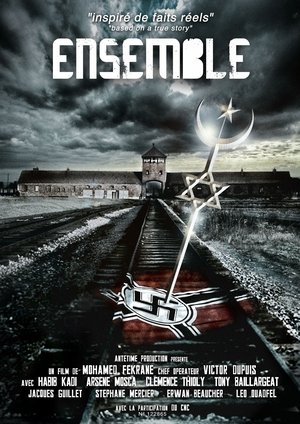
Ensemble(fr)
2010-01-01
In Paris in full German occupation in 1942, a Jewish child Isaac escapes a raid organized by the SS. He then took refuge in the Great Mosque of Paris. The imam decides to protect him by passing him off as a Muslim, as well as the other Jewish children that he manages to free with the help of the resistance networks. The French militia and the Gestapo have suspicions... This fiction film is based on the true story of the rector of the Paris mosque, Si Kaddour Benghabrit, who saved several Jews from deportation during the Second World War.
100%
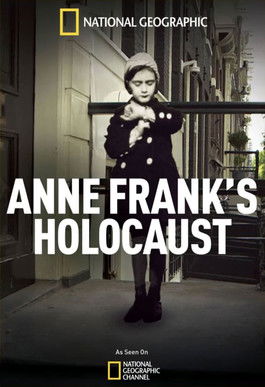
Anne Frank's Holocaust(en)
2015-06-21
Anne Frank's world famous diary came to an abrupt end shortly before she and her family were discovered hiding from the Nazis in a secret annex at the top of Otto Frank's office building, on August 4, 1944. While her diary tells the story of Anne's life, the story of her death reveals the atrocities encountered by millions of Jews during the Holocaust. In a solemn remembrance of the horrors that Anne Frank and these millions of others suffered during the dark days of World War II, National Geographic Channel (NGC) takes viewers inside the concentration camps in a two-hour special. In keeping with NGC's tradition of unparalleled storytelling, Anne Frank's Holocaust incorporates new findings and rarely seen photographs to reintroduce the story of the massacre of Jews in one of the most comprehensive documentaries on the subject to date.
0%
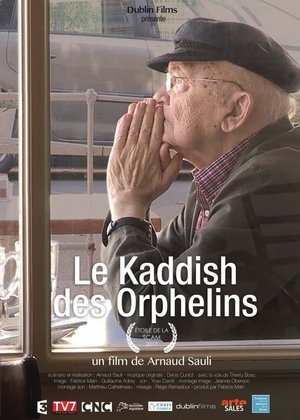
The Orphan’s Kaddish(fr)
2016-06-06
An elderly man is working tirelessly to revive the Jewish world lost in the Holocaust. His name is Aharon Appelfeld, and he became one of the greatest Jewish writers of our time. Every day, through his murmuring voice and handwriting, the survivors, the children of Ukraine, the peasants of Yiddishland come alive in the tiny office of a Jerusalem apartment. Aharon Appelfeld, solitary, wants to fight this battle to his last breath.
72%
The Diary of Anne Frank(en)
1959-03-18
The true, harrowing story of a young Jewish girl who, with her family and their friends, is forced into hiding in an attic in Nazi-occupied Amsterdam.
56%
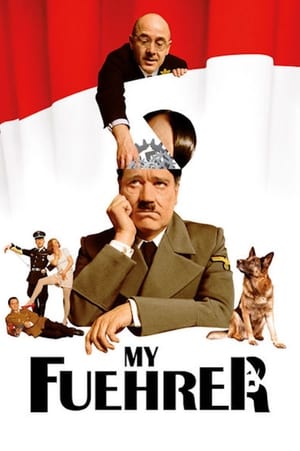
My Führer(de)
2007-01-11
Hitler no longer believes in himself, and can barely see himself as an equal to even his sheep dog. But to seize the helm of the war he would have to create one of his famous fiery speeches to mobilize the masses. Goebbels therefore brings a Jewish acting teacher Grünbaum and his family from the camps in order to train the leader in rhetoric. Grünbaum is torn, but starts Hitler in his therapy ...

70%
The Liberation of Auschwitz(de)
1986-08-13
This chilling, vitally important documentary was produced to mark the 40th anniversary of the liberation of Auschwitz Concentration Camp. The film contains unedited, previously unavailable film footage of Auschwitz shot by the Soviet military forces between January 27 and February 28, 1945 and includes an interview with Alexander Voronsov, the cameraman who shot the footage. The horrifying images include: survivors; camp visit by Soviet investigation commission; criminal experiments; forced laborers; evacuation of ill and weak prisoners with the aid of Russian and Polish volunteers; aerial photos of the IG Farben Works in Monowitz; and pictures of local people cleaning up the camp under Soviet supervision. - Written by National Center for Jewish Film

73%
Conspiracy(en)
2001-05-19
At the Wannsee Conference on January 20, 1942, senior Nazi officials meet to determine the manner in which the so-called "Final Solution to the Jewish Question" can be best implemented.

70%
The Girl with the Instagram(he)
2019-05-01
Nagyvárad, Hungary, 1944. From February to June, Eva Heyman, a 13-year-old Jewish girl, wrote a diary describing the harsh conditions of her life under Nazi occupation. How would she have told her story if she had used Instagram?

70%
Hitler's Evil Science(fr)
2019-05-25
In 1935, German scientists dug for bones; in 1943, they murdered to get them. How the German scientific community supported Nazism, distorted history to legitimize a hideous system and was an accomplice to its unspeakable crimes. The story of the Ahnenerbe, a sinister organization created to rewrite the obscure origins of a nation.