Loading Page
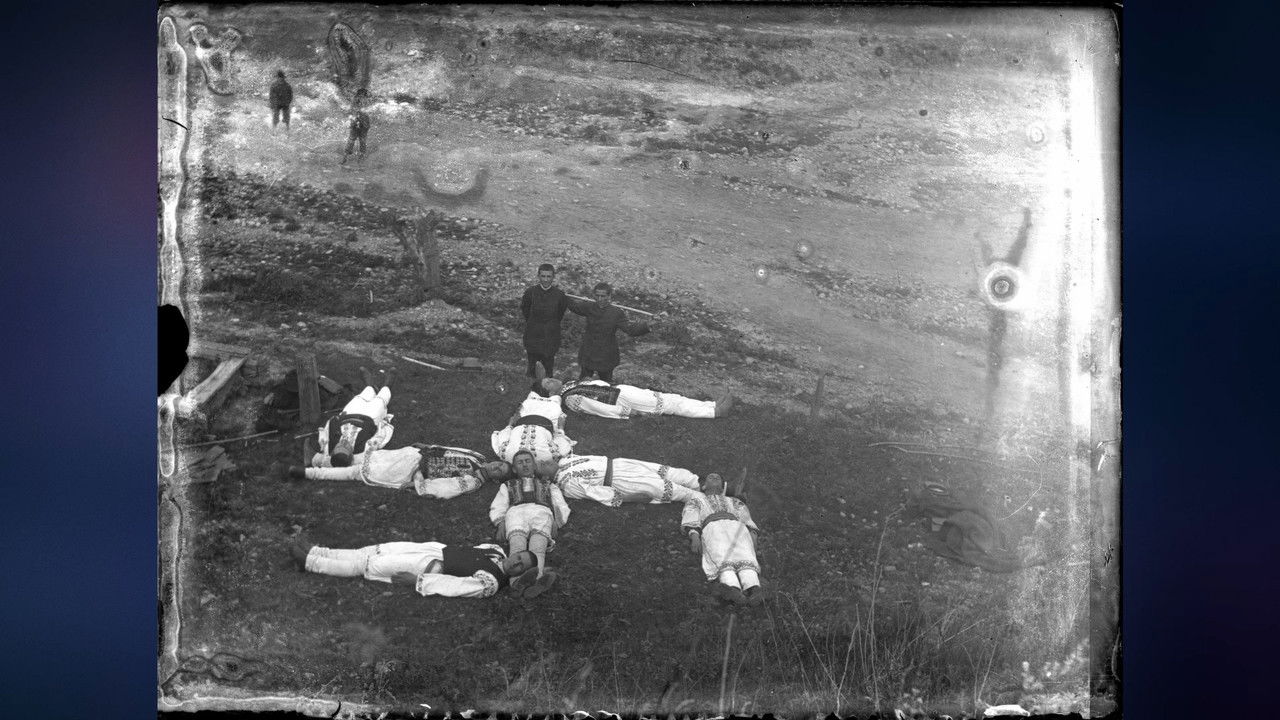

What is a fascism?(2025)
Status: Released
Date: 2025-11-07
0%
0 Votes
Time: 2h 27m
It is time to find out together.
Overview:
Catalin Moise embarks on a dizzying journey in an attempt to answer the title question, wandering through the history of Italy, Germany, and Romania in the 20th century, using as sources "The Anatomy of Fascism" and "Corneliu Zelea Codreanu The Rise and Fall of the 'Captain'."
Languages: Romanian.
Countries:
Movie: What is a fascism?
Top 1 Billed Cast
HomePage
Overview
Catalin Moise embarks on a dizzying journey in an attempt to answer the title question, wandering through the history of Italy, Germany, and Romania in the 20th century, using as sources "The Anatomy of Fascism" and "Corneliu Zelea Codreanu The Rise and Fall of the 'Captain'."
Release Date
2025-11-07
Average
0
Rating:
0.0 startsTagline
It is time to find out together.
Genres
Languages:
RomânăKeywords
Recommendations Movies
82%
The Untold History Of The United States(en)
2012-11-12
Oliver Stone charts the history of the United States from the Second World War to the present.
68%
The Unknown Known(en)
2013-08-29
Former United States Secretary of Defense, Donald Rumsfeld, discusses his career in Washington D.C. from his days as a congressman in the early 1960s to planning the invasion of Iraq in 2003.

76%
Night Will Fall(en)
2014-06-07
When Allied forces liberated the Nazi concentration camps in 1944-45, their terrible discoveries were recorded by army and newsreel cameramen, revealing for the first time the full horror of what had happened. Making use of British, Soviet and American footage, the Ministry of Information’s Sidney Bernstein (later founder of Granada Television) aimed to create a documentary that would provide lasting, undeniable evidence of the Nazis’ unspeakable crimes. He commissioned a wealth of British talent, including editor Stewart McAllister, writer and future cabinet minister Richard Crossman – and, as treatment advisor, his friend Alfred Hitchcock. Yet, despite initial support from the British and US Governments, the film was shelved, and only now, 70 years on, has it been restored and completed by Imperial War Museums under its original title "German Concentration Camps Factual Survey".
68%
Making Waves: The Art of Cinematic Sound(en)
2019-10-25
The history of cinematic sound, told by legendary sound designers and visionary filmmakers.

74%
Red Army(en)
2015-01-23
A documentary highlighting the Soviet Union's legendary and enigmatic hockey training culture and world-dominating team through the eyes of the team's Captain Slava Fetisov, following his shift from hockey star and celebrated national hero to political enemy.

70%
Ronaldo(en)
2015-11-09
Filmed over 14 months with unprecedented access into the inner circle of the man and the sport, this is the first official and fully authorised film of one of the most celebrated figures in football. For the first time ever, the world gets vividly candid and un-paralleled, behind-closed-doors access to the footballer, father, family-man and friend in this moving & fascinating documentary. Through in-depth conversations, state of the art football footage and never before seen archival footage, the film gives an astonishing insight into the sporting and personal life of triple Ballon D'Or winner Cristiano Ronaldo at the peak of his career. From the makers of ‘Senna’ and ‘Amy’, Ronaldo takes audiences on an intimate and revealing journey of what it’s like to live as an iconic athlete in the eye of the storm.
66%
Mother Night(en)
1996-11-01
An American spy behind the lines during WWII serves as a Nazi propagandist, a role he cannot escape in his future life as he can never reveal his real role in the war.
75%
The War on Democracy(en)
2007-06-15
Set both in Latin America and the United States, the film explores the historic and current relationship of Washington with countries such as Venezuela, Bolivia and Chile. Pilger says that the film "...tells a universal story... analysing and revealing, through vivid testimony, the story of great power behind its venerable myths. It allows us to understand the true nature of the so-called "war on terror". According to Pilger, the film’s message is that the greed and power of empire is not invincible and that people power is always the "seed beneath the snow".
60%
Eichmann(en)
2007-09-22
Based upon the final confession of Adolf Eichmann, made before his execution in Israel, of his role in Hitler's plan for the final solution.
72%
Silent Wedding(ro)
2008-11-21
In a small village of Communist-era Romania a young couple wish to marry, but Joseph Stalin dies the night prior to their wedding ceremony forcing the bride and groom to marry in silence.
70%
#AnneFrank. Parallel Stories(en)
2019-10-18
One single Anne Frank moves us more than the countless others who suffered just as she did but whose faces have remained in the shadows-Primo Levi. The Oscar®-winning Helen Mirren will introduce audiences to Anne Frank's story through the words in her diary. The set will be her room in the secret refuge in Amsterdam, reconstructed in every detail by set designers from the Piccolo Theatre in Milan. Anne Frank this year would have been 90 years old. Anne's story is intertwined with that of five Holocaust survivors, teenage girls just like her, with the same ideals, the same desire to live: Arianna Szörenyi, Sarah Lichtsztejn-Montard, Helga Weiss and sisters Andra and Tatiana Bucci. Their testimonies alternate with those of their children and grandchildren.
64%
The Mystery of D.B. Cooper(en)
2020-09-13
This documentary brings to life the stories of four people believed by their family and friends to be “DB Cooper,” a man who hijacked a 727 flying out of Seattle and jumped from the plane over the wilds of Washington State with a parachute and $200,000, never to be heard from again.

71%
Roger & Me(en)
1989-09-01
A documentary about the closure of General Motors' plant at Flint, Michigan, which resulted in the loss of 30,000 jobs. Details the attempts of filmmaker Michael Moore to get an interview with GM CEO Roger Smith.
68%
The War Room(en)
1993-11-03
A behind-the-scenes documentary about the Clinton for President campaign, focusing on the adventures of spin doctors James Carville and George Stephanopoulos.
66%
Drunk Stoned Brilliant Dead(en)
2015-01-25
A look at the history of the American comedy publication and production company, National Lampoon, from its beginning in the 1970s to 2010, featuring rare and never before seen footage, this is the mind boggling story of The National Lampoon from its subversive and electrifying beginnings, to rebirth as an unlikely Hollywood heavyweight, and beyond. A humour empire like no other, the impact of the magazines irreverent, often shocking, sensibility was nothing short of seismic: this is an institution whose (drunk stoned brilliant) alumni left their fingerprints all over popular culture. Both insanely great and breathtakingly innovative, The National Lampoon created the foundation of modern comic sensibility by setting the bar in comedy impossibly high.

65%
Downloaded(en)
2013-06-20
A documentary that explores the downloading revolution; the kids that created it, the bands and the businesses that were affected by it, and its impact on the world at large.

71%
The Class of ‘92(en)
2013-12-01
A detailing of the rise to prominence and global sporting superstardom of six supremely talented young Manchester United football players (David Beckham, Nicky Butt, Ryan Giggs, Paul Scholes, Phil and Gary Neville). The film covers the period 1992-1999, culminating in Manchester United's European Cup triumph.
70%
Visions of Light(en)
1992-09-17
Cameramen and women discuss the craft and art of cinematography and of the "DP" (the director of photography), illustrating their points with clips from 100 films, from Birth of a Nation to Do the Right Thing. Themes: the DP tells people where to look; changes in movies (the arrival of sound, color, and wide screens) required creative responses from DPs; and, these artisans constantly invent new equipment and try new things, with wonderful results. The narration takes us through the identifiable studio styles of the 30s, the emergence of noir, the New York look, and the impact of Europeans. Citizen Kane, The Conformist, and Gordon Willis get special attention.
64%
Why We Fight: Prelude to War(en)
1942-05-27
Prelude to War was the first film of Frank Capra's Why We Fight propaganda film series, commissioned by the Pentagon and George C. Marshall. It was made to convince American troops of the necessity of combating the Axis Powers during World War II. This film examines the differences between democratic and fascist states.
Similar Movies
48%
The Truth lies in Rostock(de)
1993-01-01
August 1992, Rostock-Lichtenhagen. The police look on as fascists bomb the Central Reception Center for Refugees (ZAST) and a hostel for Vietnamese contract workers with Molotov cocktails. A montage of video footage shot from the attacked houses, interviews with anti-fascists, the Vietnamese contract workers, the police, bureaucrats, neo-Nazis and local residents. A documentary about the collusion of politics and widespread fear.
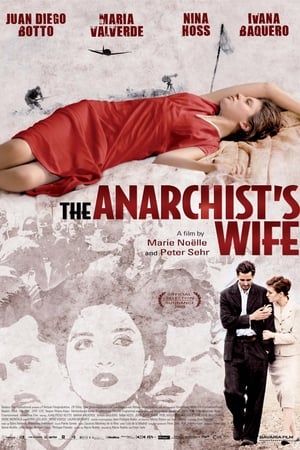
55%
The Anarchist's Wife(es)
2008-06-26
Manuela is left behind when her husband Justo fights for his ideals against Franco's Nationalists during the Spanish Civil War. He is deported to a concentration camp, and upon his release, continues the fight against nationalism in the French resistance. Years pass without a word from him, but his wife never gives up hope of seeing him again.

69%
The Garden of the Finzi-Continis(it)
1970-12-04
In 1930s Italy, a wealthy Jewish family tries to maintain their privileged lifestyle, hosting friends for tennis and parties at their villa. As anti-Semitism intensifies under Fascism, they must ultimately face the horrors of the Holocaust.
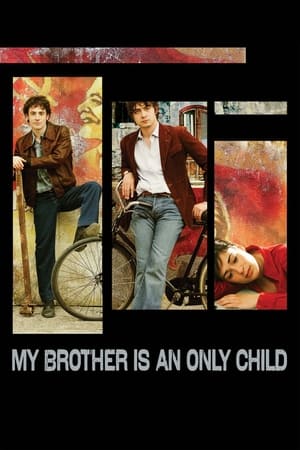
67%
My Brother Is an Only Child(it)
2007-03-28
Accio and Manrico are siblings from a working-class family in 1960s Italy: older Manrico is handsome, charismatic, and loved by all, while younger Accio is sulky, hot-headed, and treats life as a battleground — much to his parents' chagrin. After the former is drawn into left-wing politics, Accio joins the fascists out of spite, but his flimsy beliefs are put to test when he falls for Manrico's like-minded girlfriend.
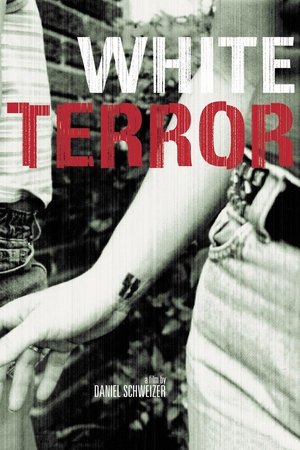
66%
White Terror(de)
2005-08-05
A video about Neo-Nazis originating in Sweden provides the starting point of an investigation of extremists' networks in Europe, Russia, and North America. Their propaganda is a message of hatred, war, and segregation.

0%
Out of the Shadows: Awaking Italy's Past(en)
2024-06-01
Italy, founder of fascism, still tolerates its sympathies. Is its government allowing the past to live on? With the far-right set to gain in European elections, is the extreme becoming mainstream?
45%
Prêtres interdits(fr)
1973-11-22
72%
The Travelling Players(el)
1975-07-01
A traveling theatre troupe tours the Greek countryside from 1939 to the early 1950s, staging “Golfo the Shepherdess”. As the years pass, its members endure persecution, betrayal, executions, and exile. Their personal stories become entangled with the country’s major historical events, in a seemingly endless cycle of violence and loss.
0%
The Killers of Mussolini(en)
1959-06-04
As the Salo Republic crumbles around him, Mussolini, along with his mistress and several of his ministers flee with retreating Nazi soldiers, but are caught at the town of Dongo by red partisans. All are brutally executed without trial.
66%
2 or 3 Things I Know About Him(de)
2005-04-07
What would your family reminiscences about dad sound like if he had been an early supporter of Hitler’s, a leader of the notorious SA and the Third Reich’s minister in charge of Slovakia, including its Final Solution? Executed as a war criminal in 1947, Hanns Ludin left behind a grieving widow and six young children, the youngest of whom became a filmmaker. It's a fascinating, maddening, sometimes even humorous look at what the director calls "a typical German story." (Film Forum)
50%
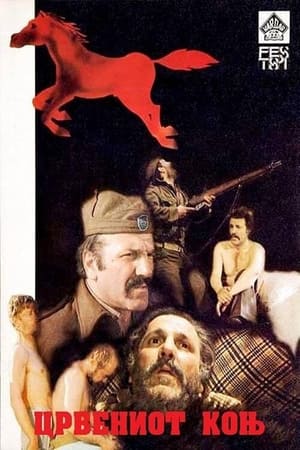
The Red Horse(mk)
1981-02-06
A joint fight of Macedonian and Greek people against the fascist monarchical government of Greece ended with their defeat in 1949, after many years of bloodshed. Many members of the democratic party DAG, as well as the innocent inhabitants experienced the destiny of political exile.
75%
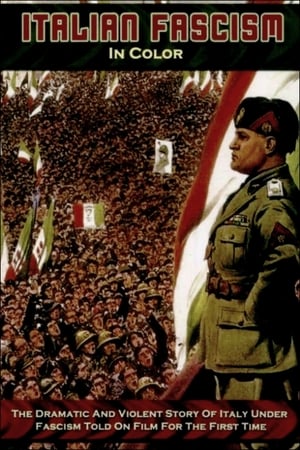
Fascism in Colour(en)
2006-01-01
After the World War I, Mussolini's perspective on life is severely altered; once a willful socialist reformer, now obsessed with the idea of power, he founds the National Fascist Party in 1921 and assumes political power in 1922, becoming the Duce, dictator of Italy. His success encourages Hitler to take power in Germany in 1933, opening the dark road to World War II. (Originally released as a two-part miniseries. Includes colorized archival footage.)

48%
El Calentito(es)
2005-06-24
Early 80's, Sara is a good-family girl, she has never been with a man, does not drinks, does not take drugs. Following her love, she enters in "El Calentito" a bar where the group "las Siux" is singing.

50%
Comprehensive Annual Financial Reports Exposed(en)
2001-01-01
Alex Jones interviews Walter Burien, commodity trading adviser (CTA) of 15 years about the biggest game in town. There are over 85,000 federal and regional governmental institutions: school districts, water and power authorities, county and city governments – and they own over 70 percent of the stock market.
52%
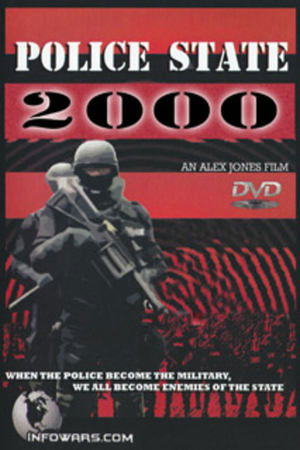
Police State 2000(en)
1999-01-04
Alex Jones exposes the growing militarization of American law enforcement and the growing relationship between the military and police. Witness US training with foreign troops and learning how to control and contain civilian populations. You will see Special Forces helicopter attacks on South Texas towns, concentration camps, broad unconstitutional police actions, search and seizure and more.
46%
Police State II: The Take Over(en)
2000-01-01
Alex Jones exposes the problem-reaction-solution paradigm being used to terrorize the American people into accepting a highly controlled and oppressive society. From children in public schools being trained to turn in their peers and parents, to the Army and National Guard patrolling our nation's highways, Police State: The Takeover reveals the most threatening developments of Police State control
38%
Police State III: Total Enslavement(en)
2003-01-01
Total Enslavement is the third installment in the critically-acclaimed Police State series and is a must-see for all who leve freedom. This film documents the nightmare rise of the Homeland Security dictatorship, Patriot Acts 1 and 2, the Total Information Awareness Network, government-run white slavery rings, the new prison surveillance economy and much more.
65%
The March on Rome(it)
2022-10-20
The fascinating story of the rise to power of dictator Benito Mussolini (1883-1945) in Italy in 1922 and how fascism marked the fate of the entire world in the dark years to come.