Loading Page

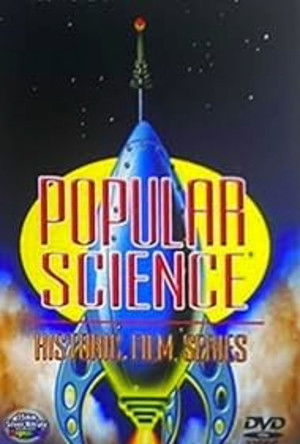
Popular Science J-0-2(1940)
Status: Released
Date: 1940-11-01
0%
0 Votes
Time: 0h 10m
Miracles of Science On The Screen!
Overview:
The usual interesting sequences, depicting a home made sun dial, some gadgets for the modern kitchen. Professor Oakes, and Dorothy Lamour singing "Moon Over Burma" (coming soon to your favorite theatre: Moon Over Burma (1940)).
Languages: English.
Countries:
United States of America
ProductionCompanies: 
Movie: Popular Science J-0-2
Top 3 Billed Cast

Gayne Whitman
Self (Voice)

Dorothy Lamour
Self
HomePage
Overview
The usual interesting sequences, depicting a home made sun dial, some gadgets for the modern kitchen. Professor Oakes, and Dorothy Lamour singing "Moon Over Burma" (coming soon to your favorite theatre: Moon Over Burma (1940)).
Release Date
1940-11-01
Average
0
Rating:
0.0 startsTagline
Miracles of Science On The Screen!
Genres
Languages:
EnglishKeywords
Recommendations Movies
72%
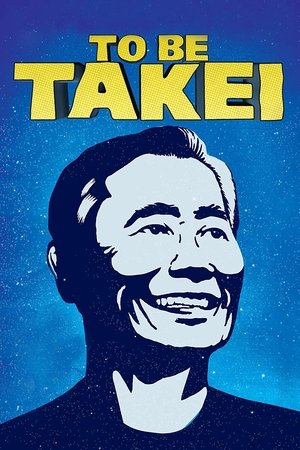
To Be Takei(en)
2014-08-22
Over seven decades, actor and activist George Takei journeyed from a World War II internment camp to the helm of the Starship Enterprise, and then to the daily news feeds of five million Facebook fans. Join George and his husband, Brad, on a wacky and profound trek for life, liberty, and love.
66%
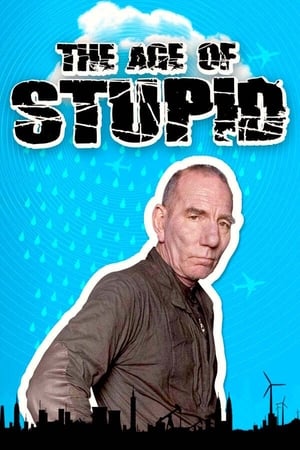
The Age of Stupid(en)
2009-09-21
Pete Postlethwaite stars as a man living alone in the devastated future world of 2055, looking at old footage from 2008 and asking: why didn’t we stop climate change when we had the chance?

78%
The Skywalker Legacy(en)
2020-03-18
The story lives forever in this feature-length documentary that charts the making of Star Wars: The Rise of Skywalker.
70%
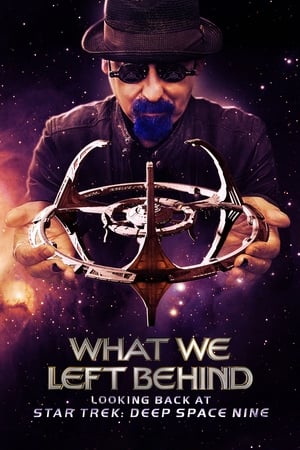
What We Left Behind: Looking Back at Star Trek: Deep Space Nine(en)
2018-10-12
A documentary exploring the legacy of Star Trek: Deep Space Nine, the reasons it went from the black sheep of Star Trek to a beloved mainstay of the franchise, and a brainstorm with the original writers on what a theoretical eighth season of the show could look like.
75%
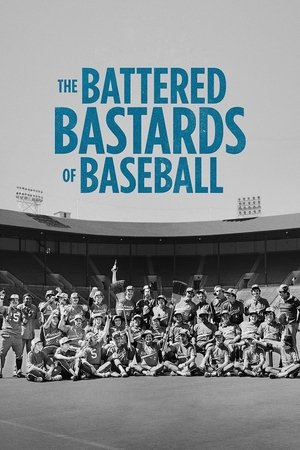
The Battered Bastards of Baseball(en)
2014-01-20
Hollywood veteran Bing Russell creates the only independent baseball team in the country—alarming the baseball establishment and sparking the meteoric rise of the 1970s Portland Mavericks.
73%
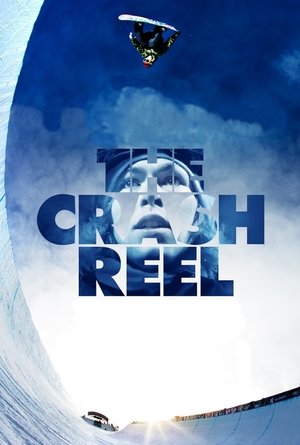
The Crash Reel(en)
2013-06-10
The Crash Reel tells the story of a sport and the risks that athletes face in reaching the pinnacle of their profession. This is Kevin Pearce’s story, a celebrated snowboarder who sustained a brain injury in a trick gone wrong and who now aims, against all the odds, to get back on the snow.
70%
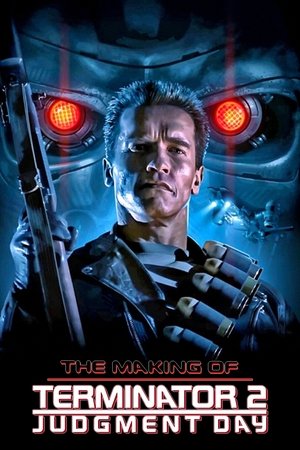
The Making of 'Terminator 2: Judgment Day'(en)
1991-09-10
Documentary of the making of the sequel to the popular Schwarzenegger film, The Terminator.
71%
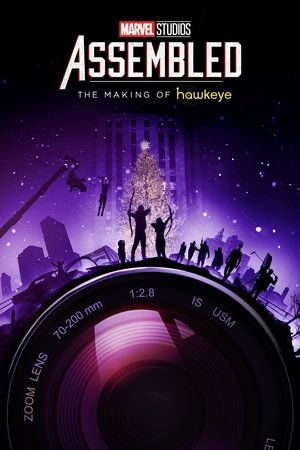
Marvel Studios Assembled: The Making of Hawkeye(en)
2022-02-09
Join the likes of Jeremy Renner, Hailee Steinfeld, Florence Pugh, and Vincent D’Onofrio as they reveal how Marvel Studios’ “Hawkeye” was conceived and created. Witness firsthand what it took to pull off the show’s pulse-pounding action set pieces, and discover how iconic characters from the pages of Marvel Comics such as Kate Bishop were adapted and brought to life for the six-episode series.

73%
Maria by Callas(en)
2017-12-13
Told through performances, TV interviews, home movies, family photographs, private letters and unpublished memoirs, the film reveals the essence of an extraordinary woman who rose from humble beginnings in New York City to become a glamorous international superstar and one of the greatest artists of all time.
76%
The Pixar Story(en)
2007-08-28
A look at the first years of Pixar Animation Studios - from the success of "Toy Story" and Pixar's promotion of talented people, to the building of its East Bay campus, the company's relationship with Disney, and its remarkable initial string of eight hits. The contributions of John Lasseter, Ed Catmull and Steve Jobs are profiled. The decline of two-dimensional animation is chronicled as three-dimensional animation rises. Hard work and creativity seem to share the screen in equal proportions.
79%
Koyaanisqatsi(en)
1983-04-27
Takes us to locations all around the US and shows us the heavy toll that modern technology is having on humans and the earth. The visual tone poem contains neither dialogue nor a vocalized narration: its tone is set by the juxtaposition of images and the exceptional music by Philip Glass.
70%
Chaos on the Bridge(en)
2014-08-25
Canadian acting legend William Shatner takes viewers inside the creation of Star Trek: The Next Generation, the bold attempt in 1986 to recreate the success of the original television series, in which Shatner played Captain James T. Kirk.
73%
Powaqqatsi(en)
1988-04-29
An exploration of technologically developing nations and the effect the transition to Western-style modernization has had on them.
69%
Anthropocene: The Human Epoch(en)
2018-09-28
Documentary on psychedelic potash mines, expansive concrete seawalls, mammoth industrial machines, and other examples of humanity’s massive, destructive reengineering of the planet.

69%
Harry Dean Stanton: Partly Fiction(en)
2013-09-11
An impressionistic portrait of the iconic actor Harry Dean Stanton comprised of intimate moments, film clips from some of his 250 films and his renditions of American folk songs.
78%
Interstellar: Nolan's Odyssey(en)
2014-11-05
A look behind the lens of Christopher Nolan's space epic.
65%
Heart of a Dog(en)
2015-10-21
Lyrical and powerfully personal essay film that reflects on the deaths of her husband Lou Reed, her mother, her beloved dog, and such diverse subjects as family memories, surveillance, and Buddhist teachings.

73%
Iris(en)
2014-10-09
IRIS pairs legendary 87-year-old documentarian Albert Maysles with Iris Apfel, the quick-witted, flamboyantly dressed 93-year-old style maven who has had an outsized presence on the New York fashion scene for decades. More than a fashion film, the documentary is a story about creativity and how, even in Iris’ dotage, a soaring free spirit continues to inspire. IRIS portrays a singular woman whose enthusiasm for fashion, art and people are life’s sustenance and reminds us that dressing, and indeed life, is nothing but an experiment.
68%
The Meerkats(en)
2008-10-15
A coming of age story following a young meerkat pup, Kolo, growing up in the Kalahari desert; and an inspiring look at how one family's connection to each other and their surroundings is a model of resilience and fortitude for us all. Shot using ground-breaking techniques, this dramatised documentary is a one-of-a-kind presentation from The Weinstein Company and the BBC, featuring narration by Paul Newman.
62%
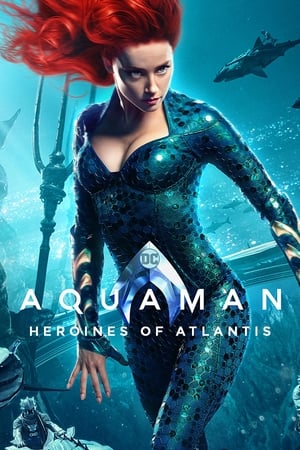
Aquaman: Heroines of Atlantis(en)
2019-03-26
Amber Heard and Nicole Kidman discuss their characters Mera and Atlanna.
Similar Movies

0%
The University(en)
2016-10-22
On a NASA research base in Silicon Valley, there's an organization that's changing the world ... Singularity University (SU). Created by renowned futurist Ray Kurzweil and entrepreneur Peter Diamandis, with support from NASA, Google, and others, the university brings in some of the smartest students from around the world, and gives them a crash course in the most powerful exponential technologies on the planet. The students are then given a challenge: create companies that will impact a billion people within ten years. The film follows the students and their companies over five years, as they use the support of scientists, astronauts and billionaires in their attempt to make a dent in the universe.
64%
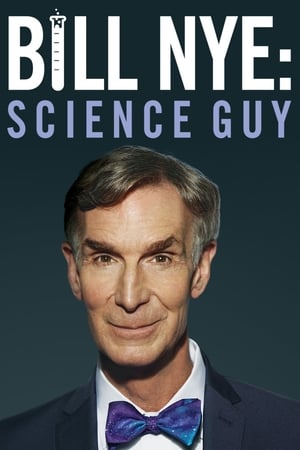
Bill Nye: Science Guy(en)
2017-04-10
Bill Nye is retiring his kid show act in a bid to become more like his late professor, astronomer Carl Sagan. Sagan dreamed of launching a spacecraft that could revolutionize interplanetary exploration. Bill sets out to accomplish Sagan's mission, but he is pulled away when he is challenged by evolution and climate change contrarians to defend the scientific consensus. Can Bill show the world why science matters in a culture increasingly indifferent to evidence?
80%
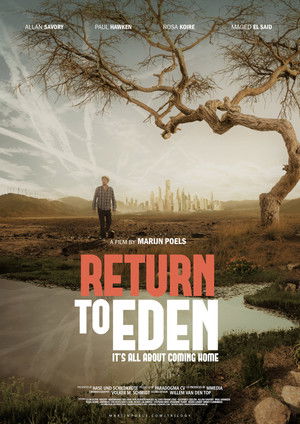
Return to Eden(en)
2020-09-17
When Natural and human interests impinge on each other and over-regulation disturbs our biological balance, important questions arise. Do we belong to nature or does nature belongs to us? A thought-provoking story in which documentary maker Marijn Poels explores the human urge to control our climate, security and preferably the other. Balancing on a razor-thin line between regulation and manipulation. When technology reigns supreme and common sense vaporizes through the test of time, humanity is on the brink of becoming the tool. Miles away from the collective panic, fear and chaos, there is hope, inspiration and reconnection.
60%
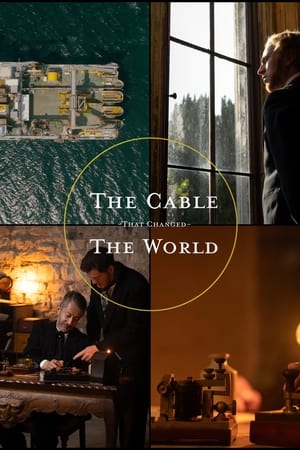
The Cable That Changed the World(en)
2024-08-05
The first transatlantic communications cable, traversing the ocean floor from Valentia Island, County Kerry, to Newfoundland, Canada, 165 years ago was an 8 year endeavor that helped lay the foundation of the modern technology industry and explains the fragility of undersea cables today.
0%
Dinosaurs: A Story of Survival(en)
2022-04-01
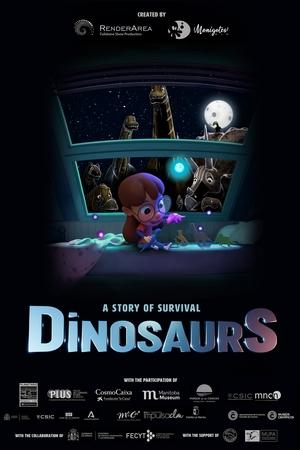
Like almost all children, Celeste is fascinated by dinosaurs. She is preparing a talk for her class about how they went extinct when Moon, a very wise and magical character, poses a tantalizing question: What if I told you that there are still dinosaurs among us? Celeste will join Moon on a journey through time, an exciting adventure that will show them the Earth as it was in the very, very distant past. They will see the fascinating transformations that these animals underwent over millions of years, creating giant creatures, armored beasts, and super-predators, until the day that a cataclysmic impact event caused a mass extinction on Earth. But all is not lost. Celeste will discover the key to their survival.
61%
How William Shatner Changed The World(en)
2005-11-13
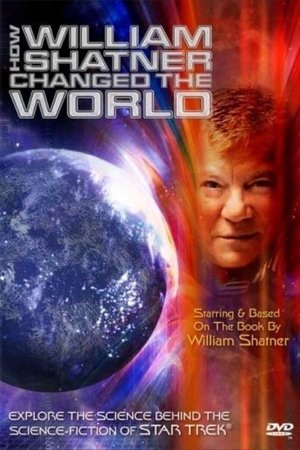
William Shatner presents a light-hearted look at how the "Star Trek" TV series have influenced and inspired today's technologies, including: cell phones, medical imaging, computers and software, SETI, MP3 players and iPods, virtual reality, and spaceship propulsion.

78%
Attacking the Devil: Harold Evans and the Last Nazi War Crime(en)
2014-06-09
Before the internet. Before social media. Before breaking news. The victims of Thalidomide had to rely on something even more extraordinary to fight their corner: Investigative journalism. This is the story of how Harold Evans fought and won the battle of his and many other lives.
0%
Close-Up on Planets(en)
1982-09-28
Computer animation and footage from NASA space missions explain how our solar system evolved and the place Earth has within the system.
79%
Koyaanisqatsi(en)
1983-04-27
Takes us to locations all around the US and shows us the heavy toll that modern technology is having on humans and the earth. The visual tone poem contains neither dialogue nor a vocalized narration: its tone is set by the juxtaposition of images and the exceptional music by Philip Glass.
72%
Fantastic Fungi(en)
2019-08-30
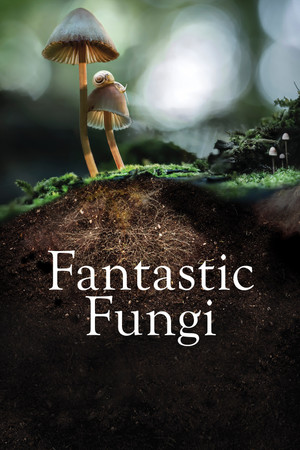
A vivid journey into the mysterious subterranean world of mycelium and its fruit— the mushroom. A story that begins 3.5 billion years ago, fungi makes the soil that supports life, connecting vast systems of roots from plants and trees all over the planet, like an underground Internet. Through the eyes of renowned mycologist Paul Stamets, professor of forest ecology Suzanne Simard, best selling author Michael Pollan, food naturalist Eugenia Bone and others, we experience the power, beauty and complexity of the fungi kingdom.
74%
Root of All Evil?(en)
2006-01-09
In this two-part Channel 4 series, Professor Richard Dawkins challenges what he describes as 'a process of non-thinking called faith'. He describes his astonishment that, at the start of the 21st century, religious faith is gaining ground in the face of rational, scientific truth. Science, based on scepticism, investigation and evidence, must continuously test its own concepts and claims. Faith, by definition, defies evidence: it is untested and unshakeable, and is therefore in direct contradiction with science. In addition, though religions preach morality, peace and hope, in fact, says Dawkins, they bring intolerance, violence and destruction. The growth of extreme fundamentalism in so many religions across the world not only endangers humanity but, he argues, is in conflict with the trend over thousands of years of history for humanity to progress to become more enlightened and more tolerant.

0%
The Making of American Hustle(en)
2014-03-18
The Making of "American Hustle" with behind the scenes content and insights from the cast and crew.
46%
Is Genesis History?(en)
2017-02-23
A fascinating new look at the biblical, historical, and scientific evidence for Creation and the Flood. Learn from more than a dozen scientists and scholars as they explore the world around us in light of Genesis. Dr. Del Tackett, creator of The Truth Project, hikes through canyons, climbs up mountains, and dives below the sea in an exploration of two competing views... one compelling truth.
76%
Microcosmos(fr)
1996-09-06
A documentary of insect life in meadows and ponds, using incredible close-ups, slow motion, and time-lapse photography. It includes bees collecting nectar, ladybugs eating mites, snails mating, spiders wrapping their catch, a scarab beetle relentlessly pushing its ball of dung uphill, endless lines of caterpillars, an underwater spider creating an air bubble to live in, and a mosquito hatching.
69%
DSKNECTD(en)
2013-10-11
As clichés go, in 1999 the World as we knew it was about to change - and we'd been expecting it. Since childhood we'd been promised that the 21st century would bring us dramatic new technologies like flying cars and Utopian cities. Instead it bought us the smart-phone, social media, and virtual societies. And as it turns out these technologies began to transform society almost as dramatically as the moon colonies we'd been expecting. Now over a decade into the revolution, 'DSKNECTD' explores how digital communication technology is profoundly changing the way we interact and experience each other - for the good and for the bad.
0%
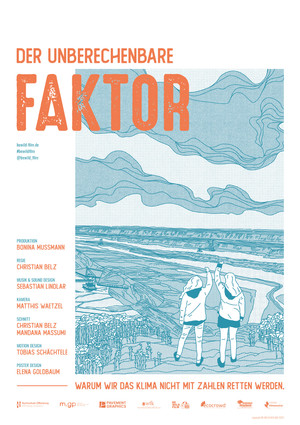
The Unpredictable Factor(de)
2022-11-03
In today's climate debate, there is only one factor that cannot be calculated in climate models - humans. How can we nevertheless understand our role in the climate system and manage the crisis? Climate change is a complex global problem. Increasingly extreme weather events, rising sea levels, and more difficult living conditions - including for us humans - are already the order of the day. Global society has never faced such a complex challenge. For young people in particular, the frightening climate scenarios will be a reality in the future. For the global south, it is already today. To overcome this crisis, different perspectives are needed. "THE UNPREDICTABLE FACTOR" goes back to the origins of the German environmental movement, accompanies today's activists in the Rhineland in their fight against the coal industry and gives a voice to scientists from climate research, ethnology and psychology.
0%
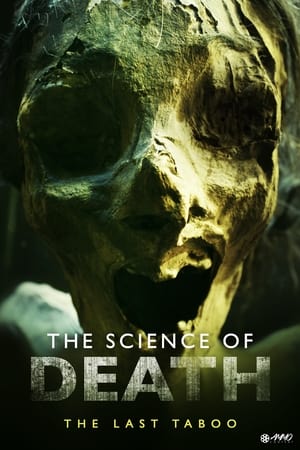
Science Of Death(en)
2001-01-01
After ignoring death for most of our history, the medical and scientific communities have begun to focus their attention on how our bodies behave on our journey to the great beyond. Often seen as an event, dying is actually a process, which, in some cases, can be stopped or reversed. Even after someone is clinically dead, life in many parts of our bodies carries on for hours, days, or even weeks.
75%
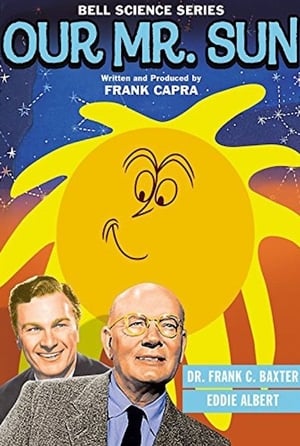
Our Mr. Sun(en)
1956-11-19
One entry in a series of films produced to make science accessible to the masses—especially children—this film describes the sun in scientific but entertaining terms.