Loading Page

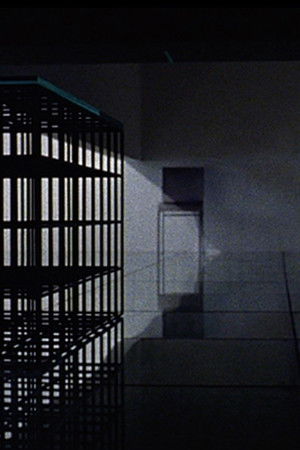
DUBHOUSE(2012)
Status: Released
Date: 2012-01-01
0%
0 Votes
Time: 0h 16m
Overview:
A documentary that focuses on an installation called “Busshitsu Shiko 51: DUBHOUSE” (Experience in Material No.51: DUBHOUSE) by architect Ryoji SUZUKI at the National Museum of Modern Art, Tokyo in 2010. Its original concept of capturing the darkness produced by architecture was dramatically altered by the Great East Japan Earthquake of March 11th, 2011. SHICHIRI begins by filming both the light and shadows produced by the works on display, and embeds SUZUKI’s drawings of the disaster-hit regions within them. Cinemas are architectural structures where darkness is inherent. Films that attempt to emerge from that darkness are a form of emitted light, and at the same time they could be seen as a type of prayer. This is a metafilm on the subject of light and darkness, as well as a response to a historical event.
Languages: Japanese.
Countries:
Movie: DUBHOUSE
HomePage
Overview
A documentary that focuses on an installation called “Busshitsu Shiko 51: DUBHOUSE” (Experience in Material No.51: DUBHOUSE) by architect Ryoji SUZUKI at the National Museum of Modern Art, Tokyo in 2010. Its original concept of capturing the darkness produced by architecture was dramatically altered by the Great East Japan Earthquake of March 11th, 2011. SHICHIRI begins by filming both the light and shadows produced by the works on display, and embeds SUZUKI’s drawings of the disaster-hit regions within them. Cinemas are architectural structures where darkness is inherent. Films that attempt to emerge from that darkness are a form of emitted light, and at the same time they could be seen as a type of prayer. This is a metafilm on the subject of light and darkness, as well as a response to a historical event.
Release Date
2012-01-01
Average
0
Rating:
0.0 startsTagline
Genres
Languages:
日本語
Recommendations Movies

77%
Love & Pop(ja)
1998-01-10
Tokyo schoolgirl Hiromi and her friends engage in a practice known as enjo kosai, or "compensated dating", where older men pay young girls for dates. Hiromi plunges deeper into this world to raise money for an expensive ring.

69%
Imprint(ja)
2006-02-25
An American journalist travels through 19th-century Japan to find the prostitute he fell in love with but instead learns of the physical and existential horror that befell her after he left.
78%
Millennium Actress(ja)
2002-09-14
Documentary filmmaker Genya Tachibana has tracked down the legendary actress Chiyoko Fujiwara, who mysteriously vanished at the height of her career. When he presents her with a key she had lost and thought was gone forever, the filmmaker could not have imagined that it would not only unlock the long-held secrets of Chiyoko’s life... but also his own.

60%
Tokyo Decadence(ja)
1992-01-06
A submissive hooker goes about her trade, suffering abuse at the hands of Japanese salarymen and Yakuza types. She's unhappy about her work, and is apparently trying to find some sort of appeasement for the fact that her lover has married.

73%
Eros + Massacre(ja)
1969-03-13
Two interwoven stories. The first is a biography of anarchist Sakae Osugi which follows his relationship with three women in the 1920s. The second centers around two 1960s students researching Osugi's theories.
65%
Sanshiro Sugata(ja)
1943-03-25
A hotheaded youth in 1880s Meiji Japan apprentices to judo master Shōgorō Yano, trading brute jujutsu bravado for discipline and humility. As Sanshirō matures, he proves judo’s spirit against old-guard challengers—including a deadly duel—while falling for his vanquished opponent’s daughter. Based on the novel by Tsuneo Tomita, son of Tomita Tsunejirō, the earliest disciple of judo.

67%
Antiporno(ja)
2017-01-28
Kyôko, a traumatized young Japanese girl, finds herself struggling with her self-confidence in her adult life. Growing up in a family without her mother and her sister, she constantly questions the rationale of sex and the notion of liberty in modern Japanese society.

79%
Koyaanisqatsi(en)
1983-04-27
Takes us to locations all around the US and shows us the heavy toll that modern technology is having on humans and the earth. The visual tone poem contains neither dialogue nor a vocalized narration: its tone is set by the juxtaposition of images and the exceptional music by Philip Glass.
82%
Samurai Rebellion(ja)
1967-05-27
The mother of a feudal lord's only heir is kidnapped by the lord. Her husband and his samurai father must decide whether to accept the unjust decision, or risk death to rescue her.

84%
Harakiri(ja)
1962-09-15
Down-on-his-luck veteran Tsugumo Hanshirō enters the courtyard of the prosperous House of Iyi. Unemployed, and with no family, he hopes to find a place to commit seppuku—and a worthy second to deliver the coup de grâce in his suicide ritual. The senior counselor for the Iyi clan questions the ronin’s resolve and integrity, suspecting Hanshirō of seeking charity rather than an honorable end. What follows is a pair of interlocking stories which lay bare the difference between honor and respect, and promises to examine the legendary foundations of the Samurai code.

73%
A Page of Madness(ja)
1926-09-24
A man takes a job at an asylum with hopes of freeing his imprisoned wife.

65%
Taboo(ja)
1999-12-18
Set during Japan's Shogun era, this film looks at life in a samurai compound where young warriors are trained in swordfighting. A number of interpersonal conflicts are brewing in the training room, all centering around a handsome young samurai named Sozaburo Kano. The school's stern master can choose to intervene, or to let Kano decide his own path.

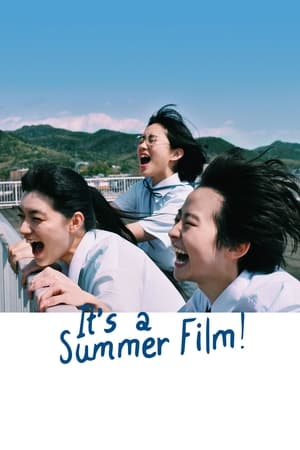
73%
It's a Summer Film!(ja)
2021-08-06
Barefoot and her friends decide to make a samurai movie, gather a unique cast and staff for the production, and try to screen it at their school festival.
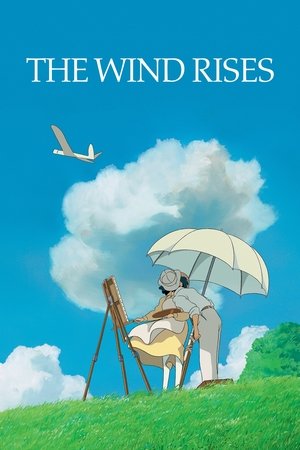
78%
The Wind Rises(ja)
2013-07-20
A lifelong love of flight inspires Japanese aviation engineer Jiro Horikoshi, whose storied career includes the creation of the A-6M World War II fighter plane.


72%
Clannad: The Motion Picture(ja)
2007-09-15
Plagued by a seemingly endless stream of haunting dreams, Tomoya drifts through life with an almost overwhelming sense of anger and emptiness. Then, one fateful day, he meets the mysterious and beautiful Nagisa, and his world begins to change. While helping Nagisa revive the defunct Drama Club at their high school, Tomoya discovers that she has the same dreams. Their story starts beneath the cherry blossoms, but where will fate lead them?
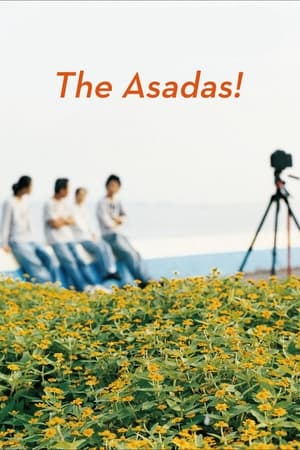
73%
The Asadas!(ja)
2020-10-02
Masashi is a photographer. He has his parents and an older brother Yukihiro. Through the 2011 Tohoku earthquake and tsunami, Masashi begins to take staged photos of his family.

69%
The Queen of Versailles(en)
2012-07-06
With the epic dimensions of a Shakespearean tragedy, The Queen of Versailles follows billionaires Jackie and David’s rags-to-riches story to uncover the innate virtues and flaws of their American dream. We open on the triumphant construction of the biggest house in America, a sprawling, 90,000-square-foot mansion inspired by Versailles. Since a booming time-share business built on the real-estate bubble is financing it, the economic crisis brings progress to a halt and seals the fate of its owners. We witness the impact of this turn of fortune over the next two years in a riveting film fraught with delusion, denial, and self-effacing humor.
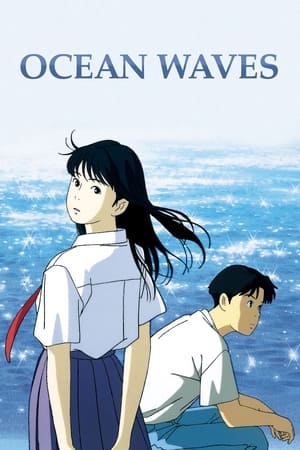
64%
Ocean Waves(ja)
1993-10-09
At Kichijōji Station, Tokyo, Taku Morisaki glimpses a familiar woman on the platform opposite boarding a train. Later, her photo falls from a shelf as he exits his apartment before flying to Kōchi Prefecture. Picking it up, he looks at it briefly before leaving. As the aeroplane takes off, he narrates the events that brought her into his life...