Loading Page
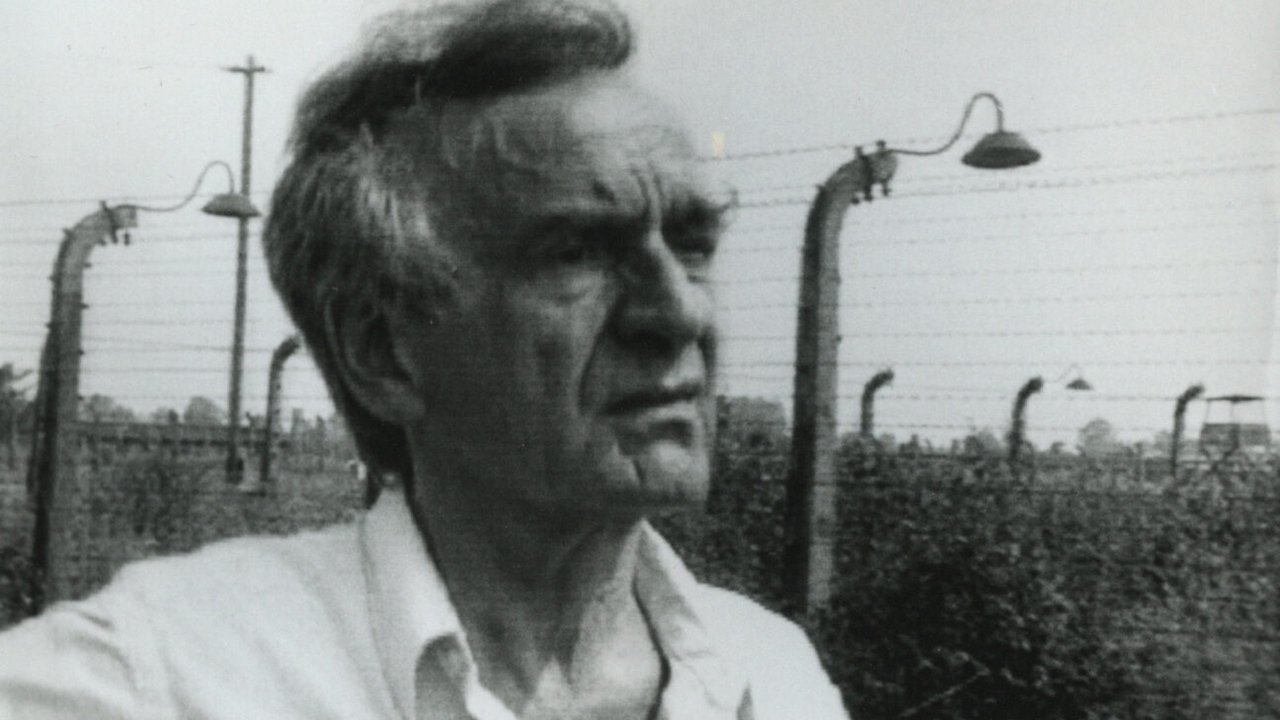
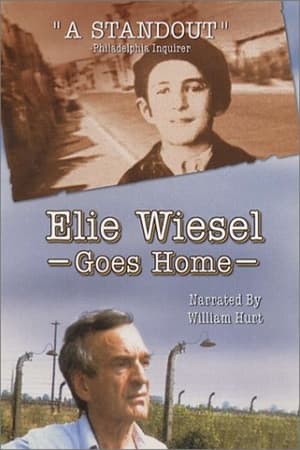
Elie Wiesel Goes Home(1997)
Status: Released
Date: 1997-02-12
0%
0 Votes
Time: 1h 48m
Overview:
A documentary chronicling the adolescent years of Elie Wiesel and the history of his sufferings. Eliezer was fifteen when Fascism brutally altered his life forever. Fifty years later, he returns to Sighetu Marmatiei, the town where he was born, to walk the painful road of remembrance - but is it possible to speak of the unspeakable? Or does Auschwitz lie beyond the capacity of any human language - the place where words and stories run out?
Languages: English, French, Hungarian, Yiddish.
Countries:
France,
Hungary,
United States of America
ProductionCompanies: 
Hunnia Filmstúdió
Dánielfilm Studio
Neurópa Film Kft
Movie: Elie Wiesel Goes Home
Top 4 Billed Cast

Elie Wiesel
Self

Jean-Hugues Anglade
Narrator (voice)

William Hurt
Narrator (voice)

Fodor Tamás
Narrator (voice)
Video Trailer Elie Wiesel Goes Home
Loading Photos
Photo Type :Total items
Recommendations Movies
77%
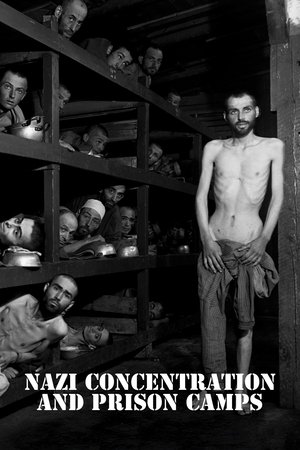
Nazi Concentration Camps(en)
1945-11-29
Produced and presented as evidence at the Nuremberg war crimes trial of Hermann Göring and twenty other Nazi leaders, this film consists primarily of dead and surviving prisoners and of facilities used to kill and torture during the World War II.
68%
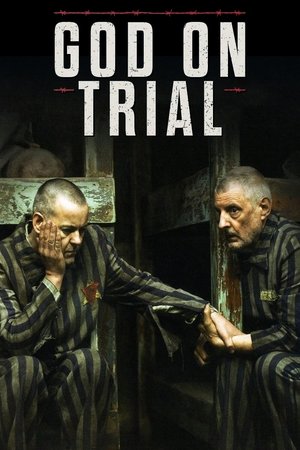
God on Trial(en)
2008-09-03
In the Jewish tradition of arguing with God, Jewish prisoners in Auschwitz decide to put God on Trial.
70%
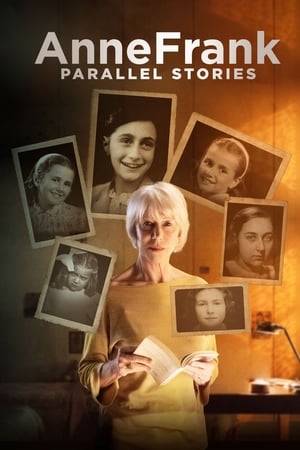
#AnneFrank. Parallel Stories(en)
2019-10-18
One single Anne Frank moves us more than the countless others who suffered just as she did but whose faces have remained in the shadows-Primo Levi. The Oscar®-winning Helen Mirren will introduce audiences to Anne Frank's story through the words in her diary. The set will be her room in the secret refuge in Amsterdam, reconstructed in every detail by set designers from the Piccolo Theatre in Milan. Anne Frank this year would have been 90 years old. Anne's story is intertwined with that of five Holocaust survivors, teenage girls just like her, with the same ideals, the same desire to live: Arianna Szörenyi, Sarah Lichtsztejn-Montard, Helga Weiss and sisters Andra and Tatiana Bucci. Their testimonies alternate with those of their children and grandchildren.
75%
The World Will Tremble(en)
2025-03-14
The incredible, untold true story of how a group of prisoners attempt a seemingly impossible escape from the first Nazi death camp in order to provide the first eyewitness account of the Holocaust.
66%
The Grey Zone(en)
2001-09-13
The story of Auschwitz's twelfth Sonderkommando — one of the thirteen consecutive "Special Squads" of Jewish prisoners placed by the Nazis in the excruciating moral dilemma of assisting in the extermination of fellow Jews in exchange for a few more months of life.

70%
The Zone of Interest(en)
2023-12-15
The commandant of Auschwitz, Rudolf Höss, and his wife Hedwig, strive to build a dream life for their family in a house and garden next to the camp.

73%
Conspiracy(en)
2001-05-19
At the Wannsee Conference on January 20, 1942, senior Nazi officials meet to determine the manner in which the so-called "Final Solution to the Jewish Question" can be best implemented.


86%
Schindler's List(en)
1993-12-15
The true story of how businessman Oskar Schindler saved over a thousand Jewish lives from the Nazis while they worked as slaves in his factory during World War II.


69%
The Boy in the Woods(en)
2023-09-19
The remarkable true-life survival story of a Jewish boy hiding and being hunted in the forests of Nazi-occupied Eastern Europe, based on Maxwell Smart's memoir.
71%
The Round-Up(hu)
1966-01-06
After the failure of the Kossuth's revolution of 1848, people suspected of supporting the revolution are sent to prison camps. Years later, partisans led by outlaw Sándor Rózsa still run rampant. Although the authorities do not know the identities of the partisans, they round up suspects and try to root them out by any means necessary.
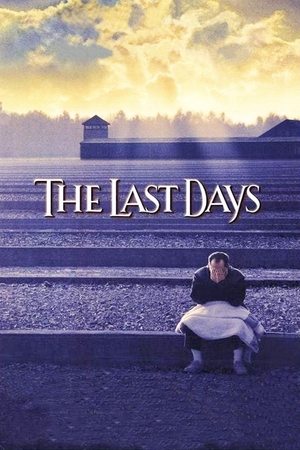
75%
The Last Days(en)
1998-10-23
Five Jewish Hungarians, now US citizens, tell their stories: before March 1944, when Nazis began to exterminate Hungarian Jews, months in concentration camps, and visiting childhood homes more than 50 years later. An historian, a Sonderkommando, a doctor who experimented on Auschwitz prisoners, and US soldiers who were part of the liberation in April 1945.

72%
Love, Gilda(en)
2018-04-18
Diaries, audiotapes, videotapes and testimonials from friends and colleagues offer insight into the life and career of Gilda Radner -- the beloved comic and actress who became an icon on Saturday Night Live.
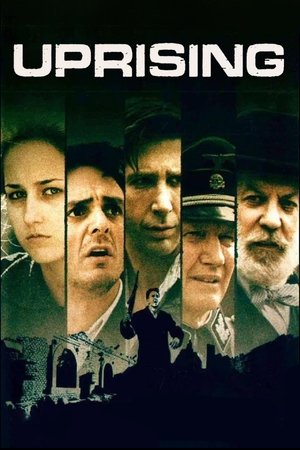

59%
The Countess(en)
2009-03-13
Kingdom of Hungary, 17th century. As she gets older, powerful Countess Erzsébet Báthory (1560-1614), blinded by the passion that she feels for a younger man, succumbs to the mad delusion that blood will keep her young and beautiful forever.

76%
Night Will Fall(en)
2014-06-07
When Allied forces liberated the Nazi concentration camps in 1944-45, their terrible discoveries were recorded by army and newsreel cameramen, revealing for the first time the full horror of what had happened. Making use of British, Soviet and American footage, the Ministry of Information’s Sidney Bernstein (later founder of Granada Television) aimed to create a documentary that would provide lasting, undeniable evidence of the Nazis’ unspeakable crimes. He commissioned a wealth of British talent, including editor Stewart McAllister, writer and future cabinet minister Richard Crossman – and, as treatment advisor, his friend Alfred Hitchcock. Yet, despite initial support from the British and US Governments, the film was shelved, and only now, 70 years on, has it been restored and completed by Imperial War Museums under its original title "German Concentration Camps Factual Survey".
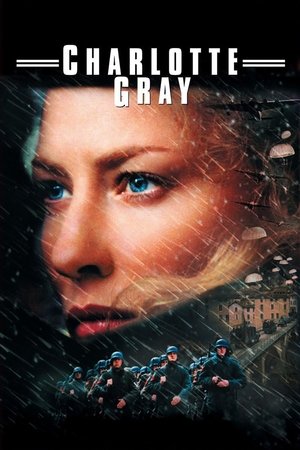
61%
Charlotte Gray(en)
2001-12-28
This is a drama set in Nazi-occupied France at the height of World War II. Charlotte Gray tells the compelling story of a young Scottish woman working with the French Resistance in the hope of rescuing her lover, a missing RAF pilot. Based on the best-selling novel by Sebastian Faulks.
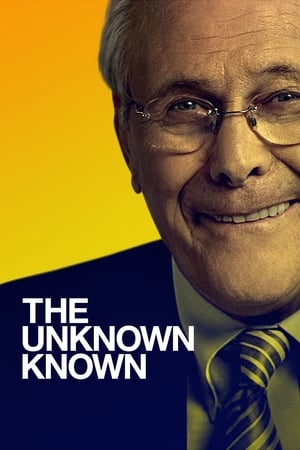
68%
The Unknown Known(en)
2013-08-29
Former United States Secretary of Defense, Donald Rumsfeld, discusses his career in Washington D.C. from his days as a congressman in the early 1960s to planning the invasion of Iraq in 2003.

68%
Denial(en)
2016-09-30
Acclaimed writer and historian Deborah E. Lipstadt must battle for historical truth to prove the Holocaust actually occurred when David Irving, a renowned denier, sues her for libel.
Similar Movies
0%
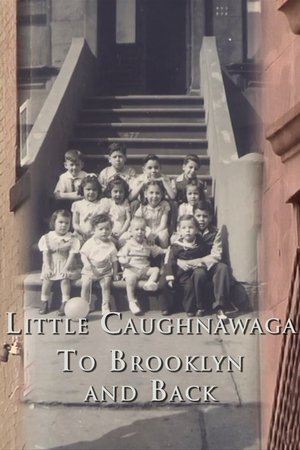
Little Caughnawaga: To Brooklyn and Back(en)
2008-01-01
For over 50 years, the Kahnawake Mohawks, of Quebec, Canada occupied a 10 square block area in the North Gowanus section of Brooklyn, which became known as Little Caughnawaga. The men, skilled ironworkers, came to New York in search of work and brought their wives, children and often, extended family with them. The story of the Mohawk ironworkers is an important one and is one that has been told and continues to be told through documentaries, newspaper and magazine articles. Yet the stories of Kahnawake Mohawk women who lived in Brooklyn have gone untold.
35%
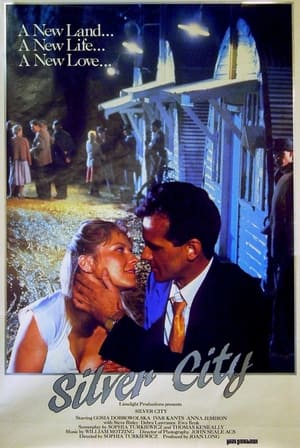
Silver City(en)
1984-09-27
After World War II, 4,000 Polish families came to Australia. They were Jews, Fascists, anti-Communists, and others dispossessed. In a large hostel, where even married men and women were housed in separate barracks, the adults lived for two years while they worked off the government's payment of their passage. Even though he is married to Anna and has a son, Julian falls in love with Nina and she with him. As they and others face the new situations and prejudices that await immigrants and as they take on aspects of Australian culture, old-country values reassert themselves. Julian decides what to do about love and family, and Nina must find a way to move on.

71%
Sissi: The Fateful Years of an Empress(de)
1957-12-18
After a wonderful time in Hungary Sissi falls extremely ill and must retreat to a Mediterranean climate to rest. The young empress’ mother takes her from Austria to recover in Madeira.
62%
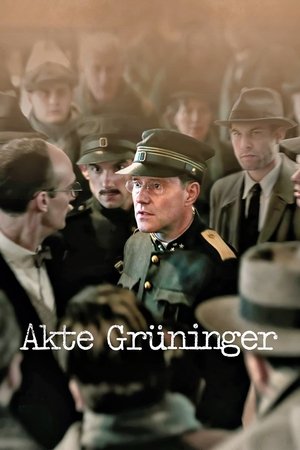
The Grüninger File(de)
2014-01-30
1938. Austria has been annexed by Nazi Germany, and Switzerland has closed its borders for Jewish refugees - a death sentence for thousands. But not all Swiss officials observe this inhuman order.
69%
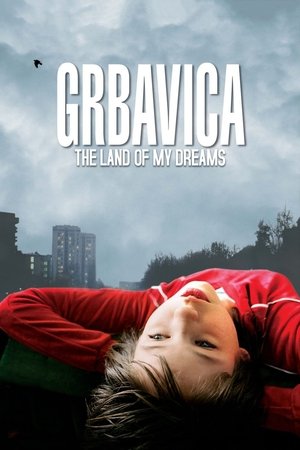
Grbavica: The Land of My Dreams(bs)
2006-03-01
A woman and her daughter struggle to make their way through the aftermath of the Balkan war.

0%
Imprint in Clay(en)
1993-01-01
“Sardar Gurcharan Singh was the father of studio pottery in India. "Daddyji" as most called him lovingly was very close to my father. I often tagged along to visit his home studio where pottery wheels were lined up under the big neem trees in his old brick house. My father wanted me to make a film on Daddyji, who was then 95. He was afraid that Daddyji's wonderful story would be left untold. He not only introduced studio pottery in India but due to his longevity, mentored many potters. So despite not knowing anything about films, I made the documentary, Imprint in Clay with a classmate of mine, which was mostly funded by my father.”
70%
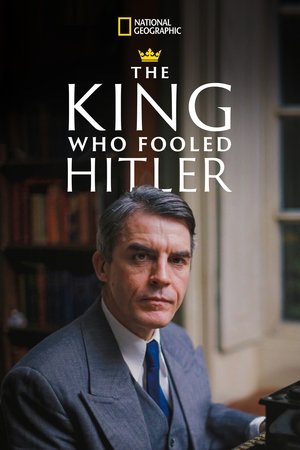
The King Who Fooled Hitler(en)
2019-05-05
In a tale of double agents and decoys, this documentary reveals, for the first time, the story of King George VI's elaborate ruse to divert German attention away from the Normandy landings in 1944.
0%
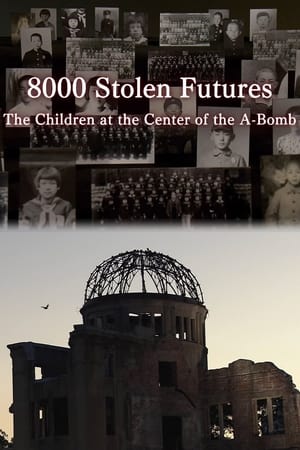
8000 Stolen Futures: The Children at the Center of the A-Bomb(en)
2022-11-06
On August 6, 1945, the first-ever nuclear bomb deployed in war was dropped on the city of Hiroshima Prefecture, leaving an estimated 140,000 dead in its wake by the end of that year. Among the victims, one particular age group stands out for the sheer number of fatalities sustained: 12 and 13 year-olds, children of first year junior high school age. We investigate the tragedy of this lost generation, piecing together surviving records and speaking with survivors, for whom the memories of children robbed of their futures that day are still burned deep in their memories, nearly eight decades on.
86%
Schindler's List(en)
1993-12-15
The true story of how businessman Oskar Schindler saved over a thousand Jewish lives from the Nazis while they worked as slaves in his factory during World War II.

57%
The Rebellious Life of Mrs. Rosa Parks(en)
2022-06-16
Beyond her historic role in the Montgomery Bus Boycott, this comprehensive dive into Civil Rights icon Rosa Parks sheds light on her extensive organizing, radical politics, and lifelong dedication to activism.
81%
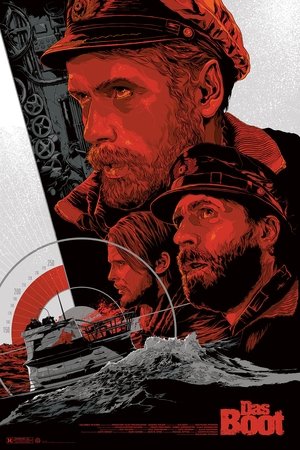
Das Boot(de)
1981-09-17
A German submarine hunts allied ships during the Second World War, but it soon becomes the hunted. The crew tries to survive below the surface, while stretching both the boat and themselves to their limits.

0%
They Made the Land(en)
1938-05-23
They Made the Land (1938) is a documentary showcasing how land in Scotland was reclaimed and cultivated for agriculture. It explores the challenges of making a living from the land while highlighting the contributions of agricultural research and animal breeding. Produced as part of a series of seven documentaries for the 1938 Empire Exhibition, the film was created under the supervision of pioneering documentarian John Grierson.
80%
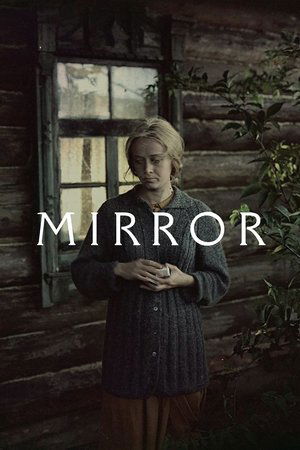
Mirror(ru)
1975-03-07
A dying man in his forties recalls his childhood, his mother, the war and personal moments that tell of and juxtapose pivotal moments in Soviet history with daily life.
0%
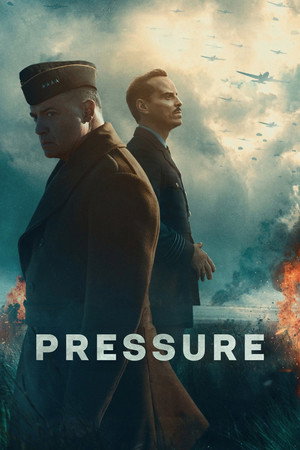
Pressure(en)
2026-05-28
In the tense 72 hours before D-Day, and the fate of the free world hanging in the balance, General Dwight D. Eisenhower and Captain James Stagg face an impossible choice—launch the largest and most dangerous seaborne invasion in history or risk losing the war altogether.
57%
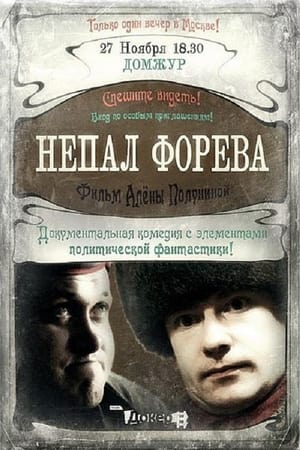
Nepal Forever(ru)
2012-12-05
This film features two Russian communist politicians. Being committed Leninists; both of them have served several terms as city council members. Their horizons are broad, but what concerns them the most is the future of global communism. At one point, by decree of fate, their booming activities begin to expand far beyond the boundaries of their native St. Petersburg and the Russian Federation. However, the future of global communism remains unclear. What remains clear is the fact that in the modern world the tail still wags the dog. A documentary comedy.
66%
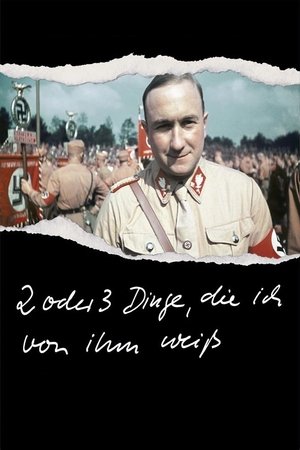
2 or 3 Things I Know About Him(de)
2005-04-07
What would your family reminiscences about dad sound like if he had been an early supporter of Hitler’s, a leader of the notorious SA and the Third Reich’s minister in charge of Slovakia, including its Final Solution? Executed as a war criminal in 1947, Hanns Ludin left behind a grieving widow and six young children, the youngest of whom became a filmmaker. It's a fascinating, maddening, sometimes even humorous look at what the director calls "a typical German story." (Film Forum)

71%
In the Realms of the Unreal(en)
2004-01-15
In the Realms of the Unreal is a documentary about the reclusive Chicago-based artist Henry Darger. Henry Darger was so reclusive that when he died his neighbors were surprised to find a 15,145-page manuscript along with hundreds of paintings depicting The Story of the Vivian Girls, in What is Known as the Realms of the Unreal, of the Glodeco-Angelinnian War Storm, Cased by the Child Slave Rebellion.