
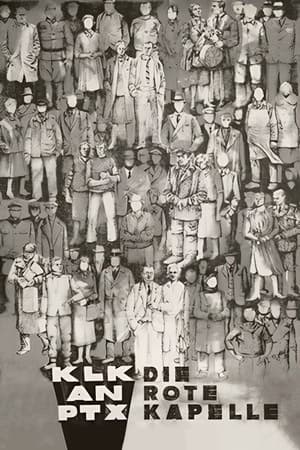
KLK Calling PTZ – The Red Orchestra(1971)
East German film about the history of Red Orchestra, a real life German pro-Soviet spy ring created after the rise of Hitler that turned into a resistance movement led by a leftist Nazi officer, Harro Schulze-Boysen, and Arvid Harnack.

Movie: KLK Calling PTZ – The Red Orchestra
Top 10 Billed Cast

Arvid Harnack

Mildred Harnack

Adam Kuckhoff

Harro Schulze-Boysen

Libertas Schulze-Boysen

Walter Küchenmeister

Elfriede Paul
Video Trailer KLK Calling PTZ – The Red Orchestra
All 1 videos

KLK an PTX - Die Rote Kapelle - DEFA-Trailer - Trailer
Recommendations Movies

Munich – The Edge of War(en)
At the tense 1938 Munich Conference, former friends who now work for opposing governments become reluctant spies racing to expose a Nazi secret.

Rosa Luxemburg(de)
Polish socialist and Marxist Rosa Luxemburg works tirelessly in the service of revolution in early 20th century Poland and Germany. While Luxemburg campaigns for her beliefs, she is repeatedly imprisoned as she forms the Spartacist League offering a new vision for Germany.
The Enigma of Kaspar Hauser(de)
The film follows Kaspar Hauser, who lived the first seventeen years of his life chained in a tiny cellar with only a toy horse to occupy his time, devoid of all human contact except for a man who wears a black overcoat and top hat who feeds him.
Mother Night(en)
An American spy behind the lines during WWII serves as a Nazi propagandist, a role he cannot escape in his future life as he can never reveal his real role in the war.
Radium Girls(en)
Young women toiling in a factory are exposed to hazardous material which takes a disastrous toll on their health.
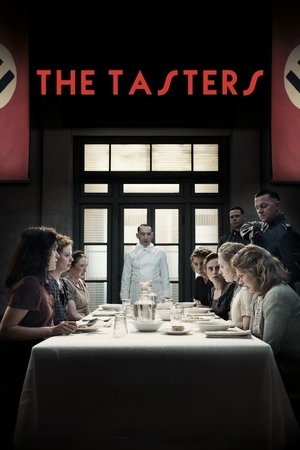
The Tasters(de)
In autumn 1943, in Gross-Partsch, 26-year-old Rosa, who had come from Berlin to stay with the parents of her husband Gregor, who was fighting on the Russian front, was taken by the SS to a mysterious place. Forced to taste a dish, she joins the group of tasters responsible for checking that the food destined for Hitler is not poisoned.

Watch on the Rhine(en)
On the eve of World War II, the German Kurt Müller, his American-born wife Sara, and their three children, having lived in Europe for years, visit Sara's wealthy mother near Washington, DC. Kurt secretly works for the anti-Nazi resistance. A visiting Romanian count, becoming aware of this, seeks to blackmail him.

Truth & Treason(en)
When loyalty to country becomes loyalty to a lie, one teen risks everything to expose the truth. With the Gestapo closing in, he must decide what it really means to be a good German.

The Forger(de)
Jewish aesthete Cioma, 21, does not let anyone take away his joy of life, especially not the Nazis. In 1942, he has to find new ways to make his living in Berlin and escape deportation. In the process he discovers his talent for forgery: not only with passports, but also his own identity.

As We Were Dreaming(de)
Andreas Dresen's adaptation of Clemens Meyer's novel about a group of East German friends right after the fall of the Wall.
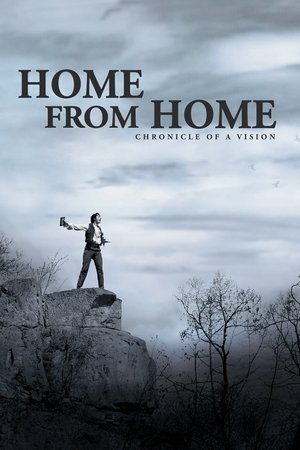
Home from Home – Chronicle of a Vision(de)
Follow-up to the TV trilogy “Heimat”, this time for cinemas, set again in the fictional village Schabbach in the Hunsrück region of Rhineland-Palatinate.

Rabiye Kurnaz vs. George W. Bush(de)
Desperate to help her son, Rabiye Kurnaz, a housewife and loving mother from Bremen, goes to the police, notifies authorities and almost despairs at their impotence and in the end, against all the odds, something truly remarkable happens.
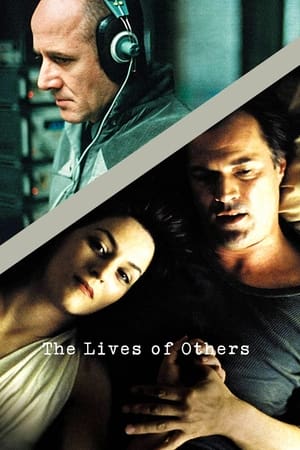
The Lives of Others(de)
In 1984 East Berlin, dedicated Stasi officer Gerd Wiesler begins spying on a famous playwright and his actress-lover Christa-Maria. Wiesler becomes unexpectedly sympathetic to the couple, and faces conflicting loyalties when his superior takes a liking to Christa-Maria.
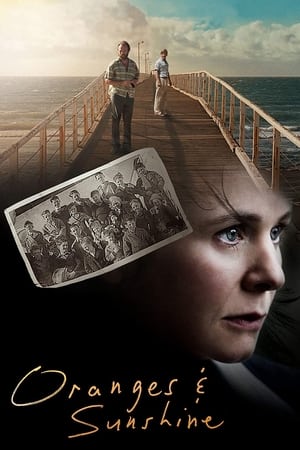
Oranges and Sunshine(en)
The story of Margaret Humphreys, a social worker from Nottingham, who uncovers one of the most significant social scandals in recent times – the forced migration of children from the United Kingdom to Australia and other Commonwealth countries. Almost singlehandedly, Margaret reunited thousands of families, brought authorities to account and worldwide attention to an extraordinary miscarriage of justice.

The Glassblower(de)
Marie violates tradition in a small German town of Lauscha, to become the first female glassblower in in 1890. Her glass ball decorations find a new market in America.

Finsterworld(de)
The film tells different stories in a kind of parallel Germany about love, affection and hatred.
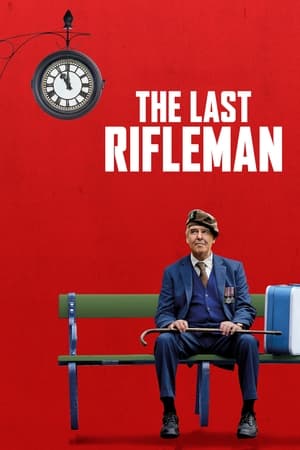
The Last Rifleman(en)
A WWII veteran escapes his care home in Northern Ireland and embarks on an arduous but inspirational journey to France to attend the 75th anniversary of the D-Day landings, finding the courage to face the ghosts of his past.

Shattered Glass(en)
The true story of fraudulent Washington, D.C. journalist Stephen Glass, who rose to meteoric heights as a young writer in his 20s, becoming a staff writer at The New Republic for three years. Looking for a short cut to fame, Glass concocted sources, quotes and even entire stories, but his deception did not go unnoticed forever, and eventually, his world came crumbling down.

The Last Valley(en)
People in a small German village in the last valley to remain untouched by the devastating Thirty Years' War try to exist in peace with a group of soldiers occupying the valley.
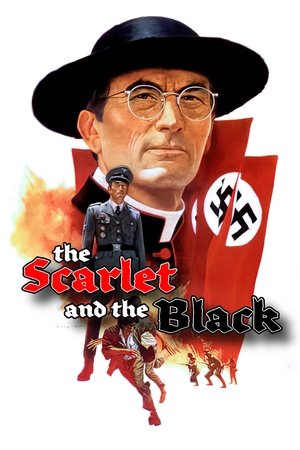
The Scarlet and the Black(en)
Fr. Hugh O'Flaherty is a Vatican official in 1943-45 who has been hiding downed pilots, escaped prisoners of war, and Italian resistance families. His activities become so large that the Nazis decide to assassinate him the next time he leaves the Vatican.
Similar Movies

Kuhle Wampe or Who Owns the World?(de)
Kuhle Wampe takes place in early-1930s Berlin. The film begins with a montage of newspaper headlines describing steadily-rising unemployment figures. This is followed by scenes of a young man looking for work in the city and the family discussing the unpaid back rent. The young man, brother of the protagonist Anni, removes his wristwatch and throws himself from a window out of despair. Shortly thereafter his family is evicted from their apartment. Now homeless, the family moves into a garden colony of sorts with the name “Kuhle Wampe.”
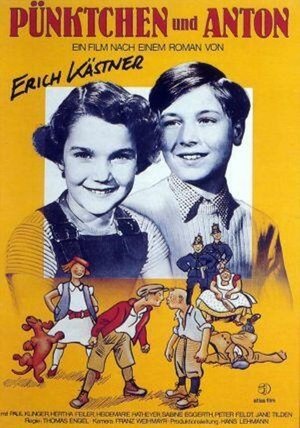
Annaluise & Anton(de)
Despite their social differences Luise, called Pünktchen, a girl from rich parentage befriends Anton, a boy who has to earn his own money in order to afford life for his sick mother and himself. Together they undergo different adventures, even preventing a theft in Pünktchens home

Axolotl Overkill(de)
Mifti is a teenager as beautiful as she is reckless. Mentally unstable, fed up with her dysfunctional family, oblivious to the youthful world, and aware of the sexual magnetism she gives off with her peculiar appearance, she wanders through the dark path of several bohemian adults with questionable lifestyles.
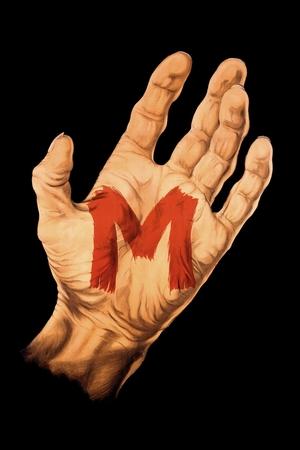
M(de)
In this classic German thriller, Hans Beckert, a serial killer who preys on children, becomes the focus of a massive Berlin police manhunt. Beckert's heinous crimes are so repellant and disruptive to city life that he is even targeted by others in the seedy underworld network. With both cops and criminals in pursuit, the murderer soon realizes that people are on his trail, sending him into a tense, panicked attempt to escape justice.

Jin-Roh: The Wolf Brigade(ja)
A member of an elite paramilitary counter-terrorism unit becomes traumatized after witnessing the suicide bombing of a young girl and is forced to undergo retraining. However, unbeknownst to him, he becomes a key player in a dispute between rival police divisions, as he finds himself increasingly involved with the sister of the girl he saw die.

The Pride of the Firm(de)
Der Stolz der Firma, meaning The Pride of the Business, is a classic German silent film from 1914. The film tells the story of a shrewd apprentice and is filmed in the comical style of director Lubitsch. This is one of the few Lubitsch films from World War I that wasn’t lost.

The Bridge on the River Kwai(en)
The classic story of English POWs in Burma forced to build a bridge to aid the war effort of their Japanese captors. British and American intelligence officers conspire to blow up the structure, but Col. Nicholson, the commander who supervised the bridge's construction, has acquired a sense of pride in his creation and tries to foil their plans.

The Murderers Are Among Us(de)
After returning from a concentration camp, Susanne finds a traumatized ex-soldier living in her apartment in bombed out Berlin. Together the two try to move past their experiences during WWII.

The Great Love(de)
The attractive Oberleutnant Paul Wendlandt is stationed in North Africa as a fighter pilot. While in Berlin to deliver a report he is given a day's leave, and on the stage of the cabaret theatre "Skala" sees the popular Danish singer Hanna Holberg. For Paul it is love at first sight. When Hanna visits friends after the end of the performance, he follows her, and speaks to her in the U-Bahn. After the party in her friends' flat, he accompanies her home and chance throws them further together when an air raid warning forces them to take cover in the air raid shelter. Hanna reciprocates Paul's feelings, but after a night spent together Paul has to return immediately to the front. There now follows a whole series of misunderstandings, and one missed opportunity after another. While Hanna waits in vain for some sign of life from Paul, he is flying on missions in North Africa. When he tries to visit her in her Berlin flat, she is giving a Christmas concert in Paris.

Is Paris Burning?(fr)
Near the end of World War II, Gen. Dietrich von Choltitz receives orders to burn down Paris if it becomes clear the Allies are going to invade, or if he cannot maintain control of the city. After much contemplation Choltitz decides to ignore his orders, enraging the Germans and giving hope to various resistance factions that the city will be liberated. Choltitz, along with Swedish diplomat Raoul Nordling, helps a resistance leader organize his forces.
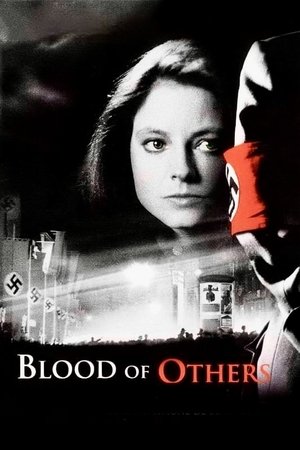
The Blood of Others(en)
In the German-occupied Paris, Helene is torn between the love for her boyfriend Jean, working for the resistance and the German administrator Bergmann, who will do anything to gain her affection.

Quiet as a Mouse(de)
A pseudo documentary study of an archetypal German who tries to model his world according to his ideas of law and (sexual) order.

We Won't Go to the Woods Anymore(fr)
In the spring of 1944, in the Woëvre forest of Lorraine, a group of young maquisards takes in four German deserters. led by Saint-Brice is based in the Woevre forest. Lise, a nineteen-year-old girl, is their liaison officer. One evening, four German soldiers turn up as deserters. After a period of doubt, the maquisards agree to integrate them into their group. Lise falls in love with one of the newcomers, Werner, and becomes his mistress. One day, she leaves on a mission with Lucien, and comes across an enemy patrol. The SS shoot Lucien and free Lise. In the camp, people begin to think that the maquis has been betrayed.
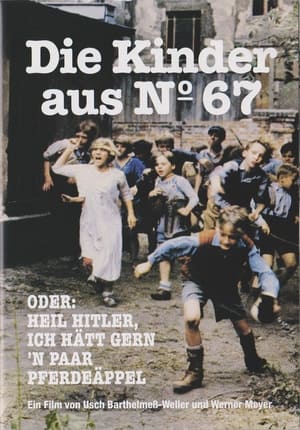
Die Kinder aus Nr. 67(de)
The "Our Gang" type adventures of German working class kids from a Berlin apartment building (number 67) during the early 1930s. With Nazism's rise, however, their tight-knit group unravels. One leader, Paul, becomes a Nazi.

The Good and the Bad(fr)
The film follows the exploits of Jacques, a car-mechanic turned pro-thief, and his Jewish co-conspirator Simon as their robberies, beginning well before the Second World War, take on a political coloration under the occupation.

Lust, Caution(zh)
During World War II, a secret agent must seduce and assassinate an official who works for the Japanese puppet government in Shanghai.

Angels of Iron(de)
The subject of this historical drama is a splintering Berlin in the years of 1948 and 1949. Played against the backdrop of social upheaval, the characters in the drama come to epitomize the best and worst of each pole of the political sphere. A 17-year-old hoodlum by the name of Gladow works hand-in-glove with a local white-collar criminal to rob and pillage every day and night, defying capture. While he and his gang of thugs are terrorizing the people of Berlin, the Soviets are trying to make the blockade of their region of control impermeable. The future casts long shadows over the drama, as Berlin's problems take the shape of times to come.

What to Do in Case of Fire?(de)
The humorous and touching story of six former creative anarchists who lived as house squatters in Berlin during its heyday in the 80s when Berlin was still an island in the middle of the former East Germany. At the end of the 80s, they went their separate ways with the exception of Tim and Hotte, who have remained true to their ideals and continue to fight the issues they did as a group. In 2000, with Berlin as Germany's new capital, an event happens forcing the group out of existential reason to reunite and, ultimately, come to terms with the reason they separated 12 years ago.

Berlin am Meer(de)
Tom and Malte are best friends; they make music together, DJ in Berlin clubs, dream of a career together, party until they drop, wait tables at a casting service and yet they are very different: Tom struggles with himself, his life and the future. When one day Mavie, Mitsch's "little" sister from Munich, moves into the Berlin flat share, Tom's emotional rollercoaster begins. Daredevil Malte, on the other hand, seems to have his luck in his pocket: Everything he touches succeeds. Tom sees no other way out than to escape: out of the city and into another life. His friends try to stop him, but even they know: Tom has to make this decision himself if he doesn't want to stand in the way of his happiness forever.

Lucy(de)
A young teenage single mother (Maggi) struggling to raise her baby daughter (Lucy) finds the weight of responsibility bearing down on her shoulders. Maggy was forced to grow up before her time. Thankfully for Maggi, her mother is always willing to help though Maggy still lives at home with her mother, it's obvious that she longs to gain some independendence. Meeting Gordon at a local club, who is a few years older, makes a living and has his own apartment. One night, after a heated argument with her mother, Maggi makes the decision to move in with Gordon. Though the pair subsequently make a sincere attempt to be good parents.and do what's best for Lucy, they soon find that taking on the responsibilities of adulthood aren't so easy when you've barely moved past childhood yourself.