

Verzeihung, sehen Sie Fußball?(1983)
A high-rise building in the center of Berlin in the GDR on July 11, 1982. The final match of the soccer World Cup is being broadcast on television. Five episodes revolve around this event: Soccer fanatic Kneutzsch is torn between the exciting match and the rather irritated woman by the unexpected visit of a lady to whom he has written a marriage announcement ... Dr. Kobermann - on painkillers - has mistaken the bathroom door for the corridor door and locked herself out. Her husband is sitting in front of the TV with headphones on and doesn't hear her ringing, so she seeks refuge in her nightgown with a neighbor, a flautist. After his ex-love Carmen leaves him and wants to return home, the exiled Andrés follows the game - in the knowledge that his father, thousands of kilometers away, is also watching...

Movie: Verzeihung, sehen Sie Fußball?
Top 8 Billed Cast

Michaela
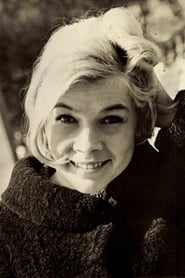
Frau Dr. Kobermann
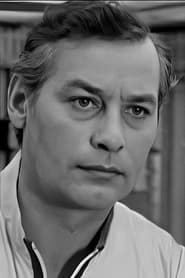
Herr Dr. Kobermann
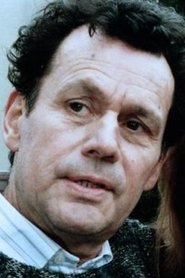
Flötist

Frau
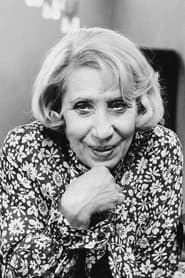
Herta
Friederike

Kneutzsch
HomePage
Overview
A high-rise building in the center of Berlin in the GDR on July 11, 1982. The final match of the soccer World Cup is being broadcast on television. Five episodes revolve around this event: Soccer fanatic Kneutzsch is torn between the exciting match and the rather irritated woman by the unexpected visit of a lady to whom he has written a marriage announcement ... Dr. Kobermann - on painkillers - has mistaken the bathroom door for the corridor door and locked herself out. Her husband is sitting in front of the TV with headphones on and doesn't hear her ringing, so she seeks refuge in her nightgown with a neighbor, a flautist. After his ex-love Carmen leaves him and wants to return home, the exiled Andrés follows the game - in the knowledge that his father, thousands of kilometers away, is also watching...
Release Date
1983-04-07
Average
4
Rating:
2.0 startsTagline
Genres
Languages:
DeutschKeywords
Recommendations Movies

As We Were Dreaming(de)
Andreas Dresen's adaptation of Clemens Meyer's novel about a group of East German friends right after the fall of the Wall.

Someday We'll Tell Each Other Everything(de)
Set in a warm summer in 1990 in former East Germany, it follows a young woman who begins a relationship with a charismatic farmer who is twice her age.

Good Day, Ramon(en)
After five failed attempts to go to the United States, 18-year-old Ramón decides to look for a friend’s aunt in Germany, but never finds her. With no papers or money, and without knowing the language, he barely survives living on the street until he meets Ruth, an old retired nurse who doesn’t speak Spanish. Beyond language barriers and prejudices, they discover that solidarity and humanity make life bearable.
Jerichow(de)
In a small Northern German town, a dishonourably discharged Afghanistan veteran is offered a job as a deliveryman by an alcoholic Turkish entrepreneur, through which the former meets the latter's gorgeous wife.
Finsterworld(de)
The film tells different stories in a kind of parallel Germany about love, affection and hatred.
The German Lesson(de)
In a small North German village a drama played out during and shortly after the Second World War about duty versus individual conscience and morality.

Come Sunday(en)
Evangelist Carlton Pearson is ostracized by his church for preaching that there is no Hell.
Alone in Berlin(en)
Berlin in June of 1940. While Nazi propaganda celebrates the regime’s victory over France, a kitchen-cum-living room in Prenzlauer Berg is filled with grief. Anna and Otto Quangel’s son has been killed at the front. This working class couple had long believed in the ‘Führer’ and followed him willingly, but now they realise that his promises are nothing but lies and deceit. They begin writing postcards as a form of resistance and in a bid to raise awareness: Stop the war machine! Kill Hitler! Putting their lives at risk, they distribute these cards in the entrances of tenement buildings and in stairwells. But the SS and the Gestapo are soon onto them, and even their neighbours pose a threat.

Hands of Stone(en)
The legendary Roberto Duran and his equally legendary trainer Ray Arcel change each other's lives.

A Coffee in Berlin(de)
Niko, a twenty-something college dropout, lives for the moment as he drifts through the streets of Berlin, curiously observing everyone around him and oblivious to his growing status as an outsider. Then on one fateful day, through a series of absurdly amusing encounters, everything changes.
The Effect of Gamma Rays on Man-in-the-Moon Marigolds(en)
Middle-aged widow Beatrice Hunsdorfer and her daughters Ruth and Matilda are struggling to survive in a society they barely understand. Beatrice dreams of opening an elegant tea room but does not have the wherewithal to achieve her lofty goal. Epileptic Ruth is a rebellious adolescent, while shy but highly intelligent and idealistic Matilda seeks solace in her pets and school projects, including one designed to show how small amounts of radium affect marigolds.
My Neighbor Adolf(en)
South America, 1960. A lonely and grumpy Holocaust survivor convinces himself that his new neighbor is none other than Adolf Hitler. Not being taken seriously, he starts an independent investigation to prove his claim, but when the evidence still appears to be inconclusive, Polsky is forced to engage in a relationship with the enemy in order to obtain irrefutable proof.
Berlin Blues(de)
In October 1989, the part of the West Berlin borough of Kreuzberg called SO 36, had been largely shut off by the Wall from the rest of the city for 28 years. A lethargic sub-culture of students, artists, bohemians and barflys had flourished among crumbling buildings. Part of that microcosm is barkeeper Frank, semi-formally called 'Herr Lehmann' by friends and patrons. He hangs out drinking, sports utter disregard for anything beyond SO 36 and lazily pursues an affair with cook Katrin. His lifestyle is gradually disturbed, when his parents show up for a visit, things go awry with Katrin and his best friend Karl starts to act strange. Meanwhile, political turmoil mounts on the other side of the Wall.

The Truth About Emanuel(en)
A troubled young woman becomes obsessed with her mysterious new neighbor, who bears a striking resemblance to the girl's dead mother.

Eleanor the Great(en)
94-year-old Eleanor Morgenstein tries to rebuild her life after the death of her best friend. As a result, she moves back to New York City after living in Florida for decades.

Nothing Like the Holidays(en)
It’s Christmastime and the far-flung members of the Rodriguez family are converging at their parents’ home in Chicago to celebrate the season and rejoice in their youngest brother’s safe return from combat overseas.

Electricity(en)
A woman leaves her seaside hometown to search for her long-lost brother, experiencing hallucinations brought on by her epilepsy during her trip.

Bastard Out of Carolina(en)
A poor, struggling South Carolinian mother and daughter face painful choices with their resolve and pride. Bone, the eldest daughter, and Anney her tired mother, grow both closer and farther apart: Anney sees Glen as her last chance.

Palermo Shooting(de)
After the wild lifestyle of a famous young German photographer almost gets him killed, he goes to Palermo, Sicily to take a break. Can the beautiful city and a beautiful local woman calm him down?

Barbara(de)
In 1980s East Germany, Berlin doctor Barbara is banished to a country medical clinic for applying for an exit visa. Deeply unhappy with her reassignment and fearful of her co-workers as possible Stasi informants, Barbara stays aloof, especially from the good-natured clinic head, Andre.
Similar Movies
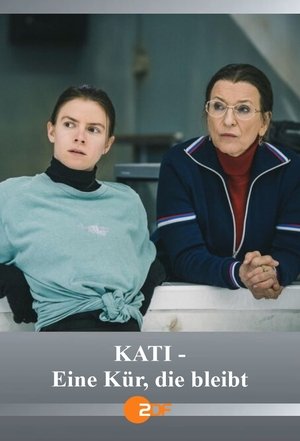
Kati: A Freestyle That Stays(de)
Four years after the end of the German Democratic Republic, Katarina Witt, two-time Olympic champion, is planning her comeback to prove to herself and to a united Germany that she still has what it takes. To do this, she has to team up with her former coach Jutta Müller and complete the toughest training of her life.

Forbidden Love(de)
18-year old Georg and 13-year old Barbara have been playing together as children. Play becomes love later, which leads to a catastrophe , as their parents are hostile leading to file a report to the court, as Barbara is still under age.
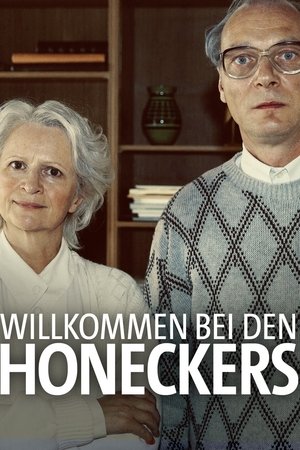
Willkommen bei den Honeckers(de)
Max Bretschneider pretends to be a communist in order to conduct the last interview with Erich Honecker.
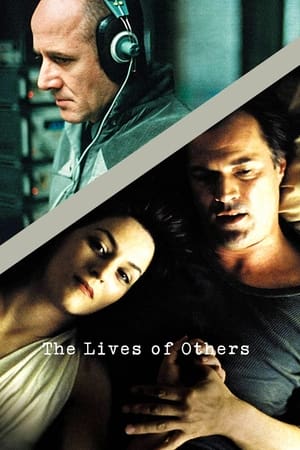
The Lives of Others(de)
In 1984 East Berlin, dedicated Stasi officer Gerd Wiesler begins spying on a famous playwright and his actress-lover Christa-Maria. Wiesler becomes unexpectedly sympathetic to the couple, and faces conflicting loyalties when his superior takes a liking to Christa-Maria.
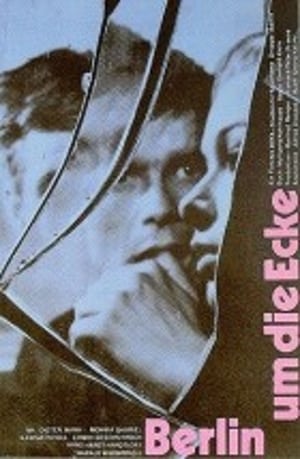
Berlin Around the Corner(de)
Berlin in the 1960s. Olaf and Horst are two young metalworkers, who provoke their older colleagues with critiques of the antiquated equipment and lack of materials... not to mention their love of leather jackets and motorbikes. Olaf and Horst begin to be targeted in the house newsletter, and the generational conflict escalates.
Farewell(de)
In August of 1914, amidst the public ecstasy surrounding the impending war, Hans Gastl, the young son of a Munich bürger, makes a decision: he will not take part in this war. This resolution signifies a turning point in his life; a farewell to his class and his family.
I Was Nineteen(de)
A young soldier enters Germany with Soviet troops at the end of WWII, feeling like a stranger in his homeland. As he meets Germans, he grapples with his ambivalence, realizing he is both a victor and one of the vanquished. His inquisitive nature leads him to confront the atrocities and lies he encounters along the way.
Free Country(de)
Former East Germany, 1992. Patrick Stein and Markus Bach, two very different police officers, are commissioned to investigate the disappearance of two female teenagers in a remote area of the country. Did they run away from home or did something more terrible happen to them?
Westler: East of the Wall(de)
Felix from West-Berlin falls in love with Thomas in East-Berlin. At first they keep their relationship going by regular visits from Felix, but the curfew forces him to return every evening. When the East-German authorities become suspicious, Thomas decides to try and flee to the West.
The Silent Revolution(de)
In 1956 Stalinstadt, East Germany, during the Hungarian uprising against Soviets is taking place, local teenagers perform a seemingly harmless act that causes unexpected consequences.
Ete and Ali(de)
Ete and Ali are discharged from the army. Since Ete knows that his wife is having an affair, he doesn't want to go home. Ali tries to persuade his friend to stand up for himself and to kick the other man out. But since Ete obviously lacks courage, Ali himself goes into action and gets rid of the rival lover. At first, Mary and Ete seem to reconcile, but repairing their marriage won't work.
Until Death Do Us Part(de)
Scenes from an East German marriage. A young couple, Sonya and Jens, are very much in love; they get married and have a child. When Sonya wants to go back to work after her maternity leave, they clash for the first time; Jens insists that she remain a full-time wife and mother. Until Death Do Us Part turns an actual police report into a gripping drama, as the director explores the depths of his characters' emotions, driving the conflict to a catastrophic climax.
Der Direktor(de)
The school authorities want to read success stories in director Joachim Faber's reports. But they cannot simply be produced on an assembly line. Pupils, for example, use the wrong tone. The matter draws circles until the superiors finally talk about refusal to work. Director Faber is caught between the efforts to resolve the conflict with pedagogical means and the pressure from above.
Abgehauen(de)
The movie tells a true story in the life of well-known German actor Manfred Krug. Living in the German Democratic Republic he is forced to leave the country after protesting against the expatriation of singer/songwriter Wolf Biermann in 1976.
1-2-3 Corona(de)
Post-war Germany 1945: Two rival gangs of uprooted boys fight each other in the ruins of Berlin, whose business is the black market out of necessity in order to survive. Their respective leaders are Gerhard and Dietrich. A pretty young circus artist named Corona comes to the destroyed city with a traveling circus. She immediately caught the boys' attention. When the latter notice that the circus director is abusing the girl, the two gangs join forces and plot an act of revenge against the tyrant. But with the hustle and bustle caused by this, Corona falls from the trapeze and is seriously injured. When the circus moves on, the boys organize a doctor for the sick artist who has been left behind. Their collectively concern for the blonde beauty makes them forget their enmity. This welds the troops closer together and sets the course for a common, meaningful future.
The Blue One(de)
In this German political drama, an ex-Stasi agent encounters an old friend whom he may have betrayed after his friend tried to escape East Germany. The former East German agent is Otto Skrodt who after many years is about to be promoted in the highest government ranks. He is anxious to maintain a squeaky clean image. His daughter is Isabelle. The young and friendly Kalle returns after spending many years in jail for his escape attempts. He doesn't know exactly who blew the whistle, but his friend Skrodt is definitely under suspicion. Kalle returns to ostensibly renew the friendship and to see Isabelle whom he loves. The duplicitous friendship between the two men becomes the main focus of the story which features interesting plot twists at the end.
Tiefe Furchen(de)
Germany in May 1945: the war is over, men are returning home and a new life begins in the villages. After 12 years in a concentration camp, the "Red Shoemaker" also returns to his home village. His wife is dead and others live in his house: Gebhardt, an employee on the farm of the large farmer Winter, and his family. The "Red Shoemaker" comes to stay with Hübner and his daughter Agnes. Over the past terrible years, he had repeatedly felt the hatred within him and wanted to take revenge on those who had sent him to the concentration camp. But now he wants to look to the future and takes on the position of mayor here in the village. He works to ensure that the village is supplied with food and tries to ensure that the fascist ideology disappears from people's minds. In doing so, he also makes enemies.
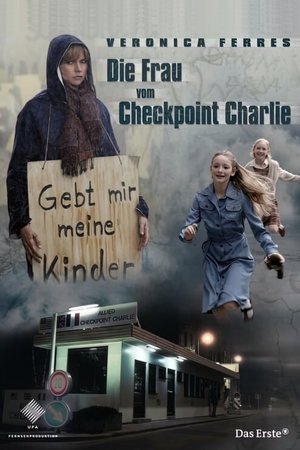
Die Frau vom Checkpoint Charlie(de)
Based on a true story, Miguel Alexandre's two-part drama focuses on an East German woman and the fight for her children. Spring 1982: Sara Bender, living with her daughters Silvia and Sabine in the East German town of Erfurt, wants to marry her colleague Peter, but shortly before the wedding, her father is killed in a road accident. As the funeral takes place in West Germany, she isn't allowed to got there, so she starts planning to leave her communist home country forever. Trying to flee via Romania, she is caught by the secret service. After years in jail, Sara is ransomed by the West German government, but without her daughters. To draw the world's attention on her desperate situation, she starts demonstrating at the Berlin border crossing Checkpoint Charlie
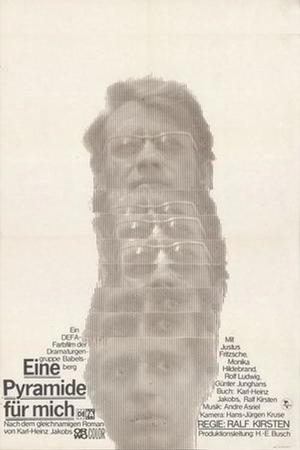
Eine Pyramide für mich(de)
A conference is to be held once again to discuss the construction of a new dam, which Professor Paul Satie rejects. During a train journey, he spontaneously leaves the train. Here in Wolfsgrün, from 1948 to 1950, he helped build the old, now far too small dam as a youth brigadier. He and the others who helped build it have erected a monument to this. A monument with his name on it. Is that perhaps why he is against the new dam?

Punching the World(de)
Two brothers grow up in the Saxon province (part of Germany) at the turn of the millennium, where the dream of family happiness in a new house quickly turns into a nightmare of decay, violence and xenophobia as they desperately search for stability and belonging.