Loading Page


Nicht alles schlucken(2015)
Status: Released
Date: 2015-05-09
90%
1 Votes
Languages: German.
Countries:
Germany
Movie: Nicht alles schlucken
HomePage
Overview
Release Date
2015-05-09
Average
9
Rating:
4.5 startsTagline
Genres
Languages:
DeutschKeywords
Recommendations Movies

61%
DMT: The Spirit Molecule(en)
2010-10-15
THE SPIRIT MOLECULE weaves an account of Dr. Rick Strassman's groundbreaking DMT research through a multifaceted approach to this intriguing hallucinogen found in the human brain and hundreds of plants, including the sacred Amazonian brew, ayahuasca. Utilizing interviews with a variety of experts to explain their thoughts and experiences with DMT, and ayahuasca, within their respective fields, and discussions with Strassman’s research volunteers, brings to life the awesome effects of this compound, and introduces us to far-reaching theories regarding its role in human consciousness.

68%
Spider-Man: All Roads Lead to No Way Home(en)
2022-05-03
JB Smoove and Martin Starr host a celebration of 20 years of "Spider-Man" movies, from the Sam Raimi trilogy to Marc Webb's movies and the trio from Jon Watts.

64%
Ex Libris: The New York Public Library(en)
2017-09-13
A documentary about how a dominant cultural and demographic institution both sustains their traditional activities and adapts to the digital revolution.

71%
Happy(en)
2012-02-11
Happy is a 2011 feature documentary film directed, written, and co-produced by Roko Belic. It explores human happiness through interviews with people from all walks of life in 14 different countries, weaving in the newest findings of positive psychology. Director Roko Belic was originally inspired to create the film after producer/director Tom Shadyac (Liar, Liar, Patch Adams, Bruce Almighty) showed him an article in the New York Times entitled "A New Measure of Well Being From a Happy Little Kingdom". The article ranks the United States as the 23rd happiest country in the world. Shadyac then suggested that Belic make a documentary about happiness. Belic spent several years interviewing over 20 people, ranging from leading happiness researchers to a rickshaw driver in Kolkatta, a family living in a "co-housing community" in Denmark, a woman who was run over by a truck, a Cajun fisherman, and more.

65%
The September Issue(en)
2009-08-28
A documentary chronicling Vogue editor-in-chief Anna Wintour's preparations for the 2007 fall-fashion issue.

69%
Harry Dean Stanton: Partly Fiction(en)
2013-09-11
An impressionistic portrait of the iconic actor Harry Dean Stanton comprised of intimate moments, film clips from some of his 250 films and his renditions of American folk songs.

61%
Naqoyqatsi(en)
2002-09-02
A visual montage portrait of our contemporary world dominated by globalized technology and violence.

74%
I Am Heath Ledger(en)
2017-04-23
The life and career of an actor, artist, and icon. His own journey through his own camera.
78%
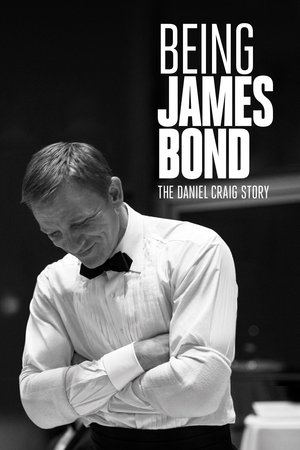
Being James Bond(en)
2021-08-29
Daniel Craig candidly reflects on his 15 year adventure as James Bond. Including never-before-seen archival footage from Casino Royale to the upcoming 25th film No Time To Die, Craig shares his personal memories in conversation with 007 producers, Michael G Wilson and Barbara Broccoli.
73%
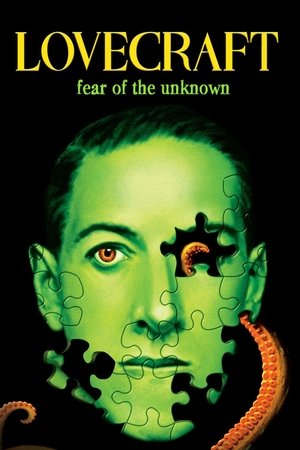
Lovecraft: Fear of the Unknown(en)
2008-07-24
A chronicle of the life, work and mind that created the Cthulhu mythos.

80%
My Mom Jayne(en)
2025-06-20
Through deeply personal interviews with her siblings and an examination of the photographs, letters, and belongings left behind, Mariska assembles a new portrait of her mother Jayne Mansfield, an extraordinary and complex woman.

65%
Downloaded(en)
2013-06-20
A documentary that explores the downloading revolution; the kids that created it, the bands and the businesses that were affected by it, and its impact on the world at large.

76%
Hawking(en)
2013-03-11
The extraordinary story of the planet’s most famous contemporary scientist, told in his own words and by those closest to him. Made with unique access to Hawking’s private life, this is an intimate and moving journey into Stephen's world, both past and present.
65%
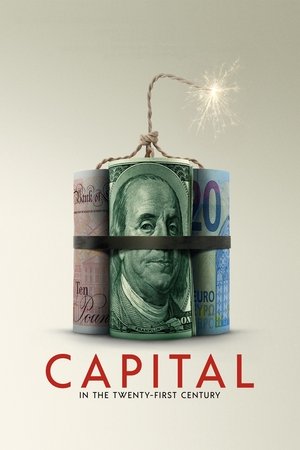
Capital in the Twenty-First Century(en)
2019-09-12
Film adaptation of French economist Thomas Piketty's ground-breaking global bestseller of the same name: an eye-opening journey through wealth and power.

66%
American Boy: A Profile of Steven Prince(en)
1978-09-16
Martin Scorsese spends an evening with larger-than-life raconteur Steven Prince—a former drug addict, road manager for Neil Diamond, and actor—as he recounts stories from his colorful life.

73%
National Gallery(en)
2014-10-08
A portrait of the day-to-day operations of the National Gallery of London, that reveals the role of the employees and the experiences of the Gallery's visitors. The film portrays the role of the curators and conservators; the education, scientific, and conservation departments; and the audience of all kinds of people who come to experience it.

69%
Wormwood(en)
2017-10-22
In this genre-bending tale, Errol Morris explores the mysterious death of a U.S. scientist entangled in a secret Cold War program known as MK-Ultra.
74%
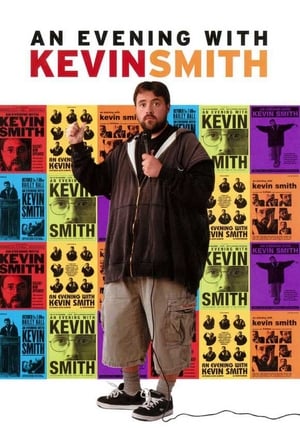
An Evening with Kevin Smith(en)
2002-12-17
Kevin Smith interacts in Q&A sessions throughout various college stops in the USA.

68%
Nothing Like a Dame(en)
2018-05-02
BBC Arena's documentary on the Dames of British Theatre and film featuring Maggie Smith, Eileen Atkins, Judi Dench and Joan Plowright on screen together for the first time as they reminisce over a long summer weekend in a house Joan once shared with Sir Laurence Olivier.

76%
6 Days to Air: The Making of South Park(en)
2011-10-09
Viewers will get a look at Parker and Stone's thought process as they approach a new episode and the 24/7 grind they subject themselves to each time the show is in production. The documentary also includes in-depth interviews with Parker and Stone about their working partnership and reflections on highlights from their careers.
Similar Movies

0%
The Pharmacy: Shanghai(fr)
1976-03-10
Filmed inside Pharmacy No. 3 in Shanghai, Joris Ivens and Marceline Loridan-Ivens document the daily work of a state pharmacy that functions as both a dispensary and a neighborhood medical center. The film focuses on routine interactions between staff and patients, revealing an integrated model of urban healthcare in 1970s China.

71%
Metallica: Some Kind of Monster(en)
2004-06-10
After bassist Jason Newsted quits the band in 2001, heavy metal superstars Metallica realize that they need an intervention. In this revealing documentary, filmmakers follow the three rock stars as they hire a group therapist and grapple with 20 years of repressed anger and aggression. Between searching for a replacement bass player, creating a new album and confronting their personal demons, the band learns to open up in ways they never thought possible.
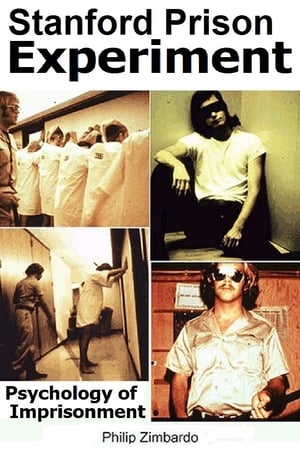
59%
Stanford Prison Experiment: Psychology of Imprisonment(en)
1991-06-06
The Stanford prison experiment was a landmark psychological study of the human response to captivity, in particular, to the real world circumstances of prison life, and the effects of imposed social roles on behaviour. It was conducted in 1971 by a team of researchers led by Philip Zimbardo of Stanford University.
0%
First Do No Pharm(en)
2024-09-22
We have had too much medicine for too many years. The time to act is now. How one doctor's fight against corporate greed led to an ancient, life-changing solution for heart disease.
65%
The Ground Truth(en)
2006-09-15
Sometimes the greatest act of courage is to tell the truth. Hear and witness our soldiers in this penetrating film. The shocking Iraq War ground conflict is only a prelude to the even more challenging battles these reluctant heroes face upon their return home.
48%
Methadonia(en)
2005-10-06
Shot over the course of 18 months in New York City's Lower East Side, METHADONIA sheds light on the inherent flaws of legal methadone treatments for heroin addiction by profiling eight addicts, in various stages of recovery and relapse, who attend the New York Center for Addiction Treatment Services (NYCATS).
70%
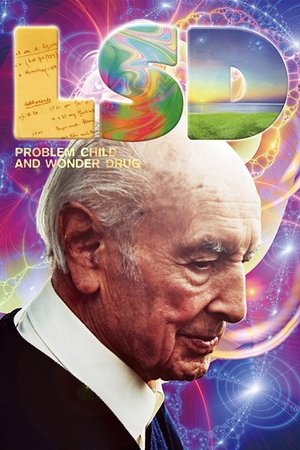
LSD: Problem Child and Wonder Drug(en)
2009-04-19
LSD: Problem Child and Wonder Drug captures the fascinating story of LSD as it is eloquently told by Dr. Albert Hofmann, the 100-year-old sage-scientist who brought LSD into the world. With interviews and presentations by Rick Doblin, Alex Grey, Ralph Metzner, Carl Ruck, Goa Gil, and others, this historic message from the father of LSD is a timeless relic and an immediate source of inspiration. The story is told through an account of the 2006 International LSD Symposium in Basel, Switzerland. At the now-legendary conference, eighty speakers and two thousand participants gathered for three days in honor of Dr. Hofmann's 100th birthday and to hear Dr. Hofmann speak about his life, his discovery, and his thoughts on the psychedelic experience. It was also an occasion for leading doctors, researchers, artists and thinkers in the psychedelic field to present their work.
74%
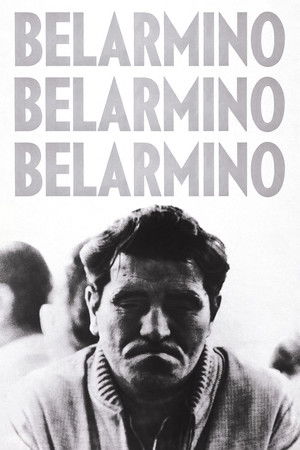
Belarmino(pt)
1964-11-19
A portrait of Belarmino Fragoso, a veteran boxer in Lisbon nearing the end of his career. In a blend of reportage and re-enactment, the many vices of the once national featherweight champion are revealed against a background of the grim economics of boxing in 1960s Portugal.
0%
Devil's Advocate?(en)
1999-01-23
Dateline's coverage of the lawsuit by Patty Burgus and family against Bennett Braun, director of the Dissociative Disorder's Unit at Rush Presbyterian St. Lukes in Chicago. Oct 1998. This is the story of the foundational works which constitute the current theory of Dissociative Identity Disorder/ Multiple Personality Disorder. This was the first Dissociative Disorder's Unit in the United States. All subsequent units specializing in Multiple Personality Disorder/ Dissociative Identity Disorders have been modeled after it. After having his license suspended in Illinois, Dr. Braun has resumed practice in Butte, Montana. Despite the malpractice payments paid by insurance on his behalf as well, Dr. Kluft remains in practice and continues to give training lectures on the treatment of MPD/DID to large audiences of mental health practitioners.

80%
Männer und Depression: Das stumme Leiden(de)
2025-10-06
Why are men two or even three times less likely than women to be diagnosed with depression? Why are the figures reversed between the sexes in suicide statistics—some 47,000 people in Europe each year, more than three-quarters of whom are men? In men, the signs may differ from those generally identified with depression: anger rather than sadness, hyperactivity (at work or in sports) rather than asthenia, antisocial or addictive behavior, greater difficulty in asking for help due to modesty or shame, etc. But whatever form it takes, mental suffering is still often overlooked by those affected, misdiagnosed by many practitioners, and therefore generally underestimated.
95%
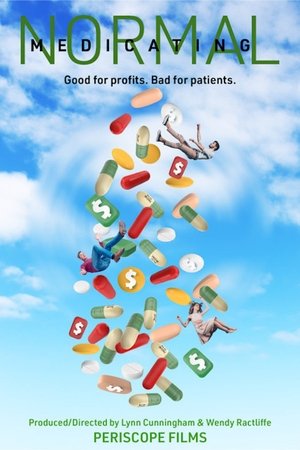
Medicating Normal(en)
2020-09-15
One in five Americans is taking a psychiatric drug, including millions of children. Pharmaceutical companies have over-hyped the benefits of these drugs, while hiding the risks and severe side effects including physiological dependence. "Medicating Normal" explores what happens when for- profit medicine intersects with human beings in distress.

63%
Vleesverlangen(nl)
2015-11-21
0%
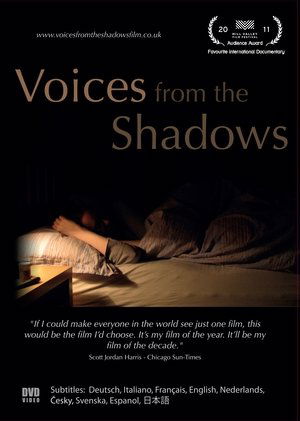
Voices from the Shadows(en)
‘Voices from the Shadows’ shows the brave and sometimes heartrending stories of five ME patients and their carers, along with input from Dr Nigel Speight, Prof Leonard Jason and Prof Malcolm Hooper. These were filmed and edited between 2009 and 2011, by the brother and mother of an ME patient in the UK. It shows the devastating consequences that occur when patients are disbelieved and the illness is misunderstood. Severe and lasting relapse occurs when patients are given inappropriate psychological or behavioural management: management that ignores the severe amplification of symptoms that can be caused by increased physical or mental activity or exposure to stimuli, and by further infections. A belief in behavioural and psychological causes, particularly when ME becomes very severe and chronic, following mismanagement, is still taught to medical students and healthcare professionals in the UK. As a consequence, situations similar to those shown in the film continue to occur.
0%
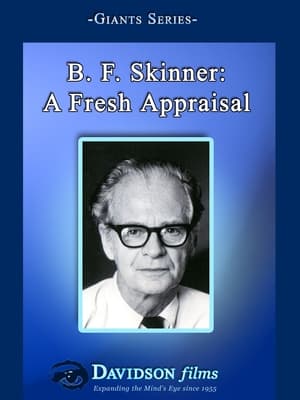
B. F. Skinner: A Fresh Appraisal(en)
1999-01-01
Other than Freud, no psychologist has been so discussed, critiqued and, at times, maligned as B.F. Skinner. Using both archival and new film, this video takes a new look at who the man was, and what he really said in his twenty books. Like other thinkers who broke new ground, Skinner had to invent his own vocabulary to describe the phenomena he was studying. In this film, his terms are introduced in context so the student understands how they were intended to be used and the research that produced them. The film lays to rest some myths and credits Skinner with contributions not often attributed to him. Understanding the complex man behind his work enables students to better evaluate the importance and relevance of the work he inspired. Murray Sidman, Ph.D., colleague and thoughtful practitioner of behavioral analysis, narrates.
0%
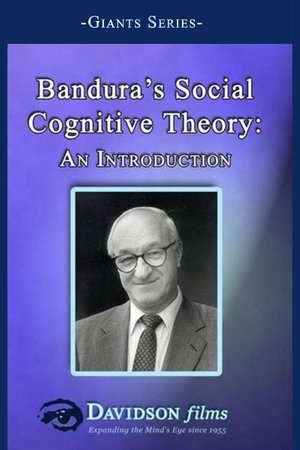
Bandura’s Social Cognitive Theory: An Introduction(en)
2003-01-01
Treading new ground in the field of social psychology, Albert Bandura’s work has become basic to an understanding of how social forces influence individuals, small groups and large groups. From his early BoBo doll experiments through his work with phobias, to his recent work on self-efficacy, Bandura has given us a sense of how people actively shape their own lives and those of others. Utilizing archival materials and newly shot visuals, students will be introduced to the vocabulary and innovative methods of this influential thinker. Dr. Bandura’s narration imbues this video with his compelling presentation style and intellectual authority.
0%
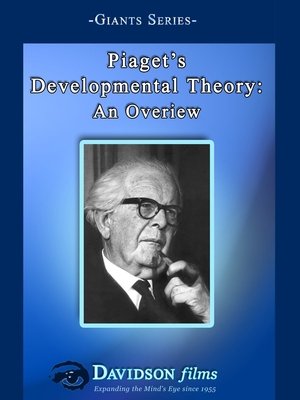
Piaget’s Developmental Theory: an Overview(en)
1989-01-01
The work of Jean Piaget has become the foundation of current developmental psychology and the basis for changes in educational practice. David Elkind, author of The Hurried Child and Miseducation, and a student of Jean Piaget, explores the roots of Piaget’s work and outlines important vocabulary and concepts that structure much of the study of child development. Using both archival film of Dr. Piaget and newly shot sequences of Dr. Elkind conducting interviews with children of varying ages, this film presents an overview of Piaget’s developmental theory, its scope and content.