Loading Page


Visual Essays: Origins of Film(1984)
Status: Released
Date: 1984-10-23
0%
0 Votes
Time: 0h 55m
Overview:
These six essays on film/image history reconstruct cinema history by 're-imagining' its origins, and its poetries, and use historical films themselves (as 'text') to provide the meanings of their creations. Together, these film essays comprise a critical/structural investigation of silent cinema ending with Segei Eisenstein's works (for Stalin) - from Lumiere and Melies through surrealism and horros, to montage and propaganda, we 're-invent' epochs in cinema that became its language and culture.
Languages: English, French, No Language.
Countries:
Canada
Movie: Visual Essays: Origins of Film
Top 5 Billed Cast
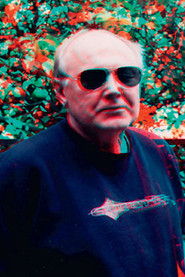
Al Razutis
(voice)
Loading Photos
Photo Type :Total items
Similar Movies
0%
Exergo(eu)
2024-05-04
Departing from peripheral details of some paintings of the Bilbao Fine Arts Museum, a female narrator unravels several stories related to the economic, social and psychological conditions of past and current artists.
65%
Penthesilea: Queen of the Amazons(en)
1974-01-01
Penthesilea, the first of six films made by Laura Mulvey and Peter Wollen, traverses thousands of years to look at the image of the Amazonian woman in myth. It asks, among other questions, is the Amazonian woman a rare strong female image or is she a figure derived from male phantasy? The film explores the complexities of such questions, but does not seek any concrete answers.

0%
Oxymoron Life...(pt)
2024-10-18
The wanderer Rascal embarks on a psychotic and contradictory journey to break out of the ego bubble in which his self-loathing and isolation have inserted him in. After his metamorphosis, his soulmate, Paloma, makes him realize that life is as complicated as it is simple - and that all that's left to do is to live.

49%
The Truth About the Imaginary Passion of an Unknown(fr)
1974-05-20
A very personal interpretation, to say the least, of the passion of the Christ According to St. John.
100%
The Scars(eu)
2019-03-12
The personal stories lived by the Uncle, the Father and the Son, respectively, form a tragic experience that is drawn along a line in time. This line is comparable to a crease in the pages of the family album, but also to a crack in the walls of the paternal house. It resembles the open wound created when drilling into a mountain, but also a scar in the collective imaginary of a society, where the idea of salvation finds its tragic destiny in the political struggle. What is at the end of that line? Will old war songs be enough to circumvent that destiny?

0%
Donosti 2730(es)
2024-03-16
A youngster writes a letter to his grandmother about his last trip to Donosti (Spain). This city inspires him to ponder about the language of cinema, time, cities, and sharing memories with our loved ones.
50%
Visions of Europe(en)
2004-05-01
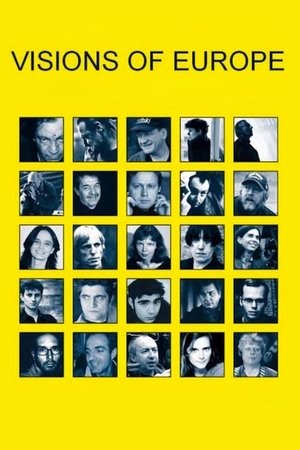
Twenty-five films from twenty-five European countries by twenty-five European directors.
62%
2 or 3 Things I Know About Her(fr)
1967-03-17
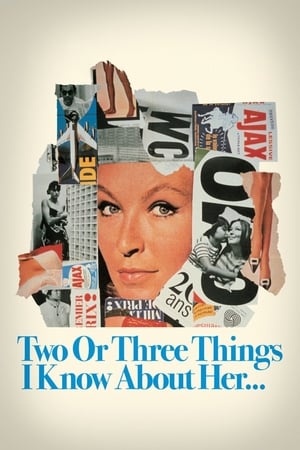
As the city of Paris and the French people grow in consumer culture, a housewife living in a high-rise apartment with her husband and two children takes to prostitution to help pay the bills.
58%
Hands Up!(pl)
1985-01-21
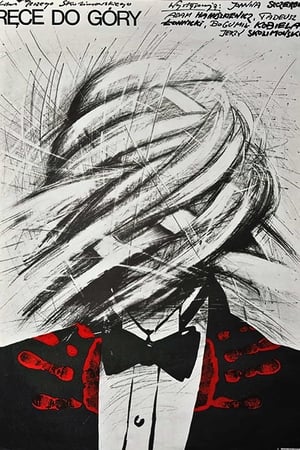
The reunion of a group of former medical students results in a flood of bitter memories.
0%
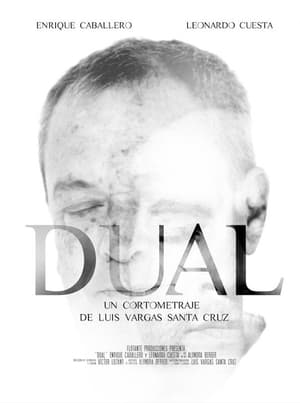
Dual(es)
After receiving a phone call, a man feels his inner world come to a standstill. Recalling the event decades later, he relives how everything changed in that moment and reflects on how quickly his life has passed and how his reality was constructed by all the things he repeated to himself like a mantra.
0%
Dr Tscharniblues(de)
1979-06-01
Bern, 1979: a tower block called Tscharnergut. A group of friends get together to make a film about their experiences growing up in suburban Switzerland.
65%
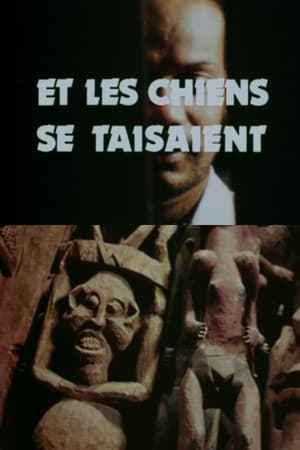
And the Dogs Were Silent(fr)
1976-04-27
For 'Et les chiens se taisaient' Maldoror adapted a piece of theatre by the poet and politician Aimé Césaire (1913–2008), about a rebel who becomes profoundly aware of his otherness when condemned to death. His existential dialogue with his mother reverberates around the African sculptures on display at the Musée de l'Homme, a Parisian museum full of colonial plunder whose director was the Surrealist anthropologist Michel Leiris.
60%
Valtos(en)
1987-01-01
Valtos is a story told from thirty years hence, in the last moments of its narrator, who awoke one day in 1987 'with the knowledge that I had been duplicated during the night, and that I was an inferior replica of myself'. There follows a relentless, epic, pursuit of an absconding phantom - his 'original' - which ends in catastrophe at Valtos, a place at once ethereal and terrifying.
100%
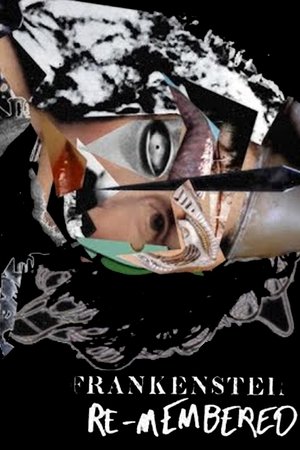
Frankenstein (Re)Membered(en)
2018-11-18
Since its publication 200 years ago, Mary Shelley’s Frankenstein has influenced vast swathes of popular culture. Adaptations have starred cinema legends from Boris Karloff to Robert De Niro – and even Alvin and the Chipmunks. From tales of science gone mad (Jurassic Park) to stories of understanding the other (ET, The Hulk, Arrival), traces of the story and its themes have spread across our media. With Frankenstein Re-membered, video artist and film historian Chris Gerrard collects these diverse fragments from the birth of cinema until the present day and in the tradition of Victor Frankenstein himself, attempts to stitch them back together into an adaptation of the original Shelley novel.
80%
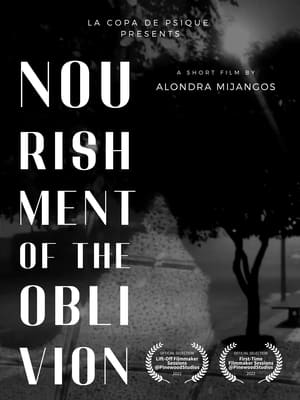
Nourishment of the oblivion(en)
2022-06-26
Andrea and the simbionte travel to Toledo; when they arrive, they find a lonely bus station, which slowly turns off the lights for them. In the silence that surrounds them, Andrea watches the moment pass and with it her certainty about her future dream with the simbionte, feeling that everything she experiences is actually a memory.
0%
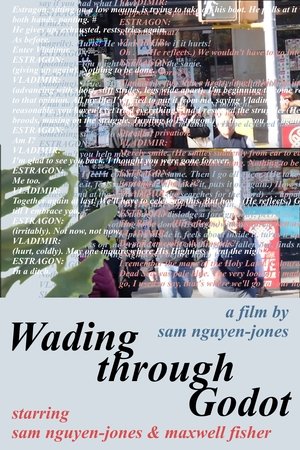
Wading through Godot(en)
2025-03-12
two friends sit on a park bench, considering a video adaptation of Waiting for Godot. A tragicomedy on things never completed, and what it means to complete a thing anyways.
0%
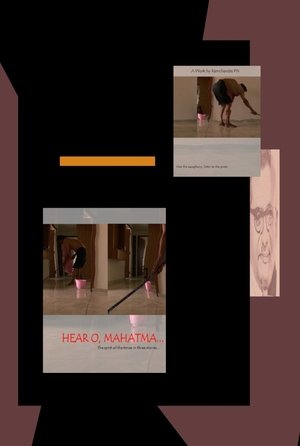
Hear O, Mahatma(en)
2024-11-20
In an open letter to the most influential modern Indian political leader, the Late Mohandas Karamchand Gandhi, the filmmaker sequentially narrates the stories of three distinct individuals - that of a confused filmmaker who flows with time, a dedicated social reformer who guides the stratified masses into social upliftment and a divisive and regressive politician. The juxtaposition of their disfigured trajectories provokes a pertinent question: Did Gandhi ever foresee the dehumanized shape that his legacy has now dangerously morphed into?

100%
Engel und Puppe(it)
1975-05-07
Engel und Puppe is the first film by Italian filmmaker and writer Ellis Donda. Screened at Oberhausen in 1975, Engel und Puppe is a political adaptation of some lines from Rilke's Duino Elegies, featuring the French poet Jacqueline Risset and a young Rossella Or (soon to become an avant-garde theatre actress).
0%
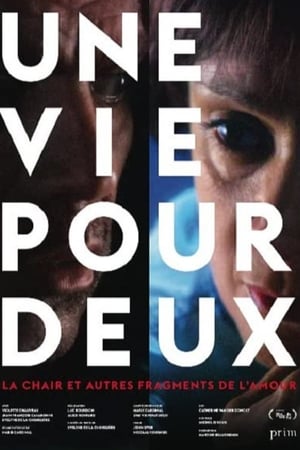
Une vie pour deux(fr)
2013-10-14
Freely adapted from the eponymous novel, Une vie pour deux is inspired by real events, the discovery by the novelist's husband (director Jean-Pierre Ronfard) of the corpse of a young woman on a beach in Ireland in the late 1970s.