Loading Page

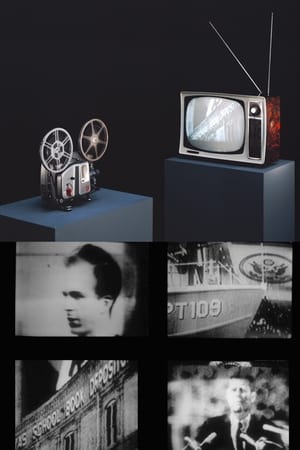
Television Assassination(1975)
Status: Released
Date: 1975-02-19
0%
0 Votes
Time: 0h 14m
Overview:
TELEVISION ASSASSINATION is one of two major works that Bruce Conner began in the days immediately following the Kennedy assassination and the artist's own thirtieth birthday, in the fall of 1963. While REPORT utilized montage and a strongly articulated structure to analyze the forces at work in the killing of a President (including our own complicity), TELEVISION ASSASSINATION is a complex, synthesizing work that weaves together fragments from the flux and flow of that history as it was in the process of being constructed and displayed daily to a nation of spectators. A monument to the enduring potency of the Kennedy myth and to the marketers who created it, the installation brings Conner's critique full-circle into the very medium that formalized it. In so doing, the work seems to suggest that the final resting place for the slain President was neither Brookline nor Arlington National Cemetery, but rather in the box, on the tube, held suspended forever on the television screen.
Languages: English.
Countries:
United States of America
Movie: Television Assassination
Top 1 Billed Cast
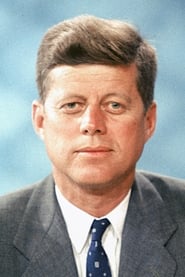
John F. Kennedy
Self
HomePage
Overview
TELEVISION ASSASSINATION is one of two major works that Bruce Conner began in the days immediately following the Kennedy assassination and the artist's own thirtieth birthday, in the fall of 1963. While REPORT utilized montage and a strongly articulated structure to analyze the forces at work in the killing of a President (including our own complicity), TELEVISION ASSASSINATION is a complex, synthesizing work that weaves together fragments from the flux and flow of that history as it was in the process of being constructed and displayed daily to a nation of spectators. A monument to the enduring potency of the Kennedy myth and to the marketers who created it, the installation brings Conner's critique full-circle into the very medium that formalized it. In so doing, the work seems to suggest that the final resting place for the slain President was neither Brookline nor Arlington National Cemetery, but rather in the box, on the tube, held suspended forever on the television screen.
Release Date
1975-02-19
Average
0
Rating:
0.0 startsTagline
Genres
Languages:
English
Recommendations Movies
66%
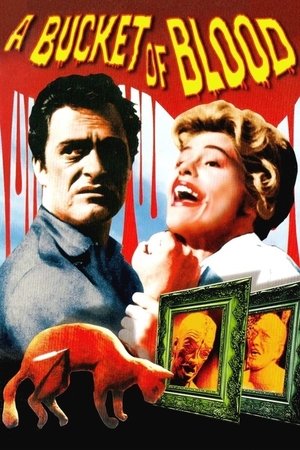
A Bucket of Blood(en)
1959-10-21
Nerdy Walter Paisley, a maladroit busboy at a beatnik café who doesn't fit in with the cool scene around him, attempts to woo his beautiful co-worker, Carla, by making a bust of her. When his klutziness results in the death of his landlady's cat, he panics and hides its body under a layer of plaster. But when Carla and her friends enthuse over the resulting artwork, Walter decides to create some bigger and more elaborate pieces using the same artistic process.
67%
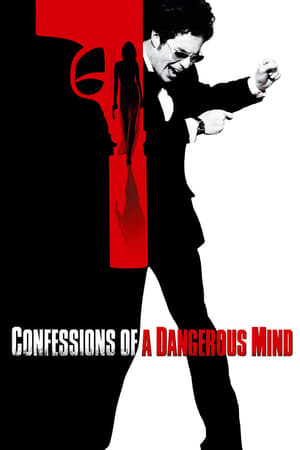
Confessions of a Dangerous Mind(en)
2002-12-31
Television made him famous, but his biggest hits happened off screen. Television producer by day, CIA assassin by night, Chuck Barris was recruited by the CIA at the height of his TV career and trained to become a covert operative. Or so Barris said.
64%
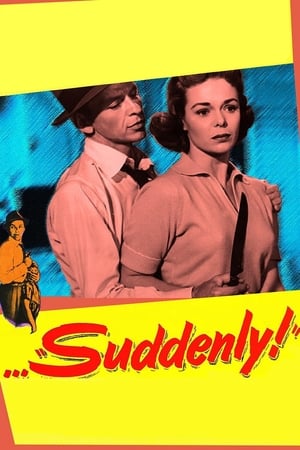
Suddenly(en)
1954-09-17
The tranquility of a small town is marred only by sheriff Tod Shaw's unsuccessful courtship of widow Ellen Benson, a pacifist who can't abide guns and those who use them. But violence descends on Ellen's household willy-nilly when the U.S. President passes through town... and slightly psycho hired assassin John Baron finds the Benson home ideal for an ambush.

62%
Parkland(en)
2013-10-02
November 22nd, 1963 was a day that changed the world forever — when young American President John F. Kennedy was assassinated in Dallas, Texas. This film follows, almost in real time, a handful of individuals forced to make split-second decisions after an event that would change their lives and forever alter the world’s landscape.

64%
Possessor(en)
2020-10-02
Tasya Vos, an elite corporate assassin, uses brain-implant technology to take control of other people’s bodies to terminate high profile targets. As she sinks deeper into her latest assignment, Vos becomes trapped inside a mind that threatens to obliterate her.
73%
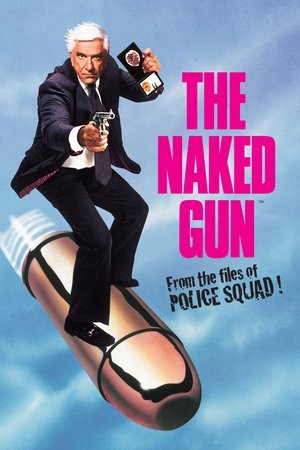
The Naked Gun: From the Files of Police Squad!(en)
1988-12-02
When the bumbling Lieutenant Frank Drebin investigates events following the shooting of his partner, he stumbles upon an attempt to assassinate Queen Elizabeth II.
64%
Executive Action(en)
1973-11-07
Rogue intelligence agents, right-wing politicians, greedy capitalists, and free-lance assassins plot and carry out the JFK assassination in this speculative agitprop.
70%
JFK Revisited: Through the Looking Glass(en)
2021-11-12
Thirty years after the release of his film JFK (1991), filmmaker Oliver Stone reviews recently declassified evidence related to the assassination of President John F. Kennedy, which took place in Dallas on November 22, 1963.
71%
The House That Jack Built(en)
2018-10-04
Failed architect, engineer and vicious murderer Jack narrates the details of some of his most elaborately orchestrated crimes, each of them a towering piece of art that defines his life's work as a serial killer for twelve years.
63%
The Raven(en)
2012-03-09
A fictionalized account of the last days of Edgar Allan Poe's life, in which the poet is in pursuit of a serial killer whose murders mirror those in the writer's stories.
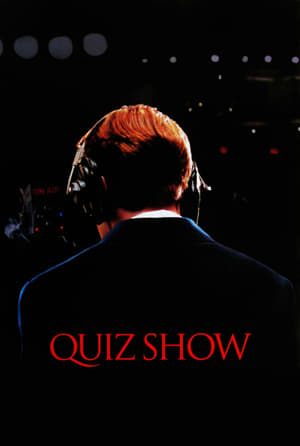
73%
Quiz Show(en)
1994-08-25
Herbert Stempel's transformation into an unexpected television personality unfolds as he secures victory on the cherished American game show, 'Twenty-One.' However, when the show introduces the highly skilled contestant Charles Van Doren to replace Stempel, it compels Stempel to let out his frustrations and call out the show as rigged. Lawyer Richard Goodwin steps in and attempts to uncover the orchestrated deception behind the scenes.
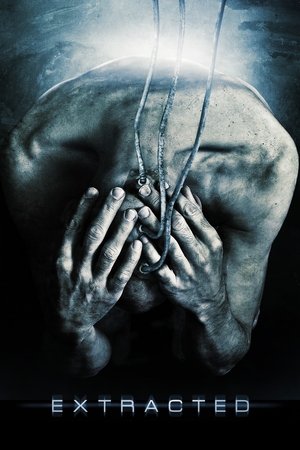
62%
Extracted(en)
2012-03-10
Thomas Jacobs invents a way to watch people's memories from the inside. Going against his morals, he accepts an offer to enter a heroin addict's memories to literally see if he committed a crime. However,a malfunction causes his consciousness to become trapped inside the criminal's mind. He remains a prisoner in the addict's memories for more than four years until he discovers the possibility of escape.
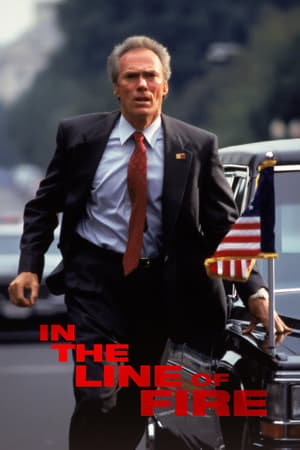
70%
In the Line of Fire(en)
1993-07-08
Veteran Secret Service agent Frank Horrigan is a man haunted by his failure to save President Kennedy while serving protection detail in Dallas. Thirty years later, a man calling himself "Booth" threatens the life of the current President, forcing Horrigan to come back to protection detail to confront the ghosts from his past.

60%
Crimes of the Future(en)
2022-05-25
With his partner, a celebrity performance artist publicly showcases the metamorphosis of his organs in avant-garde performances. An investigator from the National Organ Registry obsessively tracks their movements, which is when a mysterious group is revealed... Their mission — to use the artist's notoriety to shed light on the next phase of human evolution.
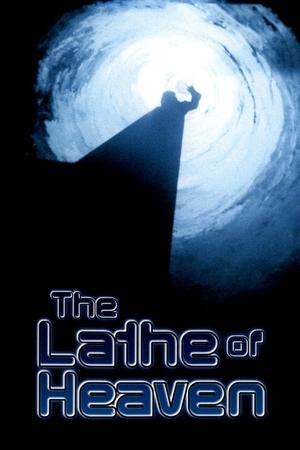
67%
The Lathe of Heaven(en)
1980-01-09
George Orr, a man whose dreams can change waking reality, tries to suppress this unpredictable gift with drugs. Dr. Haber, an assigned psychiatrist, discovers the gift to be real and hypnotically induces Mr. Orr to change reality for the benefit of mankind --- with bizarre and frightening results.
65%
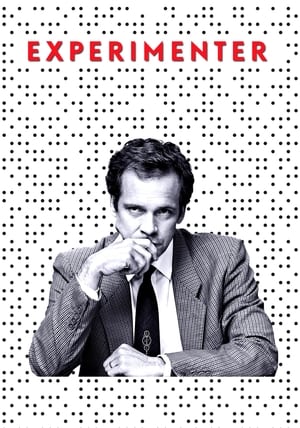
Experimenter(en)
2015-10-16
Yale University, 1961. Stanley Milgram designs a psychology experiment that still resonates to this day, in which people think they’re delivering painful electric shocks to an affable stranger strapped into a chair in another room. Despite his pleads for mercy, the majority of subjects don’t stop the experiment, administering what they think is a near-fatal electric shock, simply because they’ve been told to do so. With Nazi Adolf Eichmann’s trial airing in living rooms across America, Milgram strikes a nerve in popular culture and the scientific community with his exploration into people’s tendency to comply with authority. Celebrated in some circles, he is also accused of being a deceptive, manipulative monster, but his wife Sasha stands by him through it all.
68%
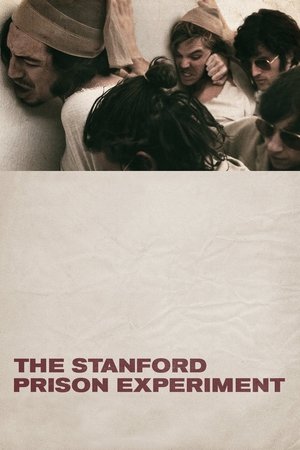
The Stanford Prison Experiment(en)
2015-07-17
In 1971, Stanford's Professor Philip Zimbardo conducts a controversial psychology experiment in which college students pretend to be either prisoners or guards, but the proceedings soon get out of hand. Based on a true story.

71%
Julius Caesar(en)
1953-06-04
The growing ambition of Julius Caesar is a source of major concern to his close friend Brutus. Cassius persuades him to participate in his plot to assassinate Caesar but both have sorely underestimated Mark Antony.