Loading Page

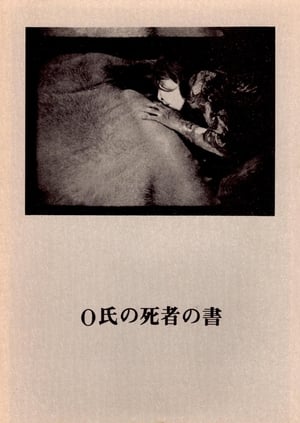
Mr O's Book of the Dead(1973)
Status: Released
Date: 1973-01-01
65%
2 Votes
Time: 1h 30m
Overview:
Mr O’s Book of the Dead is the last of a trilogy of experimental films about Kazuo Ohno, co-founder of the contemporary Japanese style of dance known as butoh, made with director Chiaki Nagano during a period in which he had retired from public performance, and just before he began touring the world as a solo dancer with his celebrated work Admiring La Argentina. In the film, Ohno leads a troupe of strangely dressed, made-up and gesticulating dancers through a succession of landscapes alternately lush, desolate and surreal.
Languages:
Countries:
Japan
Movie: Mr O's Book of the Dead
Top 1 Billed Cast
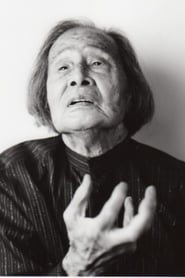
大野一雄
HomePage
Overview
Mr O’s Book of the Dead is the last of a trilogy of experimental films about Kazuo Ohno, co-founder of the contemporary Japanese style of dance known as butoh, made with director Chiaki Nagano during a period in which he had retired from public performance, and just before he began touring the world as a solo dancer with his celebrated work Admiring La Argentina. In the film, Ohno leads a troupe of strangely dressed, made-up and gesticulating dancers through a succession of landscapes alternately lush, desolate and surreal.
Release Date
1973-01-01
Average
6.5
Rating:
3.3 startsTagline
Genres
Languages:
Keywords
Recommendations Movies
58%
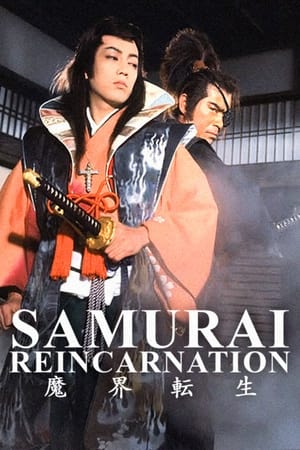
Samurai Reincarnation(ja)
1981-06-06
After surviving the slaughter of many Christians 350 years ago, a samurai denounces God for ignoring the pleas of believers. He sells his soul to Satan and receives the power to resurrect the dead to join him in a murderous rampage.

64%
The Boogeyman(en)
2023-05-31
Still reeling from the tragic death of their mother, a teenage girl and her younger sister find themselves plagued by a sadistic presence in their house and struggle to get their grieving father to pay attention before it’s too late.

61%
Fur: An Imaginary Portrait of Diane Arbus(en)
2006-08-30
In 1958 New York Diane Arbus is a housewife and mother who works as an assistant to her husband, a photographer employed by her wealthy parents. Respectable though her life is, she cannot help but feel uncomfortable in her privileged world. One night, a new neighbor catches Diane's eye, and the enigmatic man inspires her to set forth on the path to discovering her own artistry.

67%
Shadow Master(en)
2022-11-03
After being slain by a group of criminals, a man is reborn with animal-like superpowers and makes it his mission to right the wrongs of his city.

62%
Rape Zombie: Lust of the Dead 2(ja)
2013-03-23
A strange virus turns 90% of the world population into Lust eating Zombies. However, in Akihabara, Japan, some males were found to be uninfected. These men team up with the Zombies to go after the flesh and blood of surviving young women to fill their lust. The women survivors must fight to survive in an apocalyptic Japan.

70%
Grindhouse(en)
2007-04-06
Grindhouse combines Robert Rodriguez's Planet Terror, a horror comedy about a group of survivors who battle zombie-like creatures, and Quentin Tarantino's Death Proof, an action thriller about a murderous stuntman who kills young women with modified vehicles. It is presented as a double feature with fictitious exploitation trailers preceding each segment.
73%
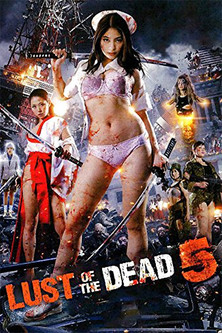
Rape Zombie: Lust of the Dead 5(ja)
2014-09-03
Convinced of the final outcome, a team of scientists travels back in time to stop the spread of a virus turning men into zombified rapists through society and causes them to finally uncover the source of the deadly disease which causes them to attempt to stop it before it happens again.

65%
Radiance(ja)
2017-05-27
The story follows the social intercourse between a cameraman, Masaya, with a visual impairment, and Misako who disconnects from the world.
76%
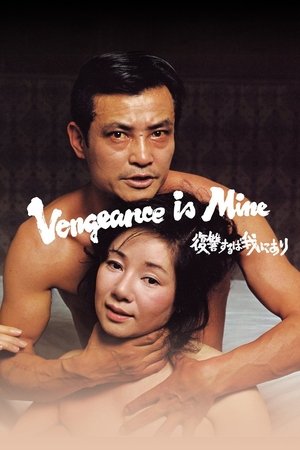
Vengeance Is Mine(ja)
1979-04-21
A thief, a murderer, and a charming lady-killer, Iwao Enokizu is on the run from the police.

77%
Love & Pop(ja)
1998-01-10
Tokyo schoolgirl Hiromi and her friends engage in a practice known as enjo kosai, or "compensated dating", where older men pay young girls for dates. Hiromi plunges deeper into this world to raise money for an expensive ring.

61%
...All the Marbles(en)
1981-03-01
A two-bit promoter tries to take a women's wrestling team to the top.
63%
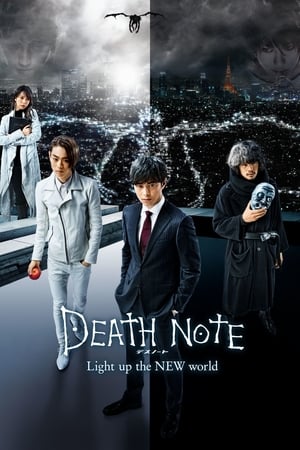
Death Note: Light Up the NEW World(ja)
2016-10-29
10 years has passed since the confrontation between Kira and L. Again, Shinigami sends death notes to the ground and due to this, the world soon falls into chaos. Tsukuru is a member of the Death Note special task force team with 6 other investigators including Matsuda who experienced the Kira case of 10 years ago. Mass murders caused by the death note takes place on Wall Street in the U.S., Shibuya in Japan and other places. World famous private investigator Ryuzaki, who is the rightful successor of L, also investigates the mass murders. They discover that 6 death notes exists in the world. A computer virus called Kira spreads in the world. A message in the Kira virus says to turn in 6 death notes. A person who has 6 death notes overwhelm the world. The confrontation begins between the person who wants Kira’s revival and the people who want to stop it.
68%
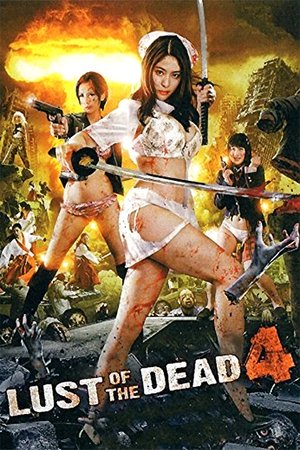
Rape Zombie: Lust of the Dead 4(ja)
2014-08-02
In a devastated, post-apocalyptic world, all men have turned into rape demons. The only hope for the future is to travel to the past and prevent the outbreak, the source of which still remains a mystery.
59%
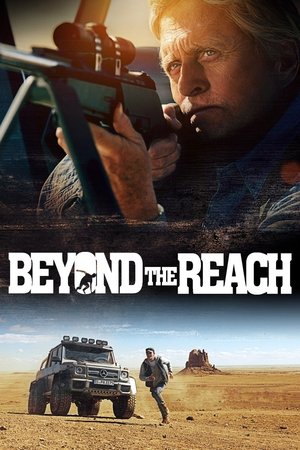
Beyond the Reach(en)
2014-09-06
A high-rolling corporate shark and his impoverished young guide play the most dangerous game during a hunting trip in the Mojave Desert.
65%
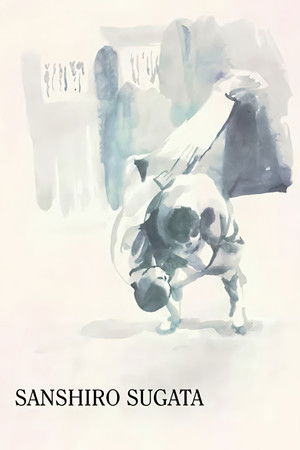
Sanshiro Sugata(ja)
1943-03-25
A hotheaded youth in 1880s Meiji Japan apprentices to judo master Shōgorō Yano, trading brute jujutsu bravado for discipline and humility. As Sanshirō matures, he proves judo’s spirit against old-guard challengers—including a deadly duel—while falling for his vanquished opponent’s daughter. Based on the novel by Tsuneo Tomita, son of Tomita Tsunejirō, the earliest disciple of judo.
62%
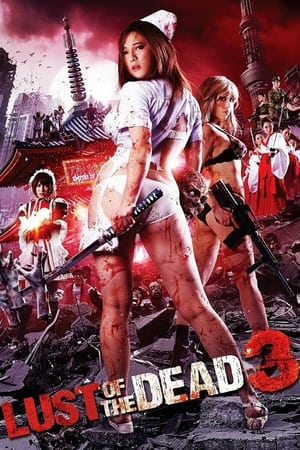
Rape Zombie: Lust of the Dead 3(ja)
2013-06-23
The zombies that arose after the nuclear outbreak are still high in numbers. The group of girls have lost some of their comrades and are fighting off the horny zombies to stay alive themselves. Can they stop the plague for once and for all?
65%
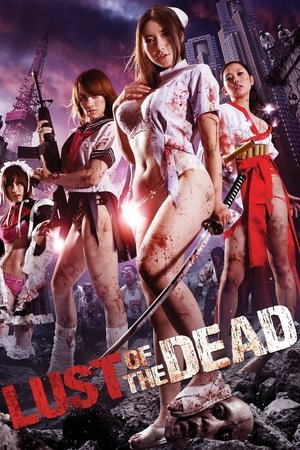
Rape Zombie: Lust of the Dead(ja)
2012-07-13
After a nuclear attack in Tokyo, the female population is attacked by infected males who have become sex-crazed zombies, hungry for human flesh. Officeworker Momoko and nurse Nozomi seek shelter in a Shinto Shrine, where they meet housewife Kanae and school girl Tamae. With no choices left to them, the group of girls decides to take a stand and arm themselves with assault rifles and explosives to fight off hordes of horny zombies. What is the secret to killing the zombies for good?
62%
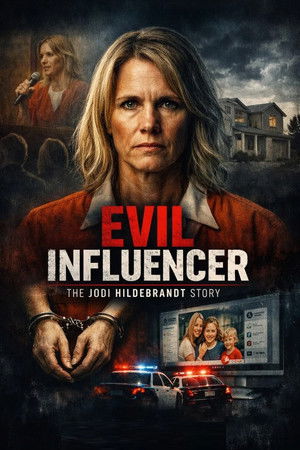
Evil Influencer: The Jodi Hildebrandt Story(en)
2025-12-30
Unravel the case of Utah therapist Jodi Hildebrandt, whose child abuse arrest with parenting YouTuber Ruby Franke exposed a twisted tale of manipulation.
60%
Crimes of the Future(en)
2022-05-25
With his partner, a celebrity performance artist publicly showcases the metamorphosis of his organs in avant-garde performances. An investigator from the National Organ Registry obsessively tracks their movements, which is when a mysterious group is revealed... Their mission — to use the artist's notoriety to shed light on the next phase of human evolution.

58%
Nightmare Cinema(en)
2018-06-21
A series of down-on-their-luck individuals enter the decrepit and spine-chilling Rialto theater, only to have their deepest and darkest fears brought to life on the silver screen by The Projectionist – a mysterious, ghostly figure who holds the nightmarish futures of all who attend his screenings.
Similar Movies
73%
Cherry Blossoms(de)
2008-03-05
After finding out that her husband, Rudi, has a fatal illness, Trudi Angermeier arranges a trip to Berlin so they can see their children. Of course, the kids don't know the real reason they're visiting -- and the catch is, neither does Rudi...

53%
Navel and A-Bomb(ja)
1960-10-21
Short film in which butoh dancing is used to reflect on the nuclear bombings of Hiroshima and Nagasaki.
0%
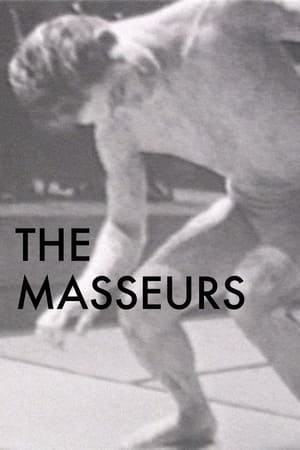
The Masseurs(ja)
1963-12-31
Anma (The Masseurs) is a representative and historical work by the creator of Butoh dance, Tatsumi Hijikata in his early period in the 1960s. The film is realized not only as a dance document but also as a Cine-Dance, a term made by Iimura, that is meant to be a choreography of film. The filmmaker "performed" with a camera on the stage in front of the audience. With the main performers: Tatsumi Hijikata and Kazuo Ohno, the film has the highlights such as Butohs of a soldier by Hijikata & a mad woman by Ohno. There is a story of the mad woman, first outcast and ignored, at the end joins to the community through her dance. Inserted descriptions of Anma (The Masseurs) are made for the film by the filmmaker, but were not in the original Butoh. The film, the only document taken of the performance, must be seen for the understanding of Hijikata Butoh and the foundation of Butoh.
90%
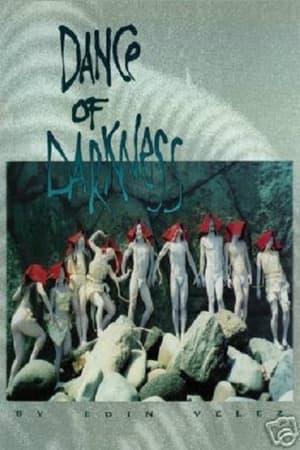
Dance of Darkness(en)
1989-01-01
The dark sensibilities and cultural resonances of Butoh, the radical Japanese dance movement, are explored in this multilayered work. Profoundly rooted in both traditional and contemporary Japanese culture, Butoh arose in a spirit of revolt in the early 1960s. Characterized by frank sexuality and bodily distortions, Butoh transforms traditional dance movements into new forms, stripping away the taboos of contemporary Japanese culture to reveal a secret world of darkness and irrationality.
0%
The Story of a Tree(ja)
2020-01-01
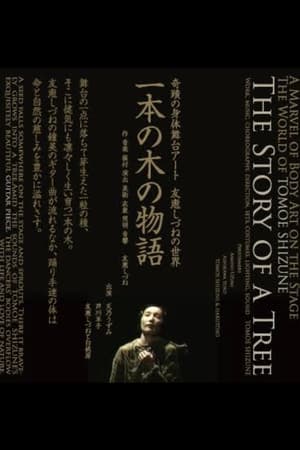
This work has been long-awaited as a masterpiece which is not performed in public since it was staged 31 years ago in 1989. This valuable video will be recorded in full and will be released for the first time. The story of a seed that fell to one point on the stage, and a tree that grew bravely and dignifiedly there. Amid the sounds of Tomoe Shizune’s exquisitely beautiful Guitar piece, the dancers’ bodies overflow with life and love of nature.

0%
Flowerbird Butoh: A Way of Life(en)
2015-01-01
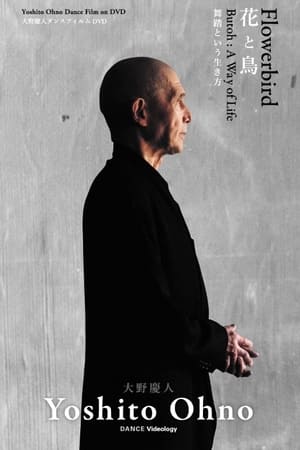
Comprising historic archive footage and texts this DVD box enlightens us greatly about Yoshito Ohno's here and now. Butoh has a distinct starting point, namely, in 1959, with Kinjiki , a duet featuring Tatsumi Hijikata and Yoshito Ohno. His father, the legendary Kazuo Ohno created another epoch-making opus in 1977 Admiring La Argentina, with Yoshito Ohno as production manager. These links are no mere coincidence. To date, we've tended to overlook Yoshito Ohno, barely granting him the recognition he merits. Just as dance requires a lengthy gestation period in which to evolve, his dance has finally come into our field of vision, in all its freshness and stark-nakedness, linking Butoh's origins to its zenith, to a point where he now stands at a crossroads.
0%
Kazuo Ohno: Beauty and Strength(ja)
2001-01-01
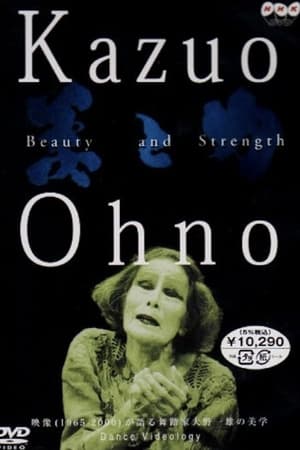
In the 60's and into the 70's, Kazuo Ohno himself produced three 16mm films. His many performances at the "Teatro Fonte" in Yokohama have been preserved with high quality Beta cameras. In addition, the television station NHK has made recordings of many of his theater performances since the premiere of "The Dead Sea" in 1985. Together, the Kazuo Ohno Dance Studio and NHK own over one hundred hours of footage. This is complemented by a 1994 film by Daniel Schmid and new 16mm footage of Kazuo Ohno filmed especially for this project in October of 2000. From these resources, this 111 minute Video/DVD was assembled. "Beauty and Strength" includes dance performances, film excerpts and interviews, examples of Ohno's drawings and writings, as well as biographical information, creating a comprehensive look into the world of Kazuo Ohno's dance.
56%
Horrors of Malformed Men(ja)
1969-10-31
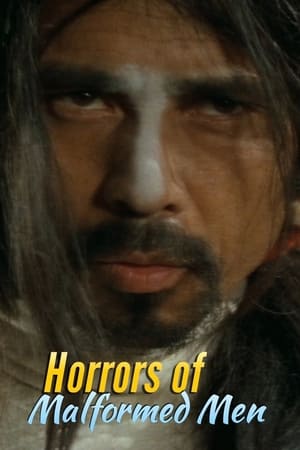
After escaping from an insane asylum, a medical student assumes the identity of a mysterious dead man, who appears to be his doppelganger, and gets lured to a sinister island ruled by a mad scientist and his malformed men.
0%
Rose Color Dance(ja)
1965-03-01
A document of Tatsumi Hijikata's Butoh dance with Kazuo Ohno as the guest dancer shot in Hijikata's early period when he was emerging as the originator of Butoh. All of the male dancers are dressed up with evening suits and move gracefully, yet an intruder breaks up the whole scene abruptly. The film is worth seeing, even if just to see a memorable gay duet of Hijikata and Ohno. Overexposed, washed out images are sandwiched among normal ones.

0%
XXL(sv)
2024-11-01
Siblings Enzo and Magda have drifted apart, and in an attempt to reconnect, Magda invites her brother on a trip to Helsinki. Over a weekend, the sibling duo encounters a series of eccentric characters and confronts situations that necessitate conversations about life, art and existence. Memories blend with the present, and dreams and reality merge for the two travelers adrift in the atmospheric city of Helsinki.
0%
Kazuo Ohno: I Dance Into the Light(en)
2004-11-20
A documentary about legendary butoh dancer Kazuo Ohno.
0%
A Summer Storm: Butoh of Dark Spirit School(ja)
2003-01-01
Ankoku Butoh is a style of avant-garde dance that established itself in the counter culture experimental arts scene of post WWII Japan. The dance form is thought to have been founded by Tatsumi Hijikata, who both created and performed in butoh pieces from the late 1950’s - through the early 1970’s. In butoh, the style of movement is extremely stylized and deliberate, vacillating between slow and sharp, expressing feelings of dread, sexualization, violence, calmness, birth and “creatureness” among other things. This performance of Summer Storm was originally recorded in 1973 at Westside Auditorium, Kyoto University, Japan, and was Hijikata’s last public performance before his death in 1986 with Butoh of Dark Spirit School. Video version produced in 2003.
0%
Goblet of Lapiz Iazuli(xx)
2023-11-04
Fill the goblet of lapis Iazuli With the life, joy, sorrow, death of this whole universe. This goblet must scoop up all. Who drifts in the isle of hollow. Mothers, babies, Sick women, filthy women, Those who praz, those who surfei, and those who accompany them. The moon goes around and attracts everything. Let us give a toast, Till the earth in the goblet turn inside out.
80%
Butoh: Body on the Edge of Crisis(en)
1990-01-01
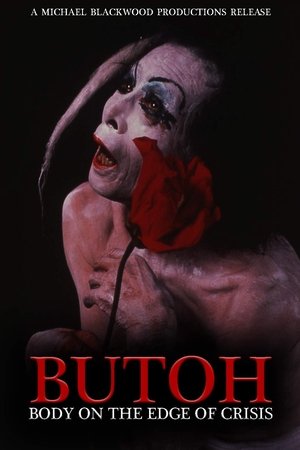
"Butoh: Body on the Edge of Crisis" is a visually striking film portrait shot on location in Japan with the participation of the major Butoh choreographers and their companies. Although Butoh is often viewed as Japan's equivalent of modern dance, in actuality it has little to do with the rational principles of modernism. Butoh is a theater of improvisation which places the personal experiences of the dancer on center-stage. By reestablishing the ancient Japanese connection of dance, music, and masks, and by recalling the Buddhist death dances of rural Japan, Butoh incorporates much traditional theater. At the same time, it is a movement of resistance against the abandonment of traditional culture to a highly organized consumer-oriented society.

0%
The Naked Summer(ja)
2008-01-19
The Naked Summer is a film that documents young artists' effort and growth while training and preparing for a performance of Butou that is praised internationally as a unique art form. Butou was born about 40 years ago as a form of modern dance that pursues the untraditional movement of the body and defies the convention of the human body. As a result, it is known for the dancer's strange facial expressions, naked body covered in white powder, and strong visuals. The film contains the summer training process of the dance group Dairakudakan led by a veteran artist of Butou, Akaji Maro