Loading Page

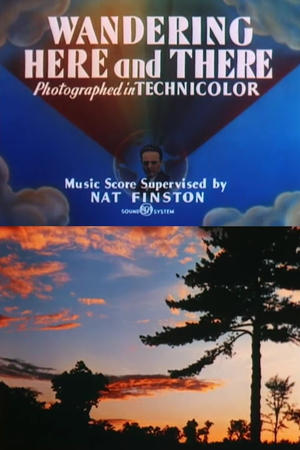
Wandering Here and There(1944)
Status: Released
Date: 1944-12-14
0%
0 Votes
Time: 0h 9m
Overview:
This Traveltalk series short visits various places around the United States. At the first stop, we admire the natural beauty of Crater Lake in Oregon. The next stop is the open pit copper mine at Bingham Canyon, Utah, the world's largest copper mine. We then spend time in Hannibal, Missouri, the hometown of author Mark Twain. After a short visit to a log-rolling contest in Washington State, we cross the country to get a view of Washington, DC from across the Potomac River. The final stop on this tour is Arlington National Cemetery, where we see the Tomb of the Unknown, Arlington House, and the mast of the USS Maine, which was sunk in 1898 in Havana Harbor.
Languages: English.
Countries:
United States of America
ProductionCompanies: 
Movie: Wandering Here and There
Top 1 Billed Cast

James A. FitzPatrick
Narrator (voice)
HomePage
Overview
This Traveltalk series short visits various places around the United States. At the first stop, we admire the natural beauty of Crater Lake in Oregon. The next stop is the open pit copper mine at Bingham Canyon, Utah, the world's largest copper mine. We then spend time in Hannibal, Missouri, the hometown of author Mark Twain. After a short visit to a log-rolling contest in Washington State, we cross the country to get a view of Washington, DC from across the Potomac River. The final stop on this tour is Arlington National Cemetery, where we see the Tomb of the Unknown, Arlington House, and the mast of the USS Maine, which was sunk in 1898 in Havana Harbor.
Release Date
1944-12-14
Average
0
Rating:
0.0 startsTagline
Genres
Languages:
EnglishKeywords
Recommendations Movies

59%
South of the Border(en)
2009-09-07
A road trip across five countries to explore the social and political movements as well as the mainstream media's misperception of South America while interviewing seven of its elected presidents.

72%
To Be Takei(en)
2014-08-22
Over seven decades, actor and activist George Takei journeyed from a World War II internment camp to the helm of the Starship Enterprise, and then to the daily news feeds of five million Facebook fans. Join George and his husband, Brad, on a wacky and profound trek for life, liberty, and love.

70%
This Place Rules(en)
2022-12-30
Acclaimed for his unfiltered reporting and deadpan humor, Andrew Callaghan brings his gonzo style reporting to the undercurrents that led to the January 6 Capitol Riot. As one of the best-known and hardest working journalists of his generation, the 25-year-old ventures on a wild RV journey through America to take the pulse of a divided nation.
68%
The Bill Murray Stories: Life Lessons Learned from a Mythical Man(en)
2018-05-02
One man’s journey to find meaning in Bill Murray’s many unexpected adventures with everyday people, rare and never-before seen footage of the comedic icon participating in stories previously presumed to be urban legend.
79%
Alone in the Wilderness(en)
2004-10-08
Dick Proenneke retired at age 50 in 1967 and decided to build his own cabin in the wilderness at the base of the Aleutian Peninsula, in what is now Lake Clark National Park. Using color footage he shot himself, Proenneke traces how he came to this remote area, selected a homestead site and built his log cabin completely by himself. The documentary covers his first year in-country, showing his day-to-day activities and the passing of the seasons as he sought to scratch out a living alone in the wilderness.

80%
My Mom Jayne(en)
2025-06-20
Through deeply personal interviews with her siblings and an examination of the photographs, letters, and belongings left behind, Mariska assembles a new portrait of her mother Jayne Mansfield, an extraordinary and complex woman.
73%
Apollo: Missions to the Moon(en)
2019-07-07
National Geographic's riveting effort recounts all 12 crewed missions using only archival footage, photos and audio.

73%
The Walking Dead: The Return(en)
2024-02-15
Stars of "The Walking Dead," Andrew Lincoln and Danai Gurira, walk down memory lane and visit iconic locations where pivotal moments between their characters, Rick and Michonne, were filmed.

68%
Spider-Man: All Roads Lead to No Way Home(en)
2022-05-03
JB Smoove and Martin Starr host a celebration of 20 years of "Spider-Man" movies, from the Sam Raimi trilogy to Marc Webb's movies and the trio from Jon Watts.

71%
The Class of ‘92(en)
2013-12-01
A detailing of the rise to prominence and global sporting superstardom of six supremely talented young Manchester United football players (David Beckham, Nicky Butt, Ryan Giggs, Paul Scholes, Phil and Gary Neville). The film covers the period 1992-1999, culminating in Manchester United's European Cup triumph.
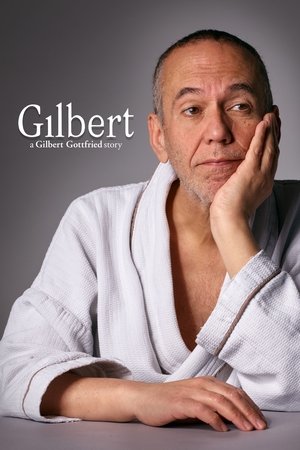
67%
Gilbert(en)
2017-04-20
The life and career of one of comedy's most inimitable modern voices, Mr. Gilbert Gottfried.

76%
Night Will Fall(en)
2014-06-07
When Allied forces liberated the Nazi concentration camps in 1944-45, their terrible discoveries were recorded by army and newsreel cameramen, revealing for the first time the full horror of what had happened. Making use of British, Soviet and American footage, the Ministry of Information’s Sidney Bernstein (later founder of Granada Television) aimed to create a documentary that would provide lasting, undeniable evidence of the Nazis’ unspeakable crimes. He commissioned a wealth of British talent, including editor Stewart McAllister, writer and future cabinet minister Richard Crossman – and, as treatment advisor, his friend Alfred Hitchcock. Yet, despite initial support from the British and US Governments, the film was shelved, and only now, 70 years on, has it been restored and completed by Imperial War Museums under its original title "German Concentration Camps Factual Survey".
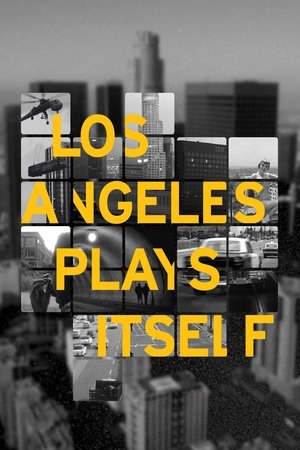
76%
Los Angeles Plays Itself(en)
2004-07-28
From its distinctive neighborhoods to its architectural homes, Los Angeles has been the backdrop to countless movies. In this dazzling work, Andersen takes viewers on a whirlwind tour through the metropolis' real and cinematic history, investigating the myriad stories and legends that have come to define it, and meticulously, judiciously revealing the real city that lives beneath.

64%
Avatar: Creating the World of Pandora(en)
2010-02-07
The Making-of James Cameron's Avatar. It shows interesting parts of the work on the set.
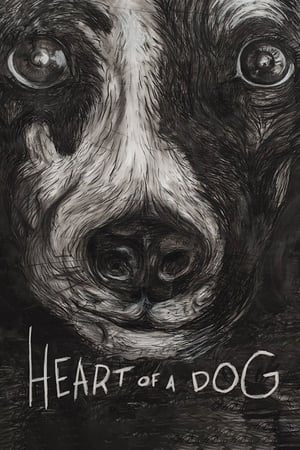
65%
Heart of a Dog(en)
2015-10-21
Lyrical and powerfully personal essay film that reflects on the deaths of her husband Lou Reed, her mother, her beloved dog, and such diverse subjects as family memories, surveillance, and Buddhist teachings.

72%
4 Little Girls(en)
1997-07-09
On September 15, 1963, a bomb destroyed a black church in Birmingham, Alabama, killing four young girls who were there for Sunday school. It was a crime that shocked the nation--and a defining moment in the history of the civil-rights movement. Spike Lee re-examines the full story of the bombing, including a revealing interview with former Alabama Governor George Wallace.
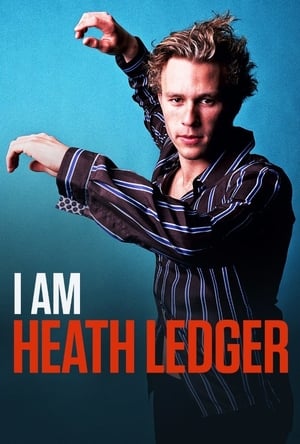
74%
I Am Heath Ledger(en)
2017-04-23
The life and career of an actor, artist, and icon. His own journey through his own camera.
71%
Boys State(en)
2020-01-24
This raucous journey into the heart of democracy captures an unusual rite of passage: 1,100 teenage boys from across Texas coming together to build a representative government from the ground up.
68%
Gates of Heaven(en)
1978-10-01
A documentary about a pet cemetery in California, and the people who have pets buried there.
66%
Titanic: 20 Years Later with James Cameron(en)
2017-11-26
For the 20th anniversary of "Titanic," James Cameron reopens the file on the disaster.
Similar Movies
0%
Serene Siam(en)
1937-05-29
This travelogue begins at Bangkok's rail depot, a center of Indo-Chinese commerce. Next the narrator talks about Buddhism as the camera shows us some of Bangkok's many temples. Then, the narrator introduces us to the importance of traditional dance, with emphasis on the way that delicate wrist movements tell stories. It's on to the system of waterways in Bangkok, where more than 1,000,000 people live or conduct commerce. We take a ride down the Menam River, the country's most important commercial and social road. From our boat, we pass Wat Arun and other colorful signs of life typical in serene Siam.
40%
Rocky Mountain Grandeur(en)
1937-06-21
This Traveltalk short visits Rocky Mountain National Park and a nearby dude ranch in Colorado.
45%
Dutch in Seven Lessons(nl)
1948-05-07
A film-within-the-film scenario involving a cameraman who's given a week to photograph the aerial highlights of Holland for a travelogue.

100%
Milestone No. 3(en)
2025-11-03
Milestone No. 3 is a documentary following three lifelong friends as they travel across the country to California for the very first time. Armed with doubts and anxiety about continuing his filmmaking career, director Nicholas Dapolito enlists the help of friends and family to examine why he creates, and if this path is truly right for him.
90%
The World, The Journey Of My Heart - Traveler: Animation Film Director Hayao Miyazaki(ja)
1998-05-09
A documentary film starring Hayao Miyazaki as he follows in the footsteps of Antoine de Saint-Exupéry.
45%
Beyond Borders(en)
2021-01-04
Pilot JP Schulze and filmmaker Louis Cole set off to circumnavigate the world in a single-engine, 1974 Cessna T210L airplane named Balloo. They had 90 days to complete the journey, and as they traveled they met people from many different cultures and asked them - is what divides us greater than what brings us together?
63%
Singapore and Jahore(en)
1938-12-31
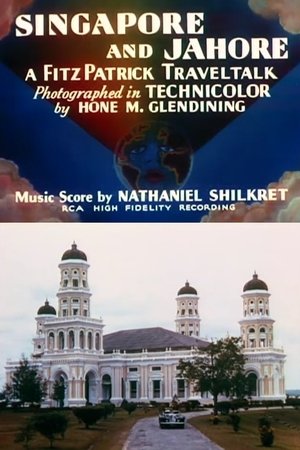
A visit to Singapore, an essential port city in Britain's empire, established in 1813 when Raffles negotiated its separation from the independent Malay state of Jahor. The camera observes Singapore's traditional neighborhoods, trade, and small craft, which are dominated by people of Chinese ancestry. Then, we drive the modern causeway to Jahor's small capital, Johor Bahru, for a look at imposing buildings and a visit to the grounds of the sultan. The sultan's son invites the crew in, and we meet the sultan, "H.H." himself. The narrator relates the sultan's commitment to commerce, economic well-being, and tolerance, stemming in part from his European education.
0%
Old New Mexico(en)
1940-10-26
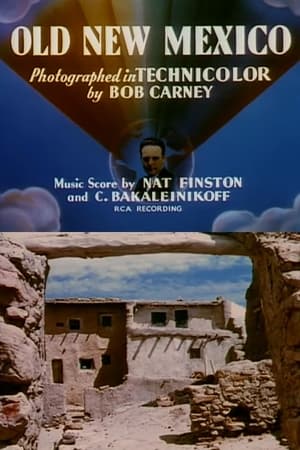
This Traveltalk series short takes viewers on a tour of old New Mexico. Starting in Santa Fe, the oldest state capitol in the USA, the city existed long before European migration. It's unique architecture is its most prominent feature. There are several archaeological sites trying to date when Indians first settled in the area. Seven percent of the population are of Indian origin. Near Taos is the onetime home of Kit Carson whose grave is one of the sacred shrines of New Mexico. The Navajo live on their 14 million acre reservation and continue their traditional way of life.
60%
Land of Orizaba(en)
1943-01-02
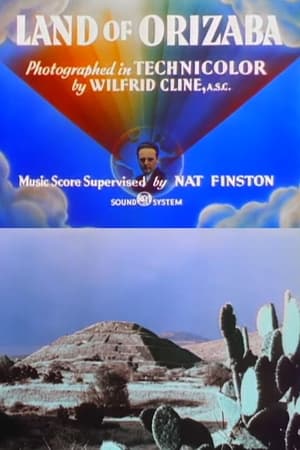
This Traveltalk series short chronicles the sights and sounds on a train ride from Veracruz to Mexico City.
65%
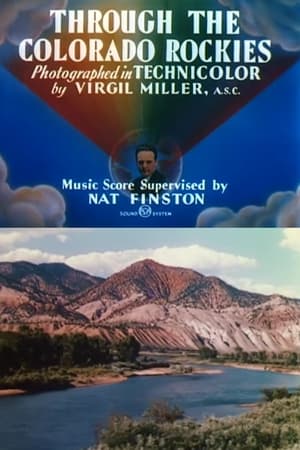
Through the Colorado Rockies(en)
1943-10-22
This Traveltalk series entry on Colorado begins in Colorado Springs, then proceeds to Pike's Peak. We experience a train ride over Royal Gorge and the sights along the Gunnison River. In Palisade, Colorado, we see men on stilts picking the local peach crop in order to avoid ladder damage to the fragile fruit trees.
0%
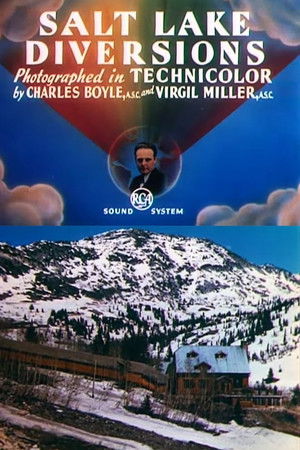
Salt Lake Diversions(en)
1943-12-25
About an hour's drive from Salt Lake City, Utah is the ski resort of Alta, a former mining town, nestled within the Wasatch Mountains. Skiing and other winter alpine pursuits take place well into mid-spring. The relatively new ski lift is one of the longest in the western US. Some ride the lift not to ski down but to glance at the view from the 1,500 foot summit. Being the end of May, people at nearby Salt Lake are instead enjoying more summerly pursuits, such as boating. Behind only the Dead Sea, it ranks second among all large inland lakes for the saline content at 27%, the buoyancy from which makes it almost impossible to sink in. On shore at Black Rock Beach of the Bonneville Salt Flats is the site of many attempts of land speed records, most records held by Ab Jenkins. Another popular activity in the lake itself is the crystallization of salt around wire forms, the process which requires relatively still water and takes about two hours.
0%
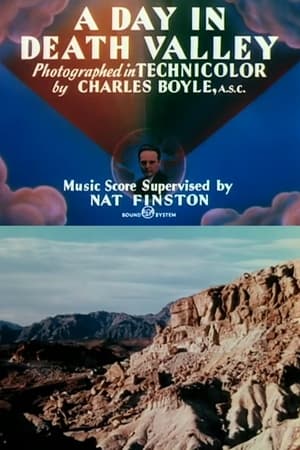
A Day in Death Valley(en)
1944-01-22
A tour of the arid, inhospitable region of the southern California desert known as Death Valley, originally named because of the many travelers in the 1840s who died of thirst, starvation and/or exposure trying to cross it.
0%
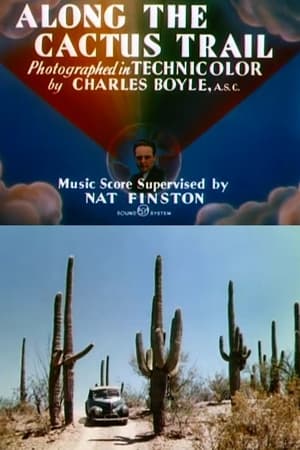
Along the Cactus Trail(en)
1944-04-15
The drive from Riverside, California to Phoenix, Arizona is affectionately known as the Cactus Trail. Starting in Riverside, sights of note include: the Mission Inn in Riverside whose unique style was the brainchild of Frank Miller; the Chapel of St. Francis in Riverside, which because of its dedication to aviation is the site of many weddings associated with aviators; the Camelback Mountain outside of Phoenix, so named for its shape.
0%
Colorful Colorado(en)
1944-05-20
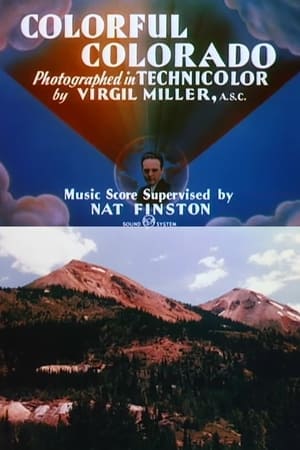
This Traveltalk series short starts off in Denver, capital of Colorado. Known as a recreational and health center, it is noted for its beautiful parks. The Museum of Natural History has specimens of local animal life. About an hour's drive from Denver on Lookout Mountain is the grave of Col. William Cody, 'Buffalo Bill', known as a scout and a plainsman. In Colorado Springs, there is a monument to the great American humorist Will Rogers who loved the stretches of open country. Much of the mountain area of Colorado is owned by the Federal government as national forest and there are many well stocked trout streams. In Mesa Verde National Park you will find the cave dwellings once used by Native Americans.

0%
St. Helena and Its 'Man of Destiny'(en)
1936-07-08
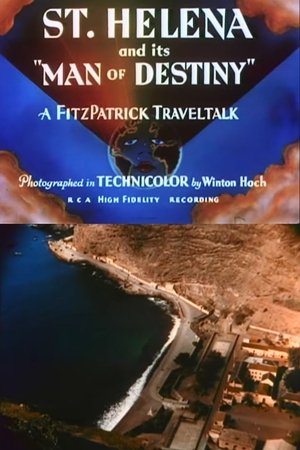
The remote island of St. Helena, a British possession located in the south Atlantic, is perhaps best known as where Napoleon Bonaparte was exiled/imprisoned for the final six years of his life and where he died in 1821. His legacy on the island remains today, despite his body being disinterred and moved back to France in 1840. His home was at Longwood, one area of the island now ceded to the French in respect of its former resident. The island was discovered and named by the Portuguese in 1502. Until the British took over, many other European countries had or wanted possession of the island because of its location along natural trade routes. Jamestown is the island's only port, named after King James. With 4,000 inhabitants, St. Helena is self supporting, growing primarily potatoes and flax. However, its primary economic generator is the sale of the rare St. Helena postage stamp.
40%
Picturesque Patzcuaro(en)
1942-05-23
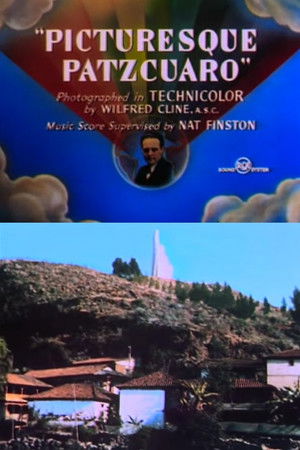
Lake Patzcuaro, located 230 miles west of Mexico City, is one of the highest and most picturesque bodies of water in Mexico. The heritage of the indigenous peoples of the area, the Tarascans, still prevails, such as the production of lacquer-ware handicrafts, and the means of hunting and fishing, the latter which uses nets shaped like large butterfly wings. Although most current day Tarascans are Roman Catholic, they have not totally abandoned their indigenous pagan gods. On Janitzio, one of the many islands in the lake, stands a large statue commemorating José María Morelos, a prominent figure in Mexican liberation and a great benefactor to the Tarascans. Janitzio is also the inspiration for many famous paintings. The town of Tzintzuntzan just inland from the lake's shore acts as the regional center for the market and for festivals.
0%
Visiting St. Louis(en)
1944-02-19
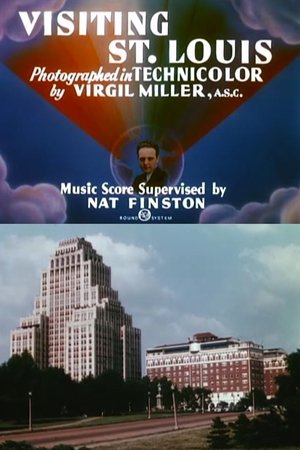
This FitzPatrick Traveltalk series short visit to St. Louis, Missouri starts with a brief history lesson. We then see several of the city's architectural landmarks and the many types of vessels that travel on the Mississippi River. Time is also spent at the zoological garden in Forest Park, where we see rhinoceros, giraffes, polar bears, giant pandas, and a group of trained elephants.
71%
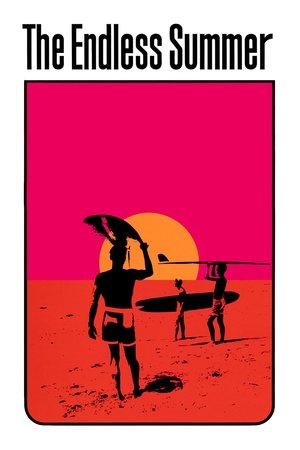
The Endless Summer(en)
1966-06-15
Bruce Brown's The Endless Summer is one of the first and most influential surf movies of all time. The film documents American surfers Mike Hynson and Robert August as they travel the world during California’s winter (which, back in 1965 was off-season for surfing) in search of the perfect wave and ultimately, an endless summer.