Loading Page


Peter Eisenman: Building Germany's Holocaust Memorial(2009)
Status: Released
Date: 2009-02-20
0%
0 Votes
Time: 1h 0m
Overview:
This documentary explores the creation of the Holocaust Memorial in Berlin as designed by architect Peter Eisenman. Reaction of the German public to the completed memorial is also shown.
Languages: German, English.
Countries:
Germany,
United States of America
ProductionCompanies:
Michael Blackwood Productions
Movie: Peter Eisenman: Building Germany's Holocaust Memorial
Top 7 Billed Cast

Gregor Gysi
himself

Lea Rosh
herself

Volker Schlöndorff
himself
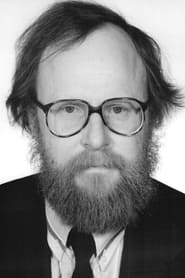
Wolfgang Thierse
himself
HomePage
Overview
This documentary explores the creation of the Holocaust Memorial in Berlin as designed by architect Peter Eisenman. Reaction of the German public to the completed memorial is also shown.
Release Date
2009-02-20
Average
0
Rating:
0.0 startsTagline
Genres
Languages:
DeutschEnglishKeywords
Recommendations Movies
62%
Trevor Noah: Where Was I(en)
2023-12-18
Trevor Noah riffs on national anthems, derailing a German sightseeing tour and getting roasted in Paris in this comedy special about his world travels.

68%
Misha and the Wolves(en)
2021-09-03
A woman’s Holocaust memoir takes the world by storm, but a fallout with her publisher-turned-detective reveals her story as an audacious deception created to hide a darker truth.

77%
B-Movie: Lust & Sound in West-Berlin 1979-1989(en)
2015-02-05
The wild West Berlin of the 1980s became the creative melting pot of pop subcultures: music, art and chaos. Before the Iron Curtain fell, anything and everything seemed possible.
69%
Mr. Death: The Rise and Fall of Fred A. Leuchter, Jr.(en)
1999-12-29
A portrait of the life and career of the infamous American execution device designer Fred A. Leuchter, Jr. Mr. Leuchter was an engineer who became an expert on execution devices and was later hired by holocaust revisionist historian Ernst Zundel to "prove" that there were no gas chambers at Auschwitz. Leuchter published a controversial report confirming Zundel's position, which ultimately ruined his own career. Most of the footage is of Leuchter, working in and around execution facilities or chipping away at the walls of Auschwitz, but Morris also interviews various historians, associates, and neighbors.
68%
Looking for Richard(en)
1996-10-11
Al Pacino's deeply-felt rumination on Shakespeare's significance and relevance to the modern world through interviews and an in-depth analysis of "Richard III."
70%
#AnneFrank. Parallel Stories(en)
2019-10-18
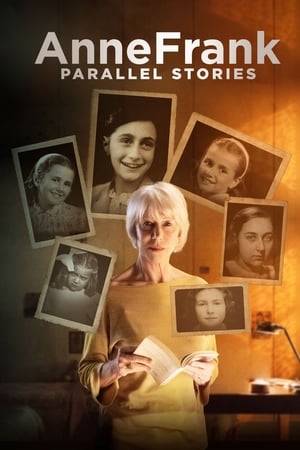
One single Anne Frank moves us more than the countless others who suffered just as she did but whose faces have remained in the shadows-Primo Levi. The Oscar®-winning Helen Mirren will introduce audiences to Anne Frank's story through the words in her diary. The set will be her room in the secret refuge in Amsterdam, reconstructed in every detail by set designers from the Piccolo Theatre in Milan. Anne Frank this year would have been 90 years old. Anne's story is intertwined with that of five Holocaust survivors, teenage girls just like her, with the same ideals, the same desire to live: Arianna Szörenyi, Sarah Lichtsztejn-Montard, Helga Weiss and sisters Andra and Tatiana Bucci. Their testimonies alternate with those of their children and grandchildren.
75%
The Fear of 13(en)
2015-10-15
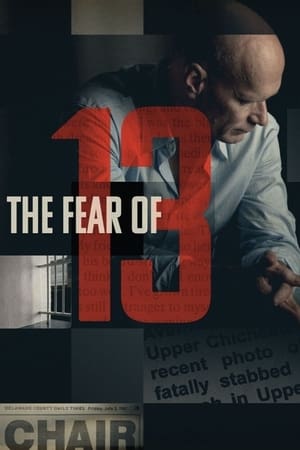
After 23 years on Death Row a convicted murderer petitions the court asking to be executed, but as his story unfolds, it becomes clear that nothing is what it seems.

81%
Chadwick Boseman: A Tribute for a King(en)
2020-08-30
A tribute to Chadwick Boseman, celebrating his life and legacy.

76%
Night Will Fall(en)
2014-06-07
When Allied forces liberated the Nazi concentration camps in 1944-45, their terrible discoveries were recorded by army and newsreel cameramen, revealing for the first time the full horror of what had happened. Making use of British, Soviet and American footage, the Ministry of Information’s Sidney Bernstein (later founder of Granada Television) aimed to create a documentary that would provide lasting, undeniable evidence of the Nazis’ unspeakable crimes. He commissioned a wealth of British talent, including editor Stewart McAllister, writer and future cabinet minister Richard Crossman – and, as treatment advisor, his friend Alfred Hitchcock. Yet, despite initial support from the British and US Governments, the film was shelved, and only now, 70 years on, has it been restored and completed by Imperial War Museums under its original title "German Concentration Camps Factual Survey".
75%
The Making of Dr. Horrible's Sing-Along Blog(en)
2007-12-19
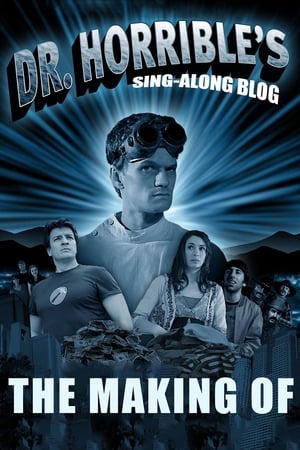
The making of 'Dr. Horrible's Sing-Along Blog'.
73%
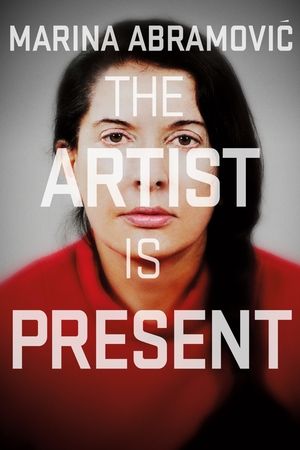
Marina Abramović: The Artist Is Present(en)
2012-06-13
Performance artist Marina Abramovic prepares for a major retrospective of her work at the Museum of Modern Art in New York.

66%
Trevor Noah: You Laugh But It's True(en)
2011-10-22
In the world of stand-up comedy in South Africa, Trevor Noah uses his childhood experiences in a biracial family during apartheid to prepare for his first one-man show.

68%
Spider-Man: All Roads Lead to No Way Home(en)
2022-05-03
JB Smoove and Martin Starr host a celebration of 20 years of "Spider-Man" movies, from the Sam Raimi trilogy to Marc Webb's movies and the trio from Jon Watts.
61%
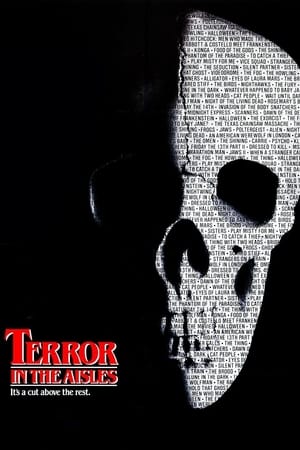
Terror in the Aisles(en)
1984-10-26
A non-stop roller coaster ride through the scariest moments of the greatest terror films of all time.

74%
Carrie Fisher: Wishful Drinking(en)
2010-12-10
"Wishful Drinking" is based on Fisher's memoirs of the same title. The stage adaptation had its world premiere in 2006 at the Geffen Playhouse in L.A. It later played at Berkeley Repertory before opening on Broadway in October at Studio 54. The show takes audiences on a comic tour of Fisher's messy personal life and career. The actress-writer recounts stories about her work on the "Star Wars" series as well as her relationship with her parents Eddie Fisher and Debbie Reynolds. She also discusses her much-publicized problems with alcohol and drugs.

68%
Welcome to Chechnya(en)
2020-01-26
This searing investigative work shadows a group of activists risking unimaginable peril to confront the ongoing anti-LGBTQ program raging in the repressive and closed Russian republic. Unfettered access and a remarkable approach to protecting anonymity exposes this under-reported atrocity–and an extraordinary group of people confronting evil.
61%
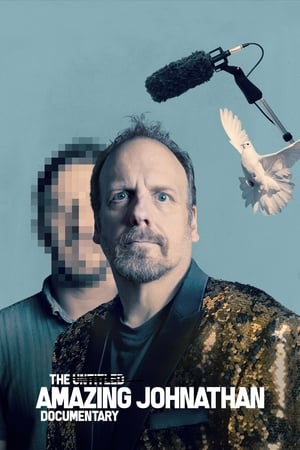
The Amazing Johnathan Documentary(en)
2019-08-16
What begins as a documentary following the final tour of a dying magician - "The Amazing Johnathan" - becomes an unexpected and increasingly bizarre journey as the filmmaker struggles to separate truth from illusion.
66%
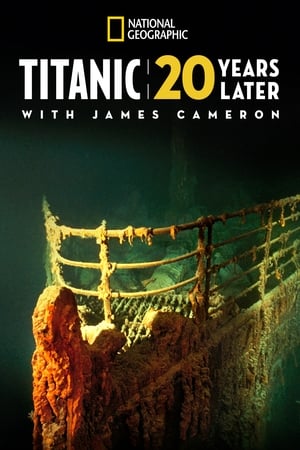
Titanic: 20 Years Later with James Cameron(en)
2017-11-26
For the 20th anniversary of "Titanic," James Cameron reopens the file on the disaster.

80%
My Mom Jayne(en)
2025-06-20
Through deeply personal interviews with her siblings and an examination of the photographs, letters, and belongings left behind, Mariska assembles a new portrait of her mother Jayne Mansfield, an extraordinary and complex woman.
Similar Movies

70%
Wir Werden Immer Weitergehen(de)
2012-11-15
Music as a counter-project to a bourgeois existence: Musicians, club and label operators, record store owners and other music lovers talk about how, despite social and economic constraints, they realize their very different, bohemian and sometimes precarious life projects on the sidelines - and always go on. Detailed essays, experience reports, portraits and interviews are dedicated to the alternative music and club scene in Berlin and Hamburg.

68%
Germany: A Summer's Fairytale(de)
2006-10-03
A documentary of the German national soccer team’s 2006 World Cup experience that changed the face of modern Germany.
79%
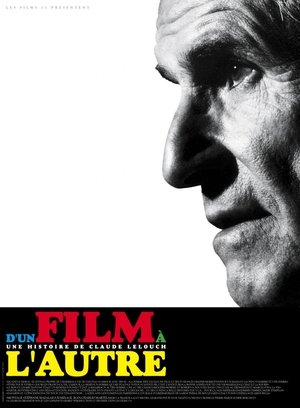
D'un film à l'autre(fr)
2011-04-13
On April 13, 2011, Les Films 13 production company turned 50. How can one celebrate an anniversary of this sort ? By simply making "another" film that would sum up all the earlier ones. D'un film à l'autre is hence a kind of anthology of the films produced Les Films 13 since the 1960s (short and feature films written and directed for the main part by Claude Lelouch), a best-of of half a century of cinema, going from Le Propre de l'homme to What Love May Bring. A biography in images of a filmmaker as admired as he is criticized. In reality, D'un film à l'autre is more than a series of film excerpts, interviews, and making-of documents (some of which possess an undeniable historical value, like that from A Man and A Woman, or the final performances of Patrick Dewaere).
70%
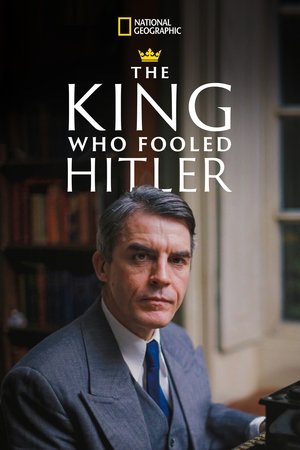
The King Who Fooled Hitler(en)
2019-05-05
In a tale of double agents and decoys, this documentary reveals, for the first time, the story of King George VI's elaborate ruse to divert German attention away from the Normandy landings in 1944.
0%
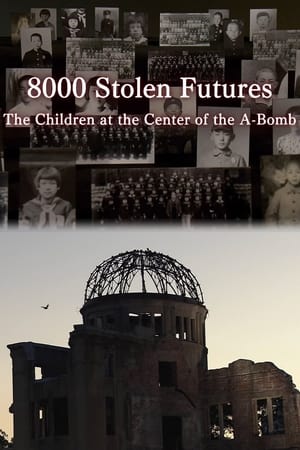
8000 Stolen Futures: The Children at the Center of the A-Bomb(en)
2022-11-06
On August 6, 1945, the first-ever nuclear bomb deployed in war was dropped on the city of Hiroshima Prefecture, leaving an estimated 140,000 dead in its wake by the end of that year. Among the victims, one particular age group stands out for the sheer number of fatalities sustained: 12 and 13 year-olds, children of first year junior high school age. We investigate the tragedy of this lost generation, piecing together surviving records and speaking with survivors, for whom the memories of children robbed of their futures that day are still burned deep in their memories, nearly eight decades on.
66%
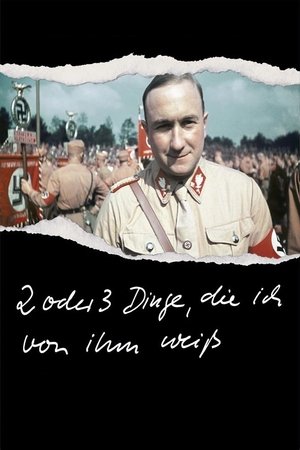
2 or 3 Things I Know About Him(de)
2005-04-07
What would your family reminiscences about dad sound like if he had been an early supporter of Hitler’s, a leader of the notorious SA and the Third Reich’s minister in charge of Slovakia, including its Final Solution? Executed as a war criminal in 1947, Hanns Ludin left behind a grieving widow and six young children, the youngest of whom became a filmmaker. It's a fascinating, maddening, sometimes even humorous look at what the director calls "a typical German story." (Film Forum)

58%
Prinzessinnenbad(de)
2007-05-31
A film about three teenagers - Klara, Mina and Tanutscha - from the Berlin district of Kreuzberg. The trio have known each other since Kindergarten and have plenty in common. The three 15-year-olds are the best of friends; they are spending the summer at Prinzenbad, a large open-air swimming pool at the heart of the district where they live. They're feeling pretty grown up, and are convinced they've now left their childhood behind.
90%
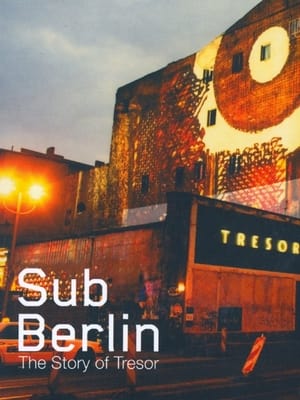
SubBerlin - Underground United(de)
2008-02-07
The original Tresor was in many ways the quintessential Berlin club: located in an unrenovated vault beneath a bombed out department store, it opened its doors amidst the general confusion and ecstasy that swept across the city when the wall fell. Its low ceilings, industrial decor and generally unhinged atmosphere created an unprecedented platform not only for techno in Berlin, but also for the scene taking shape across the Atlantic in Detroit.
67%
The Decision to Drop the Bomb(en)
1965-01-05
J. Robert Oppenheimer and other key figures involved in the decision to drop the first atomic bomb discuss their motivations in this NBC News documentary. Originally produced and televised in 1965, two decades after the bombings of Hiroshima and Nagasaki, it was re-released in 2023 with an epilogue by Michael Beschloss, NBC News Presidential Historian.

51%
Addicted to Porn: Chasing the Cardboard Butterfly(en)
2017-02-03
Like it or not, porn is here and it is harmful. In this controversial film, award-winning filmmaker Justin Hunt dissects the impact of pornography on societies around the globe, from how it affects the brain of the individual, to how modern technology leads to greater exposure to youth, to watching it literally tear a family apart. In what may well be one of the most devastating issues in modern culture, this film will break down the damage that porn is doing to us a human race and leave you thinking that it's clearly time that we start taking porn addiction a bit more seriously.
62%
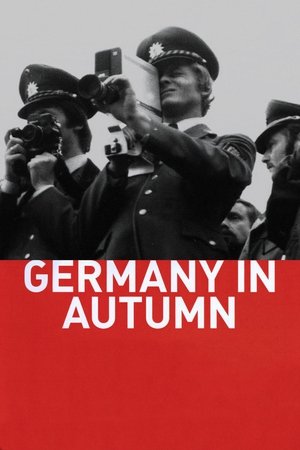
Germany in Autumn(de)
1978-03-03
Nine fictitious documentaries and films reflect the mood of late 1970s Germany, particularly the two-month period in 1977 when a businessman was kidnapped by the RAF (Red Army Faction). The kidnap had been made to orchestrate the release of the original leaders of the RAF, aka the Baader-Meinhof.

66%
Adolf Island(en)
2019-06-23
Caroline Sturdy Colls, a world leader in the forensic investigation of Nazi crime scenes, is chasing clues to an unsolved case: a concentration camp that existed on the British island of Alderney. Witnesses and survivors claimed that thousands died there, but only 389 bodies have ever been found. Under heavy restrictions imposed by the local government, which may not want its buried secrets revealed, Colls must uncover the truth using revolutionary techniques and technologies.