Loading Page


Exile(2009)
Status: Released
Date: 2009-01-01
0%
0 Votes
Time: 0h 48m
Overview:
Zacharias Kunuk tackles the subject of the High Arctic Relocation from an Inuit point of view in the documentary Exile. In 1953, Inuit families were forcibly relocated to the uninhabited and inhospitable high arctic, 1500 kilometres north of their traditional homeland of Nunavik, in northern Québec. The goal of the move was to extend Canadian claims of sovereignty to Ellesmere Island. As a result, Inuit people were forced to endure the pain of families torn apart and many years of hardship. With devastating first-person accounts of survival, the trail of broken promises and shameful practices of the government and the RCMP, this powerful documentary captures the long-standing effects of these events from the perspectives of the people who were forced to endure them.
Languages:
Countries:
Canada
Movie: Exile
HomePage
Overview
Zacharias Kunuk tackles the subject of the High Arctic Relocation from an Inuit point of view in the documentary Exile. In 1953, Inuit families were forcibly relocated to the uninhabited and inhospitable high arctic, 1500 kilometres north of their traditional homeland of Nunavik, in northern Québec. The goal of the move was to extend Canadian claims of sovereignty to Ellesmere Island. As a result, Inuit people were forced to endure the pain of families torn apart and many years of hardship. With devastating first-person accounts of survival, the trail of broken promises and shameful practices of the government and the RCMP, this powerful documentary captures the long-standing effects of these events from the perspectives of the people who were forced to endure them.
Release Date
2009-01-01
Average
0
Rating:
0.0 startsTagline
Genres
Languages:
Keywords
Recommendations Movies
71%
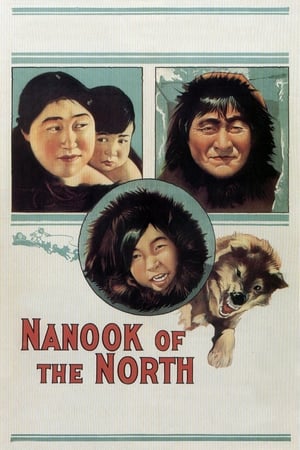
Nanook of the North(en)
1922-06-11
This pioneering documentary film depicts the lives of the indigenous Inuit people of Canada's northern Quebec region. Although the production contains some fictional elements, it vividly shows how its resourceful subjects survive in such a harsh climate, revealing how they construct their igloo homes and find food by hunting and fishing. The film also captures the beautiful, if unforgiving, frozen landscape of the Great White North, far removed from conventional civilization.

61%
Orgasm Inc: The Story of OneTaste(en)
2022-11-05
A sexual wellness company gains fame and followers, then members come forward with shocking allegations.

71%
The Class of ‘92(en)
2013-12-01
A detailing of the rise to prominence and global sporting superstardom of six supremely talented young Manchester United football players (David Beckham, Nicky Butt, Ryan Giggs, Paul Scholes, Phil and Gary Neville). The film covers the period 1992-1999, culminating in Manchester United's European Cup triumph.
69%
One of Us(en)
2017-09-10
Penetrating the insular world of New York's Hasidic community, focusing on three individuals driven to break away despite threats of retaliation.

71%
In the Realms of the Unreal(en)
2004-01-15
In the Realms of the Unreal is a documentary about the reclusive Chicago-based artist Henry Darger. Henry Darger was so reclusive that when he died his neighbors were surprised to find a 15,145-page manuscript along with hundreds of paintings depicting The Story of the Vivian Girls, in What is Known as the Realms of the Unreal, of the Glodeco-Angelinnian War Storm, Cased by the Child Slave Rebellion.
68%
Spider-Man: All Roads Lead to No Way Home(en)
2022-05-03
JB Smoove and Martin Starr host a celebration of 20 years of "Spider-Man" movies, from the Sam Raimi trilogy to Marc Webb's movies and the trio from Jon Watts.

61%
Naqoyqatsi(en)
2002-09-02
A visual montage portrait of our contemporary world dominated by globalized technology and violence.
74%
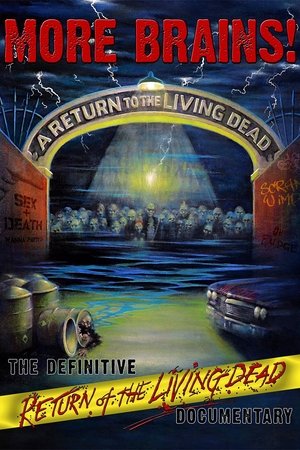
More Brains! A Return to the Living Dead(en)
2011-10-18
Retrospective documentary about the making of the horror cult classic "The Return of the Living Dead."
69%
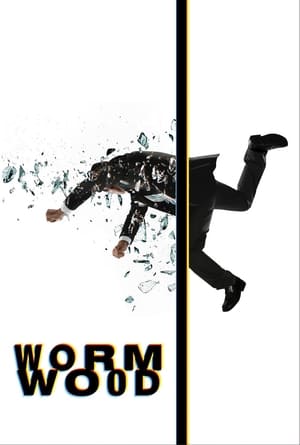
Wormwood(en)
2017-10-22
In this genre-bending tale, Errol Morris explores the mysterious death of a U.S. scientist entangled in a secret Cold War program known as MK-Ultra.
70%
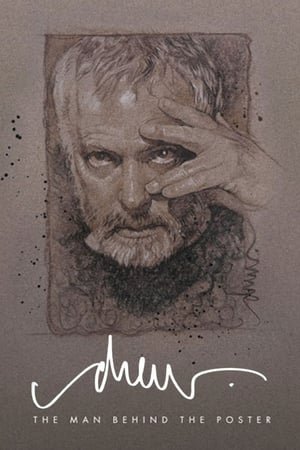
Drew: The Man Behind the Poster(en)
2013-07-19
A documentary on legendary movie-poster artist Drew Struzan.
84%
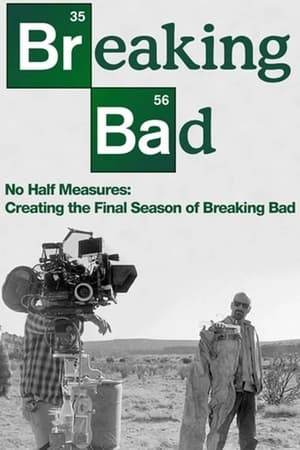
No Half Measures: Creating the Final Season of Breaking Bad(en)
2013-11-26
A documentary about the making of season five of the acclaimed AMC series Breaking Bad.

80%
My Mom Jayne(en)
2025-06-20
Through deeply personal interviews with her siblings and an examination of the photographs, letters, and belongings left behind, Mariska assembles a new portrait of her mother Jayne Mansfield, an extraordinary and complex woman.
71%
The Summers of It - Chapter Two: It Ends(en)
2019-12-10
This documentary focuses on the actors and their journey over two summers to create the remake to the original IT, by Stephen King. The documentary originally released as bonus material, bundled with IT: Chapter Two.
71%
The Mole: Undercover in North Korea(en)
2020-10-11
A real-life undercover thriller about two ordinary men who embark on an outrageously dangerous ten-year mission to penetrate the world's most secretive and brutal dictatorship: North Korea.
71%
Zeitgeist: Moving Forward(en)
2011-01-15
A presentation of a case for a needed transition out of the current socioeconomic monetary paradigm which governs the entire world society. This subject matter will transcend the issues of cultural relativism and traditional ideology and move to relate the core, empirical 'life ground' attributes of human and social survival, extrapolating those immutable natural laws into a new sustainable social paradigm called a 'Resource-Based Economy'.

59%
Hannah Montana & Miley Cyrus: Best of Both Worlds Concert(en)
2008-02-01
In this concert film, 'Hannah Montana' star Miley Cyrus performs a slew of hit songs, including 'Just Like You' and 'Life's What You Make It.'
62%
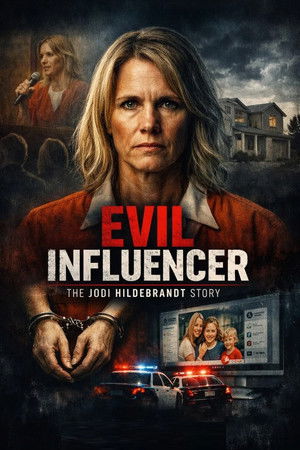
Evil Influencer: The Jodi Hildebrandt Story(en)
2025-12-30
Unravel the case of Utah therapist Jodi Hildebrandt, whose child abuse arrest with parenting YouTuber Ruby Franke exposed a twisted tale of manipulation.

76%
The Up in Smoke Tour(en)
2000-12-02
The Up in Smoke Tour is a West Coast hip hop tour in 2000 featuring artists Ice Cube, Eminem, Proof, Snoop Dogg, Dr. Dre, Nate Dogg, Kurupt, D12, MC Ren, Westside Connection, Mel-Man, Tha Eastsidaz, Doggy's Angels, Devin The Dude, Warren G, TQ, Truth Hurts and Xzibit.
Similar Movies
0%
The Hunters(en)
1977-04-20
This film joins a hunting-party of inhabitants of the Frobisher Bay Correctional Centre. The stalking, killing and skinning of seal and caribou are featured prominently, with explanations as to the importance of these animals to the Inuit way of life.
0%
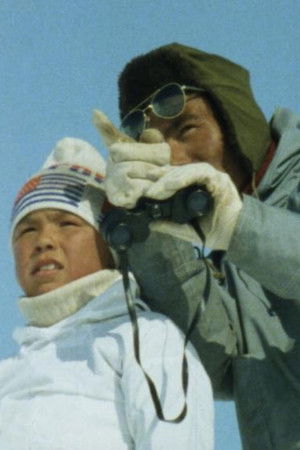
Kaali Goes for Seal Hunting(en)
1985-01-01
One day in the lives of an average Greenlandic family, which happens to be of great importance for 8-year old Kali - he's about to catch his first prey with the harpoon. The whole family is looking forward for the huge step in boy's maturation.
40%
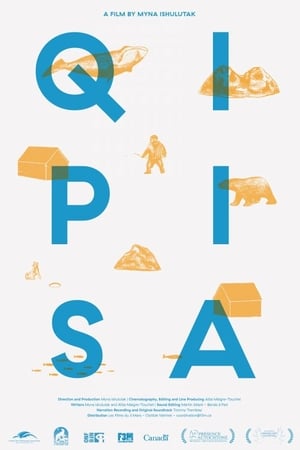
Qipisa(iu)
2017-02-23
The director goes back to her roots in Pangnirtung, amongst her family and community. It leads her to another journey: to Qipisa, the outpost camp from where they were uprooted.
71%
Nanook of the North(en)
1922-06-11
This pioneering documentary film depicts the lives of the indigenous Inuit people of Canada's northern Quebec region. Although the production contains some fictional elements, it vividly shows how its resourceful subjects survive in such a harsh climate, revealing how they construct their igloo homes and find food by hunting and fishing. The film also captures the beautiful, if unforgiving, frozen landscape of the Great White North, far removed from conventional civilization.
55%
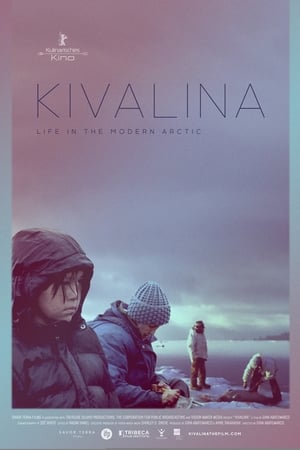
Kivalina(en)
2016-02-01
The rarely seen lives of an Arctic tribe who try to continue to honor their way of life 80 miles above the Arctic Circle on a fragile barrier island disappearing due to climate change.

0%
Kiyukta(en)
2008-02-12
80%
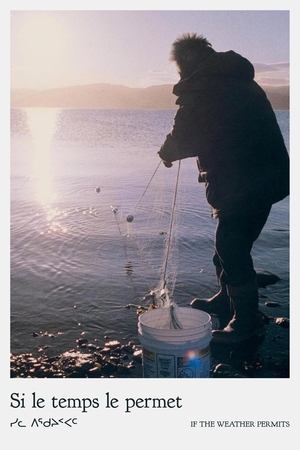
If the Weather Permits(iu)
2003-06-10
This short documentary studies life in the village of Kangirsujuaq, Nunavik. In this community on the edge of the Arctic Ocean, children’s laughter fills the streets while the old people ponder the passage of time. They are nomads of the wide-open spaces who are trying to get used to the strange feeling of staying put. While the teenagers lap up Southern culture and play golf on the tundra to kill time, the Elders are slowly dying, as their entire culture seems to fade away. Elisapie Isaac, a filmmaker born in Nunavik, decides to return to her roots on this breathtaking land. To bridge the growing gap between the young and the old, she speaks to her grandfather, now deceased, and confides in him her hopes and fears. Grappling with isolation, family relationships, resource extraction, land-based knowledges, the influence of Southern culture and the ongoing impacts of colonialism on Inuit ways of life, Elisapie Isaac offers a nuanced portrait of the North.
0%
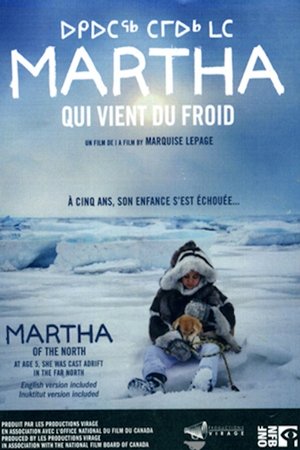
Martha of the North(en)
2009-01-23
In the mid-1950s, lured by false promises of a better life, Inuit families were displaced by the Canadian government and left to their own devices in the Far North. In this icy desert realm, Martha Flaherty and her family lived through one of Canadian history’s most sombre and little-known episodes.
0%
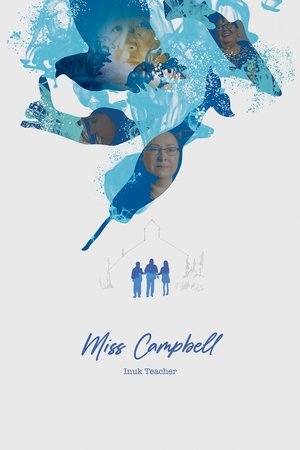
Miss Campbell: Inuk Teacher(en)
2023-10-17
Part oral history and part visual poem, Miss Campbell: Inuk Teacher is the story of Evelyn Campbell, a trailblazer for an Inuit-led educational system in the small community of Rigolet, Labrador.
90%
Those Who Come, Will Hear(iu)
2018-06-08
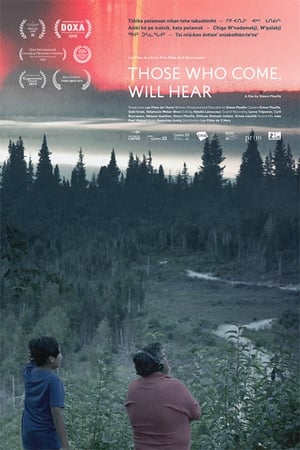
The documentary proposes a unique meeting with the speakers of several indigenous and inuit languages of Quebec – all threatened with extinction. The film starts with the discovery of these unsung tongues through listening to the daily life of those who still speak them today. Buttressed by an exploration and creation of archives, the film allows us to better understand the musicality of these languages and reveals the cultural and human importance of these venerable oral traditions by nourishing a collective reflection on the consequences of their disappearance.
77%
The Last Igloo(en)
2019-06-14
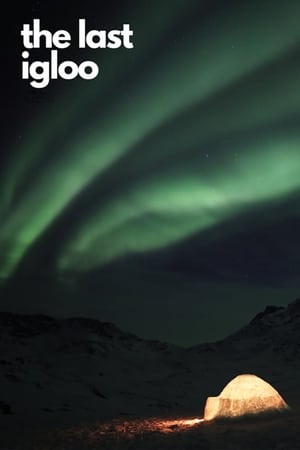
Documentary that follows a lone Inuit as he hunts, fishes and constructs an igloo, a way of life threatened by climate change.
55%
The Good Canadian(en)
2025-09-30
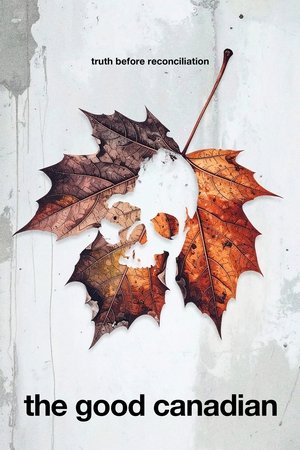
The world knows the image of the good Canadian. But what if there was a dark secret behind a national identity? THE GOOD CANADIAN exposes the truth behind the idea of a True North strong and free. In this unflinching and eye-opening documentary, directors Leena Minifie and David Paperny move us through the corridors of systemic inequity, from the Indian Act to residential schools, to modern-day family separation. Fusing shocking footage with detailed interviews with experts, advocates, whistleblowers and politicians, THE GOOD CANADIAN challenges national myth-making, while offering Canadians the chance to forge a new identity from the truth.
0%
The Annanacks(en)
1964-01-01
This short documentary depicts the formation in 1959 of the first successful co-operative in an Inuit community in Northern Québec. The film describes how, with other Inuit of the George River community, the Annanacks formed a joint venture that included a sawmill, a fish-freezing plant and a small boat-building industry.
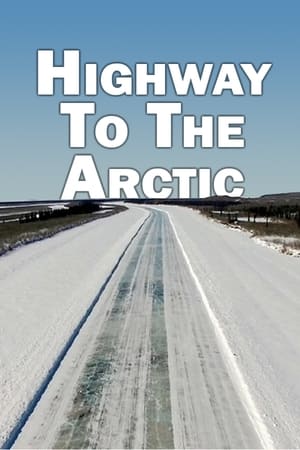
70%
Highway to the Arctic(de)
2017-02-21
Every winter for decades, the Northwest Territories, in the Canadian Far North, changes its face. While the landscape is covered with snow and lakes of a thick layer of ice, blocking land transport, ice roads are converted to frozen expanses as far as the eye can see.
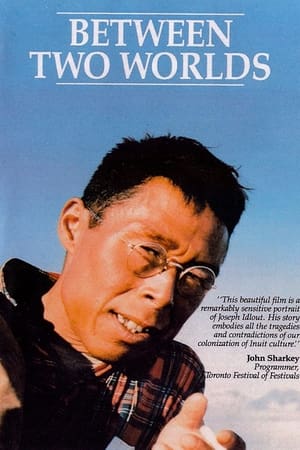
0%
Between Two Worlds(en)
1990-01-01
This feature film is a documentary portrait of Joseph Idlout, a man who was once the world's most famous Inuit. Unknown to most Canadians today, Idlout was the subject of many films and books, and one of the Inuit hunters pictured for many years on the back of Canada's $2 bill. In this film Idlout's son, Peter Paniloo, takes us on a journey through his father's life - that of a man caught "between two worlds."
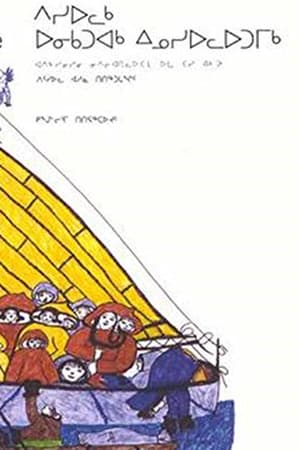
0%
Pictures Out Of My Life(en)
1973-01-01
The drawings and recollections of Inuit artist Pitseolak, from the book of the same title written by Dorothy Eber. Now in her seventies, Pitseolak is one of the most famous of the graphic artists of the Cape Dorset (Baffin Island) artists' colony and co-operative. Her coloured pencil and felt-pen drawings vividly illustrate her memories of past life in the Arctic, and of the birds, animals and spirits that figured so large in the daily life of the Inuit.
0%
Timuti(iu)
2012-01-01
In this short film, artist Jobie Weetaluktuk turns his gaze on his family and the power of ritual through the story of a young woman and her unplanned child. In Inukjuak, an Inuit community in the Eastern Arctic, a baby boy has come into the world and they call him Timuti, a name that recurs across generations of his people, evoking other Timutis, alive and dead, who will nourish his spirit and shape his destiny.
0%
Nya vädrets offer(en)
2009-11-02
"Melting Lives - Victims of the New Weather" is a six-part documentary series in which the viewers meet people in the Arctic region who live close to and depend on nature for survival, and who struggle to maintain their way of life. Their tales are being heard and testimonies about how life is changing as the world gets ever warmer. The host, Samuel Idivuoma, is from northern Sweden. He visits Inuits on Greenland and in Alaska, aboriginal people in Canada and Nenets from the Siberian tundra in Russia

0%
Greenland(en)
2024-12-25