
Paulina(1997)
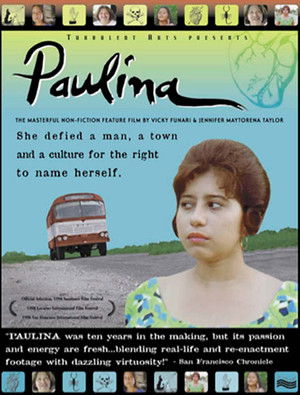
Through both interviews and dramatic reenactments, this documentary chronicles the life of Paulina Cruz Suárez.In the 1950's, when Paulina was a child in a rural Mexican village, her parents traded her away for land rights. The villagers ostracized her and the town boss raped her, keeping her as his unwilling mistress throughout much of her adolescence. At 15, she took control of her destiny and escaped to Mexico City to begin a new life. Now middle-aged, Paulina returns to her village to confront her family about what happened and encounters a web of intrigue and denial. PAULINA interweaves documentary and fiction styles to explore the characters' radically different perspectives and memories, and those of this vital, resilient woman.
Movie: Paulina
HomePage
Overview
Through both interviews and dramatic reenactments, this documentary chronicles the life of Paulina Cruz Suárez.In the 1950's, when Paulina was a child in a rural Mexican village, her parents traded her away for land rights. The villagers ostracized her and the town boss raped her, keeping her as his unwilling mistress throughout much of her adolescence. At 15, she took control of her destiny and escaped to Mexico City to begin a new life. Now middle-aged, Paulina returns to her village to confront her family about what happened and encounters a web of intrigue and denial. PAULINA interweaves documentary and fiction styles to explore the characters' radically different perspectives and memories, and those of this vital, resilient woman.
Release Date
1997-12-15
Average
0
Rating:
0.0 startsTagline
Genres
Languages:
EspañolKeywords
Similar Movies

Carlos Sainz: The Operator(es)
Patrimonio(es)
As unrestricted development threatens water sources in Baja California Sur, Mexico, local peoples are beginning to push back against global business interests.
The Little Horse(es)
The novohispanic equestrian statue of Charles IV of Spain is relocated in Mexico city.
A Place Called Chiapas(en)
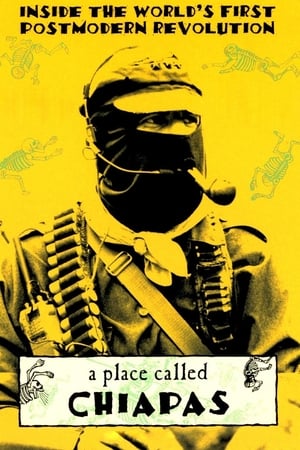
In 1994, the Zapatista National Liberation Army, made up of impoverished Mayan Indians from the state of Chiapas, took over five towns and 500 ranches in southern Mexico. The government deployed its troops and at least 145 people died in the ensuing battle. Filmmaker Nettie Wild travelled to the country's jungle canyons to film the elusive and fragile life of this uprising.
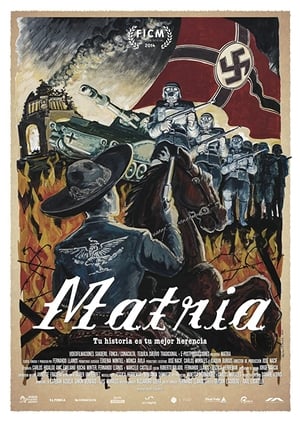
Matria(es)
My grandfather fought alongside Pancho Villa, became Master Mason, was an elected official who represented Oaxaca three times, and president of the national Association of Cattle Hands. In 1942, he formed the Legion of Mexican Fighters, a group of 100,000 cattle hands training to repel a possible Nazi invasion in Mexico. His story of success, however, held a secret that affected my family, and that I discovered while making this documentary.
Cartel Land(en)
In the Mexican state of Michoacán, Dr. Jose Mireles, a small-town physician known as "El Doctor," shepherds a citizen uprising against the Knights Templar, the violent drug cartel that has wreaked havoc on the region for years. Meanwhile, in Arizona's Altar Valley—a narrow, 52-mile-long desert corridor known as Cocaine Alley—Tim "Nailer" Foley, an American veteran, heads a small paramilitary group called Arizona Border Recon, whose goal is to halt Mexico’s drug wars from seeping across our border.
Which Way Home(en)
Follows unaccompanied child migrants, on their journey through Mexico, as they try to reach the United States.
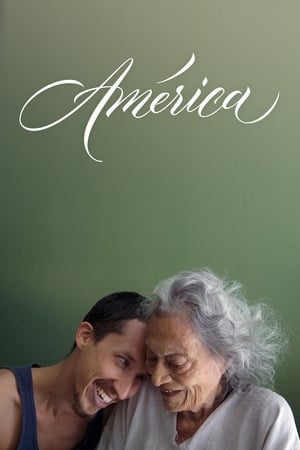
América(en)
This sparkling, irreverent, and deeply emotional piece of creative nonfiction announces the arrival of a standout filmmaking partnership. When their father is hauled away, a colorful trio of brothers — a sibling team to rival Moe, Larry, and Curly — step up to take care of América, their grandmother, in Colima, Mexico. Rodrigo, Diego, and Bruno are stilt-walkers and acrobats and Elvis impersonators and unicycle riders — when not running the family's agriculture warehouse. With a loose, offhanded charm, Stoll and Whiteside capture the family’s natural performative streak in a way that makes even the most explosive, dramatic moments feel organic. The endearing, genuine scenes between Diego and his grandmother celebrate the possibility of multigenerational connection.
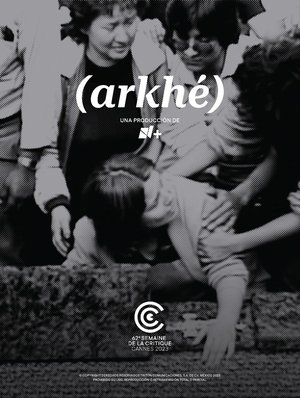
Arkhé(es)
“Archeology” and “Archive” share the same roots. Both words come from “Arkhé”, the Greek word for “origin”. In the ruins of buildings, lost forever by earthquakes, as in the depth of the archives, we dig. What happened the morning of the big earthquake? The morning of September 19th 1985 is fading away in our memories. These recordings have never been seen. Unedited images of the catastrophe dug out by the archaeological adventure of an archivist that suffered with them. He dug and suffered until he could no longer see.
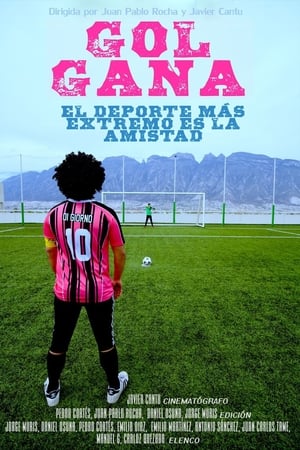
Gol Gana(es)
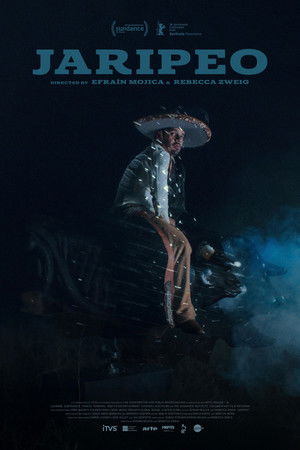
Jaripeo(en)
Set against the vibrant spectacle of the jaripeo, a symbol of Mexican cowboy tradition and machismo, this story unveils a hidden world of queer desire and quiet rebellion. As glances and gestures disrupt the rigid norms of masculinity, the rodeo becomes a stage for our protagonists to navigate identity, community, and the search for belonging in an oppressively traditional space.
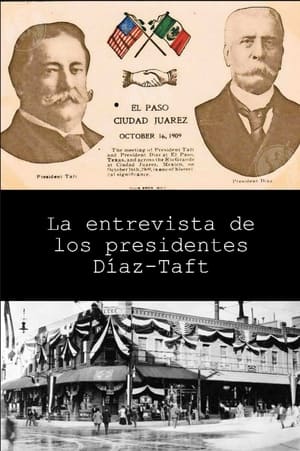
The Meeting of President Taft and President Díaz at El Paso, Texas(es)
The first meeting of a U.S. president and a Mexican president took place when William Howard Taft met Porfirio Díaz on 16 October 1909, in El Paso. The meeting was celebrated in both El Paso and Juárez with parades, elaborate receptions, lavish gifts and large crowds. Shot by the pioneers of Mexican Cinema the brothers Alva. This is a typical example of newsreel material prior to the Mexican revolution. By hemerographical references we know that this footage was presented to the then president of Mexico General Porfirio Díaz in the Castle of Chapultepec, then residence of the president.
Separated(en)
Academy Award®-winning filmmaker Errol Morris confronts one of the darkest chapters in recent American history: family separations. Based on NBC News Political and National Correspondent Jacob Soboroff’s book, Separated: Inside an American Tragedy, Morris merges bombshell interviews with government officials and artful narrative vignettes tracing one migrant family’s plight. Together they show that the cruelty at the heart of this policy was its very purpose. Against this backdrop, audiences can begin to absorb the U.S. government’s role in developing and implementing policies that have kept over 1300 children without confirmed reunifications years later, according to the Department of Homeland Security.

PETer Plastik(es)
A guy named Peter learns several facts about plastic's impact on the environment.
Dreams(en)
These are the future leaders of their communities. Ever wonder what it’s like to walk a day in their shoes? How the world looks through their eyes? We were curious. So, we asked them.

Mexican Moods(en)
This 1942 travelogue film, directed by Aldo Ermini and sponsored by the Office of the Coordinator of Inter-American Affairs, showcases Mexican culture during World War II, focusing on various cultural activities and popular entertainers of the time. The film features notable figures like Puerto Rican actress and singer Mapy Cortés, Mexican comedian Cantinflas, and a re-enactment of Aztec traditions.
Lila Downs - Lotería Cantada(es)
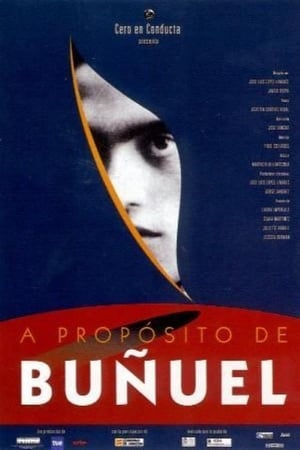
Speaking of Buñuel(es)
Surrealist master Luis Buñuel is a towering figure in the world of cinema history, directing such groundbreaking works as Un Chien Andalou, Exterminating Angels, and That Obscure Object of Desire, yet his personal life was clouded in myth and paradox. Though sexually diffident, he frequently worked in the erotic drama genre; though personally quite conservative, his films are florid, flamboyant, and utterly bizarre.
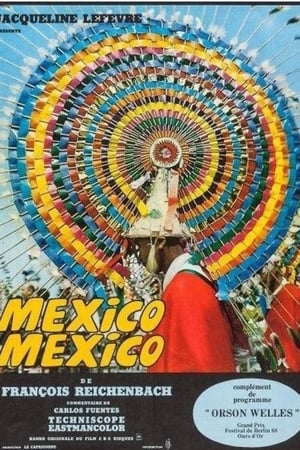
México, México: Mexique en mouvement(fr)
"Mexico begins where the roads end ”. Mexican writer Carlos Fuentes tells us about the history of Mexico: its invasions, its revolutions, its sacred lands, its forgotten legends, its religious rituals and this frightening misery. François Reichenbach and his camera sink into the dust, on this sacred land, where "the land never ends."